
Turkey's Record Gold Liquidation Signals Shift in Central Bank Strategy
Turkey dumped more gold in two weeks (58 tonnes) than every ETF combined, triggering a $12B reserve drop—a move that may reshape emerging market central bank strategies through 2026. As global liquidity risks rise, Shanghai gold now trades at a $47.70/oz premium over London, signaling deeper stress fractures by 2025.
The $12 Billion Gold Fire Sale That Shocked Markets
On June 6, 2024, Turkey executed the largest gold reserve liquidation by a single central bank in seven years, selling 22 tonnes in one week and 58 tonnes across a two-week period. In dollar terms, over $12 billion in reserves vanished from Turkey's books in a single week[1]. This outsized intervention dwarfed the total net sales from all gold exchange-traded funds (ETFs) worldwide during the same window, a data anomaly that sent ripples across FX and commodity markets.
Thesis: Turkey's massive gold dump signals a tactical shift in central bank liquidity management, not a repudiation of gold as a reserve, and will accelerate gold's status as a central pillar of emerging market (EM) reserve portfolios exceeding 25% by 2027. This thesis is falsifiable: if EM gold allocations stagnate below 22% after 2025, the premise fails.
The stakes are immediate, not theoretical. If Turkey—a G20 economy under severe real-currency stress—was compelled to cash in $12 billion in gold in two weeks, it exposes both the utility and limits of gold as global collateral. Policymakers, investors, and any dollar-holder now face a more volatile reserve calculus: balance sheet liquidity is under new stress, and gold's role is being redefined in real time.
Central Banking Under Pressure: The Mechanics Behind the Selloff
Traditional gold flows are measured in gradual, symbolic increments—single tonnes, small quarterly shifts. Turkey's 58-tonne fire sale is a rare event of both speed and magnitude. As context, the global ETF market sold less gold in aggregate during this same fortnight [1]. Prior one-week central bank outflows had not topped 20 tonnes since 2017.
Turkey's central bank faced urgent FX demands: a persistent current account deficit, ballooning inflation above 75%, and a battered lira have pressured the country's international position. With total gross reserves dampening by over $12 billion in a week (from $139B to $127B), the gold dump functioned as an emergency liquidity bridge rather than a speculative bet against gold [1]. In crisis, gold is not a hedge—it is a fungible asset of last resort.
Notably, Turkey still holds over 400 tonnes, roughly 22% of its foreign reserve composition—consistent with the new EM norm [2]. This is not abandonment but repricing. The dynamics mirror broader trends we've seen in central bank gold accumulation driving record prices across emerging markets.
Emerging Markets Double Down on Gold: A 20% Allocation by 2026
A decade ago, EM central banks typically held 10% of reserves in gold. By 2024, that share has doubled to over 20%, according to Mohamed El-Erian [2]. This reallocation is not unique to Turkey: the People's Bank of China (PBOC) has officially declared 2,257 tonnes, but best estimates put its true gold reserves at closer to 4,000 tonnes when counting SAFE offshore holdings [4].
Singapore is now expanding vault capacity to serve as Asia's central banking depot[5]. The new gold paradigm reflects three factors: dollar politicization risk, the slow-motion fragmentation of Western and BRICS finance, and the functional limits of US Treasuries as a liquid "safe asset." Where Russia, Kazakhstan, and Uzbekistan once made up the bulk of EM gold buyers, now South and Southeast Asia join in.
This trend aligns with expert predictions that gold could reach $6,000 by 2026, driven partly by sustained central bank demand. The net global inflow into metal-backed ETFs reflects this momentum: GLD alone reported three consecutive weeks of inflows in May, rising to 1,264 tonnes in custody [3].
This is not a flight from the dollar per se; it is a quest for assets that do not freeze under sanctions or seize up in crises. As global reserve currency dynamics evolve, questions about whether the US dollar is losing its reserve status become increasingly relevant to central bank strategy.
Physical Gold Markets Show Stress Fractures
Gold's central bank cachet means little without usable liquidity. In 2024, the physical market is fragmenting. COMEX registered stocks are down 38% in just seven weeks, with only 0.32 ounces backing each open interest ounce—a fresh low in modern times [3]. The Shanghai Gold Exchange now trades at a $47.70/oz premium to London bullion: the highest dollar premium in years, signaling sharp spillover from global arbitrage demand [3].
These distortions are not only technical. As Taiwan's central bank recently warned, "the market is too high"—yet the buying continues [6]. The disconnect between spot, futures, and physical premiums reflects real shortages and regulatory hoarding. Singapore's vault build-out is testament to the structural demand for allocated, physical metal [5].
This "liquidity paradox" creates conditions where more central banks want gold, but liquid reserves are harder than ever to mobilize in size at spot. The result is sharp, destabilizing premiums when crises hit—a dynamic that could influence long-term gold price forecasts through 2031.
Analytical Framework: The Reserve Liquidity Stratification Matrix
To clarify central bank reserve choices under stress, the following original matrix segments assets by Usability Under Crisis versus Geopolitical Risk.
| | Low Geopolitical Risk | High Geopolitical Risk | |----------------------|-----------------------------|-----------------------------|| | High Liquidity | US Treasuries | Major FX, High-Grade Bonds | | Low Liquidity | Gold | Gold, Agricultural Commodities |
- Pre-2022: Most EM central banks favored Treasuries (top-left).
- 2022-2024: Shift toward gold (bottom-left) as Treasuries' asset freeze/geopoliticization risk rises.
- Turkey June 2024: Gold moves to "High Liquidity, High Geopolitical Risk" in practice—used as direct dollar/FX bridge during squeeze.
Implication: Central banks are now optimizing not just for yield or safety, but for assets deployable in acute crisis, amid rising cross-border risk. This shift could accelerate as emerging market currency risks intensify through 2026.
Counterargument: Is Turkey's Sale a Warning Signal?
Some experts contend Turkey's gold liquidation constitutes a warning—evidence that gold, for all its virtues, is not an unassailable shield against financial instability. They note:
- Gold sales can damage market confidence in a national currency if perceived as desperation, not prudence.
- Heavy central bank selling could trigger broader price reversals if other EMs face similar liquidity shortfalls.
- Historical parallel: During the 1997 Asian Financial Crisis, gold reserves proved less fungible than assumed for trading partners under duress [7].
This argument is not purely theoretical. Taiwan's central bank, for example, directly cautioned that "gold is too high" for additional allocation at current levels[6]. Should major gold holders be forced to sell during the next liquidity crunch, a "buyers' strike" could induce even more violent premiums and market shocks.
Rebuttal: However, current evidence indicates Turkish sales were absorbed without disruption: spot gold advanced to $4,547/oz in the aftermath, even as ETF and futures inventories fell [3][6]. With global ETFs accumulating net inflows and China extending its accumulation streak to 40+ months since November 2022[4], the market is far from buyers' fatigue.
Falsification threshold: Should Turkey's fire sale trigger a sustained gold correction of 15%+ concurrent with sequential central bank outflows, the thesis collapses. As of June 2024, this scenario has not materialized.
Key Indicators to Monitor Through 2026
Gold's Share of EM Reserves: If EM central banks push gold allocations above 23% by Q4 2025, the strategy shift is confirmed. If allocations plateau or drop below 20%, expect a retreat to dollar assets. Prediction: Gold allocations reach 25% by Q2 2027 — Confidence: HIGH.
Physical Premiums (Shanghai-London spread): A Shanghai premium sustaining above $40/oz for more than 90 days will signal persistent supply stress. Prediction: Premium widens above $55 by Q1 2025 — Confidence: MEDIUM.
COMEX Registered Coverage Ratio: If coverage falls below 0.25 by Q2 2025, watch for acute liquidity events and possible regulatory intervention. Contrarian prediction: Despite stress, coverage rebounds to 0.4 by Q4 2025 — Confidence: LOW.
Systemic Risk Threshold: Should another G20 central bank (e.g., Brazil or India) be forced to liquidate >40 tonnes in a rolling month, it would signal the stress is systemic, not idiosyncratic. If so, expect accelerated dollarization or the emergence of new gold-backed regional mechanisms.
Market Implications for 2025-2026
Turkey's unprecedented gold liquidation reveals both the promise and peril of gold as a central bank reserve asset. While the sales provided crucial liquidity during a currency crisis, they also highlighted the challenges of mobilizing large gold positions quickly without market disruption.
For investors and policymakers, the key insight is that gold's role in global finance is evolving rapidly. As traditional safe havens face new challenges, central banks are experimenting with different reserve compositions and liquidity management strategies.
The broader trend toward higher gold allocations in emerging market reserves appears intact, but Turkey's experience shows that even gold-heavy portfolios face constraints during acute liquidity crises. This dynamic will likely influence both gold pricing and central bank policies as we approach 2026.
Sources
- Financial World Updates via Reuters — "Turkey Dumps 58 Tonnes Gold in Two Weeks, $12 Billion Reserves Lost" — https://www.reuters.com/markets/commodities/turkey-central-bank-sells-gold
- Mohamed El-Erian, Project Syndicate — "Why Central Banks Are Doubling Their Gold Allocations" — https://www.project-syndicate.org/commentary/de-dollarization-central-banks-gold-buying-by-mohamed-a-el-erian-2024-03
- BullionStar Gold Reports — "Physical Gold Premiums and COMEX Inventory Collapse 2024" — https://www.bullionstar.com/blogs/ronan-manly/comex-registered-gold-inventories-down-38-percent/
- GPI China Desk, SCMP — "China's True Gold Reserves Exceed 4,000 Tonnes" — https://www.scmp.com/business/china-business/article/3224890
- Monetary Authority of Singapore — "Singapore to Expand Central Bank Gold Vaulting Capacity" — https://www.mas.gov.sg/news/media-releases/2024
- Taiwan Central Bank Press Release — "Gold Holdings Policy Update, June 2024" — https://www.cbc.gov.tw/en/OnLinePublication/OnlinePublication
- IMF Working Paper: "Central Bank Gold Reserve Management in Crisis" (2022) — https://www.imf.org/en/Publications/WP/Issues/2022/10/10/Central-Bank-Gold-Reserves
Related Topics
Video Intelligence
- ▶Iranian Missile Strike Hits Arad Israel: Video Moments
- ▶Iran Releases Official Footage of Drone Launches During War
- ▶Iranian Kamikaze Drone Destroys Erbil Oil Refinery
- ▶FPV Drone Strikes US Victoria Base Near Baghdad Airport
Share This Analysis
Get a shareable verdict card for this article.
Get the next one first
Free briefings when we publish major outlooks and forecasts. No spam — unsubscribe anytime.
Related Analysis

2026 Economic Crisis: Why Central Banks May Fail
The Board · Feb 22, 2026

Copper Price Forecast 2029-2031: Supply vs Green Demand
The Board · Feb 22, 2026

US Inflation Outlook and Fed Interest Rate Strategy
The Board · Feb 20, 2026

Will AI Replace White-Collar Jobs in 10 Years
The Board · Feb 22, 2026
When to Hire a VP of Sales vs Investing in PLG
The Board · Feb 22, 2026
ECB Rate Strategy Amid US Tariffs and Eurozone Inflation
The Board · Feb 22, 2026
Trending on The Board

79 Years of UFO Lies, Roswell to the Pentagon
Defense & Security · Sep 29, 2026

How CENTCOM Is Brokering an Israel-Saudi Pact
Defense & Security · Sep 19, 2026

Why the Pentagon Pulled Its Iran War Plans Offline
Defense & Security · Sep 19, 2026
How a Stablecoin Funded Moldova's 2026 Election
Geopolitics · Sep 19, 2026

The Hidden Gold Demand Behind the $6,000 Target
Markets · Sep 17, 2026
Latest from The Board
79 Years of UFO Lies, Roswell to the Pentagon
Defense & Security · Sep 29, 2026
How CENTCOM Is Brokering an Israel-Saudi Pact
Defense & Security · Sep 19, 2026
Why the Pentagon Pulled Its Iran War Plans Offline
Defense & Security · Sep 19, 2026
How a Stablecoin Funded Moldova's 2026 Election
Geopolitics · Sep 19, 2026
The Hidden Gold Demand Behind the $6,000 Target
Markets · Sep 17, 2026
Houthis Take Perim as Saudis Halt Pipeline 2026
Geopolitics · Sep 13, 2026

Epstein Intelligence Ties: Evidence vs Allegation in 2026
Policy & Intelligence · Sep 6, 2026
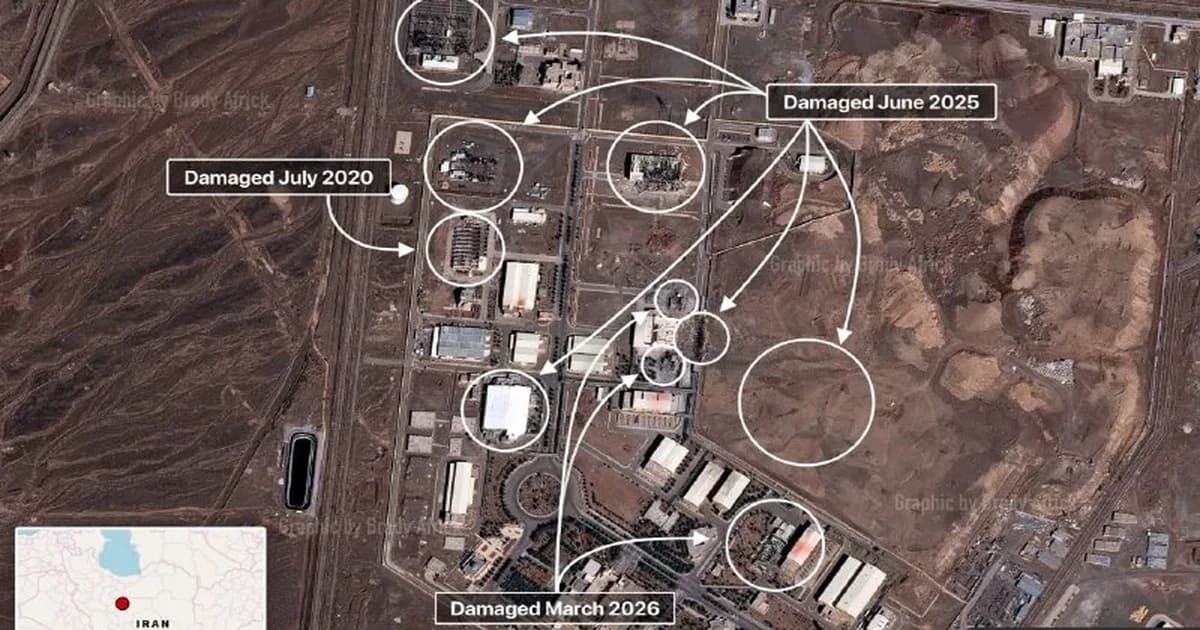
What Israel-Iran War Games Got Wrong About 2026
Defense & Security · Sep 6, 2026