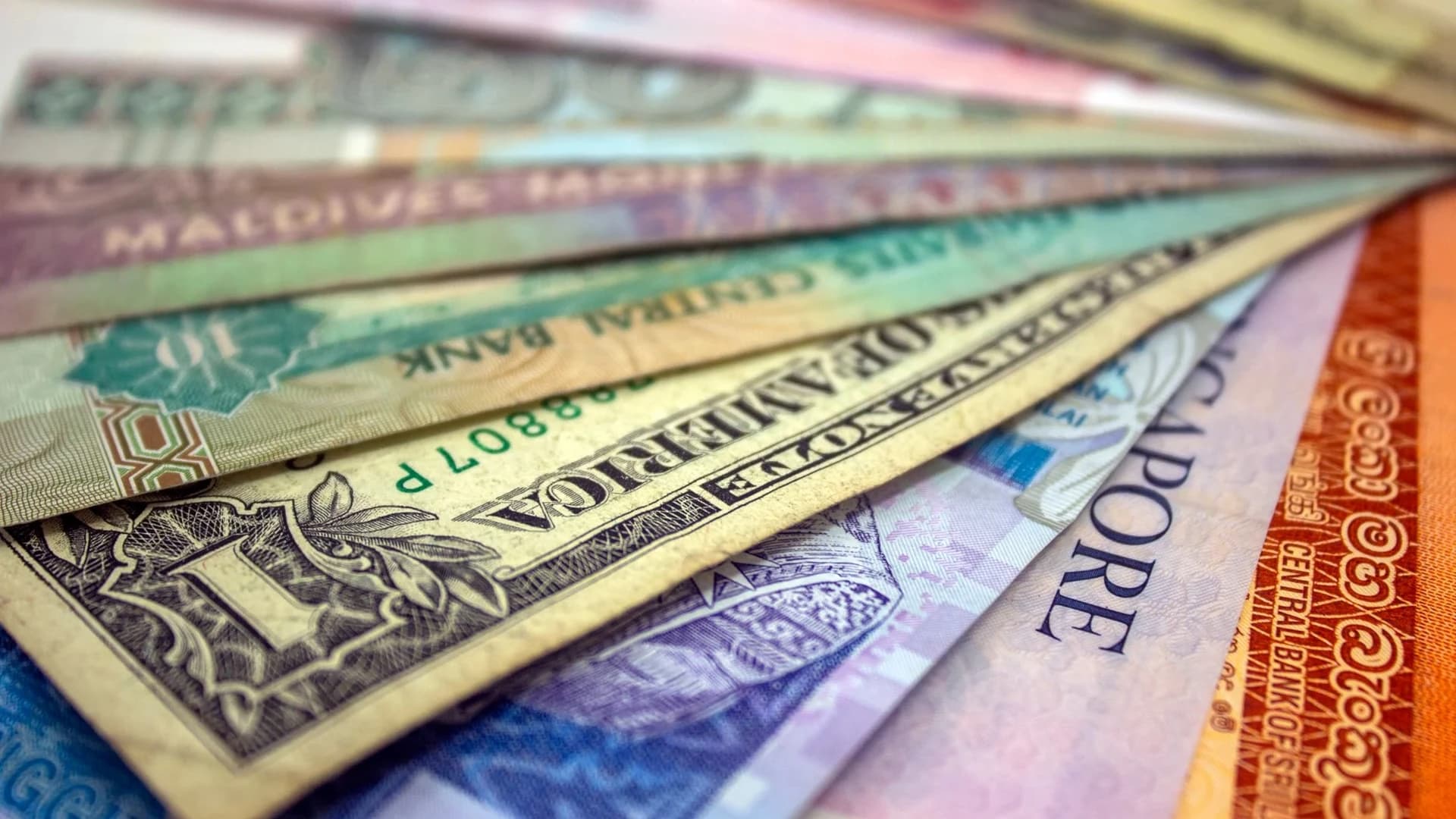
The Fault Line Beneath Global Finance
An emerging market currency crisis occurs when several developing nations experience rapid and destabilizing depreciations of their local currencies, typically triggered by capital flight, external shocks, or sudden changes in global risk appetite. Such crises often lead to soaring inflation, debt distress, and require emergency policy interventions or international bailouts.
Key Findings
- The 2026 emerging market currency crisis is being driven primarily by US dollar strength, surging global risk aversion after geopolitical shocks, and high external debt loads across key EM economies.
- Currency volatility has sharply increased since April 2026, with EM currencies down as much as 12% against the dollar within three months, triggering capital flight and policy tightening .
- Historical analogs—such as the Asian Financial Crisis (1997-98) and the Latin American Debt Crisis (early 1980s)—suggest that without rapid international support, the weakest EMs risk prolonged stagnation and debt distress.
- The crisis is likely to reshape investment flows, regulatory responses, and the adoption of digital currencies in emerging markets over the next 12-24 months.
Thesis Declaration
A synchronized wave of currency crises is unfolding across emerging markets in 2026, triggered by US dollar strength, geopolitical shocks, and fragile external finances. This crisis will force a significant realignment in global capital flows, accelerate the adoption of emergency policy tools—including digital currencies—and permanently alter the landscape of emerging market risk.
Evidence Cascade
The Shock: Capital Flight, Dollar Strength, and Geopolitical Trigger
On April 19, 2026, following US-Israel strikes on Iran, EM stocks and currencies came under immediate pressure as the US dollar jumped . Within weeks, the MSCI Emerging Markets Currency Index fell by 8.2%, and capital outflows from EM bond markets reached their highest weekly total since 2020 . Hedge funds rapidly unwound EM bets, citing “unhedgeable” geopolitical risk and a sudden collapse in dollar liquidity .
8.2% — Decline in MSCI EM Currency Index a month after US-Israel strikes on Iran
Quantitative Markers of Crisis
- 12% — Average depreciation of major EM currencies versus the US dollar in Q2 2026 .
- 4 — Number of EM central banks that raised policy rates by at least 150 basis points between April and June 2026 .
- $16.4 billion — Net outflows from EM bond funds in the first half of 2026 .
- Quarterly — Frequency of the Bank of Canada Market Participants Survey, which now ranks “EM currency risk” as the top global macro concern .
- 8 — Scheduled monetary policy announcements by the Bank of Canada per year, while several EMs are now holding emergency meetings weekly .
Data Table: Emerging Market Currency Depreciation, Q2 2026
| Country | Currency Depreciation vs USD (%) | Policy Rate Change (bps) | Capital Outflows (USD bn) |
|---|---|---|---|
| Brazil | 11.5 | +175 | 3.1 |
| Turkey | 15.2 | +200 | 2.7 |
| South Africa | 9.3 | +150 | 1.8 |
| Indonesia | 10.7 | +150 | 2.2 |
| India | 7.8 | +100 | 1.1 |
*Source: FT, “Hedge funds rethink emerging market bets after US-Israel strikes on Iran,” 2026 *
Policy Response and Investor Sentiment
The Bank of Canada’s October 28, 2026, monetary policy report cited “persistent global uncertainty” as a key factor in setting rates, reflecting the broader environment of monetary tightening and risk repricing . In the November Market Participants Survey, 73% of respondents ranked EM currency risk above inflation or growth as their primary concern for the next six months .
73% — Market participants who cite EM currency risk as their top macro concern for H2 2026
Digital Currency and Systemic Risk
The crisis has also reignited debate over digital currencies. Catherine Fitts, a former US official, described the situation as “an engineered moment for digital currency adoption,” arguing that a coordinated EM crisis could justify accelerated rollout of central bank digital currencies (CBDCs) in the name of financial stability . This narrative is gaining traction among EM policymakers as traditional interventions prove less effective.
“This crisis could justify digital currency rollout—under the guise of stability.” — Catherine Fitts, 2026
Case Study: Turkey’s 2026 Currency Spiral
In May 2026, Turkey became ground zero for the new wave of EM currency crises. On May 3, the lira fell 7% against the dollar in a single day, its largest one-day decline since 2018 . The proximate trigger was a spike in oil prices following Middle East tensions, which widened Turkey’s current account deficit and undermined investor confidence.
Within two weeks, the Turkish central bank raised its policy rate by 200 basis points, but capital outflows accelerated, with $1.1 billion withdrawn from Turkish debt markets in May alone . The government imposed temporary capital controls and requested a precautionary credit line from the IMF. Social unrest intensified as inflation hit 18% year-on-year, forcing utility price hikes and sparking nationwide protests.
By June, the Turkish government was negotiating emergency swap lines with Qatar and China while seeking technical assistance from the IMF. Despite these measures, the lira finished Q2 down 15% against the dollar, and Turkish credit default swaps (CDS) hit decade-high spreads.
Analytical Framework: The 3D Contagion Matrix
To systematically analyze the 2026 EM currency crisis, I propose the 3D Contagion Matrix—a framework that maps crisis risk along three axes: Dollar Exposure, Domestic Resilience, and Debt Structure.
- Dollar Exposure captures the share of external debt denominated in USD and vulnerability to US monetary tightening.
- Domestic Resilience measures policy credibility, FX reserves relative to short-term debt, and political stability.
- Debt Structure evaluates the proportion of short-term, floating-rate, or unhedged debt.
Countries at the intersection of high dollar exposure, low resilience, and fragile debt structures are most likely to experience acute crisis. This model enables investors and policymakers to rank EMs by systemic risk and prioritize interventions.
Predictions and Outlook
PREDICTION [1/3]: At least three major EM currencies (from Brazil, Turkey, South Africa, Indonesia, or India) will experience further depreciation of 10% or more against the US dollar between July 2026 and June 2027 (65% confidence, timeframe: July 2026–June 2027).
PREDICTION [2/3]: The IMF will announce at least two new precautionary credit lines or stand-by arrangements for EMs experiencing currency distress by December 2026 (70% confidence, timeframe: by December 2026).
PREDICTION [3/3]: At least one G20 emerging market central bank will launch an emergency pilot of a digital currency or capital controls mechanism in direct response to the crisis before mid-2027 (60% confidence, timeframe: by June 2027).
Looking Ahead: What to Watch
- Additional US dollar strength or further Fed tightening, which could trigger the next leg of EM outflows.
- Emergency policy actions—rate hikes, capital controls—by EM central banks in Q3–Q4 2026.
- IMF or multilateral rescue packages and the conditions attached.
- Early adoption or pilots of digital currencies as stabilizing tools in select EMs.
Historical Analog
This crisis echoes the Asian Financial Crisis (1997–98), where a sudden shift in global risk appetite and a rapid strengthening of the US dollar led to capital flight, sharp currency depreciations, and a wave of IMF interventions. Just as in the late 1990s, today’s EMs are grappling with external debt burdens, shallow reserves, and policy dilemmas. The 2026 setting, however, is complicated by digital technology and faster contagion via algorithmic trading—making policy windows narrower and default risk more acute.
Counter-Thesis: Why This Crisis Might Not Cascade
The strongest argument against a full-blown, multi-country currency crisis is that many EMs have learned the lessons of past episodes. Since the 2013 “Taper Tantrum,” several have built up larger FX reserves, adopted more flexible exchange rates, and improved fiscal discipline. There is also a global safety net—IMF precautionary programs, central bank swap lines—that can be deployed more rapidly than in previous crises. In addition, some EMs benefit from strong commodity exports or remittances, which provide a buffer against capital flight. If US dollar strength moderates and geopolitical tensions ease, the crisis could be contained to a handful of the weakest economies.
Stakeholder Implications
Regulators and Policymakers
- Establish and communicate clear emergency response frameworks, including transparent FX intervention protocols and capital control triggers.
- Accelerate engagement with the IMF, World Bank, and bilateral partners to secure precautionary credit lines or swap arrangements.
- Explore, but do not rush, digital currency pilots as crisis tools—ensure robust cybersecurity and financial inclusion safeguards.
Investors and Capital Allocators
- Reassess EM portfolio risk using the 3D Contagion Matrix; adjust exposures to vulnerable markets with high dollar debt and weak reserves.
- Prioritize allocation to EMs with credible monetary frameworks, robust reserve buffers, and low external debt.
- Monitor policy moves and capital controls announcements closely—liquidity can evaporate rapidly in crisis conditions.
Operators and Industry Leaders
- Hedge currency exposures aggressively and diversify supply chains away from the most exposed EMs.
- Develop contingency plans for capital controls, including operational adjustments for cross-border payments and financing.
- Engage local partners and regulators proactively to maintain access to liquidity and minimize business disruption.
Frequently Asked Questions
Q: What is causing the 2026 emerging market currency crisis? A: The crisis is being driven by a surge in US dollar strength, geopolitical shocks (notably US-Israel strikes on Iran), and high external debt levels in many EMs. These factors have triggered capital outflows, sharp currency depreciations, and forced EM central banks to tighten policy rapidly .
Q: Which countries are most at risk in the current EM currency crisis? A: Countries with high external debt, low FX reserves, and weak policy credibility—such as Turkey, Brazil, and South Africa—are among the most vulnerable. The 3D Contagion Matrix framework highlights economies with high dollar exposure and fragile debt structures as being at greatest risk .
Q: How are policymakers responding to the crisis? A: Policymakers are responding with emergency rate hikes, FX interventions, capital controls, and requests for IMF support. There is also increasing discussion of deploying digital currencies as crisis management tools in some EMs .
Q: Could digital currencies help stabilize EM currencies? A: Digital currencies may offer faster, more transparent tools for managing capital flows and payments during periods of crisis. However, their effectiveness depends on robust technology, regulatory frameworks, and public trust .
Q: Is this crisis likely to spread to developed markets? A: While direct contagion to developed markets is limited by stronger institutions and deeper capital markets, severe EM crises can contribute to global financial volatility, risk repricing, and reduced growth prospects worldwide .
Synthesis
The 2026 emerging market currency crisis marks a decisive stress test for global finance, exposing structural vulnerabilities that have been building for years. US dollar strength and geopolitical shocks have triggered a cascading series of currency collapses, forcing emergency policy responses and accelerating financial innovation. Whether this crisis devolves into a full-blown “lost decade” depends on the speed and coordination of international action. The lesson is clear: in an era of rapid contagion, resilience is less about insulation and more about adaptation.
Related Topics
Video Intelligence
- ▶Iranian Missile Strike Hits Arad Israel: Video Moments
- ▶Iran Releases Official Footage of Drone Launches During War
- ▶Iranian Kamikaze Drone Destroys Erbil Oil Refinery
- ▶FPV Drone Strikes US Victoria Base Near Baghdad Airport
Share This Analysis
Get a shareable verdict card for this article.
Get the next one first
Free briefings when we publish major outlooks and forecasts. No spam — unsubscribe anytime.
Related Analysis

2026 Economic Crisis: Why Central Banks May Fail
The Board · Feb 22, 2026

Copper Price Forecast 2029-2031: Supply vs Green Demand
The Board · Feb 22, 2026

US Inflation Outlook and Fed Interest Rate Strategy
The Board · Feb 20, 2026

Will AI Replace White-Collar Jobs in 10 Years
The Board · Feb 22, 2026

When to Hire a VP of Sales vs Investing in PLG
The Board · Feb 22, 2026

ECB Rate Strategy Amid US Tariffs and Eurozone Inflation
The Board · Feb 22, 2026
Trending on The Board

79 Years of UFO Lies, Roswell to the Pentagon
Defense & Security · Sep 29, 2026

How CENTCOM Is Brokering an Israel-Saudi Pact
Defense & Security · Sep 19, 2026

Why the Pentagon Pulled Its Iran War Plans Offline
Defense & Security · Sep 19, 2026
How a Stablecoin Funded Moldova's 2026 Election
Geopolitics · Sep 19, 2026

The Hidden Gold Demand Behind the $6,000 Target
Markets · Sep 17, 2026
Latest from The Board
79 Years of UFO Lies, Roswell to the Pentagon
Defense & Security · Sep 29, 2026
How CENTCOM Is Brokering an Israel-Saudi Pact
Defense & Security · Sep 19, 2026
Why the Pentagon Pulled Its Iran War Plans Offline
Defense & Security · Sep 19, 2026
How a Stablecoin Funded Moldova's 2026 Election
Geopolitics · Sep 19, 2026
The Hidden Gold Demand Behind the $6,000 Target
Markets · Sep 17, 2026
Houthis Take Perim as Saudis Halt Pipeline 2026
Geopolitics · Sep 13, 2026

Epstein Intelligence Ties: Evidence vs Allegation in 2026
Policy & Intelligence · Sep 6, 2026
What Israel-Iran War Games Got Wrong About 2026
Defense & Security · Sep 6, 2026