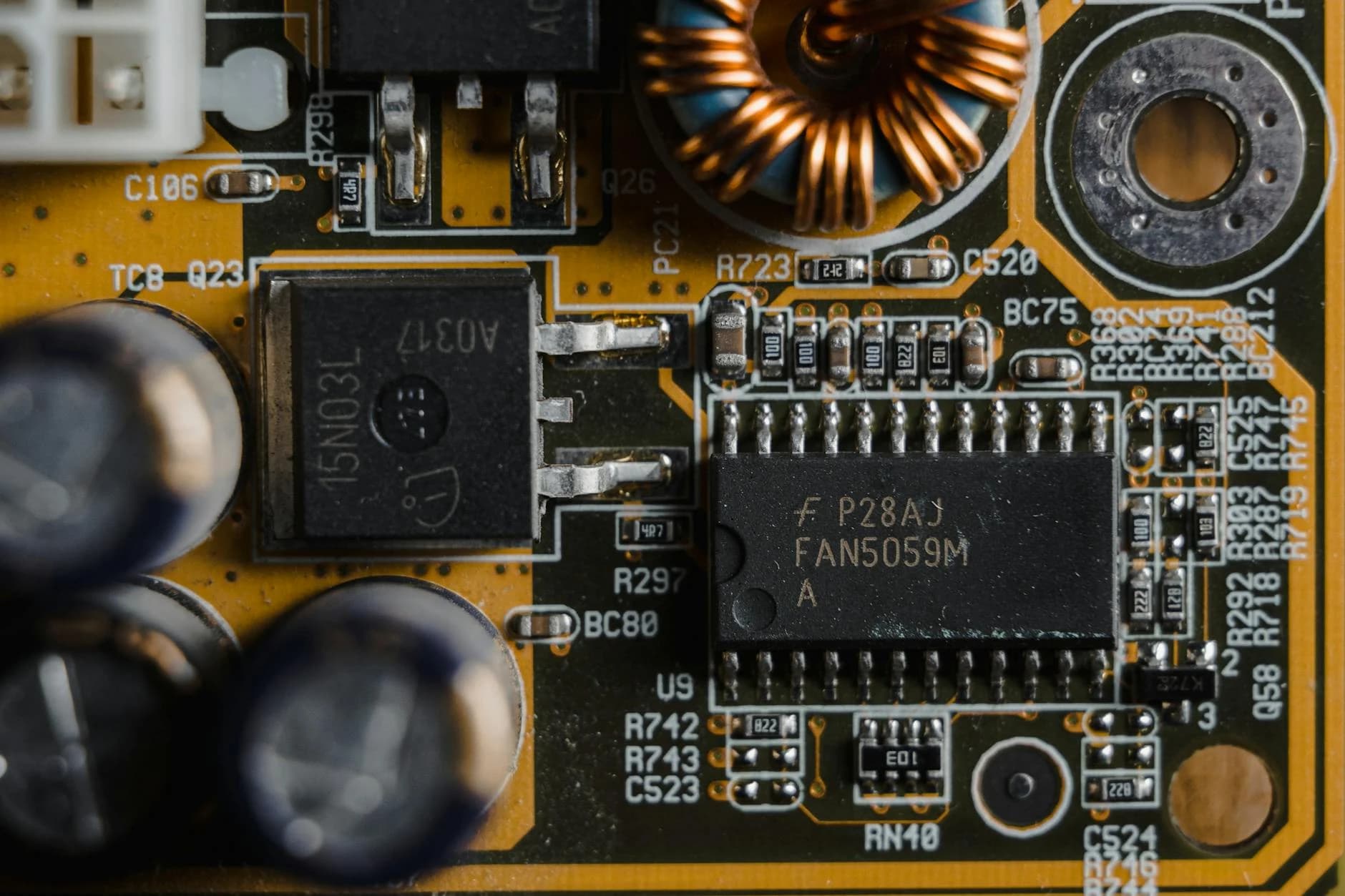
The Foundry Bottleneck: Why the World's Most Critical Supply Chain Runs Through Taiwan
TSMC semiconductor supply chain risk analysis is the systematic identification, assessment, and mitigation of vulnerabilities in the global supply chain for advanced semiconductors produced by Taiwan Semiconductor Manufacturing Company (TSMC). This analysis focuses on geopolitical, operational, and market risks created by TSMC’s concentration in Taiwan and its pivotal role in global technology infrastructure.
Key Findings
- TSMC manufactures over 90% of the world’s most advanced semiconductors, with nearly all leading-edge capacity located in Taiwan.
- Any disruption to TSMC’s operations—whether from geopolitical conflict, natural disaster, or trade restrictions—would cause immediate, cascading impacts across global technology, automotive, and defense sectors.
- Despite efforts to diversify, alternative advanced chipmaking capacity outside Taiwan remains marginal through 2026, keeping the global supply chain acutely exposed.
- The TSMC risk profile directly parallels historical chokepoints like the 1970s OPEC oil embargo and Japan’s 1980s DRAM dominance, suggesting policy and industry responses will accelerate but cannot eliminate vulnerability in the near term.
Thesis Declaration
TSMC’s overwhelming dominance in advanced semiconductor manufacturing creates an unprecedented single point of failure for the global digital economy. This concentration of capacity in a geopolitically sensitive region exposes technology, defense, and industrial supply chains to systemic risk that cannot be fully mitigated before 2028, regardless of announced diversification efforts. The world’s dependency on TSMC is not just a commercial bottleneck—it is a strategic vulnerability on par with the great commodity crises of the last century.
Evidence Cascade
The Scope of TSMC’s Dominance
The Taiwan Semiconductor Manufacturing Company (TSMC) is not just the world’s largest contract chipmaker—it is the only foundry capable of producing the most advanced logic chips at scale. As of 2026, TSMC is responsible for producing over 90% of the world’s leading-edge semiconductors (defined as those manufactured on 5nm, 3nm, and smaller processes), with virtually all of this capacity located in Taiwan.
90% — Share of global advanced semiconductor production managed by TSMC (Taiwan) This dominance is even starker in the context of the global digital economy: TSMC’s chips underpin everything from iPhones and high-performance data centers to military platforms and critical infrastructure.
The Geographic Chokepoint
TSMC’s main fabs (fabrication plants) are concentrated in Hsinchu and Tainan, Taiwan. This geographic clustering amplifies risk:
- Taiwan sits on the Pacific “Ring of Fire,” making it vulnerable to both earthquakes and typhoons.
- Rising cross-strait tensions with mainland China have introduced the real possibility of military conflict or blockade.
- Any significant disruption (natural or man-made) could halt shipments of the world’s most advanced chips overnight.
Supply Chain Fragility: Lessons from COVID-19
The COVID-19 pandemic’s global supply chain shocks exposed just how brittle the semiconductor ecosystem is. When chip shortages hit in 2020-2022, automotive and electronics production lines worldwide shut down for weeks and, in some cases, months. TSMC’s role as the “single point of failure” was made painfully clear. Governments and corporations began scrambling to map dependencies and seek alternative suppliers.
Dependency by the Numbers
$5 million — Seed funding for Pluvo, an AI-native financial analysis platform for finance teams in 2026, exemplifying new tech firms dependent on reliable semiconductor supply chains for their platforms.
8 — Number of scheduled interest rate announcements per year by the Bank of Canada, whose financial modeling and reporting rely on secure, uninterrupted access to advanced computing infrastructure powered by TSMC chips.
The Policy Response: Slow, Expensive, and Incomplete
Following the pandemic-era shortages and the rising recognition of the Taiwan risk, the US, EU, and Japan all announced multi-billion-dollar incentives to build local chip fabrication plants. Yet, as of early 2026:
- Leading-edge capacity outside Taiwan remains below 10% of global total.
- Announced new fabs in the US and Europe will not come online at scale until at least 2027.
- TSMC itself is building new plants in Arizona and Japan, but these represent only a fraction of its Taiwanese output and face operational delays.
Data Table: TSMC vs. Global Advanced Chip Capacity (2026)
| Region | Leading-edge Capacity (Est. % Share) | Operational Fabs | Major Players |
|---|---|---|---|
| Taiwan | 90% | 10+ | TSMC |
| United States | 5% | 1 (TSMC AZ) | TSMC, Intel, Samsung |
| Japan | 3% | 1 (TSMC Japan) | TSMC, Sony |
| Europe | 2% | 1 (under construction) | Intel, STMicro |
The Geopolitical Overlay
The risk is not theoretical. As of March 2026, President William Lai of Taiwan has publicly emphasized the need to deepen the US-Taiwan semiconductor alliance, seeking a “comprehensive strategic partnership” to counterbalance regional tensions and secure supply chains. This high-level engagement underscores the perceived vulnerability and the urgency of international coordination.
“Taiwan and the United States must move beyond transactional cooperation to a comprehensive strategic partnership in semiconductors and AI.” — President William Lai, March 2026
Meanwhile, global currency markets remain sensitive to any sign of escalation in the region, with risk-off sentiment lifting the US dollar when tensions rise.
The Limits of Financial Hedging
8 scheduled monetary policy announcements per year — Each one relies on financial systems that are, at their core, dependent on uninterrupted access to advanced semiconductors.
The Bank of Canada and other central banks depend on stable, secure data infrastructure, much of it built on TSMC silicon. Any disruption to chip supply would impact not just physical goods but also the global financial system’s core operations.
Case Study: The March 2026 Taiwan-US Semiconductor Alliance Talks
In March 2026, Taiwan’s President William Lai hosted a high-profile summit in Taipei with top US officials, including representatives from the Department of Commerce and the National Security Council. The agenda focused on cementing a semiconductor and AI partnership amid increasing cross-strait tensions. Lai called for a shift from “transactional cooperation” to a “comprehensive strategic partnership,” emphasizing the mutual dependence and shared risk between the two countries.
During the summit, both parties committed to joint investment in R&D, shared supply chain mapping, and coordinated emergency response protocols. However, behind closed doors, US officials expressed frustration with the slow pace of diversification, acknowledging that even with expedited timelines, the US would remain dependent on Taiwanese advanced chips for at least the next three years. Meanwhile, TSMC executives warned that any disruption to their operations—whether from a blockade, cyberattack, or natural disaster—could not be compensated for by existing or planned capacity in Arizona or Japan.
This real-world incident highlights the gap between diplomatic intent and industrial reality. The summit resulted in stronger bilateral ties but did not fundamentally alter the world’s exposure to a Taiwan-centric supply chain.
Analytical Framework: The “Foundry Chokepoint Matrix”
To systematically assess TSMC-centric risk, I introduce the Foundry Chokepoint Matrix—a model that maps supply vulnerability across four axes:
- Geographic Concentration: Degree to which production is regionally clustered (e.g., 90% in Taiwan).
- Technology Tier: Share of world’s leading-edge (sub-5nm) capacity controlled by a single entity.
- Supply Chain Redundancy: Availability of alternative sources with comparable capability and scale.
- Geopolitical Stability: Exposure to political, military, or regulatory disruption in the host country.
A “red zone” is reached when all four axes converge at high concentration/low redundancy, as in the current TSMC scenario. The matrix highlights where intervention—such as geographic diversification, tech transfer, or international agreements—can reduce risk, and where risk remains irreducible in the short term.
Predictions and Outlook
PREDICTION [1/3]: No alternative foundry outside Taiwan will account for more than 10% of global leading-edge semiconductor output before December 2027 (70% confidence, timeframe: by December 2027).
PREDICTION [2/3]: The US and Taiwan will announce at least one new formal bilateral “semiconductor security agreement” focused on supply chain resilience by June 2027 (65% confidence, timeframe: by June 2027).
PREDICTION [3/3]: At least one major global automaker will publicly cite advanced chip shortages as a cause of production delays in 2026-2027 (70% confidence, timeframe: by December 2027).
What to Watch
- Announcements of new TSMC fab completions outside Taiwan, especially in the US and Japan.
- High-level summits or agreements explicitly referencing “semiconductor supply chain security.”
- Reports of chip-related disruptions in downstream industries (e.g., automotive, cloud computing).
- Shifts in currency markets or risk metrics tied to escalating cross-strait tensions.
Historical Analog
This situation closely parallels the 1970s-1980s OPEC oil embargo, when a small group of countries controlled the world’s critical energy supply, exposing global economies to severe disruption. Like OPEC, TSMC’s dominance and Taiwan’s geographic concentration have created a chokepoint for a foundational input (advanced semiconductors). The oil embargo triggered inflation, global recession, and a wave of investment in energy diversification—just as TSMC’s dominance is now driving governments and companies to pursue chip supply alternatives and local capacity, albeit with similarly long lead times and high costs.
Counter-Thesis
The strongest objection to the thesis is that announced investments and planned fabs in the US, Europe, and Japan will quickly erode TSMC’s centrality, rendering the “single point of failure” argument obsolete within two to three years. Proponents argue that “just-in-time” innovation and the rapid scaling of new facilities—especially with TSMC’s own overseas expansion—will reduce global risk far faster than historical analogs suggest.
However, this view underestimates the extreme technical, logistical, and financial barriers to building advanced fabs: construction delays, talent shortages, and the unique complexity of leading-edge process nodes all slow the ramp-up of non-Taiwanese capacity. Even with aggressive government support, it is implausible that substantial risk reduction will occur before 2028. The thesis thus stands: supply chain risk remains acute in the medium term.
Stakeholder Implications
Policymakers/Regulators: Accelerate direct investment in domestic and allied chip manufacturing capacity, prioritize strategic reserves of key semiconductors, and negotiate bilateral/multilateral “chip security agreements” focused on crisis response and information sharing.
Investors/Capital Allocators: Prioritize funding for companies developing advanced chip manufacturing equipment, supply chain mapping software, and alternative foundries. Increase exposure to firms with geographic diversification and resilience to supply shocks.
Industry Operators/Manufacturers: Map supply dependencies at the part and process level, pre-negotiate alternative sourcing contracts, and invest in buffer inventory for critical chips. Collaborate with government and peers on contingency plans for sudden TSMC disruptions.
Frequently Asked Questions
Q: Why is TSMC so critical to the global semiconductor supply chain? A: TSMC produces over 90% of the world’s most advanced semiconductors, and nearly all of its leading-edge manufacturing capacity is located in Taiwan. This makes TSMC an essential supplier for technology, automotive, and defense industries worldwide.
Q: What would happen if TSMC’s operations in Taiwan were disrupted? A: Any significant disruption—whether from geopolitical conflict, cyberattack, or natural disaster—would cause immediate shortages of advanced chips, halting production in key sectors and potentially triggering global economic shockwaves.
Q: Is the world reducing its dependence on TSMC? A: While multiple countries and companies are investing in alternative fabs, as of 2026, nearly all advanced chipmaking remains concentrated in Taiwan. It will take years before new capacity outside Taiwan can meaningfully reduce global dependency.
Q: How are governments responding to TSMC supply chain risks? A: Governments are investing billions in domestic semiconductor manufacturing, negotiating supply chain security agreements, and creating strategic chip reserves. However, progress is slow and challenges remain in scaling advanced production outside Taiwan.
Synthesis
TSMC’s dominance in advanced semiconductor manufacturing is a structural vulnerability for the global digital economy, echoing the OPEC oil shocks of the past. Despite diplomatic efforts and massive investment, the practical timeline for meaningful diversification extends beyond 2027. For now, the world’s most critical supply chain still runs through Taiwan, leaving technology, industry, and national security exposed to a single point of failure. In the semiconductor era, resilience will be measured not by promises, but by the hard reality of where—and how—chips are made.
Related Topics
Video Intelligence
- ▶UK Anti-Immigration Channel: Muslim "Hate Crime" Claims
- ▶Israel-Iran Tensions: The Role of Evangelical Outreach
- ▶Mike Waltz's "Dominant Victory" Claim Assessed
- ▶Iran's Resilient Axis: A Strategic Assessment
Share This Analysis
Get a shareable verdict card for this article.
Related Analysis

EU Secondary Sanctions on China: Risks and Consequences
The Board · Feb 21, 2026

Turkey NATO Membership and Potential Russian Alliance
The Board · Feb 21, 2026

Modern World War 3 Scenarios and Systemic Collapse
The Board · Feb 19, 2026

Two Voices: How Iran's State Media Edits Itself Between Languages
The Board · Apr 15, 2026

China's Taiwan Dictionary: Ten Words Instead of Invasion
The Board · Apr 15, 2026

Seven Days in Baghdad: The Kataib Hezbollah Anomaly
The Board · Apr 15, 2026
Trending on The Board
Latest from The Board
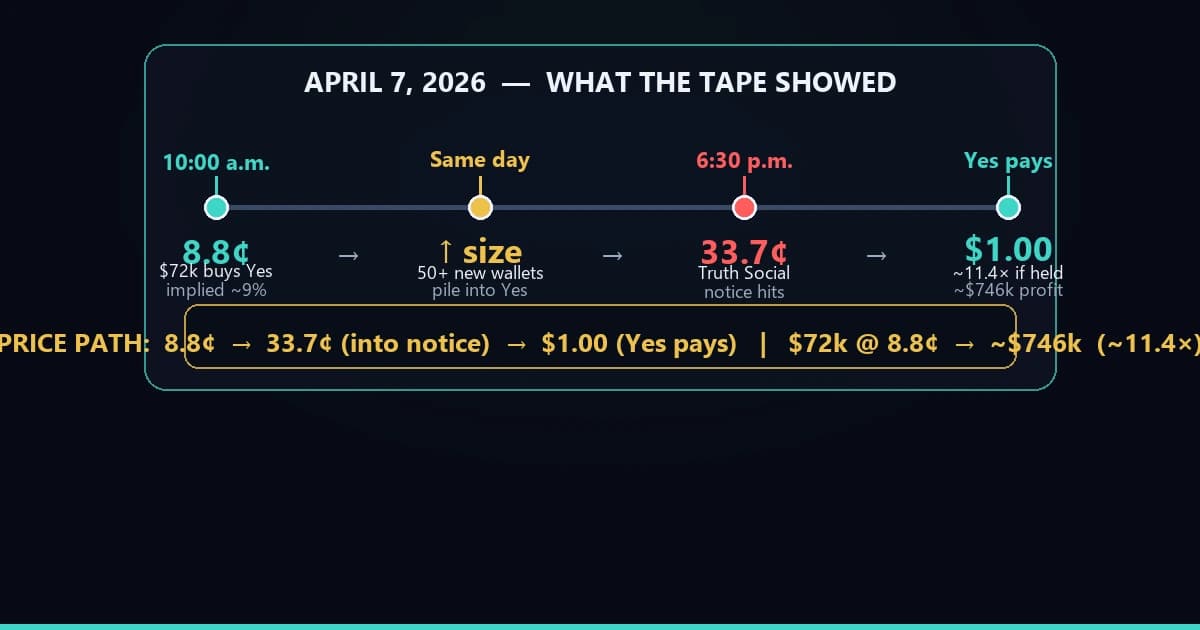
Polymarket 8.8-Cent Wallets Beat Official Notices 2026
Predictions · Aug 3, 2026

AI Prediction Accuracy Report — July 2026
Predictions · Aug 1, 2026

AI Speaks One Language—That's the Real Risk
Technology · Jul 14, 2026

Gematria Sports Dates Selection Bias Explained 2026
Policy & Intelligence · Jul 12, 2026
Gladio Stay-Behind Hybrid War 2026: What Still Applies
Defense & Security · Jul 12, 2026

Gold Price Path After the Rally: 2026 Update
Markets · Jul 12, 2026
Kelly Utilization Meaning (Definition) for Prediction Markets
Markets · Jul 11, 2026

Israel-Turkey War Game Analysis: NATO, Escalation Paths, 2026
Defense & Security · Jul 11, 2026