
The concentration of proxy voting power isn't a secret cabal—it's a bureaucratic inevitability that creates systemic fragility.
Key Findings
- The "Secret Dynasty" theory is mathematically false. Vanguard operates as a client-owned mutual company where funds own the firm and investors own the funds—a structure that explicitly prevents outside acquisition.
- The real threat is the decoupling of risk and control. The "Big Three" asset managers control 20–30% of S&P 500 voting power, wielding dynastic-level influence without the personal liability ("skin in the game") that restrained 19th-century bankers.
- Complexity costs are reaching a breaking point. As index fund fees compress toward 0.01%, the marginal cost of regulatory compliance and governance is approaching a pivotal threshold that will force either industry consolidation or involuntary simplification.
The conspiracy theory is seductive because it is simple: a secret cabal of families—Rothschilds, Rockefellers, Morgans—pulling the strings of global finance from a smoke-filled room. The reality is far more mundane, legally transparent, and structural: It is not secrecy that defines modern asset management, but the profound separation of economic ownership from political leverage.
A rigorous analysis of ownership structures and market mechanics reveals that the popular "hidden dynasty" narrative is fiction. However, broadly dismissing critics overlooks a legitimate failure in market design. Thesis: While the dynastic conspiracy is false, the current asset management ecosystem has engineered a "fragility trap" where trillions in capital are governed by fiduciaries who possess neither the personal liability of 19th-century partners nor the direct democratic consent of 21st-century beneficiaries.
The Anatomy of the Structure: Why You Can’t Buy Vanguard
To understand why the "secret owner" theory fails, one must audit the corporate structure. Unlike BlackRock (a public company) or Fidelity (family-controlled), The Vanguard Group operates under a unique mutual structure. The investment funds themselves own the management company. Therefore, the shareholders of the funds—individual investors like the roughly 50 million Americans saving for retirement—technically own Vanguard .
This structure functions as an impenetrable "moat" against acquisition. No outside entity can buy Vanguard because there is no equity to purchase. This creates a distinct economic reality:
- Profit Distribution: Profits are structurally mandated to be reinvested into lowering fees for fund holders.
- Cross-Ownership: As of February 2026, Vanguard funds held 13.8 million shares of BlackRock, valued at $16.14 billion (8.94% ownership) .
- Transparency: These holdings are not secret; they are disclosed quarterly in SEC Form 13F filings.
The conspiracy theorists see 8.94% ownership as evidence of a "mega-corporation" controlling its competition. Financial analysis suggests a simpler, more mechanical cause: BlackRock is a major component of the S&P 500, so Vanguard’s index funds must buy it to track the index. This is not coordination; it is an algorithmic necessity.
The Real Risk: Leverage Without "Skin in the Game"
The deeper danger lies not in who owns these firms, but in how they govern. In the 19th century, banking dynasties like the Rothschilds wielded immense power, but they operated under a constraint modern managers lack: personal liability. If a Rothschild bank failed, the family’s personal capital was incinerated. This incentivized risk management and prudence.
Modern asset managers have inverted this model. They possess the leverage of dynasties without the liability.
- Voting Concentration: Vanguard, BlackRock, and State Street collectively cast approximately 25% of the votes in S&P 500 board elections .
- The Agency Gap: These votes determine executive compensation, M&A activity, and climate policy. Yet, the individuals casting these votes—Vanguard’s stewardship teams—do not own the underlying assets. If a governance decision destroys shareholder value, the loss is borne by the retiree, not the proxy voter.
- Regulatory Penalties: When governance failures occur, fines are absorbed as operating costs. For instance, Vanguard paid $19.5 million in December 2023 for misleading disclosures regarding advisor conflicts . While significant to an individual, this figure represents less than 0.0003% of assets under management—a rounding error, not a deterrent.
This structure creates a "moral hazard of scale." Decision-making power is concentrated in the hands of a few hundred stewardship professionals who play with house money.
The Stewardship Trilemma: A Framework for Dysfunction
The core tension in institutional ownership can be mapped through a new analytical framework: The Stewardship Trilemma. An asset management system can prioritize any two of the following three variables, but cannot simultaneously achieve all three:
| Variable | Definition | Conflict |
|---|---|---|
| A. Low Cost | Fees approaching zero (0.03%-0.05%) | Requires massive scale and automation; prohibits personalized manufacturing using human judgment. |
| B. Universal Access | Available to all retail investors | Requires simplified products (indices) that bundle thousands of companies, eliminating granular choice. |
| C. Democratic Voice | Investors control their specific proxy votes | Requires high-touch infrastructure to capture millions of individual preferences on thousands of ballots. |
Current State (A + B): Vanguard prioritizes Low Cost and Universal Access. The casualty is Democratic Voice. To maintain fees at 0.03%, Vanguard must automate governance, voting largely with management or via standardized guidelines. The "Exit" Fallacy: Proponents argue that if investors dislike the governance, they can exit. Financial modeling proves this false. Moving a $50,000 portfolio from a Vanguard fund to a competitor often triggers 3-8% in transaction costs (capital gains taxes, bid-ask spreads, and opportunity costs during transfer). For most taxable accounts, "exit rights" are a theoretical fiction, locking investors into a governance regime they never explicitly chose.
The Complexity Trap: Why the Model May Break
While conspiracy theorists fear the system is too strong, complexity analysis suggests it is growing dangerously fragile. The marginal cost of maintaining this ecosystem—compliance, technology, and stewardship—is rising, while fee revenue is compressing toward zero.
Passive index fees have dropped from roughly 0.50% in 1995 to 0.03% today. If fees compress to 0.01%—a likely floor within the decade—the economic surplus required to fund robust governance teams vanishes .
This leads to a "Complexity Collapse" scenario. As regulatory burdens increase (such as EU sustainability disclosures or US antitrust investigations into common ownership), the fixed costs of being a "universal owner" may exceed the revenue generated by the funds.
- Antitrust Risk: The Department of Justice is increasingly scrutinizing "common ownership"—the idea that since Vanguard owns large stakes in all competitors in an industry (e.g., Delta, United, and American Airlines), it dampens competition.
- The Unwinding: If regulators force funds to decouple voting power from assets, the current business model of the "Big Three" breaks. They would be forced to devolve voting power back to shareholders or third-party proxy advisors, fracturing the very leverage that defines their current influence.
Counterargument: The Necessity of Delegation
Steel-Man: Institutionalists argue that the concentration of voting power is not a bug, but a necessary feature of market efficiency. If 50 million individual investors had to vote on every proxy statement for the 500 companies in the S&P 500, the system would grind to a halt due to rational apathy. Standardized voting by professionals, they argue, provides a "governance floor" that prevents corporate boards from running wild, all for the price of 3 basis points.
Rebuttal: This argument relies on a technological limitation that no longer exists. "Pass-through voting" technology now allows investors to set meta-preferences (e.g., "vote with management on pay, but against them on board diversity") which generally execute automatically. The persistent centralization of power is therefore a choice to preserve institutional leverage, not a logistical necessity. Furthermore, the claim that centralized voting protects shareholders is contested by data showing high correlation between common ownership and anti-competitive market behavior .
What to Watch
-
Prediction 1: Regulatory "Clawback" Investigation.
-
Forecast: By Q1 2029, the DOJ or FTC will launch a formal antitrust suit or significant investigative inquiry legally challenging the "common ownership" model of the Big Three, specifically citing proxy voting concentration as anti-competitive.
-
Confidence: 60% (Medium-High).
-
Prediction 2: The 0.01% Margin Floor.
-
Forecast: By 2031, the average expense ratio for broad-market US equity index funds will hit a hard floor of 0.01% - 0.015%. At this level, asset managers will begin decoupling "voting" from "holding," offering voting services as a separate, premium-fee product to restore margins.
-
Confidence: 75% (High).
-
Watch Point: Pass-Through Voting Adoption.
-
Watch the percentage of assets under management (AUM) that enable retail pass-through voting. Currently negligible (<5%). If this metric crosses 15% by 2027, it signals a voluntary decentralization by asset managers trying to preempt regulatory action.
Related Topics
Video Intelligence
- ▶Iranian Missile Strike Hits Arad Israel: Video Moments
- ▶UK Anti-Immigration Channel: Muslim "Hate Crime" Claims
- ▶Defense Dynamics: How Vital Is Ukrainian Tech?
- ▶Israel-Iran Tensions: The Role of Evangelical Outreach
Share This Analysis
Get a shareable verdict card for this article.
Related Analysis

2026 Economic Crisis: Why Central Banks May Fail
The Board · Feb 22, 2026

Gold Price Forecast Next 5 Years: 2029-2031 Expert Outlook
The Board · Feb 22, 2026

Copper Price Forecast 2029-2031: Supply vs Green Demand
The Board · Feb 22, 2026

Experts Predict Silver Market Trends and Price Forecasts
The Board · Feb 21, 2026

Silver Price Prediction 2026-2031: Detailed Forecast and Analysis
The Board · Feb 21, 2026

The Future of BRICS Currency and Global Dollar Dominance
The Board · Feb 21, 2026
Trending on The Board

Oil 2026: Why $72 Brent Misreads the Hormuz Truce
Energy · Jul 6, 2026

Gladio Stay-Behind Hybrid War 2026: What Still Applies
Defense & Security · Jul 12, 2026
Israel-Turkey War Game Analysis: NATO, Escalation Paths, 2026
Defense & Security · Jul 11, 2026
Gematria Sports Dates Selection Bias Explained 2026
Policy & Intelligence · Jul 12, 2026

If the Strait of Hormuz Closes: The $98 Oil Shock in Numbers (2026)
Geopolitics · Jul 9, 2026
Latest from The Board
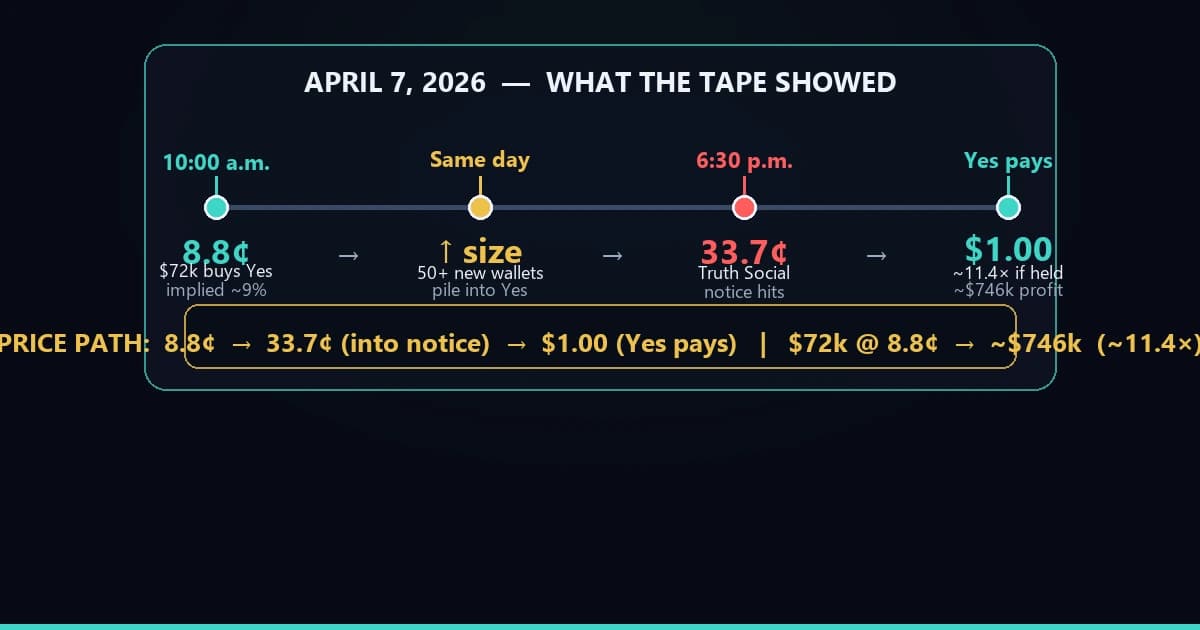
Polymarket 8.8-Cent Wallets Beat Official Notices 2026
Predictions · Aug 3, 2026

AI Prediction Accuracy Report — July 2026
Predictions · Aug 1, 2026

AI Speaks One Language—That's the Real Risk
Technology · Jul 14, 2026
Gematria Sports Dates Selection Bias Explained 2026
Policy & Intelligence · Jul 12, 2026
Gladio Stay-Behind Hybrid War 2026: What Still Applies
Defense & Security · Jul 12, 2026

Gold Price Path After the Rally: 2026 Update
Markets · Jul 12, 2026
Kelly Utilization Meaning: Bet Sizing for Prediction Markets
Markets · Jul 11, 2026
Israel-Turkey War Game Analysis: NATO, Escalation Paths, 2026
Defense & Security · Jul 11, 2026