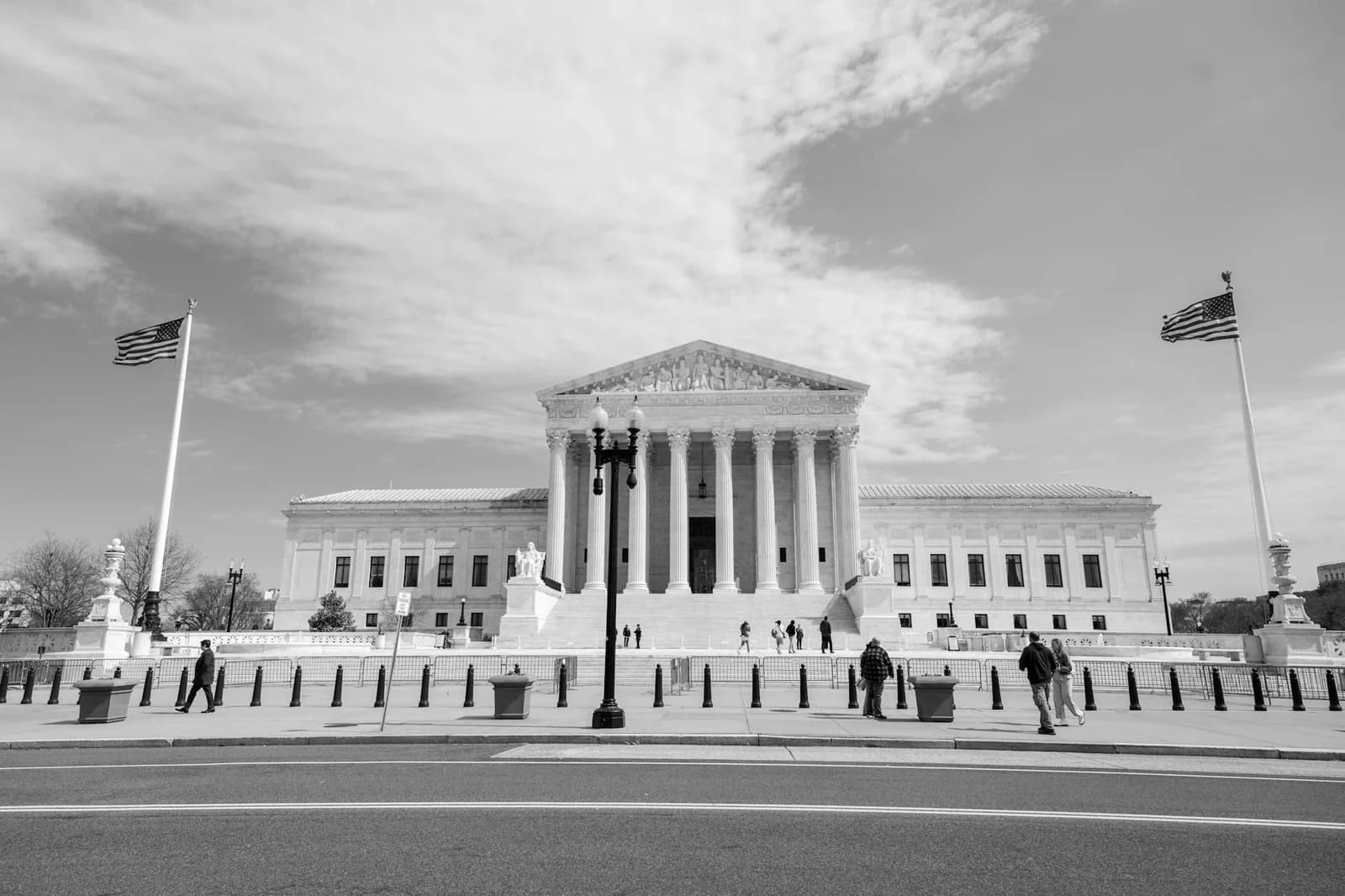
The Supreme Court’s block on IEEPA-based trade levies forces a pivot to Section 232 and 301 without ending the protectionist supercycle.
Key Findings
- The pivot is procedural, not ideological: While the Supreme Court invalidated the specific use of the International Emergency Economic Powers Act (IEEPA) for broad tariffs, the administration retains potent authority under Section 232 (national security) and Section 301 (unfair trade practices) to maintain high barriers.
- The $269 billion litigation trap: The retroactive invalidation of "Liberation Day" tariffs triggers a massive legal bottleneck; we project less than 15% of collected funds will be returned to importers by Q4 2027 due to "unjust enrichment" defenses.
- Consumer prices will not revert: Supply chains have already priced in the structural friction of the trade war, and corporate treasury strategies prioritize margin retention over price deflation in the face of persistent geopolitical volatility in Iran and China.
On February 20, 2026, the Supreme Court delivered a stunning rebuke to the executive branch, ruling in nearly unanimous fashion that the International Emergency Economic Powers Act (IEEPA) does not grant the President the authority to impose unilateral, across-the-board tariffs on trading partners absent a specific military nexus. The decision immediately imperils the legality of the $269 billion in duties collected under the administration’s "Liberation Day" tariff regime . However, markets expecting a swift return to globalization or a collapse of the "America First" trade architecture are misreading the statutory landscape.
The ruling represents a procedural check, not a paradigm shift. Thesis: While the Supreme Court has dismantled the IEEPA "fast track" for trade wars, forcing a chaotic administrative scramble over refunds, the administration will successfully substitute Section 232 and Section 301 authorities to maintain effective tariff rates above 18% through 2028. The judiciary has cut the President’s speed, but not his power.
The immediate fallout involves a complex legal battle over the quarter-trillion-dollar war chest currently held by the Treasury, while the geopolitical focus shifts to how the White House will weaponize remaining statutes against China amidst the destabilization of the Iranian regime .
The Constitutional Correction: Why IEEPA Failed
The Supreme Court’s decision clarifies the boundaries of the 1977 International Emergency Economic Powers Act. Historically, IEEPA was designed to sanction rogue states (e.g., Iran, North Korea) by blocking assets, not to regulate the flow of commercial goods from major trading partners like the European Union or Mexico to correct trade deficits.
By attempting to categorize general trade imbalances as a "national emergency," the administration stretched the statute beyond its breaking point. The Court’s opinion emphasized that Article I of the Constitution explicitly grants Congress, not the Executive, the power "to lay and collect Taxes, Duties, Imposts and Excises."
However, this restoration of congressional prerogative arrives in a vacuum. Congress remains paralyzed by partisan gridlock, unable to pass comprehensive trade legislation. Consequently, the trade war does not end; it merely becomes more bureaucratic. The administration must now abandon the broad-brush approach of IEEPA and utilize narrower, investigation-heavy tools.
The $269 Billion Question: The Refund Quagmire
The most tangible economic shock of the ruling is the uncertain fate of the $269 billion collected under the now-illegal framework. Importers are already scrambling to file claims , but the path to liquidity is blocked by legal and logistical obstacles.
The Department of Justice is expected to invoke the "pass-on defense," a legal theory suggesting that if an importer passed the cost of the tariff to the consumer, reimbursing the importer would constitute "unjust enrichment." This sets up a bifurcated outcome for US businesses.
Framework: The Tariff Refund Distribution Matrix
To analyze the likely winners and losers of this refund process, we categorize claimants by their pricing power during the tariff period and their supply chain elasticity.
| Claimant Profile | Did They Raiser Prices? | Legal Standing | Liquid Refund Probability |
|---|---|---|---|
| The Absorbers (e.g., Low-margin retail, Dollar Stores) | No (Margins compressed) | Strong | High (>75%) |
| The Pass-Throughs (e.g., Specialized industrial equipment) | Yes (Costs fully passed to buyers) | Weak (Unjust Enrichment) | Low (<10%) |
| The Hybrid Negotiators (e.g., Auto OEMs) | Partial (Shared pain with suppliers) | Moderate | Medium (30-50%) |
| The Speculators (Importers who stockpiled) | Inventory held | Strong | Medium (Audit delays) |
Source: Internal Analysis based on historical Customs and Border Protection precedents.
For the broader economy, this means the "stimulus" of a massive tariff refund is illusory. The "Absorbers"—companies that took the hit to keep market share—will see balance sheet repair, but "Pass-Through" entities will likely see their claims gridlocked in federal court for 3-5 years.
Furthermore, consumers should not expect price drops. Even if refunds are issued, sticky prices prevail. A retailer that raised the price of a toaster from $40 to $50 due to tariffs is unlikely to lower it back to $40 simply because they received a retroactive check from the Treasury. That revenue will be redirected toward automation or stock buybacks rather than price deflation .
The Pivot: Section 232, 301, and 122
With IEEPA off the table, the White House is pivoting to the "Pre-2026 Three," the triad of trade authorities that formed the basis of the 2018-2020 trade war.
- Section 232 (National Security): The administration has already signaled a rapid expansion of Section 232 investigations. While originally intended to protect the defense industrial base, the definition of "national security" has been broadened to include "economic security." Expect new investigations into semiconductors, electric vehicle batteries, and pharmaceutical precursors within 30 days.
- Section 301 (Unfair Trade Practices): This allows for tariffs as retaliation for intellectual property theft or discriminatory barriers. It requires a USTR investigation, but the administration can likely repurpose existing findings on China to reinstate duties quickly.
- Section 122 (Balance of Payments): This is the nuclear option. The Trade Act of 1974 allows the President to impose quotas or surcharges of up to 15% for 150 days to deal with "large and serious" balance-of-payments deficits.
Given the current volatility in global markets—exacerbated by the power vacuum in Iran following reports of Ayatollah Khamenei's death —the administration may argue that the trade deficit poses a systemic financial risk, unlocking Section 122 authority.
Counterargument: The "Gulliver" Effect Proponents of free trade argue that the IEEPA ruling is a functional death blow to the administration’s trade agenda because the remaining tools are too slow and cumbersome (the "Gulliver" effect—tied down by thousands of small procedural threads).
- The Argument: Section 232 investigations typically take 270 days. Section 301 requires public comment periods and consultations. By the time these hurdles are cleared, the political momentum will have dissipated, or the midterms will alter the calculus.
- The Evidence: Previous Section 232 steel investigations took roughly 10 months from initiation to proclamation.
- The Rebuttal: This view ignores the "emergency" latitude the executive branch retains over timelines. The Department of Commerce can expedite these findings. In 2018, the administration proved it could weaponize these statutes faster than anticipated. Furthermore, the threat of Section 122 (which has no long investigation requirement) can be used to coerce voluntary export restraints from partners like the EU and Japan, achieving the same result as tariffs without the legal vulnerability of IEEPA.
Geopolitical Accelerants: The Iran-China Nexus
The timing of the Supreme Court decision collides with a severe geopolitical crisis. Reports indicate a power vacuum in Tehran following strikes that may have killed Supreme Leader Ali Khamenei . This instability threatens oil flows to China, which relies on Iran for approximately 10-15% of its crude imports.
This creates a distinct leverage point. As China faces energy insecurity, the US administration may use the threat of Section 301 tariffs to force Beijing’s hand on unrelated issues, such as forcing the divestiture of Chinese software interests or limiting support for proxy groups.
Interestingly, contrarian financial signals suggest that the "trade war" is morphing into a "capital war." With physical tariffs facing legal headwinds, the White House may lean harder on investment restrictions (outbound investment screening) which the Supreme Court ruling did not touch. The coordination of "emergency protests" by CCP-linked NGOs in the US suggests Beijing is bracing for asymmetric escalation, utilizing social friction rather than just trade retaliation .
What to Watch
1. The Section 122 Declaration Monitor the White House press briefings for the phrase "Balance of Payments Emergency." If the administration invokes Section 122 of the Trade Act of 1974, it enables a 15% across-the-board surcharge for 150 days.
- Metric: US Trade Deficit reports and Executive Order filings.
Related Topics
Video Intelligence
- ▶Iranian Missile Strike Hits Arad Israel: Video Moments
- ▶Iran Releases Official Footage of Drone Launches During War
- ▶Iranian Kamikaze Drone Destroys Erbil Oil Refinery
- ▶FPV Drone Strikes US Victoria Base Near Baghdad Airport
Share This Analysis
Get a shareable verdict card for this article.
Get the next one first
Free briefings when we publish major outlooks and forecasts. No spam — unsubscribe anytime.
Related Analysis

2026 Economic Crisis: Why Central Banks May Fail
The Board · Feb 22, 2026

Copper Price Forecast 2029-2031: Supply vs Green Demand
The Board · Feb 22, 2026

US Inflation Outlook and Fed Interest Rate Strategy
The Board · Feb 20, 2026

Will AI Replace White-Collar Jobs in 10 Years
The Board · Feb 22, 2026
When to Hire a VP of Sales vs Investing in PLG
The Board · Feb 22, 2026
ECB Rate Strategy Amid US Tariffs and Eurozone Inflation
The Board · Feb 22, 2026
Trending on The Board
Houthis Take Perim as Saudis Halt Pipeline 2026
Geopolitics · Sep 13, 2026

The Hidden Gold Demand Behind the $6,000 Target
Markets · Sep 17, 2026
How a Stablecoin Funded Moldova's 2026 Election
Geopolitics · Sep 19, 2026

How CENTCOM Is Brokering an Israel-Saudi Pact
Defense & Security · Sep 19, 2026

Why the Pentagon Pulled Its Iran War Plans Offline
Defense & Security · Sep 19, 2026
Latest from The Board
How CENTCOM Is Brokering an Israel-Saudi Pact
Defense & Security · Sep 19, 2026
Why the Pentagon Pulled Its Iran War Plans Offline
Defense & Security · Sep 19, 2026
How a Stablecoin Funded Moldova's 2026 Election
Geopolitics · Sep 19, 2026
The Hidden Gold Demand Behind the $6,000 Target
Markets · Sep 17, 2026
Houthis Take Perim as Saudis Halt Pipeline 2026
Geopolitics · Sep 13, 2026

Epstein Intelligence Ties: Evidence vs Allegation in 2026
Policy & Intelligence · Sep 6, 2026
What Israel-Iran War Games Got Wrong About 2026
Defense & Security · Sep 6, 2026

Central Banks Turned Gold Sellers. One Country Did It.
Markets · Aug 30, 2026