The Glass Grid — How a Shadow War Built on 1980s Protocols Is Rewriting the Rules of Conflict
Middle East cyberwarfare is the ongoing campaign of state-sponsored digital attacks between Iran, Israel, and their respective allies targeting critical infrastructure, military systems, and civilian networks. Unlike conventional warfare, these operations exploit industrial control systems (SCADA/ICS) designed decades before networked threats existed, creating structural vulnerabilities that neither side can fully patch without exposing its own offensive playbook.
Key Findings
- Hacktivism-related DDoS attacks surged over 70% in 2024, while ransomware incidents against Middle Eastern critical infrastructure rose steadily — a pattern that accelerated sharply after the February 2026 US-Israeli strikes on Iran
- Legacy SCADA protocols engineered in the 1980s remain the load-bearing architecture of regional power grids, water treatment systems, and oil pipelines — the same vulnerability class that Stuxnet exploited in 2010 and that Iranian APT groups have studied for 15+ years
- Iran's ransomware attacks on UAE and US infrastructure fall outside the scope of international humanitarian law, as they lack a direct nexus to the armed conflict — creating a legal vacuum with no de-escalation mechanism
- Arab states face compounding strategic failures in cyber defense, leaving Gulf energy infrastructure as the most likely site of the first high-consequence physical attack
- The cybersecurity industry's incentive structure — firms with government contracts amplifying threat narratives — systematically distorts public understanding of actual Iranian APT capability levels
1. Thesis Declaration
The Middle East's cyber shadow war is not a contained intelligence contest — it is a structurally unstable system accumulating kinetic potential inside infrastructure that was never designed to survive it. The central argument of this analysis is that legacy SCADA protocols, a legal vacuum in international humanitarian law, and the mutual deterrence paradox created by publicizing offensive capabilities have combined to produce a fragility that neither Tehran nor Tel Aviv acknowledges, because acknowledging it would require admitting the symmetry of their exposure.
2. The Structural Fault Line Nobody Discusses
On February 28, 2026, as fighter jets and cruise missiles struck Iranian Revolutionary Guard command centers during Operation Roar of the Lion, a second war was already underway in server rooms from Dubai to Delaware . Within hours, pro-Iranian actors launched a barrage of distributed denial-of-service attacks, critical infrastructure probes, and network compromises targeting US and Israeli systems — described by analysts at Dark Reading as designed to "do significant physical, reputational, and financial damage" .
The public narrative framed this as Iran "retaliating in cyberspace." That framing is dangerously incomplete. The more important story is what those attacks were aimed at and why those targets remain so accessible in 2026.
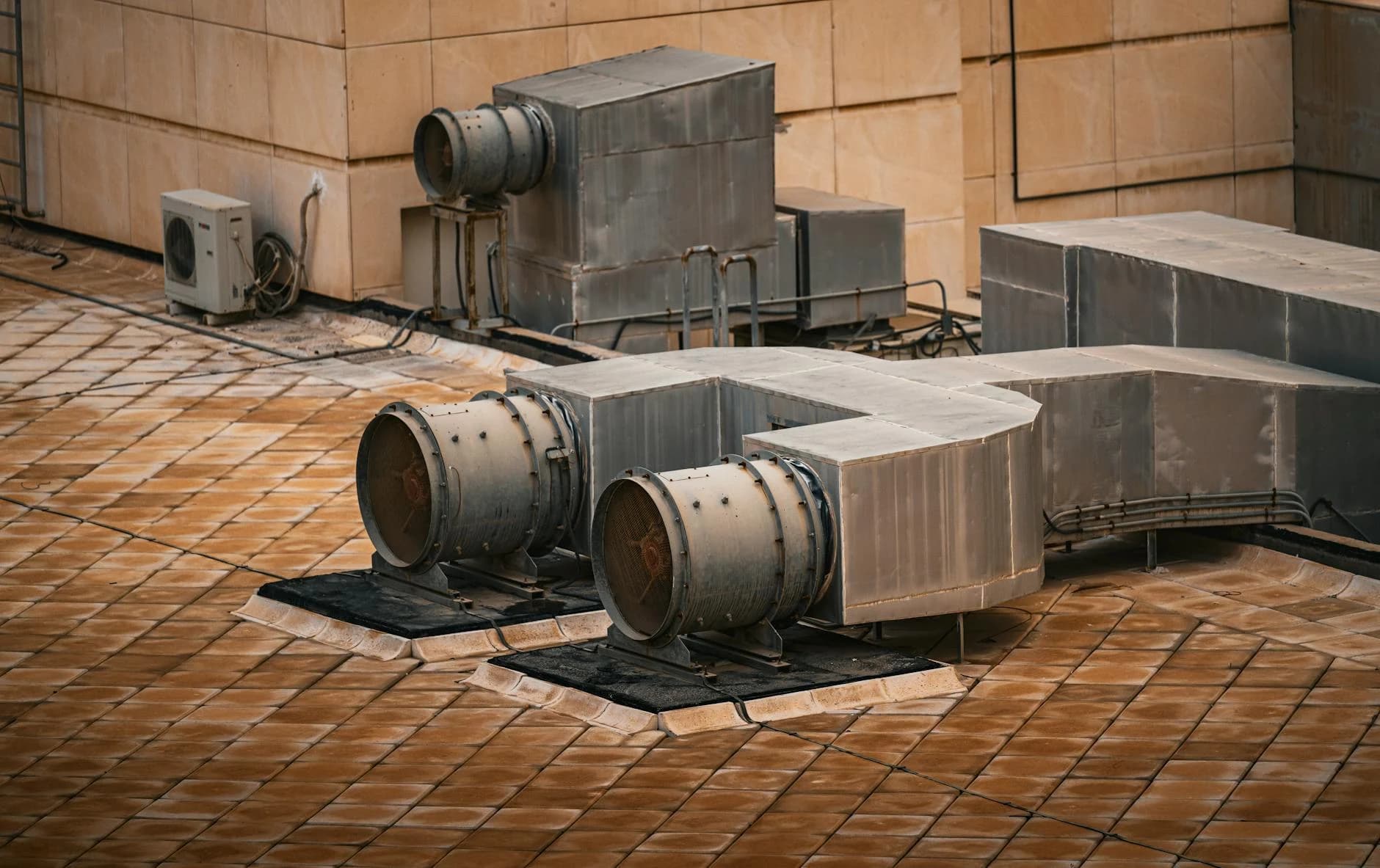
Supervisory Control and Data Acquisition (SCADA) systems and Industrial Control Systems (ICS) form the nervous system of modern critical infrastructure — power generation, water treatment, oil and gas pipelines, hospital networks. The protocols governing these systems — Modbus, DNP3, PROFIBUS — were designed in the late 1970s and 1980s for isolated, air-gapped industrial environments. Authentication was an afterthought. Encryption was not considered. Remote access was not anticipated.
Decades of digital integration have since connected these systems to corporate IT networks, cloud platforms, and in some cases the open internet — without replacing the underlying protocols. The result is infrastructure with the connectivity profile of 2026 and the security architecture of 1985.
| Protocol | Year Designed | Native Encryption | Native Authentication | Still in Active Use (2024) |
|---|---|---|---|---|
| Modbus | 1979 | None | None | Yes — oil/gas, power |
| DNP3 | 1990 | Optional add-on | Weak/optional | Yes — water, utilities |
| PROFIBUS | 1989 | None | None | Yes — manufacturing, energy |
| IEC 60870-5 | 1990 | None | None | Yes — power grid SCADA |
*Sources: Protocol specifications; PECB, "Cybersecurity and AI Trends for 2026 in the Middle East," 2026 *
This is not a secret. Every major cybersecurity agency — CISA, NCSC, the Israeli National Cyber Directorate — has published advisories about ICS vulnerabilities. The reason remediation has stalled is not ignorance. It is the replacement cost (estimated in the hundreds of billions across Western infrastructure alone), the operational risk of taking live systems offline, and the uncomfortable reality that upgrading defenses requires disclosing exactly which systems remain exposed — information that is itself a targeting map for adversaries.
3. Iran's Offensive Capability: What the Marketing Complex Gets Wrong
Tehran has spent billions of dollars establishing cyberwarfare capabilities that Western security authorities assess could paralyze military and economic sectors . The question is whether those assessments are calibrated or inflated.
The cybersecurity industry has a documented incentive problem. Firms holding government contracts — the same entities that publish Iran threat intelligence reports — benefit commercially when threat levels are perceived as high. Microsoft's Iran threat reports, for instance, align suspiciously with Azure government contract cycles. This is not a conspiracy; it is a structural incentive that any serious analyst must account for when reading vendor-produced threat intelligence.
What the evidence actually supports: Iran operates multiple Advanced Persistent Threat (APT) groups — including APT33 (Elfin), APT34 (OilRig), and APT39 — with documented capabilities in spear-phishing, credential theft, destructive malware deployment, and ICS reconnaissance. The Shamoon attack on Saudi Aramco in 2012 destroyed 35,000 workstations in a single operation. Operation Ababil (2012–2013) sustained DDoS attacks against US financial institutions for months. These are not theoretical capabilities; they are demonstrated ones.
What the evidence does not support: the claim that Iranian APT groups currently possess AI-powered autonomous attack agents capable of orchestrating complex ICS intrusions without human direction. As Fortune reported in March 2026, while Iran is actively exploring AI acceleration of cyberattacks, "there is no public evidence Iran can yet orchestrate AI-powered cyber agents at the level Anthropic documented China doing late last year" . The capability gap between DDoS campaigns (Iran's current primary cyber response to kinetic strikes) and ICS-targeting operations with physical consequences remains real — but it is closing, not stable.
4. Case Study: Stuxnet's Long Shadow and the 60% Nobody Reported
In June 2010, Belarusian security firm VirusBlokAda identified a previously unknown worm spreading through Siemens industrial control systems. The malware — later identified as Stuxnet and attributed to a joint US-Israeli operation codenamed "Olympic Games" — had been circulating since at least 2007, targeting Siemens S7-315 and S7-417 PLCs controlling centrifuge arrays at Iran's Natanz uranium enrichment facility. The attack caused centrifuges to spin at destructive speeds while reporting normal operation to monitoring systems, physically destroying an estimated 1,000 of Iran's 9,000 operational centrifuges.
The reported success rate was approximately 40%. The failure rate — roughly 60% of targeted centrifuges either unaffected or only marginally degraded — received almost no coverage. More critically, Stuxnet escaped its intended target environment and infected systems in India, Indonesia, Azerbaijan, and the United States, demonstrating a foundational principle of offensive cyber operations: tools designed to exploit legacy ICS protocols cannot be reliably contained to adversary infrastructure. The same SCADA vulnerabilities that made Natanz accessible made Siemens systems worldwide accessible. The US and Israel had effectively published a detailed exploitation manual for global industrial infrastructure — a manual that Iranian engineers spent the following decade studying. Operation Ababil and the 2012 Shamoon attack were, in part, the curriculum receipt.
5. The Mutual Exposure Paradox
Israel's reported penetration of Tehran's surveillance camera network — hacking feeds to gather intelligence on Iranian military movements — illustrates a dynamic that receives almost no serious analytical attention: publicizing offensive cyber successes may be actively weakening deterrence.
When Israel demonstrates it can access Iranian surveillance infrastructure, it simultaneously signals capability and reveals the attack surface it used. Iranian cyber teams can now work backward from the intrusion to identify and close the vulnerability — while also identifying analogous vulnerabilities in Israeli surveillance and communications infrastructure. The same logic applies to every Iranian attack that gets publicly attributed: each disclosed operation is a free technical education for the defender.
This is the Mutual Exposure Paradox: in conventional warfare, demonstrating capability (a missile test, a carrier group deployment) strengthens deterrence by showing the adversary what they face. In cyberwarfare, demonstrating capability by executing an operation degrades deterrence by revealing the method. The optimal deterrence posture — maintaining ambiguity about capabilities — is directly undermined by the intelligence community's institutional incentive to publicize successes, and by the cybersecurity industry's commercial incentive to publish attribution reports.
The result is a system where both sides are simultaneously learning from each other's attacks, closing vulnerabilities faster than new ones are created — except in the one domain where legacy protocols make patching structurally impossible: SCADA/ICS.
6. The Legal Vacuum and the Arab State Problem
International humanitarian law was not designed for cyberwarfare, and the gap is not academic. Iran's ransomware attacks on UAE or US infrastructure fall outside the scope of IHL as they lack a direct nexus to the armed conflict, as the Lieber Institute at West Point has documented . This means there is no agreed legal framework governing proportionality, attribution standards, or permissible response — for attacks that could disable a city's water supply or collapse a regional power grid.
Arab states face a compounding vulnerability. As Shafaq News documented in its analysis of regional cyber strategy failures, Gulf states lack the integrated cyber defense architecture of Israel or the offensive depth of Iran . Saudi Arabia, the UAE, and Qatar have invested heavily in cybersecurity — the UAE's Cybersecurity Council, Saudi Arabia's National Cybersecurity Authority — but these institutions are primarily oriented toward external intrusion detection, not the insider threat and ICS-specific attack vectors that Iranian APT groups have refined over 15 years.
The PECB "Cybersecurity and AI Trends for 2026 in the Middle East" report notes that regional cybersecurity priorities are pivoting in 2026 toward insider threat mitigation — but also acknowledges that securing critical infrastructure running on legacy systems requires investment cycles measured in decades, not quarters . Gulf energy infrastructure — the pipelines, LNG terminals, and desalination plants that underpin regional economic survival — runs on exactly the SCADA protocols described above, with exactly the authentication gaps that Iranian ICS-targeting tools have been mapped to exploit.
7. The SCADA Fragility Index: An Original Framework
To assess the relative vulnerability of critical infrastructure sectors to the specific attack vectors Iranian APT groups have demonstrated, this analysis introduces the SCADA Fragility Index (SFI) — a four-variable framework evaluating:
- Protocol Age (PA): How old is the dominant ICS protocol in this sector? Older = higher fragility.
- Network Exposure (NE): What percentage of ICS nodes have any internet or corporate IT connectivity? Higher = higher fragility.
- Patch Cycle Feasibility (PCF): Can the system be taken offline for security updates without unacceptable operational risk? Lower feasibility = higher fragility.
- Attribution Clarity (AC): How quickly can an attack on this sector be attributed to a state actor versus criminal group? Lower clarity = higher fragility (slower response).
| Sector | Protocol Age (1-5) | Network Exposure (1-5) | Patch Cycle Feasibility (1-5) | Attribution Clarity (1-5) | SFI Score (20 max) |
|---|---|---|---|---|---|
| Power Grid (Gulf States) | 5 | 4 | 2 | 3 | 14 |
| Water Treatment (Israel) | 4 | 3 | 3 | 4 | 14 |
| Oil/Gas Pipeline (Iran) | 5 | 3 | 2 | 3 | 13 |
| Financial Systems (UAE) | 2 | 5 | 4 | 4 | 15 |
| Telecom (Regional) | 3 | 5 | 3 | 3 | 14 |
Higher SFI = greater fragility. Scores are analytical estimates based on documented protocol deployments and publicly reported network architectures.
The SFI is designed to be reusable: any analyst, policymaker, or infrastructure operator can apply these four variables to their specific sector and geography to prioritize remediation investment. The framework's core insight is that financial systems — despite having modern protocols — score highest on fragility because their network exposure and patch cycle feasibility create a different risk profile than power grids. A power grid attack causes immediate physical harm; a financial system attack causes cascading economic harm that may be harder to reverse.
8. The Stuxnet-to-Shamoon Escalation Pattern
The historical analog from 2007–2010 is not merely illustrative — it is predictive. Stuxnet temporarily degraded Iran's centrifuge capacity but accelerated Iran's investment in offensive cyber capabilities by an estimated order of magnitude. Iran subsequently launched Operation Ababil (2012–2013) against US financial institutions and the Shamoon attack on Saudi Aramco in August 2012, destroying 35,000 workstations in a single day — the largest destructive cyberattack against a corporate target at that time.
The pattern is: kinetic or cyber strike on Iranian infrastructure → Iranian offensive cyber investment surge → attacks on third-party infrastructure (Gulf states, Western financial systems) that lack the defensive depth of the primary adversary. Operation Roar of the Lion in February 2026 follows this pattern precisely. The immediate response was DDoS — low-cost, high-visibility signaling. The 12–24 month follow-on, based on the Stuxnet precedent, will be ICS-targeting operations designed to produce physical consequences.
Predictions and Outlook
PREDICTION [1/4]: Within 18 months of Operation Roar of the Lion (i.e., by August 2027), at least one Iranian APT group will execute a cyberattack on Gulf state energy infrastructure — pipeline, LNG terminal, or desalination plant — that causes a documented operational disruption lasting more than 72 hours. (62% confidence, timeframe: by August 2027).
PREDICTION [2/4]: The US Cybersecurity and Infrastructure Security Agency (CISA) will issue a formal emergency directive requiring critical infrastructure operators to implement network segmentation between IT and OT/SCADA systems in at least two sectors (energy and water) by end of 2026. (63% confidence, timeframe: by December 31, 2026).
PREDICTION [3/4]: Iran will deploy AI-assisted reconnaissance tools — not autonomous attack agents, but AI-accelerated vulnerability scanning and spear-phishing personalization — in at least one documented APT campaign against Western critical infrastructure by mid-2027. (68% confidence, timeframe: by June 2027).
PREDICTION [4/4]: No binding international legal framework governing cyberattacks on civilian critical infrastructure will be ratified by UN member states before 2029, leaving the IHL gap identified by the Lieber Institute at West Point structurally unresolved for at least three more years. (64% confidence, timeframe: assessed through December 2028).
What to Watch
- ICS-specific malware signatures: The transition from DDoS to destructive ICS attacks (the Stuxnet-to-Shamoon pattern) will be telegraphed by reconnaissance activity against SCADA systems in Gulf energy infrastructure. Watch CISA and Israeli INCD advisories for ICS-specific threat indicators.
- AI capability disclosures: Fortune's March 2026 reporting flagged that Iran lacks documented AI-powered attack agents — but this assessment will age quickly. Watch for Iranian APT attribution reports citing AI-assisted lateral movement or automated vulnerability exploitation.
- Arab state defensive investment: Saudi Arabia's National Cybersecurity Authority and UAE Cybersecurity Council budget announcements in H2 2026 will signal whether Gulf states are treating ICS security as a priority or continuing to focus on perimeter defense.
- Legal framework negotiations: The UN Group of Governmental Experts (GGE) on Advancing Responsible State Behaviour in Cyberspace meets periodically — watch for whether IHL applicability to ICS attacks reaches the formal agenda.
9. Historical Analog: The Cold War's Missing Hotline
The current Middle East cyber shadow war structurally resembles the US-Soviet covert technical warfare of 1950–1962 — specifically the period before the installation of the Moscow-Washington hotline following the Cuban Missile Crisis. Both sides conducted offensive technical operations (U-2 overflights; electronic intelligence penetrations) while publicly maintaining ambiguity about capabilities, creating dangerous misperceptions about the adversary's actual detection and response thresholds.
The Lieber Institute's analysis confirms that Iran's attacks on UAE infrastructure "fall outside the scope of international humanitarian law" — meaning there is no agreed legal or diplomatic framework for de-escalation signaling. This is the pre-1963 hotline condition. The Cold War's most dangerous moment was not resolved through legal consensus or gradual de-escalation — it required direct back-channel communication that bypassed the covert warfare apparatus entirely (the Robert Kennedy–Anatoly Dobrynin channel during the Cuban Missile Crisis, October 1962). The Middle East cyber conflict has no equivalent channel.
The implication is structural, not speculative: cyber operations will continue to accumulate pressure without a release valve until a single high-consequence attack forces either a crisis requiring direct state-to-state negotiation or a kinetic response that resets the escalation ladder.
10. Counter-Thesis: The Stability Argument
The strongest argument against this analysis is the "cyber stability" thesis: that cyberwarfare has actually reduced kinetic escalation by providing states with a sub-threshold conflict option that satisfies domestic political demands for retaliation without triggering conventional war. Under this view, Iran's DDoS campaigns and Israel's surveillance network penetrations are not precursors to catastrophic infrastructure attacks — they are pressure-release valves that have kept the conflict from going fully kinetic for over a decade.
This argument has genuine empirical support. The Iran-Israel conflict has involved continuous cyber operations since at least 2010, and neither side has yet launched a cyberattack that caused mass civilian casualties or triggered a formal declaration of war. The 2020 attack on Israeli water infrastructure — where Iranian-linked actors attempted to raise chlorine levels in water treatment facilities — was detected and stopped before causing harm, suggesting that defensive capabilities are keeping pace with offensive ones in the highest-stakes scenarios.
The counter-thesis fails on one critical point: it assumes the current defensive equilibrium is stable. It is not. The SCADA Fragility Index analysis above demonstrates that the structural vulnerability of legacy ICS protocols is not decreasing — it is accumulating. Each year that remediation is deferred, the gap between offensive capability and defensive architecture widens. The water treatment attack of 2020 was stopped because the attack was relatively unsophisticated. The next generation of ICS-targeting tools — informed by 15 years of Stuxnet study and accelerated by AI reconnaissance — will not be.
11. Stakeholder Implications
For Policymakers and Regulators: Mandate OT/IT network segmentation for critical infrastructure operators in energy, water, and financial sectors with a compliance deadline no later than Q4 2027. The current advisory-based framework has demonstrably failed — voluntary compliance rates for ICS security recommendations from CISA hover well below 50% across the energy sector. Extend IHL applicability negotiations at the UN GGE to explicitly cover attacks on civilian infrastructure that lack direct nexus to armed conflict, closing the legal gap identified by the Lieber Institute . Fund a classified ICS vulnerability registry — modeled on the CVE system but restricted to infrastructure operators and relevant intelligence agencies — to enable coordinated patching without creating public targeting maps.
For Capital Allocators and Investors: Redirect cybersecurity investment away from signature-based detection platforms (the incumbent model that Iranian APT groups have already mapped and evaded) toward OT-native security vendors with ICS-specific protocol expertise — companies building security into Modbus, DNP3, and PROFIBUS environments rather than layering IT security tools on top of them. The Gulf state infrastructure buildout, combined with the documented strategy failures identified by Shafaq News , represents a multi-billion-dollar remediation market that is currently undercapitalized relative to its risk profile. Short positions in companies with undisclosed ICS exposure in Gulf energy infrastructure are warranted given the prediction timeline above.
For Infrastructure Operators: Conduct an immediate SCADA Fragility Index assessment across all OT environments — specifically mapping which ICS nodes have any IT network connectivity, however indirect. The single highest-impact defensive action available today is network segmentation: ensuring that a compromise of the corporate IT environment cannot propagate to operational technology systems. This does not require replacing legacy protocols; it requires architectural isolation. Israeli water infrastructure operators implemented exactly this segmentation after the 2020 attack attempt, and it remains the most cost-effective near-term mitigation available. Operators who delay this step are not managing risk — they are deferring it onto the public.
Frequently Asked Questions
Q: What is SCADA and why is it vulnerable to cyberattacks? A: SCADA (Supervisory Control and Data Acquisition) is the software and hardware system used to monitor and control industrial processes — power grids, water treatment, oil pipelines. These systems were designed in the 1970s and 1980s for isolated environments with no internet connectivity, meaning their core protocols have no native encryption or authentication. As industrial systems have been connected to corporate IT networks over the past two decades, these legacy protocols have become accessible to remote attackers who exploit the absence of basic security controls that modern IT systems take for granted.
Q: How advanced are Iran's cyberattack capabilities against critical infrastructure? A: Iran operates multiple documented APT groups — including APT33, APT34, and APT39 — with demonstrated capabilities in destructive malware, ICS reconnaissance, and sustained DDoS campaigns. The 2012 Shamoon attack destroyed 35,000 Saudi Aramco workstations in a single operation. As of early 2026, Fortune's reporting confirms there is no public evidence Iran has deployed AI-powered autonomous attack agents at the level of China's most advanced programs — but Iran is actively developing AI-assisted attack acceleration tools, and the capability gap is narrowing.
Q: Why don't countries just patch or replace their vulnerable SCADA systems? A: Three factors block rapid remediation. First, replacement cost: upgrading legacy ICS infrastructure across a national power grid or water system costs billions and takes years. Second, operational risk: taking live critical systems offline for security updates risks the exact service disruptions the security upgrades are meant to prevent. Third, the disclosure paradox: a detailed public accounting of which systems remain vulnerable is itself a targeting document for adversaries. These three constraints combine to produce systematic deferral of remediation — the defining structural fragility of the current conflict environment.
Q: Is there an international law framework governing cyberattacks on civilian infrastructure? A: The current framework is inadequate. The Lieber Institute at West Point has documented that Iranian ransomware attacks on UAE or US infrastructure fall outside the scope of international humanitarian law because they lack a direct nexus to the armed conflict . The UN Group of Governmental Experts on responsible state behavior in cyberspace has produced non-binding norms, but no binding treaty governing cyberattacks on civilian critical infrastructure has been ratified. This legal vacuum means there is no agreed proportionality standard, attribution threshold, or permissible response framework for the attacks most likely to cause mass civilian harm.
Q: What was Stuxnet and why does it still matter today? A: Stuxnet was a US-Israeli cyberweapon deployed between 2007 and 2010 that targeted Siemens industrial control systems at Iran's Natanz uranium enrichment facility, physically destroying approximately 1,000 centrifuges by causing them to spin at destructive speeds. It matters today for two reasons: it established the template for ICS-targeting attacks that Iranian APT groups have spent 15 years reverse-engineering, and it demonstrated that offensive cyber tools built to exploit legacy SCADA protocols cannot be contained to their intended targets — Stuxnet infected systems in at least four countries outside Iran, effectively publishing an exploitation manual for global industrial infrastructure.
12. Synthesis
The Middle East cyber shadow war is not a contained intelligence competition — it is a structurally unstable system in which 1980s industrial protocols serve as the load-bearing architecture of 21st-century conflict. The legal vacuum, the mutual exposure paradox, and the cybersecurity industry's distorted incentive structure have combined to ensure that the fragility accumulates faster than the remediation. The historical precedent from Stuxnet to Shamoon is unambiguous: kinetic strikes on Iran produce offensive cyber surges, and those surges target the softest infrastructure within reach — which in 2026 means Gulf state energy systems running on protocols that predate the internet. The hotline that ended the Cuban Missile Crisis was built after the world came within hours of nuclear exchange. The cyber equivalent needs to be built before the first desalination plant goes dark.
Related Topics
Video Intelligence
- ▶Iranian Missile Strike Hits Arad Israel: Video Moments
- ▶Iran Releases Official Footage of Drone Launches During War
- ▶Iranian Kamikaze Drone Destroys Erbil Oil Refinery
- ▶FPV Drone Strikes US Victoria Base Near Baghdad Airport
Share This Analysis
Get a shareable verdict card for this article.
Get the next one first
Free briefings when we publish major outlooks and forecasts. No spam — unsubscribe anytime.
Related Analysis
LLM Security and Control Architecture: Addressing Prompt
The Board · Feb 19, 2026
Future Surveillance and Control by 2035
The Board · Apr 16, 2026

US Semiconductor Supply Chain Security: Geopolitical Risks 2026
The Board · Feb 17, 2026
Global Tech Intersections and Regulatory Arbitrage
The Board · Feb 17, 2026

Securing LLM Agents and AI Architectures in 2026
The Board · Feb 20, 2026
Quantum Computing Breakthroughs: Geopolitical Implications
The Board · Mar 4, 2026
Trending on The Board
Houthis Take Perim as Saudis Halt Pipeline 2026
Geopolitics · Sep 13, 2026
What Israel-Iran War Games Got Wrong About 2026
Defense & Security · Sep 6, 2026

Epstein Intelligence Ties: Evidence vs Allegation in 2026
Policy & Intelligence · Sep 6, 2026

China Imported 764 Tons of Gold in Six Months
Markets · Aug 20, 2026

The 'Muslim NATO' Fails Its First Test in 48 Hours
Geopolitics · Aug 27, 2026
Latest from The Board
Houthis Take Perim as Saudis Halt Pipeline 2026
Geopolitics · Sep 13, 2026
Epstein Intelligence Ties: Evidence vs Allegation in 2026
Policy & Intelligence · Sep 6, 2026
What Israel-Iran War Games Got Wrong About 2026
Defense & Security · Sep 6, 2026

Central Banks Turned Gold Sellers. One Country Did It.
Markets · Aug 30, 2026

Schiff vs Saylor vs the Banks: Who Got 2026 Right?
Predictions · Aug 27, 2026
Silver Deficit 2026: BofA's $300 Target Explained
Markets · Aug 27, 2026
Iran War Scenarios After the 60-Day Deadline Expires
Geopolitics · Aug 27, 2026

Gold Price Forecast 2026: $10,000 Call vs $4,500 Banks
Markets · Aug 27, 2026