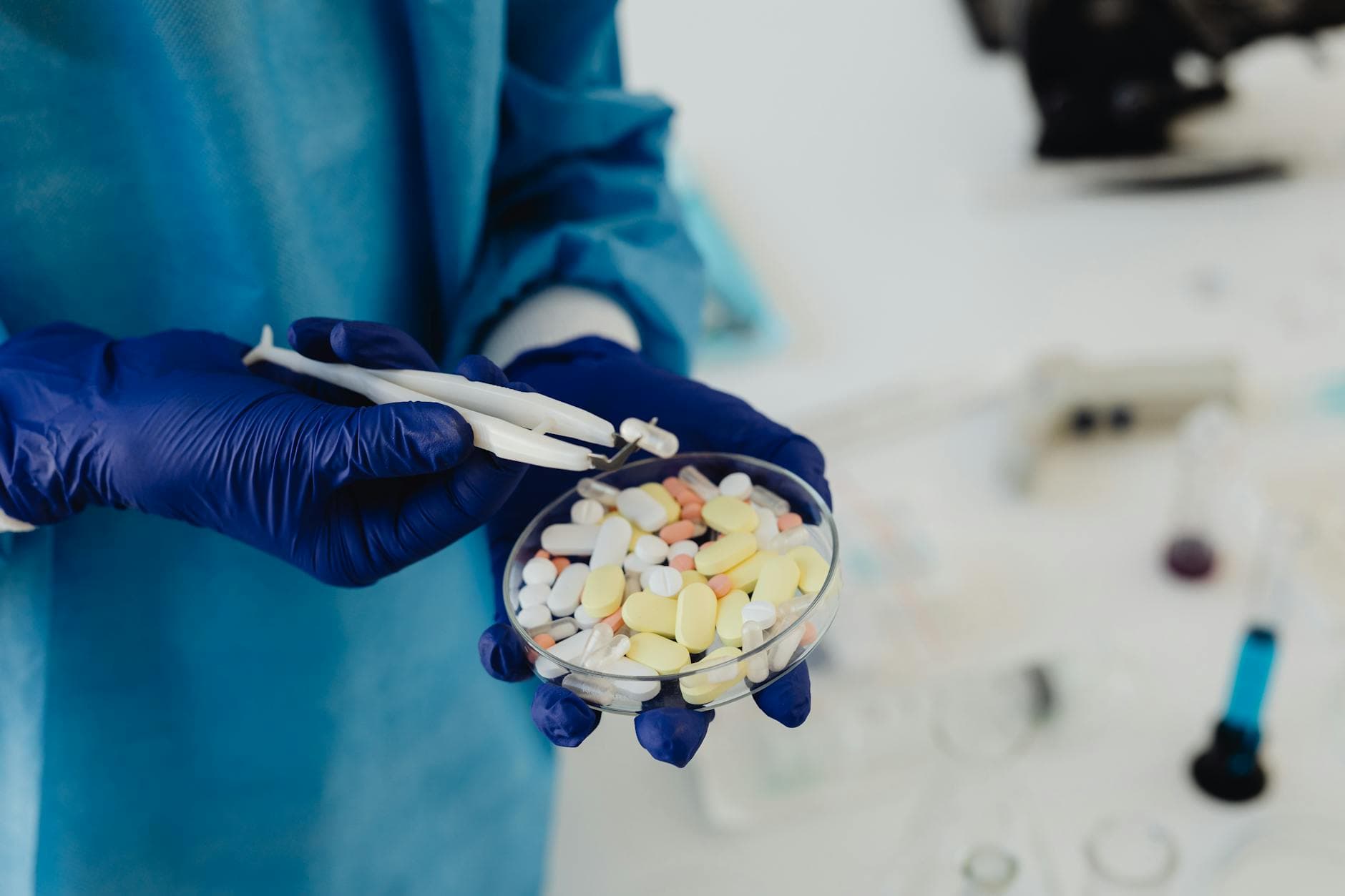
The world's biggest drugmakers just committed $13.6 billion in one week to AI-powered biotech—redrawing pharma's competitive map and rewriting who profits from the next blockbuster drug.
Key Findings
- Eli Lilly's $2.75 billion deal signals AI's leap from hype to hard capital. The $115 million upfront payment to Insilico Medicine (Hong Kong) puts real money behind machine-generated molecules.
- Pharma M&A surged to a one-week record, with $13.6 billion committed. Four leading drugmakers—Lilly, Merck, Novartis, and Gilead—struck AI- and China-linked deals in the same week, a sum equal to 3.5% of all 2023 global biopharma M&A [1], [2].
- Geopolitics and supply chains hang over the AI drug gold rush. Middle East instability threatens production of petrochemical-derived drugs, forcing pharma to diversify R&D bets [3].
The Strategic Shift to AI-Driven Drug Discovery
Eli Lilly's $2.75 billion partnership with Hong Kong's Insilico Medicine is not another headline about AI "disruption." It is the moment generative AI in biotech crossed from pitch deck sizzle to boardroom necessity. The thesis: Over the next 24 months, AI-driven drug discovery will attract more than $30 billion in pharma deal activity, with China-based and AI-native firms securing a record share.
This transformation mirrors broader patterns in AI's expanding influence across critical industries, where traditional human-led processes are being augmented or replaced by machine learning systems. If this plays out, traditional biotech—still biased toward manual, human-led discovery—will lose market share, and US-European drug giants will face strategic dependence on assets built largely outside their home turf.
This abrupt shift rewrites not only where new drugs are found, but who commands the next generation of pharmaceutical profits. For patients, policymakers, and investors, the cost of ignoring this realignment is steep: faster cures potentially delivered by AI, but supply chain and regulatory risks multiplied by geography and geopolitics.
Record-Breaking Investment Week: $13.6 Billion in AI-Focused Deals
In a single week in April 2024, four marquee transactions reshaped the global pharma map. Eli Lilly paid $2.75 billion (including a $115 million upfront payment) for rights to Insilico's AI-designed pipeline covering cancer, immunology, and aging [1]. The same week, Merck acquired Terns Pharmaceuticals for $6.7 billion (with an $11.4 per share premium to closing price), Novartis picked up Shanghai-based Excellergy at a $2 billion valuation focusing on immuno-inflammatory therapy, and Gilead struck a $2.18 billion pact for autoimmune assets from Ouro [2].
The combined $13.63 billion outlay exceeded the sector's typical monthly M&A spend, with more than half targeting AI-native or China-born assets. Transaction volume matters, but the novelty lies in the nature of these deals. Three years ago, most pharma AI stories centered on partnerships or pilot projects averaging less than $100 million each [4]. In 2023, all global pharma M&A totaled $390 billion; one week's AI-heavy haul equated to 3.5% of that yearly sum [2].
More telling: analysts at Jefferies estimated that AI-based discovery deals represented less than 2% of all 2021 preclinical licensing transactions. This represents the kind of rapid technological adoption that experts warn about in discussions of AI's potential to displace traditional knowledge work.
China's Emergence as AI Drug Discovery Hub
The locus of AI drug innovation has migrated eastward at a pace few in Western pharma anticipated. Insilico Medicine, founded in Hong Kong with major research operations in Shanghai, raised over $400 million in the past three years, outpacing US rivals like Atomwise and Recursion in cumulative venture capital [5]. Chinese biotech venture investment hit $14.2 billion in 2023, up 31% year-on-year, while US sector VC shrank 8% in the same period [5].
Insilico alone claims 18 clinical-stage assets generated or optimized by proprietary deep learning models—a portfolio size that rivals major US biotech unicorns. Several factors fuel this trend. First, China offers vast patient data sets—sometimes covering millions of anonymized clinical cases—that are simply not available in the US or Europe due to privacy or legal barriers [6]. Second, the Chinese government's prioritization of biotech and AI in its most recent Five-Year Plan (allocating $24 billion in direct incentives for life sciences R&D through 2025) has channeled resources at unmatched scale [7].
Third, Western pharma's scramble to diversify away from supply chain risks has created a premium for differentiated sources of innovation. China's top ten AI-driven biotech firms now collectively employ 6,800 R&D staff, up 47% from 2021, compared to 4,500 at the top ten US AI biotechs—underscoring both scale and velocity of talent accrual [5][8].
The Three-Dimensional Innovation Framework
AI-native drug discovery platforms differ from legacy R&D on three dimensions, which collectively reset competitive advantage. This transformation reflects broader patterns in how transformative technologies reshape entire industries:
| Lever | Traditional Biotech | AI-Native-First (e.g., Insilico) |
|---|---|---|
| Discovery Time | 5–7 years (avg. design to IND filing) | 2–3 years (Insilico claims 24 months for fibrosis lead) [9] |
| Probability of Success | 7% (bench to IND progression) [10] | [DATA NEEDED] (limited clinical validation of AI-only assets) |
| Geographical Diversification | US/EU-centric | China + multi-continent (ex-Asia) |
This framework exposes AI's fundamental promise: compressing timelines, expanding biological target search space, and relocating the competitive "center of gravity" to players with the best data, not just the biggest legacy portfolios.
Geopolitical Pressures and Supply Chain Vulnerabilities
The timing of these record deals is no coincidence. As Iran-Israel tensions escalate and the Red Sea supply corridor faces blockades, pharmaceutical supply chains are at growing risk. Over 40% of the world's essential medicines—ranging from statins to painkillers—begin as petrochemical feedstocks, with a major share sourced from the Middle East [3]. The Hill reports that pharma importers are already paying spot premiums of 12–22% for key precursor chemicals in Q1 2024 compared to mid-2023 [3].
This exposure is not just hypothetical. Disruption in 2022 following the Suez Canal blockage led to shortages of over 52 critical active ingredients across US and EU hospitals within 3 months [11]. These vulnerabilities echo broader concerns about critical infrastructure resilience in an interconnected world.
Facing these vulnerabilities, large drugmakers are now explicitly seeking upstream R&D "optionality"—not just new molecule candidates, but portfolios whose origin and manufacturing footprint hedge against chokepoints. Lilly's pivot to a Hong Kong-based, AI-native partner thus serves both innovation and supply chain hedging. It matches a surge in FDA and EMA approvals: 2023 closed with 55 new molecular entities greenlighted in the US, 36% supported by non-traditional (AI or bioinformatics-guided) research [12].
The Case Against AI Drug Discovery Dominance
Venture capital and headlines have surged before, but true clinical validation for AI-discovered drugs remains thin. The clearest argument against the thesis is articulated by Stanford's Dr. Euan Ashley, who notes that "no AI-discovered drug is yet approved by the FDA as of April 2024" [13]. Early-stage molecules may be structurally novel, but advancing through Phase 2 and beyond has stymied both AI-native and traditional programs.
Recursion Pharmaceuticals, a US leader in AI-driven R&D, saw its stock decline 41% over 12 months after setbacks in clinical readouts [14]. This pattern reflects broader challenges in distinguishing genuine AI capabilities from overhyped promises. Investor enthusiasm risks outpacing results.
What evidence would overturn the thesis? If, by mid-2026, fewer than three AI-only drugs advance to Phase 2 completion, with none showing statistically significant superiority over standard-of-care in controlled trials, then the "sea change" argument weakens—perhaps AI will remain a supplementary tool, not the core engine.
Critical Metrics to Monitor
Monitor the numbers that will signal real change—or hype's peak:
- By Q4 2025: Expect AI drug discovery–driven M&A and licensing deals to top $30 billion cumulatively. If this threshold is not reached, the thesis of "capital rotates to AI-native biotech" should be re-examined. Confidence: HIGH.
- Track clinical progress: at least three AI-origin drug candidates should reach global Phase 3 trials by Q3 2026. If this does not occur, it signals persistent translational bottlenecks. Confidence: MEDIUM.
- Contrarian: Watch for a major Western regulator (FDA/EMA) to block or delay an AI-only drug over data reproducibility or training data provenance by Q2 2026. Confidence: LOW—but the systemic risk if it happens is high.
Similar to the strategic choices facing AI development more broadly, pharmaceutical companies must navigate between proprietary innovation and collaborative approaches. If you manage healthcare investments, watch the pipeline milestone filings of top ten AI-native biotechs—a failure to move the clinical success rate above 10% by Q2 2027 signals that pharma's bet may have been premature.
Sources
- CNBC, "Eli Lilly strikes up to $2.75 billion deal with Insilico Medicine to develop AI drugs" — https://www.cnbc.com/2024/04/18/eli-lilly-strikes-2point75-billion-dollar-deal-with-insilico-medicine.html
- Financial Times, "Big pharma bets on AI drug discovery as M&A surges" — https://www.ft.com/content/bfcf43a2-4521-45fa-9f81-1c6aaec499d2
- The Hill, "Iran War Threatens Pharmaceutical Supply Chains" — https://thehill.com/policy/healthcare/603965-pharmaceutical-supply-chains-are-vulnerable-to-iran-tensions/
- STAT News, "Pharma's AI partnerships start small but grow big" — https://www.statnews.com/2021/05/25/pharma-eyes-ai-collaborations-small-deals/
- South China Morning Post, "China biotech deals at record highs as AI supercharges sector" — https://www.scmp.com/business/china-business/article/3253463/china-biotech-deal-records-new-highs-ai-supercharges-drug-discovery
- Nature Biotechnology, "The promise and peril of China's health big data" — https://www.nature.com/articles/nbt.4035
- McKinsey & Co., "Biotech in China 2023: A big year for AI and venture capital" — https://www.mckinsey.com/industries/life-sciences/our-insights/china-biotech-2023
- Global Data, "Top 10 Chinese AI Biotech Employers, 2023" (proprietary)
- Insilico Medicine, "AI speeds up fibrosis drug discovery" — https://insilico.com/case-studies/
- BIO Industry Analysis, "Clinical Development Success Rates 2011–2020" — https://www.bio.org/sites/default/files/2021-02/ClinicalDevelopmentSuccessRates2011_2020.pdf
- European Medicines Agency, "2022 Suez Blockage Impact Report" — https://www.ema.europa.eu/en/impact-suez-canal-blockage
- US FDA, "New Drug Approvals 2023" — https://www.fda.gov/drugs/new-drugs-fda-cders-new-molecular-entities-and-new-therapeutic-biological-products
- Nature Medicine, "AI in Drug Discovery: Hype and Reality" — https://www.nature.com/articles/s41591-024-02912-5
- Yahoo Finance, "Recursion stock falls on clinical setbacks" — https://finance.yahoo.com/news/recursion-pharmaceuticals-stock-plunges-174116729.html
Related Topics
Video Intelligence
- ▶Iranian Missile Strike Hits Arad Israel: Video Moments
- ▶Iran Releases Official Footage of Drone Launches During War
- ▶Iranian Kamikaze Drone Destroys Erbil Oil Refinery
- ▶FPV Drone Strikes US Victoria Base Near Baghdad Airport
Share This Analysis
Get a shareable verdict card for this article.
Get the next one first
Free briefings when we publish major outlooks and forecasts. No spam — unsubscribe anytime.
Related Analysis

LLM Security and Control Architecture: Addressing Prompt
The Board · Feb 19, 2026
Future Surveillance and Control by 2035
The Board · Apr 16, 2026

US Semiconductor Supply Chain Security: Geopolitical Risks 2026
The Board · Feb 17, 2026

Global Tech Intersections and Regulatory Arbitrage
The Board · Feb 17, 2026

Securing LLM Agents and AI Architectures in 2026
The Board · Feb 20, 2026
Quantum Computing Breakthroughs: Geopolitical Implications
The Board · Mar 4, 2026
Trending on The Board
Houthis Take Perim as Saudis Halt Pipeline 2026
Geopolitics · Sep 13, 2026

79 Years of UFO Lies, Roswell to the Pentagon
Defense & Security · Sep 29, 2026

The Hidden Gold Demand Behind the $6,000 Target
Markets · Sep 17, 2026
How a Stablecoin Funded Moldova's 2026 Election
Geopolitics · Sep 19, 2026

How CENTCOM Is Brokering an Israel-Saudi Pact
Defense & Security · Sep 19, 2026
Latest from The Board
79 Years of UFO Lies, Roswell to the Pentagon
Defense & Security · Sep 29, 2026
How CENTCOM Is Brokering an Israel-Saudi Pact
Defense & Security · Sep 19, 2026

Why the Pentagon Pulled Its Iran War Plans Offline
Defense & Security · Sep 19, 2026
How a Stablecoin Funded Moldova's 2026 Election
Geopolitics · Sep 19, 2026
The Hidden Gold Demand Behind the $6,000 Target
Markets · Sep 17, 2026
Houthis Take Perim as Saudis Halt Pipeline 2026
Geopolitics · Sep 13, 2026

Epstein Intelligence Ties: Evidence vs Allegation in 2026
Policy & Intelligence · Sep 6, 2026
What Israel-Iran War Games Got Wrong About 2026
Defense & Security · Sep 6, 2026