
BOARD SYNTHESIS — Final Verdict
Executive Summary
VET Protocol is viable, but you're building the wrong product. The market will exist — agent trust verification becomes mandatory infrastructure within 12-18 months following the first major autonomous agent breach. However, your current "better testing tool" approach is strategically DOA. The play is trust registry as critical infrastructure, not SaaS dev tooling. Pivot immediately to insurance-mandated certification model or abandon.
Key Insights
- Market timing: 12-18 months before forcing event (major agent breach triggers insurance/regulatory response)
- Wrong product-market fit: Currently solving "better testing" when the real opportunity is "trust standard that unlocks insurability"
- Network effects exist: Strong winner-take-most dynamics in trust registries, but you're at 1.6% of critical mass (16 bots vs ~1,000 needed)
- Defensible moat: Third-party attestation for insurance creates structural advantage over cloud provider self-certification
- Integration clarity: VET strengthens MINDHIVE as verification layer, not separate product
Points of Agreement
All the analysiss converged on three critical insights:
-
Insurance companies are the market (Schneier, Bezos, Grove, Metcalfe) — not enterprises, not developers. Underwriters will mandate verification once liability crystallizes.
-
Registry > Testing quality (Thiel, Bezos, Metcalfe) — the moat is becoming the standard everyone checks (ICANN/credit bureau model), not having superior probe technology.
-
Timing window is narrow (Grove, Taleb, Strategic Director) — 12-18 months until forcing event, but also until AWS/CrowdStrike build competing infrastructure. First-mover advantage in trust standards is nearly insurmountable.
Points of Disagreement
Severity of technical blind spots:
- Schneier flags that compliance-based attacks are undetectable by current probe architecture — this is an existential vulnerability
- Thiel counters that perfect security is irrelevant; you're selling compliance theater, which is a feature not a bug
- Synthesis: Both are right. The business model works even with imperfect detection, BUT one catastrophic false-positive kills trust permanently (Taleb's fragility point). You need Taleb's barbell: 90% boring compliance + 10% adversarial ML research.
Market adoption speed:
- Grove: 18-24 months early, survival question dominates
- Taleb: 12 months MAX to forcing event, market underpricing acceleration
- Synthesis: Plan for Taleb's timeline, but structure for Grove's survival scenario. The 90-day insurance pilot IS the test of whether you can bridge the gap.
Architecture decision:
- Thiel: Pure registry play, abandon testing quality
- Schneier: Verification must evolve to ML-based adversarial probing
- Synthesis: Registry-first for business model, but probe evolution for technical credibility. You need both — the registry creates the moat, the probes create the trust that makes the registry valuable.
Verdict
PROCEED with immediate pivot — 90-day prove-or-kill milestone
VET Protocol should become the trust attestation layer for AI agent insurance and procurement, not a better testing tool.
Strategic repositioning:
- From: "We help developers test agents better"
- To: "We provide third-party trust certification that unlocks agent insurability"
Minimum viable position:
- 1 insurance underwriter pilot within 90 days (if not achievable, kill project)
- Registry architecture (agent profile + trust score + attestation chain)
- Adversarial ML probe roadmap (not rule-based health checks)
Defensibility requirements:
- First-mover lock with 2+ insurance carriers before competitors move
- Marketplace integrations (OpenAI/Microsoft/AWS) that reference your trust scores
- Antifragile probe evolution (attacks improve the system via ML training)
Risk Flags
- FALSE NEGATIVE DEATH SPIRAL (Taleb, 70% failure probability)
- A "Verified Trusted" agent executes successful attack
- Single catastrophic miss destroys trust faster than 1,000 successes build it
- Mitigation: Taleb's skin-in-the-game model — VET stakes capital on ratings, creates financial accountability
- COMMODITIZATION BY CLOUD PROVIDERS (Pre-Mortem, 20% failure probability)
- AWS/Azure bundle "good enough" verification free within 18 months
- You compete on quality while they compete on distribution
- Mitigation: Race to become the STANDARD before they move. Insurance relationship creates structural third-party advantage (conflict of interest in self-certification).
- TOO EARLY + UNDERCAPITALIZED (Grove, 10% failure probability)
- Market takes 30 months to materialize, you run out of runway at 24 months
- Mitigation: Insurance anchor customer provides revenue bridge. If you can't land that pilot in 90 days, the timing risk is unfixable — kill the project.
Competitive Landscape Reality Check
Is CrowdStrike going to eat this?
No — complementary surfaces. CrowdStrike builds agent EDR (runtime monitoring, incident response). You build agent credit score (pre-deployment certification). They detect breaches; you enable insurability. Different buyer (SecOps vs. Risk/Procurement), different use case.
Likely outcome: CrowdStrike acquires you in 18-24 months to complete their agent security stack (Schneier's prediction). This is a GOOD exit if you establish the trust standard first.
Is AWS going to eat this?
Partially — but structural advantage exists. AWS will bundle basic agent trust scoring (like they bundle basic security tooling). BUT insurance companies need third-party attestation to avoid conflict of interest. You can't be judge and jury. This creates a defensible niche for independent verification.
Your window: 12 months to lock insurance partnerships before AWS Agent Trust Score launches. After that, you're either the independent standard they integrate or you're competing on distribution (you lose).
MINDHIVE Integration Architecture
VET Protocol should be integrated as the verification layer, not a separate product:
Trust Score Propagation:
VET
Related Topics
Video Intelligence
- ▶Iranian Missile Strike Hits Arad Israel: Video Moments
- ▶Iran Releases Official Footage of Drone Launches During War
- ▶Iranian Kamikaze Drone Destroys Erbil Oil Refinery
- ▶FPV Drone Strikes US Victoria Base Near Baghdad Airport
Share This Analysis
Get a shareable verdict card for this article.
Get the next one first
Free briefings when we publish major outlooks and forecasts. No spam — unsubscribe anytime.
Related Analysis

LLM Security and Control Architecture: Addressing Prompt
The Board · Feb 19, 2026

Future Surveillance and Control by 2035
The Board · Apr 16, 2026

US Semiconductor Supply Chain Security: Geopolitical Risks 2026
The Board · Feb 17, 2026

Global Tech Intersections and Regulatory Arbitrage
The Board · Feb 17, 2026

Securing LLM Agents and AI Architectures in 2026
The Board · Feb 20, 2026

Quantum Computing Breakthroughs: Geopolitical Implications
The Board · Mar 4, 2026
Trending on The Board

79 Years of UFO Lies, Roswell to the Pentagon
Defense & Security · Sep 29, 2026

How CENTCOM Is Brokering an Israel-Saudi Pact
Defense & Security · Sep 19, 2026

Why the Pentagon Pulled Its Iran War Plans Offline
Defense & Security · Sep 19, 2026
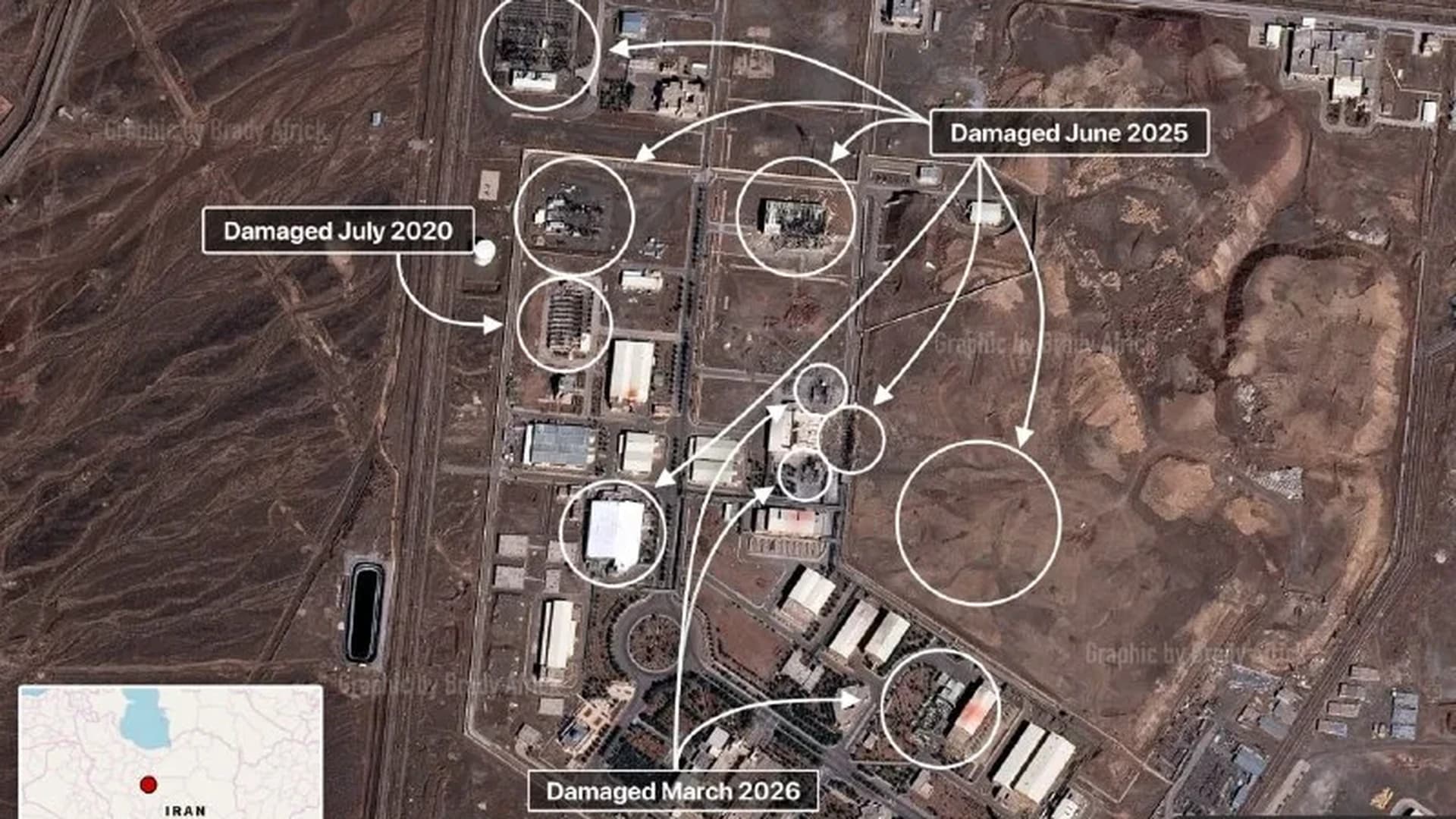
How a Stablecoin Funded Moldova's 2026 Election
Geopolitics · Sep 19, 2026

The Hidden Gold Demand Behind the $6,000 Target
Markets · Sep 17, 2026
Latest from The Board
79 Years of UFO Lies, Roswell to the Pentagon
Defense & Security · Sep 29, 2026
How CENTCOM Is Brokering an Israel-Saudi Pact
Defense & Security · Sep 19, 2026
Why the Pentagon Pulled Its Iran War Plans Offline
Defense & Security · Sep 19, 2026
How a Stablecoin Funded Moldova's 2026 Election
Geopolitics · Sep 19, 2026
The Hidden Gold Demand Behind the $6,000 Target
Markets · Sep 17, 2026
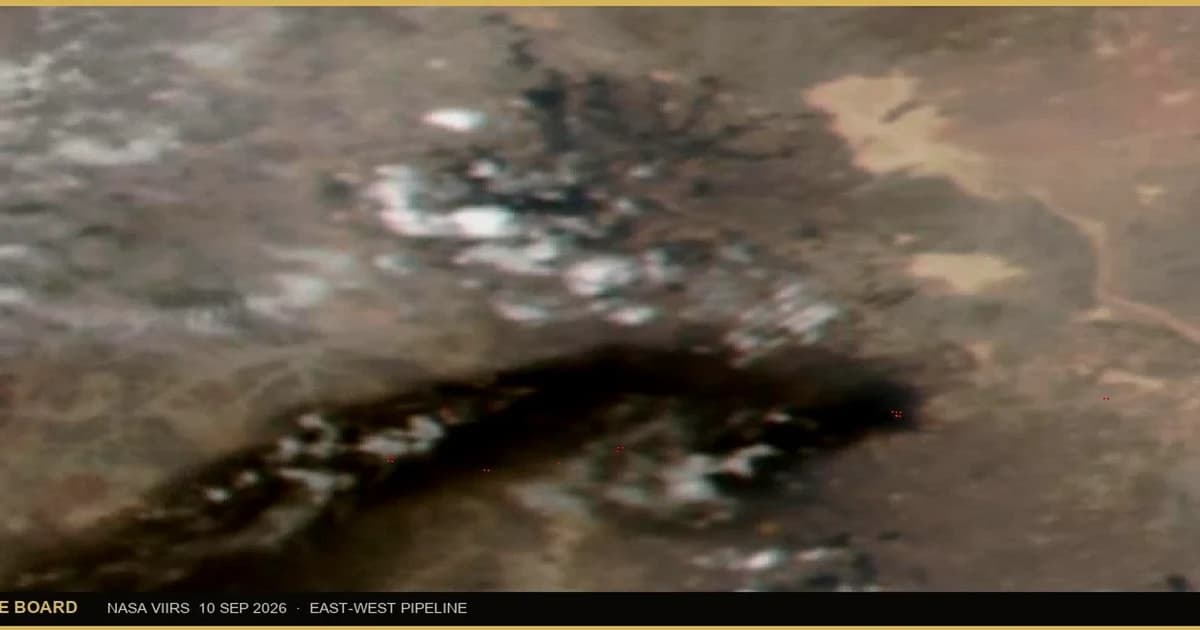
Houthis Take Perim as Saudis Halt Pipeline 2026
Geopolitics · Sep 13, 2026

Epstein Intelligence Ties: Evidence vs Allegation in 2026
Policy & Intelligence · Sep 6, 2026
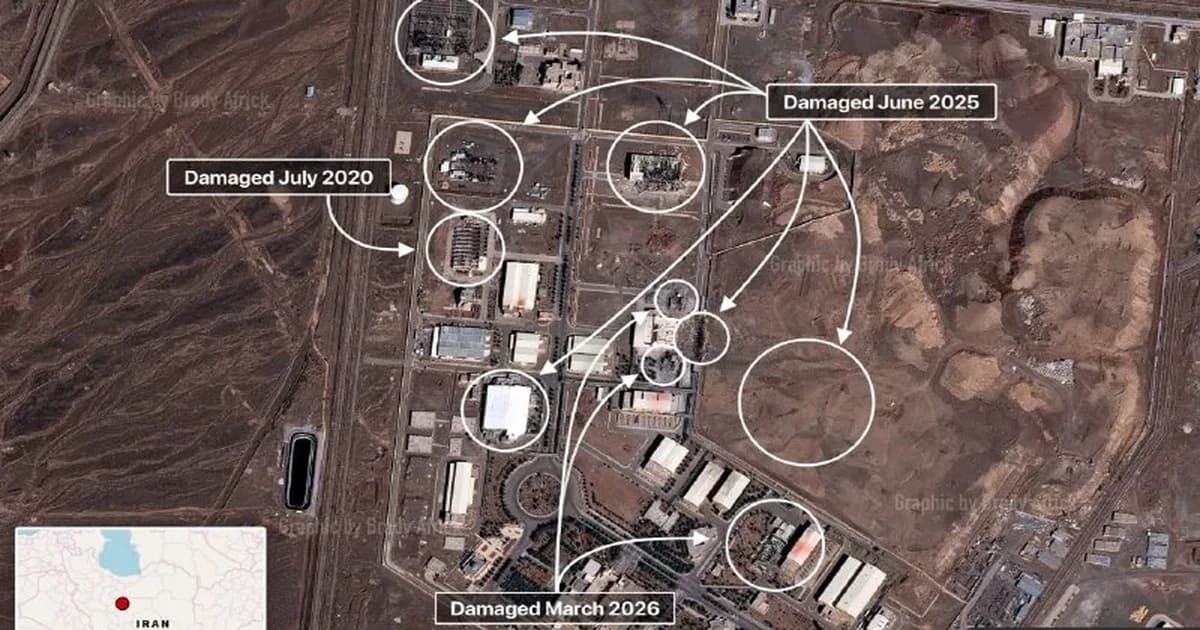
What Israel-Iran War Games Got Wrong About 2026
Defense & Security · Sep 6, 2026