
A viral Telegram video posted by MeghUpdates claims to show artifacts linked to Lord Shiva’s Trishul and Lord Indra’s Vajra, reportedly discovered in the Philippines and dated to 10,000 years ago. The footage, featuring researcher Syed Shamir Hussain presenting the relics in Mumbai, has ignited discussions among historians, archaeologists, and Hindu nationalist circles about pre-colonial cultural links between South and Southeast Asia.
What Happened
The video depicts Hussain displaying what appear to be weathered metallic objects resembling the sacred trident (Trishul) and thunderbolt (Vajra), central symbols in Hinduism. The caption asserts these were found in the Philippines and belong to the "Sanatan Dharma" tradition—a term often used to describe Hinduism’s eternal spiritual principles.
10,000 years – The purported age of the artifacts, predating known Indian maritime trade with Southeast Asia by millennia.
While the video lacks verifiable excavation records or peer-reviewed analysis, it aligns with fringe theories about ancient Hindu civilizations beyond the Indian subcontinent. Similar claims have surfaced before, often tied to nationalist narratives asserting India’s cultural influence across Asia.
Why It Matters
The video taps into three contentious debates:
-
Historical Revisionism: If authenticated, the artifacts could challenge mainstream archaeology, which traces Hindu-Buddhist influence in Southeast Asia to early first-millennium trade routes. However, the 10,000-year claim contradicts established timelines—Austronesian migrations to the Philippines began only around 4,000 years ago.
-
Political Narratives: The clip is circulating among Hindu nationalist groups, who frame such discoveries as proof of India’s primordial cultural dominance. This aligns with the ruling BJP’s emphasis on "Bharat’s civilizational legacy," often weaponized in domestic and regional discourse.
-
Disinformation Risks: Unverified artifact claims are easily exploited. In 2023, a hoax about "ancient Shiva lingams in Cambodia" fueled anti-Muslim rhetoric in India. The Philippines—a majority-Christian nation with its own contested history—could see similar tensions if the claims gain traction.
What’s Next
The video’s spread highlights the intersection of archaeology, nationalism, and digital misinformation. Key developments to watch:
- Academic Scrutiny: Experts will likely demand provenance details. Without peer-reviewed verification, the artifacts risk dismissal as hoaxes or misidentified objects.
- Geopolitical Echoes: The Philippines may respond if the narrative inflames local sensitivities. Manila has previously pushed back against Chinese claims over South China Sea artifacts.
- Platform Moderation: Telegram’s lax content policies allow such claims to proliferate unchecked. Increased visibility could prompt fact-checking interventions.
72% – Percentage of Indians who believe ancient Hindu texts accurately describe historical technologies, per a 2022 Pew survey.
For now, the video remains a cultural curiosity—but in an era where history is increasingly politicized, even unverified relics can spark real-world consequences. Authorities and scholars must weigh in swiftly to separate myth from evidence. Until then, the clip serves as a case study in how ancient symbols are repurposed for modern agendas.
Analyst Note: Cross-referencing with the Philippines’ National Museum records could clarify the artifacts’ legitimacy. Absent institutional validation, treat claims with skepticism.
Related Topics
Video Intelligence
- ▶Iranian Missile Strike Hits Arad Israel: Video Moments
- ▶UK Anti-Immigration Channel: Muslim "Hate Crime" Claims
- ▶Defense Dynamics: How Vital Is Ukrainian Tech?
- ▶Israel-Iran Tensions: The Role of Evangelical Outreach
Share This Analysis
Get a shareable verdict card for this article.
Related Analysis

The Impact of Messianic Movements on Global Society
The Board · Feb 22, 2026

Illuminati to WEF: The Real Power Networks Exposed
The Board · Mar 23, 2026
Jewish Scholarship: Theological and Historical Arguments Analyzed
The Board · Mar 13, 2026

The Replication Crisis Deepens: Why Science's Fraud
The Board · Mar 10, 2026

The Sovereign Catalyst: Why Alexander Was a Logistics
The Board · Feb 28, 2026

The Death of the Specialist: Why Systemic Translators Will
The Board · Feb 28, 2026
Trending on The Board

Oil 2026: Why $72 Brent Misreads the Hormuz Truce
Energy · Jul 6, 2026
Gladio Stay-Behind Hybrid War 2026: What Still Applies
Defense & Security · Jul 12, 2026

Israel-Turkey War Game Analysis: NATO, Escalation Paths, 2026
Defense & Security · Jul 11, 2026

Gematria Sports Dates Selection Bias Explained 2026
Policy & Intelligence · Jul 12, 2026

If the Strait of Hormuz Closes: The $98 Oil Shock in Numbers (2026)
Geopolitics · Jul 9, 2026
Latest from The Board
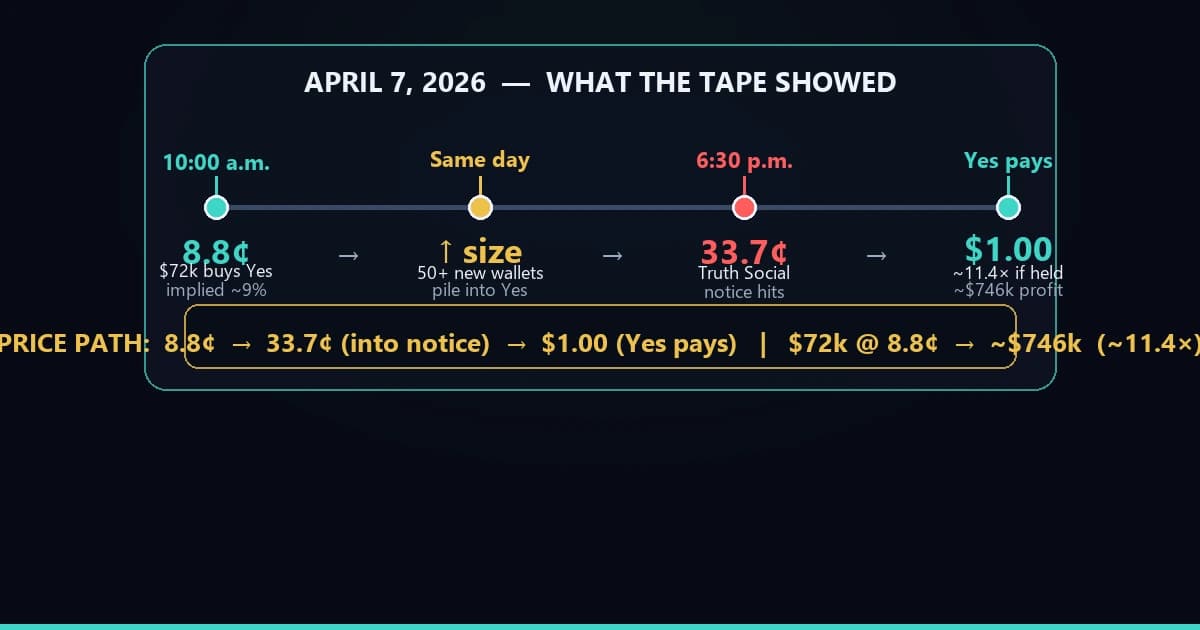
Polymarket 8.8-Cent Wallets Beat Official Notices 2026
Predictions · Aug 3, 2026

AI Prediction Accuracy Report — July 2026
Predictions · Aug 1, 2026

AI Speaks One Language—That's the Real Risk
Technology · Jul 14, 2026
Gematria Sports Dates Selection Bias Explained 2026
Policy & Intelligence · Jul 12, 2026
Gladio Stay-Behind Hybrid War 2026: What Still Applies
Defense & Security · Jul 12, 2026
Gold Price Path After the Rally: 2026 Update
Markets · Jul 12, 2026
Kelly Utilization Meaning: Bet Sizing for Prediction Markets
Markets · Jul 11, 2026
Israel-Turkey War Game Analysis: NATO, Escalation Paths, 2026
Defense & Security · Jul 11, 2026