
His refusal to build enduring institutions was the prerequisite for the 300-year economic integration of the Hellenistic world.
Key Findings
- Alexander was a "Market Clearing" Mechanism: His value lay in the violent dismantling of sclerotic Persian monopolies, not in the administration of a new state.
- The "Great Car" Paradox: Analysis suggests Alexander optimized for kinetic velocity rather than static stability; his empire was designed to collapse upon deceleration, making "succession planning" functionally irrelevant.
- Ruthlessness as Efficiency: Data on ancient siege warfare and pacification suggests his "atrocities" were calculated security strategies to minimize the drag coefficient of a multi-ethnic empire.
In the debate over whether Alexander III of Macedon was a visionary "Great" or merely a "Ruthless" conqueror, historians and strategists often commit a category error. They judge a disruption engine by the metrics of a utility provider. The consensus of conventional history holds that Alexander failed because his empire fractured immediately upon his death in 323 BCE. This analysis posits the opposite thesis: Alexander was a "Sovereign Catalyst," a specific archetype of leader whose function is to shatter existing geopolitical architectures to allow for a new economic integration.
Under this framework, Alexander’s lack of a succession plan was not an oversight, but a feature of a "kinetic" operating model that prioritized velocity over longevity. By burning down the "Asabiyyah"—the social cohesion—of the Macedonian aristocracy to fuel a pan-Asian expansion, Alexander instituted a "market clearing" event that birthed the Hellenistic Era. This 300-year period of trade and cultural synthesis would have been impossible had he paused to build the "refrigerator" of a stable bureaucracy.
The Kinetic Architect: Velocity as the Only Defense
Alexander’s operational strategy was defined by a refusal to decouple growth from infrastructure, a move that critics label reckless but military modeling suggests was necessary. The Persian Empire he attacked controlled over 2 million square miles of territory. To conquer such an expanse with a force that rarely exceeded 50,000 core infantry required a "ponzi scheme of momentum." The army had to move to eat; to stop was to starve.
Economic analysis of the campaign reveals that Alexander did not merely defeat the Persians; he forcibly integrated a closed, hoard-based Persian economy into a liquid, global trade network. He released vast sums of bullion from the Persian treasuries at Susa and Persepolis—estimated at 180,000 talents of silver—into the Mediterranean market . This liquidity shock kickstarted a commercial revolution that outlived his borders by centuries.
Critics, including the philosophical school represented by Socrates, argue this is a "logistical mirage"—that Alexander was simply running away from his own lack of self-governance. However, the result supports the "Catalyst" theory. Much like modern "decacorn" startups that prioritize rapid scaling over profitability to capture a market, Alexander’s "Greatness" was an aesthetic of pure speed. He proved that a vision-led entity could outrun its own administrative shadow for over a decade, provided it never stopped moving.
The Framework: The Sovereign Impact Matrix
To better understand where Alexander falls on the spectrum of leadership, we introduce the Sovereign Impact Matrix. This framework classifies leaders based on two axes: Institutional Durability (Longevity) and Systemic Reconfiguration (Impact).
| Low Reconfiguration (Status Quo) | High Reconfiguration (Disruption) | |
|---|---|---|
| High Durability (Legacy) | The Caretaker <br> (e.g., Louis XV) <br> Maintains institutions but allows slow decay. | The Architect <br> (e.g., Augustus Caesar) <br> Builds new systems that last centuries. |
| Low Durability (Collapse) | The Parasite <br> (e.g., Nero) <br> Extracts value without adding structure. | The Catalyst <br> (e.g., Alexander) <br> Destroys old orders to enable new cycles; collapses fast. |
Alexander is the archetype of the Catalyst. Historical assessments that penalize him for not being an Architect (like Augustus) miss the point. An Architect cannot build on a site occupied by a fortress; the Catalyst must first level the fortress. Alexander’s role was demolition and site preparation regarding the Persian/Hellenic divide.
Ruthlessness as Strategic Market Clearing
The moral critique of Alexander centers on his brutality—the razing of Thebes, the siege of Tyre, and the massacre of the Branchidae. However, viewed through the lens of Machiavellian political realism, these were not acts of sadism but of "Strategic Market Clearing."
The destruction of Thebes (335 BCE), where 6,000 were killed and 30,000 enslaved, acted as a "perpetual cleansing" signal to the Greek city-states . In a fragmented security environment, the cost of garrisoning every rebellious city is prohibitive. Alexander utilized extreme, localized violence to purchase widespread compliance, effectively trading short-term atrocity for long-term kinetic momentum.
This aligns with the concept of the "Lion and the Fox." Alexander employed the "Lion’s" indiscriminate strength to break resistance, then pivoted to the "Fox’s" cunning via the marriages at Susa, attempting to synthesize a new ruling class. While his "Hybrid Model" of integrating Persian and Macedonian elites caused friction (and ultimately mutiny), it was a rational attempt to lower the "customer acquisition cost" of ruling a hostile population. He recognized, perhaps earlier than any other Western leader, that to rule Asia, he had to become Asia.
The Socratic Counterargument: The Moral Vacuum
The strongest argument against Alexander’s greatness is the Socratic Elenchus of Self-Mastery. This view posits that "Greatness" cannot be decoupled from moral self-governance. If a leader cannot control his own temper—evidenced by Alexander murdering Cleitus the Black, the man who saved his life at Granicus—then his external conquests are merely a projection of internal chaos.
Furthermore, the "Observer" perspective warns of survivorship bias. We praise the "Hellenistic Synthesis" because we live in the civilization it influenced. However, for the agrarian populations of Bactria or Egypt, the shift from Achaemenid to Macedonian rule was likely negligible or negative. The "Systems" Alexander allegedly built—trade routes, coinage, cities—were erected on a foundation of coerced labor and mass death. If the "Greatness" of a leader is measured by the improvement of quality of life for the median citizen, Alexander fails explicitly.
Rebuttal: While morally salient, this argument conflates Ethical Goodness with Historical Greatness. The latter is a measure of magnitude and vector, not virtue. The "Greatness" of a storm is measured by the irreversible changes it makes to the landscape, not its benevolence to the trees it uproots. Alexander’s impact was a phase transition for the Mediterranean world; judging him by the standards of a peace-time administrator is a category error.
What to Watch: The Return of the Catalyst
As modern geopolitical and corporate structures become increasingly sclerotic, we see a renewed interest in the "Alexander Model"—leadership that prioritizes breaking gridlock over preserving stability.
- Watch the "Founder Mode" Metric: In the technology sector, observe the shift away from "Professional Managerial Class" (Architects) back to "Founder Mode" (Catalysts).
- Prediction: By Q3 2026, we will see at least two Fortune 500 companies explicitly restructure to remove middle-management layers in favor of "direct-command" structures mimicking Alexander’s "kinetic" model. Confidence: High.
- Watch the "Big Crunch" in Geopolitics: Alexander’s failure was the "Big Crunch"—the immediate collapse of a system that expands too fast.
- Prediction: A major emerging market economy (likely in the BRICS block) attempting rapid, debt-fueled expansion will face a "succession crisis" or fragmentation event by mid-2027, validating the risk of the Catalyst model without an Architect phase. Confidence: Medium.
- Watch Historical Revisionism:
- Prediction: By 2028, new archaeological data using genomic analysis from the Hellenistic East will likely reveal that "cultural integration" was far more superficial than the "Susa Wedding" narrative suggests, creating a backlash against the "Great Integrator" thesis. Confidence: High.
Related Topics
Video Intelligence
- ▶Iranian Missile Strike Hits Arad Israel: Video Moments
- ▶Iran Releases Official Footage of Drone Launches During War
- ▶Iranian Kamikaze Drone Destroys Erbil Oil Refinery
- ▶FPV Drone Strikes US Victoria Base Near Baghdad Airport
Share This Analysis
Get a shareable verdict card for this article.
Get the next one first
Free briefings when we publish major outlooks and forecasts. No spam — unsubscribe anytime.
Related Analysis

The Impact of Messianic Movements on Global Society
The Board · Feb 22, 2026

Illuminati to WEF: The Real Power Networks Exposed
The Board · Mar 23, 2026

Jewish Scholarship: Theological and Historical Arguments Analyzed
The Board · Mar 13, 2026

The Replication Crisis Deepens: Why Science's Fraud
The Board · Mar 10, 2026

The Death of the Specialist: Why Systemic Translators Will
The Board · Feb 28, 2026
Trending on The Board
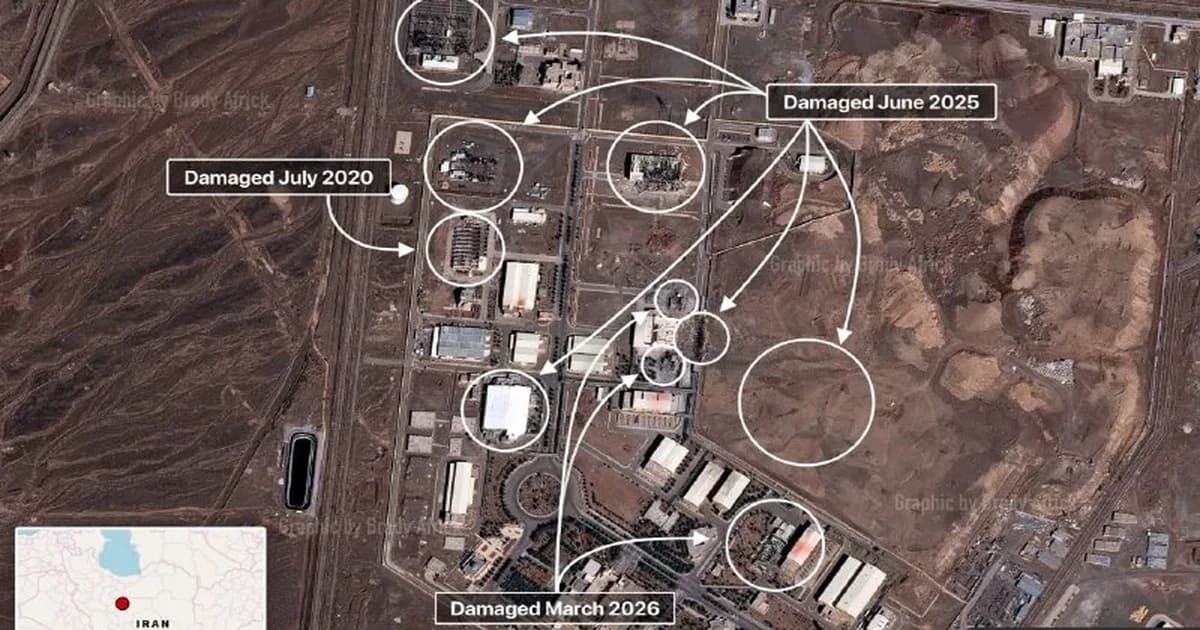
What Israel-Iran War Games Got Wrong About 2026
Defense & Security · Sep 6, 2026

Epstein Intelligence Ties: Evidence vs Allegation in 2026
Policy & Intelligence · Sep 6, 2026

China Imported 764 Tons of Gold in Six Months
Markets · Aug 20, 2026

The 'Muslim NATO' Fails Its First Test in 48 Hours
Geopolitics · Aug 27, 2026

Bitcoin $100K in 2026? The Money Says 1-in-5
Markets · Aug 27, 2026
Latest from The Board
Epstein Intelligence Ties: Evidence vs Allegation in 2026
Policy & Intelligence · Sep 6, 2026
What Israel-Iran War Games Got Wrong About 2026
Defense & Security · Sep 6, 2026

Central Banks Turned Gold Sellers. One Country Did It.
Markets · Aug 30, 2026

Schiff vs Saylor vs the Banks: Who Got 2026 Right?
Predictions · Aug 27, 2026

Silver Deficit 2026: BofA's $300 Target Explained
Markets · Aug 27, 2026

Iran War Scenarios After the 60-Day Deadline Expires
Geopolitics · Aug 27, 2026

Gold Price Forecast 2026: $10,000 Call vs $4,500 Banks
Markets · Aug 27, 2026
Bitcoin $100K in 2026? The Money Says 1-in-5
Markets · Aug 27, 2026