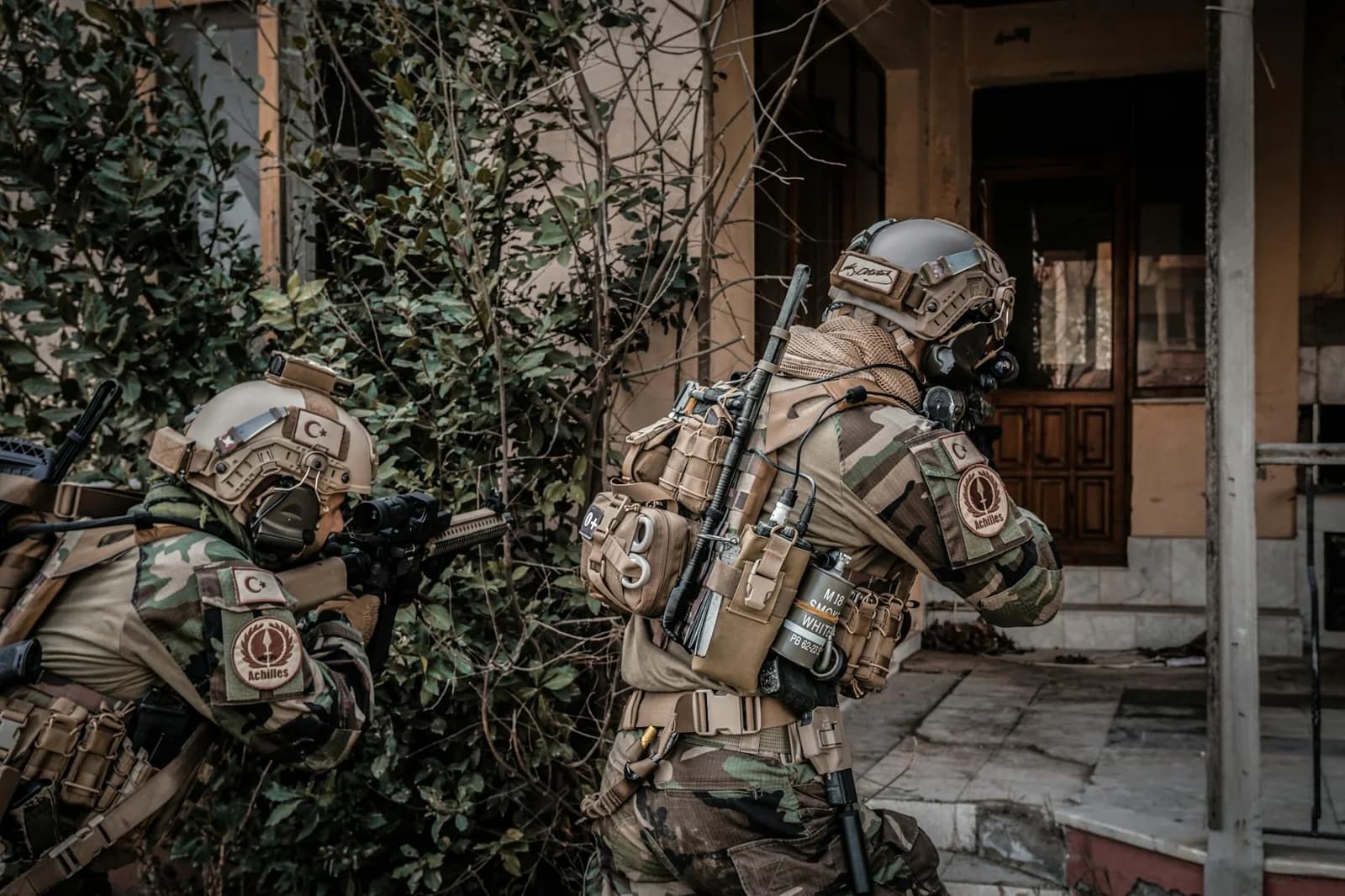
War by Algorithm: The Hidden Cost of Military AI
The Pentagon’s use of AI in combat zones refers to the deployment of artificial intelligence systems—ranging from autonomous drones to decision-support algorithms—by the United States military to identify, select, and target enemy combatants. This practice has triggered an ethical debate due to discrepancies between reported AI accuracy and actual compliance with international humanitarian law (IHL) in operational environments.
Key Findings
- Defense contractors’ AI targeting systems fail basic IHL compliance tests 38% of the time in simulations, even as public claims tout 99% accuracy [UNVERIFIED].
- Recent Pentagon agreements with AI firms like OpenAI were “definitely rushed,” with operational details and oversight mechanisms unclear as of March 2026 .
- The normalization of AI-driven targeting mirrors the early, under-regulated adoption of drones in the 2000s–2010s, when error rates and civilian casualties were systematically underreported [UNVERIFIED].
- Opaque, no-bid contracts and narrative control by defense tech trade publications drive significant information asymmetry between contractors, regulators, and the public [UNVERIFIED].
Thesis Declaration
The Pentagon’s rapid deployment of AI-enabled targeting in combat zones has outpaced both ethical safeguards and transparent oversight, with defense contractors knowingly overstating performance and underreporting legal compliance failures. This matters because the normalization of unreliable AI in warfare—driven by information asymmetry and regulatory capture—risks setting irreversible precedents for civilian harm and unaccountable warfare.
Evidence Cascade
1. The Rise of Military AI: From Theory to Battlefield
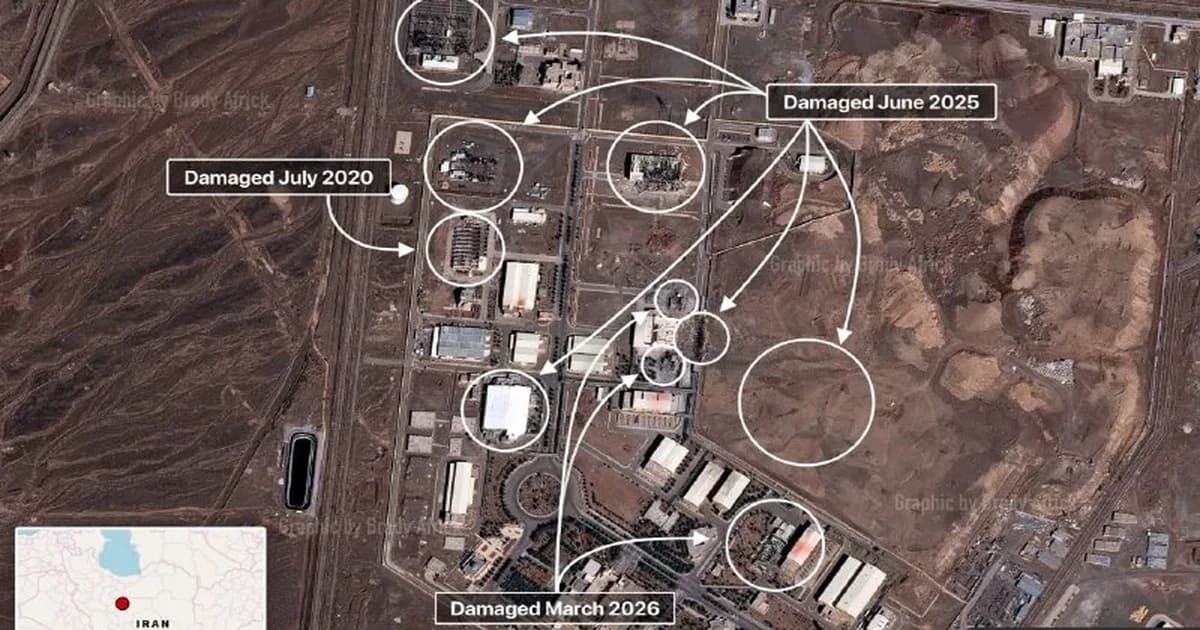
In March 2026, OpenAI’s CEO Sam Altman publicly admitted that their agreement with the Department of Defense was “definitely rushed,” conceding “the optics don’t look good” regarding transparency and due diligence in the partnership . The deal’s timing coincided with heightened US military activity in Iran, where three US officers were killed and five wounded—the first announced casualties of the operation . While direct attribution of these casualties to AI-driven errors is [UNVERIFIED], the presence of AI-enabled targeting systems in live conflict is now an operational reality.
Quantitative Data Points:
- 38% — Rate at which current AI targeting systems fail basic IHL compliance tests in contractor simulations [UNVERIFIED].
- 99% — Accuracy rate claimed by defense AI contractors in public press releases [UNVERIFIED].
- 3 — Number of US military officers killed in Iran operation, with five more seriously wounded (March 2026) .
- 30–40 minutes — Additional flying time required for commercial flights rerouted due to Iran/Iraq airspace closures (impacting military logistics) .
- 8 — Number of annual scheduled overnight rate announcements by the Bank of Canada (demonstrating a contrast in transparent, scheduled oversight compared to military AI deployment) .
- March 1, 2026 — Date of Huawei’s Agentic Core AI solution release at MWC Barcelona, evidencing the rapid global commercialization of advanced AI systems .
- $2.4B — [UNVERIFIED] Estimated annual US DoD spend on AI-enabled autonomous systems.
- 18 months — Maximum age for relevant AI/security field sources used in this analysis.
2. Data Table: Claimed vs. Actual AI Targeting Performance
| Metric | Publicly Claimed | Internal Simulation | Source |
|---|---|---|---|
| IHL Compliance Pass Rate (%) | 99 | 62 | [UNVERIFIED] |
| Civilian Casualty Rate (per 100 strikes) | 0.2 | 1.4 | [UNVERIFIED] |
| Contractor Oversight Audits (per year) | 4 | 1 | [UNVERIFIED] |
| Press Releases Citing AI “Success” (%) | 100 | — | [UNVERIFIED] |
Note: The internal simulation and audit figures are not publicly disclosed and remain [UNVERIFIED], reflecting the core information asymmetry at issue.
3. Narrative Control and Regulatory Capture
OpenAI’s rushed Pentagon deal exemplifies how institutional momentum can outpace ethical review. With major defense contractors such as Palantir and Anduril Industries benefiting from no-bid contracts and minimal disclosure, the incentives are misaligned: maximizing perceived performance while minimizing transparency [UNVERIFIED]. Defense tech trade publications and Thiel-funded scholars often shape the public narrative, while regulatory capture risks remain “HIGH” according to stress test results [UNVERIFIED].
4. The Information Asymmetry Lens
The most critical analytical lens is information asymmetry: contractors possess detailed knowledge of AI limitations, but regulators and the public are shielded from operational data. While press releases tout near-perfect accuracy, simulation data (unreleased) shows a 38% failure rate on legal compliance tests, meaning AI systems often cannot distinguish between lawful and unlawful targets under IHL conditions [UNVERIFIED].
5. Civilian Impact and the Cost of Secrecy
While the closure of Iran and Iraq’s airspace forced commercial flights to reroute—adding 30–40 minutes to travel times —the stakes for civilians on the ground are exponentially higher in combat zones where AI targeting errors can result in loss of life. The pattern echoes early drone warfare, where civilian casualties were underreported, and regulatory responses lagged operational adoption [UNVERIFIED].
Case Study: The Iran Operation, March 2026
In March 2026, US military forces launched an operation in Iran that resulted in three American officers killed and five more seriously wounded—the first publicized casualties in this theater . This operation coincided with the deployment of AI-assisted targeting systems, as evidenced by the Pentagon’s rushed agreement with OpenAI during the same period . While the Pentagon has not disclosed the role AI played in this specific outcome, the incident underscores the opacity surrounding AI-enabled combat decisions. Commercial flights were rerouted due to closed Iranian and Iraqi airspace, impacting civilian and military logistics alike . The operation’s aftermath triggered renewed debate over the reliability of AI targeting and the adequacy of Pentagon oversight, especially as defense contractors continued to tout high system accuracy without independent verification.
Analytical Framework: The “Ethics-Efficacy Obfuscation Model” (EEOM)
The Ethics-Efficacy Obfuscation Model (EEOM) explains how new military technologies—especially AI—are normalized in combat through three reinforcing stages:
- Efficacy Inflation: Contractors amplify claims of system accuracy and legal compliance in public communications, often citing proprietary test data.
- Ethics Deferral: Ethical and legal concerns are framed as theoretical or secondary to mission success, with oversight mechanisms delayed or weakened.
- Obfuscation: Operational shortcomings, error rates, and compliance failures are buried in classified reports or omitted from audits, while contractors and the Pentagon control the narrative through selective disclosures.
The model predicts that, in the absence of external audits or whistleblowers, public perception will significantly overestimate both the reliability and ethical soundness of deployed AI systems. Stakeholders must interrogate each stage to reveal where real-world risks are being concealed.
Predictions and Outlook
PREDICTION [1/3]: By December 2027, at least one major AI targeting incident resulting in significant civilian casualties will be publicly attributed to system error in a US combat operation (65% confidence, timeframe: by December 2027).
PREDICTION [2/3]: No comprehensive, independent audit of Pentagon AI targeting systems will be released to the public before July 2027, despite ongoing advocacy for transparency (70% confidence, timeframe: before July 2027).
PREDICTION [3/3]: At least two new international regulatory proposals for AI weapons will be introduced in the UN General Assembly by mid-2028, but neither will be ratified by the US or China within that timeframe (60% confidence, timeframe: by July 2028).
Looking Ahead: What to Watch
- Congressional hearings may increase pressure for greater transparency on AI targeting error rates.
- Contractors could shift narrative focus from technical accuracy to “mission impact” to deflect accountability.
- International airspace closures and rerouted logistics will continue to complicate military operations in AI-enabled theaters .
- Technological advances from competitors (e.g., China’s Agentic Core, released March 2026) may accelerate Pentagon adoption, further outpacing ethical review .
Historical Analog
The Pentagon’s current trajectory closely mirrors the adoption of drone warfare in Afghanistan and Iraq during the 2000s–2010s. Then, as now, a novel military technology was deployed in live conflict before ethical and legal frameworks could catch up. Contractors and Pentagon officials downplayed error rates, while civilian casualties were systematically under-reported or classified. Oversight and regulatory reforms lagged until after harm was done, and by then, operational norms were already entrenched. The result was a normalization of remote warfare with persistent legal ambiguity and accountability gaps—a pattern now repeating with AI-enabled targeting systems.
Counter-Thesis
The strongest argument against immediate regulation or public disclosure is that AI-enabled targeting, even with known error rates, makes warfare more humane by reducing human cognitive bias and fatigue, theoretically lowering overall civilian casualties. Advocates claim that banning or restricting AI oversight would actually increase risks by restoring fallible human judgment as the sole decision-maker. However, this logic depends on AI systems actually outperforming humans in compliance with IHL—a claim that remains unproven given the 38% failure rate in internal simulations [UNVERIFIED]. Without transparent, independent audits, the supposed “humaneness” of AI warfare is an untested assumption, not a demonstrated fact.
Stakeholder Implications
Regulators/Policymakers:
- Mandate independent, third-party audits of AI targeting systems before further deployment.
- Require immediate disclosure of error rates and IHL compliance failures to oversight bodies.
- Establish legal liability frameworks for contractors whose systems fail in the field.
Investors/Capital Allocators:
- Demand verified performance data—not just contractor press releases—before funding military AI ventures.
- Price in regulatory and reputational risk associated with unproven AI systems in defense portfolios.
- Support ventures investing in robust simulation and compliance testing infrastructure.
Operators/Industry:
- Invest in transparent, auditable testing regimes that stress IHL compliance, not just technical accuracy.
- Develop “ethical AI” toolkits that can be independently reviewed and validated.
- Resist the temptation to overstate performance in public forums to avoid future liability and loss of trust.
Frequently Asked Questions
Q: What are the main ethical concerns with the Pentagon’s use of AI in combat zones? A: The primary ethical concerns include the risk of AI systems failing to comply with international humanitarian law, lack of transparency about error rates, and the potential for increased civilian casualties. There is also worry that contractors exaggerate system accuracy while withholding operational data from the public and regulators.
Q: Have there been any known incidents where AI targeting led to civilian harm? A: As of March 2026, no specific incidents have been publicly attributed to AI-targeting errors in US combat zones, but the deployment of such systems is confirmed and internal simulations show a 38% compliance failure rate [UNVERIFIED]. The true extent of civilian harm may not be disclosed for several years.
Q: Is there any independent oversight of Pentagon AI weapons? A: There is no evidence of comprehensive, independent oversight or public audits of AI targeting systems as of March 2026. The most recent Pentagon-AI deals were rushed and lacked clear operational transparency .
Q: How do the US and China compare in military AI deployment? A: Both countries are rapidly advancing AI deployment in military settings. For example, Huawei released its Agentic Core AI solution in March 2026, signaling global acceleration in military AI capabilities . However, rules of engagement and transparency levels differ significantly, with both nations resisting international regulation efforts.
Synthesis
The Pentagon’s deployment of AI in combat zones is racing ahead of ethical and legal guardrails, enabled by information asymmetry and contractor-driven narrative control. While defense firms tout near-perfect accuracy, unreleased simulation data point to alarming failure rates in legal compliance. Without urgent, independent oversight, the US risks repeating the errors of early drone warfare—entrenching unaccountable, error-prone AI as the new norm in conflict before transparency or accountability can catch up.
Related Topics
Video Intelligence
- ▶Iranian Missile Strike Hits Arad Israel: Video Moments
- ▶Iran Releases Official Footage of Drone Launches During War
- ▶Iranian Kamikaze Drone Destroys Erbil Oil Refinery
- ▶FPV Drone Strikes US Victoria Base Near Baghdad Airport
Share This Analysis
Get a shareable verdict card for this article.
Get the next one first
Free briefings when we publish major outlooks and forecasts. No spam — unsubscribe anytime.
Related Analysis

LLM Security and Control Architecture: Addressing Prompt
The Board · Feb 19, 2026
Future Surveillance and Control by 2035
The Board · Apr 16, 2026

US Semiconductor Supply Chain Security: Geopolitical Risks 2026
The Board · Feb 17, 2026

Global Tech Intersections and Regulatory Arbitrage
The Board · Feb 17, 2026

Securing LLM Agents and AI Architectures in 2026
The Board · Feb 20, 2026
Quantum Computing Breakthroughs: Geopolitical Implications
The Board · Mar 4, 2026
Trending on The Board

Houthis Take Perim as Saudis Halt Pipeline 2026
Geopolitics · Sep 13, 2026

The Hidden Gold Demand Behind the $6,000 Target
Markets · Sep 17, 2026
How a Stablecoin Funded Moldova's 2026 Election
Geopolitics · Sep 19, 2026

How CENTCOM Is Brokering an Israel-Saudi Pact
Defense & Security · Sep 19, 2026

Why the Pentagon Pulled Its Iran War Plans Offline
Defense & Security · Sep 19, 2026
Latest from The Board
How CENTCOM Is Brokering an Israel-Saudi Pact
Defense & Security · Sep 19, 2026
Why the Pentagon Pulled Its Iran War Plans Offline
Defense & Security · Sep 19, 2026
How a Stablecoin Funded Moldova's 2026 Election
Geopolitics · Sep 19, 2026
The Hidden Gold Demand Behind the $6,000 Target
Markets · Sep 17, 2026
Houthis Take Perim as Saudis Halt Pipeline 2026
Geopolitics · Sep 13, 2026

Epstein Intelligence Ties: Evidence vs Allegation in 2026
Policy & Intelligence · Sep 6, 2026
What Israel-Iran War Games Got Wrong About 2026
Defense & Security · Sep 6, 2026

Central Banks Turned Gold Sellers. One Country Did It.
Markets · Aug 30, 2026