
Decapitation strikes targeting Iranian leadership have removed the diplomatic off-ramp, pushing global energy markets into a sustained volatility supercycle.
Key Findings
- The "Decapitation Paradox": While the reported death of Supreme Leader Ali Khamenei successfully disrupts centralized command, it fractures control over IRGC units, increasing the likelihood of uncoordinated, maximum-casualty reprisal attacks in the Strait of Hormuz.
- Nuclear Setback Confirmed: Joint US-Israeli strikes have significantly degraded facilities in Isfahan, Qom, and Parchin, likely delaying Iran's breakout time by 3-5 years, though at the cost of immediate regional stability , .
- Energy Risk Premium: With the Strait of Hormuz declared closed by Tehran, insurance premiums for tankers have effectively blockaded the route, creating a supply shock that Saudi spare capacity cannot immediately offset .
The Strategic Assessment
At 02:00 local time on February 28, 2026, the strategic calculus of the Middle East shifted violently. The coordinated launch of "Operation Epic Fury" by the United States and "Operation Roaring Lion" by Israel against targets in Tehran, Isfahan, and Kermanshah represents the most significant military escalation in the region since the 2025 conflict . Initial damage assessments indicate a tactical success: air defenses were overwhelmed, and key nuclear components were neutralized.
However, the operational victory contains a strategic poison pill. Israel’s claim that Supreme Leader Ali Khamenei was killed in the strikes fundamentally alters the escalation dynamics. Thesis: While "Operation Epic Fury" has successfully degraded Iran’s nuclear latency, the simultaneous decapitation strategy has fractured the command-and-control structure necessary to negotiate a de-escalation, virtually guaranteeing a prolonged, asymmetric maritime conflict that will sustain Brent crude above $110/barrel through Q3 2026.
We are no longer dealing with a unitary state actor capable of rational bargaining, but rather a "Headless Hydra"—a fragmented security apparatus where individual IRGC commanders now possess the autonomy and incentive to launch uncoordinated retaliatory strikes.
The Nuclear Calculus: Kinetic Success, Diplomatic Vacuum
The strikes, precipitated by the collapse of diplomatic talks in Geneva on February 26 , exercised a kinetic option that prediction markets had only assigned a 16-18% probability to occurring in February . This surprise factor maximized the tactical impact. Reports confirm heavy damage to IAEA-safeguarded sites and undeclared facilities involved in weaponization, specifically targeting missile production hubs in Parchin .
Historically, nuclear interdiction strikes (Osirak 1981, Al-Kibar 2007) rely on the target regime absorbing the blow to preserve its residual power. That logic does not apply here. The strike on a girls' school in southern Iran, resulting in 51 casualties , combined with the targeting of the Supreme Leader, has stripped the regime of political room to maneuver. The US has effectively removed the entity that could order a surrender.
Original Framework: The Post-Strike Matrix
To understand the next 72 hours, analysts must discard standard deterrence models. We must analyze the Iranian response through the "Regime Fragmentation Matrix," which maps Command Cohesion against Retaliatory Capacity.
| Scenario | Command Cohesion | Retaliatory Capacity | Outcome |
|---|---|---|---|
| Controlled Escalation | High | High | Centralized salvo launches; negotiable off-ramp. |
| Attrition War | High | Low | State-level insurgency; prolonged low-intensity conflict. |
| Implosion | Low | Low | Civil war; loss of asset control; minimal external threat. |
| The Headless Hydra | Low | High | Current State: Regional commanders with ballistic inventory launch independent max-casualty attacks to prove legitimacy. |
We are currently in the distinct "Headless Hydra" quadrant. With the power structure "shattered" , local IRGC naval commanders in Bandar Abbas are operating without central restraint. This explains the immediate declaration closing the Strait of Hormuz . In a functioning hierarchy, closing the Strait is a desperate final card; in a fractured one, it is the first move of autonomous units fighting for survival.
The Chokepoint Crisis regarding Hormuz
The declaration that the Strait of Hormuz is closed is legally irrelevant but commercially decisive. The physical capacity of the Iranian Navy to block the 21-mile wide channel against the US Fifth Fleet is negligible. However, the commercial blockade is already effective.
Tanker operators are risk-averse. Following the strike confirmation, marine insurers are likely to suspend coverage for hull and machinery transiting the Gulf, or price it at prohibitive rates. Sources indicate that oil and gas tankers began diverting immediately upon the announcement .
The math of the blockade is stark. The Strait handles roughly 20-30% of global oil consumption. While Saudi Arabia and the UAE can bypass the Strait via the East-West Pipeline and the Habshan-Fujairah pipeline respectively, their combined bypass capacity is approximately 6.5–7 million barrels per day (bpd). This leaves a shortfall of over 10 million bpd that cannot reach the open ocean if the Strait remains a "no-go" zone for civilian traffic.
This creates a specific volatility floor for energy markets. Unless the US Navy creates a convoy system within 96 hours—a logistical challenge requiring assets not currently in position—the friction in global supply chains will remain acute.
Counterargument: The "Paper Tiger" Collapse Theory
The Argument: A prevailing view in hawkish Western circles, articulated by commentators like Patrick Bet-David, suggests that the removal of the "Headless Snake" will lead to a rapid regime collapse rather than prolonged war . Proponents argue that without Khamenei, the deep internal fissures in Iranian society—evidenced by the reaction to the student casualties—will spark a revolution that paralyzes the military. Under this "Liberation Scenario," the IRGC capitulates to preserve its economic assets, and oil markets stabilize within weeks as a transitional government emerges.
The Rebuttal: This analysis suffers from "optimism bias" and ignores the command structure of the IRGC. Unlike the Iraqi Republican Guard in 2003, the IRGC is ideologically indoctrinated and decentralized. The "Headless Hydra" framework suggests that in the event of a leadership vacuum, hardliners effectively hijack the state's remaining assets. Furthermore, the civilian casualty count (85 confirmed in some reports, including the school strike) provides the IRGC with a potent "rally around the flag" narrative that dampens immediate revolutionary sentiment. The prediction markets, which heavily skewed toward a later conflict (June 2026 reliability at 74%) , suggest the market was unprepared for this timeline, indicating that the immediate reaction will be financial panic, not political resolution.
What to Watch
The next 72 hours will define the trajectory of the remainder of 2026.
-
Metric: The Lloyd’s List War Risk Premium.
-
Watch for the "Hull War Risks" additional premium to exceed 5% of hull value. If it breaches this threshold by March 3, the Strait is effectively closed regardless of US naval presence.
-
Confidence: High.
-
Prediction: Chinese Naval Intervention.
-
By March 5, 2026, the People’s Liberation Army Navy (PLAN) will announce the deployment of an escort task force to the Gulf, ostensibly to protect commercial shipping. This will complicate US rules of engagement.
-
Confidence: Medium (60%).
-
Indicator: The UAE Interception Rate.
-
Abu Dhabi has already intercepted one wave of strikes . If the interception success rate drops below 80% in the next 48 hours relative to launch volume, expect UAE diplomatic channels to fracture the anti-Iran coalition in favor of a separate peace.
-
Confidence: High.
Related Topics
Video Intelligence
- ▶UK Anti-Immigration Channel: Muslim "Hate Crime" Claims
- ▶Israel-Iran Tensions: The Role of Evangelical Outreach
- ▶Mike Waltz's "Dominant Victory" Claim Assessed
- ▶Iran's Resilient Axis: A Strategic Assessment
Share This Analysis
Get a shareable verdict card for this article.
Related Analysis

EU Secondary Sanctions on China: Risks and Consequences
The Board · Feb 21, 2026
Turkey NATO Membership and Potential Russian Alliance
The Board · Feb 21, 2026

Modern World War 3 Scenarios and Systemic Collapse
The Board · Feb 19, 2026

Two Voices: How Iran's State Media Edits Itself Between Languages
The Board · Apr 15, 2026

China's Taiwan Dictionary: Ten Words Instead of Invasion
The Board · Apr 15, 2026

Seven Days in Baghdad: The Kataib Hezbollah Anomaly
The Board · Apr 15, 2026
Trending on The Board
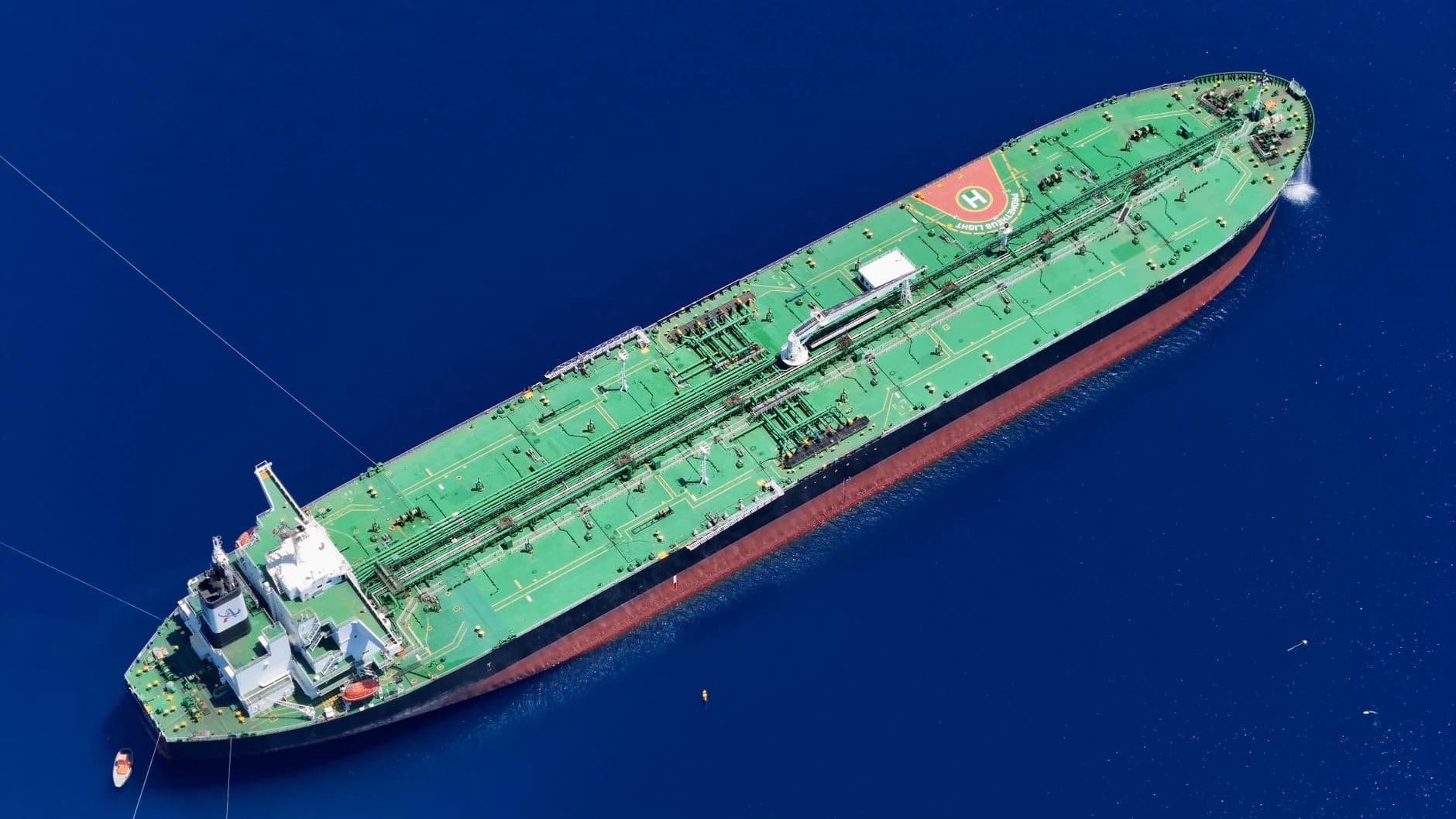
Oil 2026: Why $72 Brent Misreads the Hormuz Truce
Energy · Jul 6, 2026
Gladio Stay-Behind Hybrid War 2026: What Still Applies
Defense & Security · Jul 12, 2026
Israel-Turkey War Game Analysis: NATO, Escalation Paths, 2026
Defense & Security · Jul 11, 2026
Gematria Sports Dates Selection Bias Explained 2026
Policy & Intelligence · Jul 12, 2026

If the Strait of Hormuz Closes: The $98 Oil Shock in Numbers (2026)
Geopolitics · Jul 9, 2026
Latest from The Board
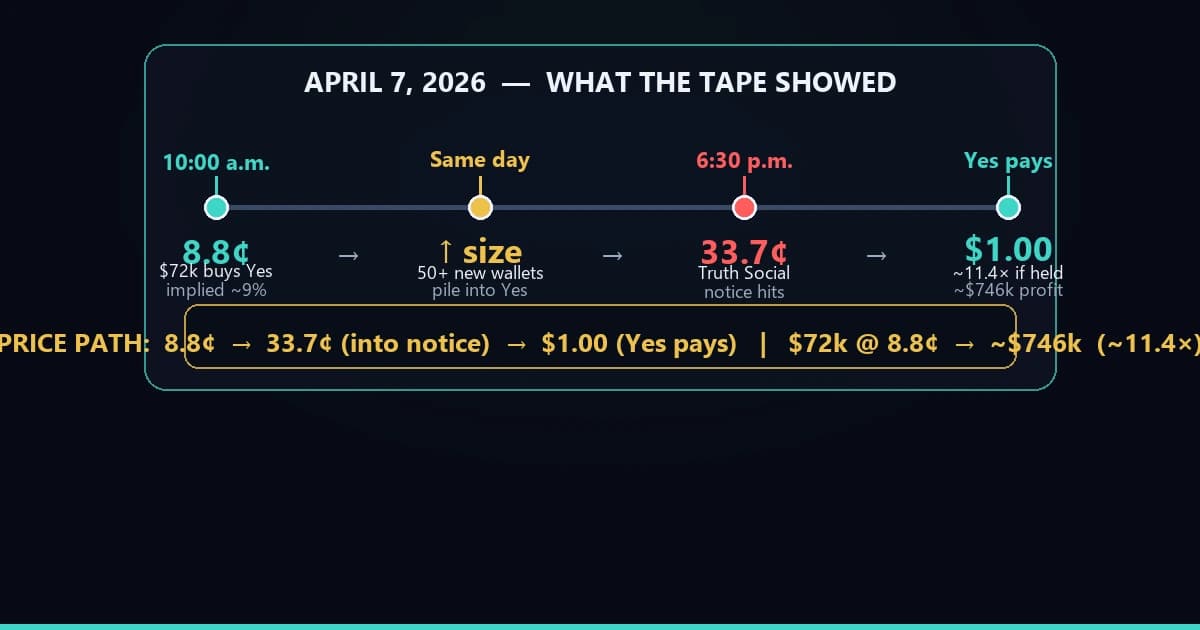
Polymarket 8.8-Cent Wallets Beat Official Notices 2026
Predictions · Aug 3, 2026

AI Prediction Accuracy Report — July 2026
Predictions · Aug 1, 2026

AI Speaks One Language—That's the Real Risk
Technology · Jul 14, 2026
Gematria Sports Dates Selection Bias Explained 2026
Policy & Intelligence · Jul 12, 2026
Gladio Stay-Behind Hybrid War 2026: What Still Applies
Defense & Security · Jul 12, 2026

Gold Price Path After the Rally: 2026 Update
Markets · Jul 12, 2026

Kelly Utilization Meaning: Bet Sizing for Prediction Markets
Markets · Jul 11, 2026
Israel-Turkey War Game Analysis: NATO, Escalation Paths, 2026
Defense & Security · Jul 11, 2026