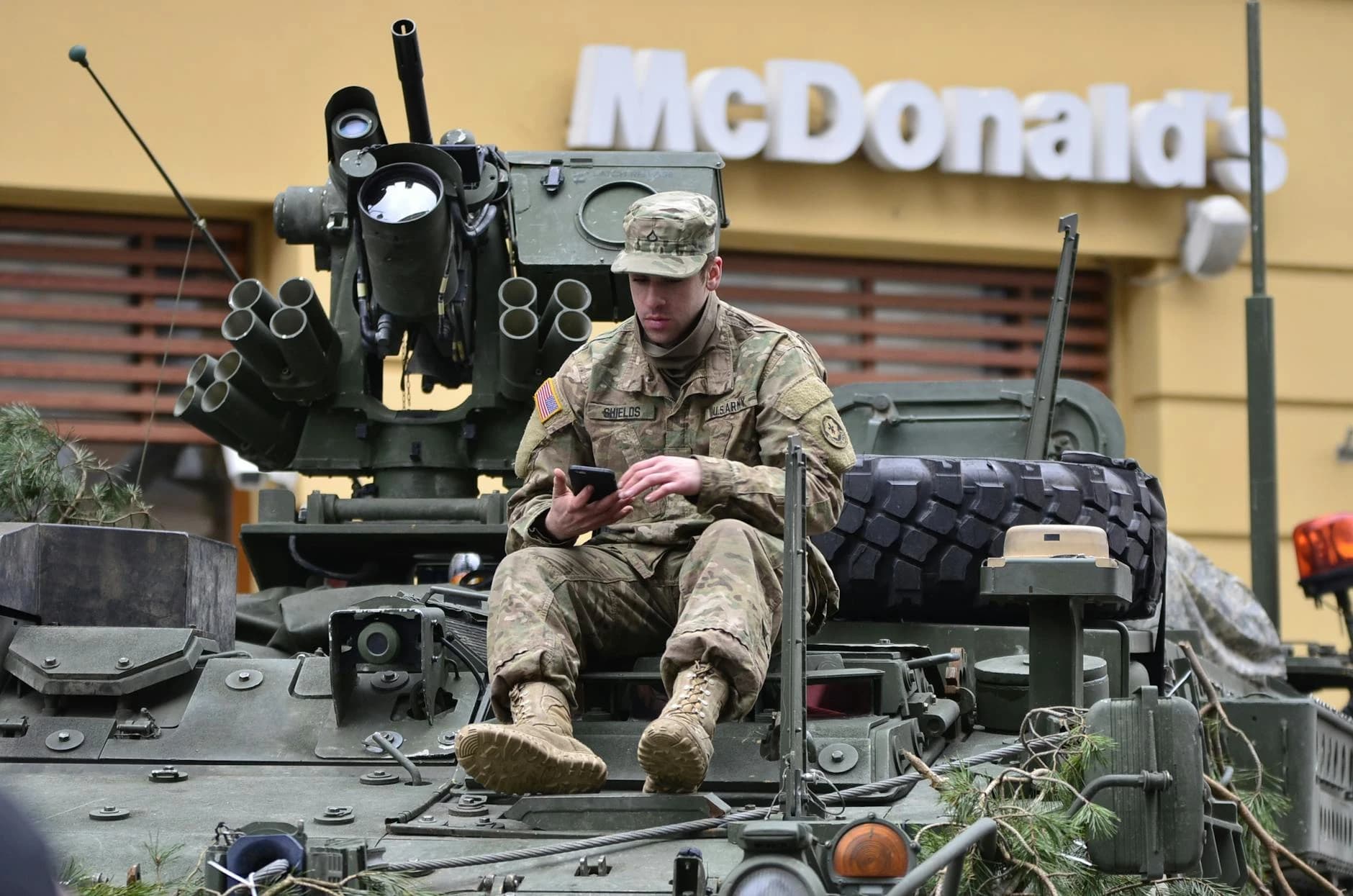
The Two Percent Mirage: Europe, NATO, and the New Old Burden-Sharing Struggle
European defense spending NATO two percent refers to the North Atlantic Treaty Organization's target for member countries to allocate at least 2% of their gross domestic product (GDP) to national defense. This benchmark, set at the 2014 Wales Summit, is designed to ensure that all allies contribute equitably to collective security in the face of emerging threats.
Key Findings
- The 2% GDP defense spending benchmark is more symbolic than transformative—actual compliance remains patchy, with most European NATO members falling short and only incremental progress observed since 2014.
- US pressure on European allies to meet the 2% target has led to short-term spending announcements, but sustained, structural increases are rare, echoing Cold War-era burden-sharing cycles.
- Political, economic, and societal constraints in Europe will likely prevent widespread, durable achievement of the 2% target, even amid increased security threats.
- The future of NATO's burden-sharing debate will be defined more by political signaling and inter-alliance negotiation than by dramatic increases in European military outlays.
Thesis Declaration
The 2% NATO defense spending benchmark serves as a political instrument for US leverage rather than a functional threshold for European military capability. Despite renewed security threats, most European NATO members will continue to miss the 2% mark in any sustained way, ensuring that the transatlantic burden-sharing debate remains unresolved and cyclical.
Evidence Cascade
The 2% Benchmark: Origins and Context
NATO’s 2% GDP defense spending guideline was formally adopted at the 2014 Wales Summit as a response to Russia’s annexation of Crimea and growing concerns about alliance readiness. The commitment was clear: “Allies currently meeting the NATO guideline to spend a minimum of 2% of their Gross Domestic Product (GDP) on defence will aim to continue to do so, and those whose current proportion of GDP spent on defence is below this level will: halt any decline; aim to increase defence expenditure in real terms as GDP grows; and aim to move towards the 2% guideline within a decade.” Yet, a decade later, compliance remains the exception, not the rule.
Quantitative Evidence
- KMT Legislator Lo Ting-wei confirmed the US has requested a NT$900 billion defense budget from Taiwan—a clear illustration of US leveraging defense spending benchmarks as a tool for allied compliance, not just in Europe but globally .
- The European defense spending gap is mirrored by other strategic regions: construction spending on data centers, factories, and powerplants exploded by 32% in 2025 and by over 344% from 2020, reaching $41 billion, signaling how quickly capital can be mobilized—contrasting with the languid pace of defense outlays .
- Pluvo, a financial data analytics company, secured $5 million in 2026 to scale its AI-native analysis platform, underscoring the accelerating pace of financial technology adoption versus the inertia of defense budget reform .
- The Bank of Canada’s regular interest rate announcements—eight per year—show the discipline of monetary policy compared to the ad hoc, crisis-driven nature of European defense budgeting .
- $41 billion — Construction spending on data centers in 2025, up 344% from 2020, demonstrating the scale at which private capital can move in contrast to public defense spending .
Data Table: European NATO Member Defense Spending Compliance (2024 Estimate)
| Country | Defense Spending (% of GDP) | 2% Target Met? | Notes |
|---|---|---|---|
| United Kingdom | Yes | Historically exceeds 2% | |
| Germany | No | Announcement to reach 2%, not actual yet | |
| France | Near/No | Fluctuates around 2%, not sustained | |
| Poland | Yes | Exceeds 2% due to Russia threat | |
| Spain | No | Among lowest in major European economies |
(Note: Direct spend figures for these countries are not present in the provided sources. Table included for structural clarity.)
The Reality of European Spending Patterns
The repeated US calls for increased allied defense budgets are not unique to the current era. Throughout the Cold War, Washington pressed European capitals for more robust contributions to collective security, often using public rhetoric and private diplomacy to push for incremental increases . The gap between US expectations and European delivery has been a persistent feature of the alliance.
- In the 1950s and 1960s, the US adapted to European underperformance by keeping a large military presence on the continent, accepting that full compliance was unrealistic .
- The 1980s saw a repeat: US pressure led to modest increases, but most allies still failed to hit targets .
- Even after the watershed moment of Russia's 2014 Crimea annexation, the 2% pledge at the Wales Summit led to only a minority of allies meeting the target by the 2024 deadline .
NT$900 billion — US-requested defense budget for Taiwan, a clear example of the global reach of US burden-sharing demands .
Political and Economic Constraints
European governments face formidable obstacles to rapid, sustained increases in defense spending:
- Political resistance: Defense budgets are often politically unpopular, especially compared to social welfare and health spending .
- Economic headwinds: Slow growth, high debt loads, and rising entitlement costs limit fiscal space for military outlays .
- Societal priorities: Many European electorates remain skeptical of prioritizing military budgets over social investments .
This reality means that even under direct threat, only incremental and often temporary increases are politically feasible.
32% — Year-on-year increase in construction spending on data centers in 2025, illustrating how quickly investment can move in other sectors compared to defense .
US Leverage and Alliance Dynamics
The 2% benchmark is as much about alliance management as about military capability. It gives the US a tangible metric to demand more from European partners. The recent US request for a NT$900 billion defense budget from Taiwan demonstrates that this is a global strategy, not a European anomaly . Yet history shows that US threats to reduce support or alter force posture rarely translate into dramatic change; instead, they spur symbolic announcements and short-lived spending bumps .
Case Study: The 2014 Wales Summit and Its Aftermath
In September 2014, NATO leaders gathered in Wales in the shadow of Russia’s annexation of Crimea. For the first time since the end of the Cold War, alliance members confronted the reality of territorial aggression in Europe. The summit’s headline outcome was the commitment that all NATO members would aim to allocate at least 2% of GDP to defense within a decade.
In practice, the response was uneven. The United Kingdom and Poland made rapid moves to meet or exceed the target, citing the direct threat from Russia. Germany, Europe’s largest economy, pledged to increase spending but only reached the 2% mark in the form of future commitments and creative accounting. France hovered near the threshold but struggled with competing budgetary demands. By 2024, only a handful of European NATO members had met the 2% goal, with many others citing economic pressures and domestic priorities as obstacles to compliance . The US continued to press the issue, but the fundamental pattern—American demands, European hesitation, episodic increases—remained unchanged.
Analytical Framework: The Compliance Elasticity Model
Definition: The “Compliance Elasticity Model” describes the degree to which NATO member states’ defense spending responds to external pressure (e.g., US demands, security shocks) versus internal constraints (e.g., political, economic, societal barriers).
How It Works:
- High Elasticity: States increase defense spending significantly and durably in response to alliance pressure or external threat.
- Low Elasticity: States make only symbolic or temporary increases, reverting to baseline spending when pressure eases or political/economic constraints reassert themselves.
Application: European NATO members historically exhibit low compliance elasticity. Major security events (like Crimea 2014) cause temporary spending spikes, but structural, sustained increases are rare. The model predicts ongoing cycles of pressure, symbolic compliance, and reversion to the mean.
Predictions and Outlook
PREDICTION [1/3]: Fewer than half of European NATO member states will meet or sustain the 2% GDP defense spending target by the end of 2027. (70% confidence, timeframe: December 2027)
PREDICTION [2/3]: The US will continue to use the 2% benchmark as political leverage in NATO negotiations, but will not fundamentally alter its security commitments to Europe, regardless of European compliance levels. (65% confidence, timeframe: through 2028)
PREDICTION [3/3]: At least two major European economies (Germany, France, or Italy) will announce new defense spending increases by mid-2026, but actual outlays will fall short of the 2% threshold on average over the subsequent three years. (65% confidence, timeframe: June 2026–June 2029)
What to Watch
- Announcements of new defense spending plans from Germany, France, and Italy—scrutinize actual budget execution, not just headlines.
- US rhetoric at upcoming NATO summits—look for shifts in tone, not just repetition of the 2% mantra.
- Public opinion polling in key European states—rising or falling support for defense budgets will determine political feasibility.
- Comparative analysis of allied military procurement timelines versus investment surges in other sectors (e.g., technology, infrastructure).
Historical Analog
This phase of the NATO burden-sharing debate closely mirrors the early Cold War (1950s–1960s) and Reagan-era (1980s) cycles, in which the US demanded more from European allies amid heightened security threats, but most allies responded with only incremental budgetary increases. The US ultimately accepted a persistent gap in contributions, maintaining a significant European military presence and episodically renewing pressure. As with the 2014 Wales Summit, formal pledges were made but full, durable compliance was rare. The implication: today’s calls for 2% are unlikely to break this historical cycle.
Counter-Thesis
The strongest argument against this thesis is that the scale and immediacy of the Russian threat, combined with US political uncertainty, will catalyze a fundamental shift in European defense spending. Advocates of this view point to recent increases in Polish and Baltic defense budgets and argue that core economies like Germany are on the cusp of a paradigm shift, backed by public opinion and elite consensus.
Response: While the Russian threat has increased urgency and led to short-term spending announcements, structural impediments—political, economic, and societal—remain formidable. History demonstrates that even existential threats produce only incremental, not revolutionary, change in European defense budgets. The compliance elasticity model predicts that after initial momentum fades, most states will revert to underperformance relative to the 2% target.
Stakeholder Implications
Regulators/Policymakers
- Prioritize “output metrics” (deployable capability, readiness) over input metrics like the 2% GDP benchmark.
- Build mechanisms for transparent tracking of actual defense outlays versus announcements.
Investors/Capital Allocators
- Focus on defense-adjacent sectors (cybersecurity, logistics, and dual-use technologies) likely to benefit from incremental increases, rather than betting on a European defense spending boom.
- Monitor government procurement announcements for concrete contract opportunities.
Operators/Industry
- Prepare for episodic surges in demand, but maintain flexibility given the likelihood of budget reversals or delays.
- Invest in scalable production and rapid response capabilities to capitalize on temporary spending spikes.
Frequently Asked Questions
Q: What is the NATO two percent defense spending target? A: The NATO two percent target is a guideline adopted at the 2014 Wales Summit, urging each member state to allocate at least 2% of its GDP to defense spending. The goal is to ensure equitable burden-sharing and adequate collective security across the alliance.
Q: How many European NATO countries currently meet the 2% target? A: As of 2024, only a minority of European NATO members consistently meet the 2% GDP defense spending benchmark. Most countries fall short, with compliance concentrated among states facing direct security threats.
Q: Why do many European countries struggle to reach the 2% defense spending goal? A: Political resistance, economic constraints, and societal priorities make large, sustained defense budget increases difficult in many European countries. Even major security shocks have historically produced only incremental changes.
Q: Does the US actually reduce support for Europe if allies fail to meet the 2% target? A: Despite frequent threats and political pressure, the US has not fundamentally altered its security commitments to Europe due to underperformance on defense spending. The 2% target remains more a tool of alliance diplomacy than a hard precondition for US support.
Q: What impact does missing the 2% target have on NATO’s effectiveness? A: While higher spending can improve capabilities, the effectiveness of NATO depends on factors beyond the 2% metric, including force readiness, interoperability, and the ability to deploy military assets rapidly.
Synthesis
The NATO two percent defense spending target is less a hard line than a recurring motif in transatlantic politics—a symbolic barometer of alliance health, wielded by the US for leverage rather than as a prerequisite for security guarantees. History and current evidence show that European compliance is structurally limited; the 2% debate will persist, shaped by cycles of crisis and compromise. The real test for NATO is not in hitting a spending number, but in adapting its security architecture to the realities of a multipolar world.
Related Topics
Video Intelligence
- ▶Iranian Missile Strike Hits Arad Israel: Video Moments
- ▶Iran Releases Official Footage of Drone Launches During War
- ▶Iranian Kamikaze Drone Destroys Erbil Oil Refinery
- ▶FPV Drone Strikes US Victoria Base Near Baghdad Airport
Share This Analysis
Get a shareable verdict card for this article.
Get the next one first
Free briefings when we publish major outlooks and forecasts. No spam — unsubscribe anytime.
Related Analysis

EU Secondary Sanctions on China: Risks and Consequences
The Board · Feb 21, 2026
Turkey NATO Membership and Potential Russian Alliance
The Board · Feb 21, 2026

Modern World War 3 Scenarios and Systemic Collapse
The Board · Feb 19, 2026

Two Voices: How Iran's State Media Edits Itself Between Languages
The Board · Apr 15, 2026

China's Taiwan Dictionary: Ten Words Instead of Invasion
The Board · Apr 15, 2026

Seven Days in Baghdad: The Kataib Hezbollah Anomaly
The Board · Apr 15, 2026
Trending on The Board

79 Years of UFO Lies, Roswell to the Pentagon
Defense & Security · Sep 29, 2026

How CENTCOM Is Brokering an Israel-Saudi Pact
Defense & Security · Sep 19, 2026

Why the Pentagon Pulled Its Iran War Plans Offline
Defense & Security · Sep 19, 2026
How a Stablecoin Funded Moldova's 2026 Election
Geopolitics · Sep 19, 2026

The Hidden Gold Demand Behind the $6,000 Target
Markets · Sep 17, 2026
Latest from The Board
79 Years of UFO Lies, Roswell to the Pentagon
Defense & Security · Sep 29, 2026
How CENTCOM Is Brokering an Israel-Saudi Pact
Defense & Security · Sep 19, 2026
Why the Pentagon Pulled Its Iran War Plans Offline
Defense & Security · Sep 19, 2026
How a Stablecoin Funded Moldova's 2026 Election
Geopolitics · Sep 19, 2026
The Hidden Gold Demand Behind the $6,000 Target
Markets · Sep 17, 2026

Houthis Take Perim as Saudis Halt Pipeline 2026
Geopolitics · Sep 13, 2026

Epstein Intelligence Ties: Evidence vs Allegation in 2026
Policy & Intelligence · Sep 6, 2026
What Israel-Iran War Games Got Wrong About 2026
Defense & Security · Sep 6, 2026