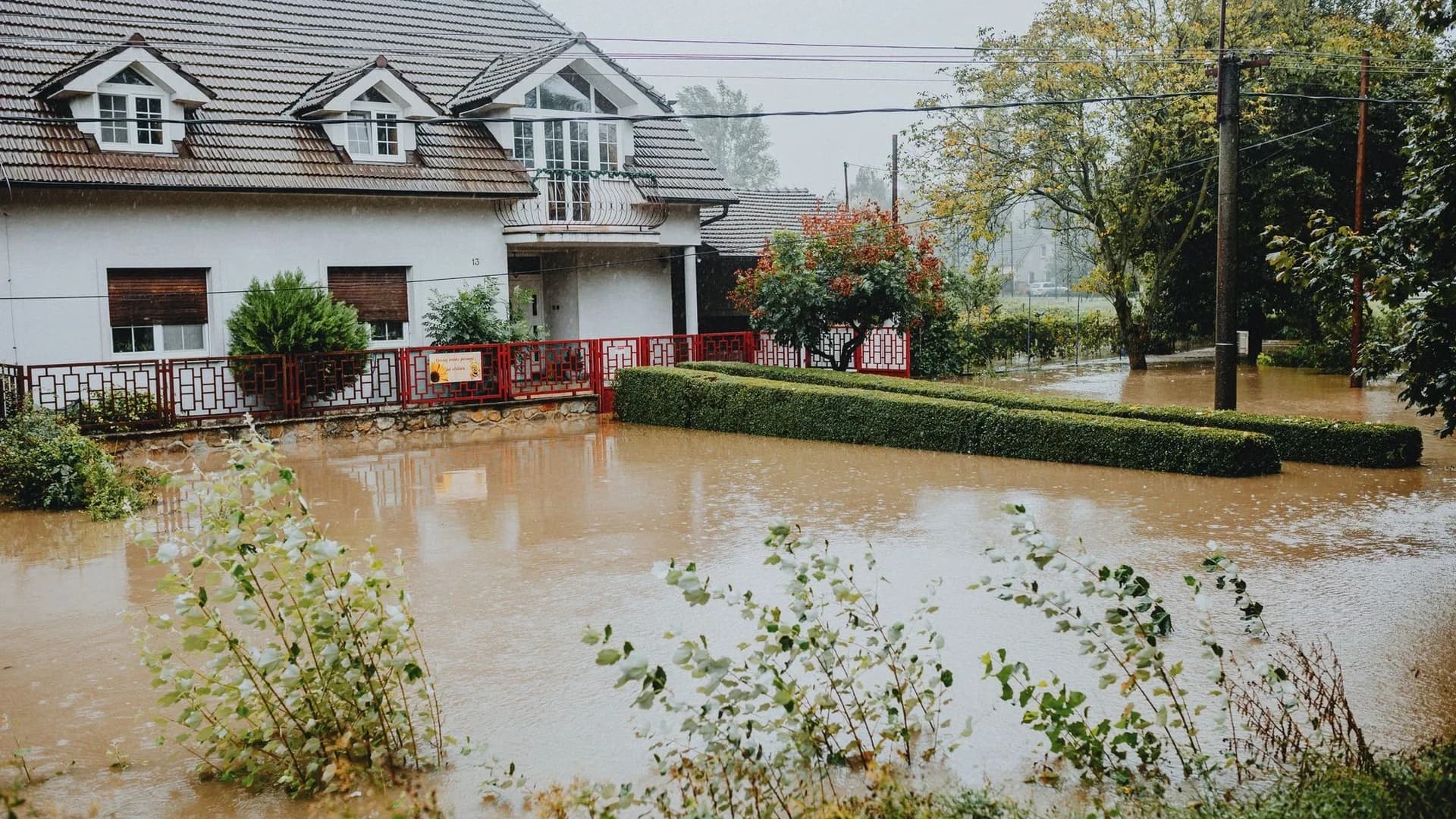
State Farm. Allstate. Farmers. AIG. These aren't fringe companies. They are the bedrock of American property insurance — the firms that handled claims for the Great Chicago Fire's descendants, that built actuarial tables through a century of American expansion. And they are, methodically and without apology, withdrawing from entire states.
The headlines focus on California and Florida. But the insurance exodus has spread to Louisiana, Texas, Colorado, Minnesota, and is now touching states like Virginia and North Carolina that have never appeared on catastrophe risk maps before. The insurance industry is not being dramatic. It is solving a math problem. And the answer to that math problem is reshaping where Americans can afford to live.
How It Actually Works: The Reinsurance Cascade
Most people understand insurance at the retail level: you pay premiums, the company pays claims. What they don't understand is that insurance companies don't actually hold most of that risk. They offload it to reinsurance companies — firms like Munich Re, Swiss Re, Hannover Re, and Lloyd's of London syndicates — which pool risk globally and set the underlying price floors for all insurance.
The reinsurance industry repriced catastrophe risk dramatically starting after Hurricane Ian in September 2022, which generated $112 billion in insured losses — the second-costliest weather event in insurance history. Munich Re's January 2023 reinsurance renewals hiked catastrophe reinsurance premiums for Florida by 50%. The January 2024 renewals added another 30%. Each hike at the reinsurance level cascades to the retail level: your homeowner's premium increases not because your house changed but because the global risk pool repriced every property in your ZIP code simultaneously.
The number that explains the crisis: the insurance industry paid out $101 billion in catastrophe losses in 2023 in the United States alone. They collected $83 billion in property premiums. The math is negative before you count operating expenses, reinsurance costs, or investment income. The industry is operating at an underwriting loss in the United States, full stop.
Florida: Where the Market Has Already Broken
Florida's insurance market has not just contracted — it has partially ceased to function as a private market. Since 2020, 12 property insurance companies have gone insolvent in Florida. Seven major carriers — including Farmers, Lexington (AIG subsidiary), Bankers Insurance, and TypTap — have stopped writing new policies. State Farm and Allstate stopped writing new policies in 2022 and 2023 respectively but continue servicing existing policyholders (for now).
The result: Citizens Property Insurance Corporation — the Florida state-run "insurer of last resort" — now has 1.2 million policies and $576 billion in exposure. Citizens was designed to be a small backstop for the genuinely uninsurable. It has become the primary insurer for an eighth of the state. If a major hurricane hits, Citizens cannot pay its claims without a special assessment levied on every insured Florida resident and ultimately a state bailout.
The premium reality: the average Florida homeowner premium hit $6,000 annually in 2024, compared to the national average of $1,700. In Miami-Dade, coastal policies routinely exceed $10,000–$15,000 per year. A $400,000 home paying $12,000 annually in insurance is paying an effective "risk tax" of 3% of home value per year — on top of property taxes, mortgage, and maintenance. The total cost of ownership for a Florida home is now structurally higher than almost anywhere else in America.
What makes this worse: Florida's assignment of benefits fraud problem inflated claims by an estimated $2.8 billion in 2022 alone. The legislature passed reform in 2022 and 2023 that eliminated one-way attorney fees and prohibited direct assignment to contractors. Rates are marginally improving — but the underlying climate risk that drives reinsurance pricing has not improved.
California: Fire Risk Repriced, $700B in Exposure Stranded
California's insurance crisis predates the recent Los Angeles fires but those fires — which destroyed 16,000 structures and generated insured losses estimated at $40–$55 billion in January 2025 — have accelerated it toward a cliff edge.
State Farm Non-Renewals in California: 72,000 policies sent non-renewal notices in March 2024. Allstate stopped writing new homeowners policies in 2022 and has been quietly non-renewing since. Farmers cut maximum policy exposure per county. By January 2026, the California FAIR Plan — the state's insurer of last resort, analogous to Florida's Citizens — had grown to 452,000 policies representing $458 billion in exposure. This is a state program with no private capital backing it; if it fails, California taxpayers are on the hook.
The FAIR Plan was not designed for this. Its maximum policy value cap — historically $1.5 million — was raised to $3 million in 2023 under emergency regulations, but that still leaves a significant gap for coastal and hillside properties in Los Angeles, Marin, and Santa Barbara counties where median home values exceed $2 million. Wealthy homeowners in those areas are purchasing "excess and surplus" (E&S) coverage from Lloyd's of London syndicates at premiums that can exceed $60,000 per year for a $3 million property.
The geological problem underneath the climate problem: California has 35,000 miles of high fire-risk land with 6 million housing units on or adjacent to it. That is not a rounding error. That is 25% of California's entire housing stock sitting in what insurance actuaries now classify as "difficult to model" risk zones — industry code for "we don't know how to price this."
The Cascade: No Insurance → No Mortgage → Collapse
Here is the mechanism that most people haven't traced to its conclusion:
Step 1 — Insurance becomes unavailable or unaffordable. A homeowner in Fort Myers, Florida cannot get private insurance. They are forced onto Citizens at $9,000/year.
Step 2 — Mortgage lenders require insurance as a loan condition. Federal Housing Administration (FHA) and conventional mortgages require proof of insurance. No insurance = no mortgage. No mortgage = cash-only purchase market.
Step 3 — Cash-only markets eliminate 80% of buyers. The median U.S. homebuyer has a 20% down payment. If they can't get a mortgage because they can't get insurance, they cannot buy. The pool of eligible buyers collapses.
Step 4 — Property values decline as buyer pool shrinks. This is already measurable. A peer-reviewed study published in Nature Climate Change in October 2023 found that properties in high-climate-risk areas are overvalued by an average of $121–$237 billion relative to properties that correctly price climate risk. When insurance markets correctly price the risk, property values will eventually follow.
Step 5 — Local tax revenue falls. Property tax is the primary funding mechanism for local government in most of America. In Florida counties, every 10% decline in assessed property value translates to approximately $800 million in lost annual tax revenue statewide. School funding, fire departments, road maintenance — all funded by property tax — contract simultaneously.
Step 6 — Services decline, accelerating outmigration. The death spiral: insurance crisis → property value decline → tax revenue decline → service quality decline → population outmigration → further property value decline.
This is not theoretical. It is the documented trajectory of coastal Louisiana communities after Katrina. It is beginning in specific Florida counties. And it is the future of every ZIP code that insurance companies are systematically abandoning.
The "Insurance Deserts" Are Already Mapped
Researchers at the First Street Foundation have done the work that insurance companies do internally but will not publish. Their 2023 "Uninsurable Nation" report identified specific patterns:
-
Louisiana Gulf Coast: 67% of properties in Plaquemines Parish have seen primary insurer withdrawal since 2020. The parish is home to 20,000 people, a major oil port, and is projected to lose 30% of its land area to sea level rise by 2050.
-
Mississippi River Delta communities: Several incorporated towns in Louisiana's Terrebonne Parish cannot find any private insurer at any price. They are carried entirely on the Louisiana Citizens plan at rates that exceed $20,000/year for modest homes.
-
Florida's interior counties: Insurance "deserts" are not just coastal. Polk County and Highlands County — central Florida agricultural communities with no hurricane exposure — are seeing premium spikes of 40–60% because reinsurance models are now pricing all of Florida at elevated risk regardless of coastal proximity.
-
Texas Gulf Coast: Galveston Island, home to 52,000 people and a major tourist economy, has seen private insurance virtually disappear. The Texas Windstorm Insurance Association (TWIA) — the state backstop — carries 237,000 policies with $82 billion in exposure and a maximum funding capacity of approximately $9 billion.
The Low-Risk Trap: It's No Longer About Your House
The most infuriating reality for individual homeowners: in 2025–2026, even genuinely low-risk properties are being swept up in market-wide repricing.
InsuranceNewsNet documented cases throughout 2025 of inland Florida homeowners — 100 miles from any coast, in concrete block construction, with no claims history — receiving non-renewal notices. The reason: the insurance company is withdrawing from the state of Florida entirely, not from their property specifically. Your perfectly safe house in Orlando is uninsurable because it shares a state with Miami Beach.
This "market exit" phenomenon is different from individual risk repricing. When State Farm exits California, they are not saying your house is too risky. They are saying their capital position, reinsurance access, and regulatory environment in California make the entire state's book of business unprofitable. Individual risk doesn't matter; the aggregate state exposure does.
The regulatory trap compounds this: California's Proposition 103 (1988) requires prior state approval for insurance rate increases. Carriers cannot raise rates fast enough to match actual risk repricing — so their only option is to exit. The regulation designed to protect consumers from gouging has, paradoxically, driven insurers out of the market entirely.
The New Geography of American Wealth
The insurance crisis is not evenly distributed, and neither is its solution. Wealthy homeowners have options. They can self-insure (hold liquid assets to cover catastrophic loss), access E&S markets at high cost, or relocate. The housing market data is beginning to show exactly this: net domestic migration from Florida, California, and Louisiana to inland Midwest and Mountain West states is running at multi-decade highs.
The emerging "safe" real estate markets — Des Moines, Columbus, Indianapolis, Omaha — have insurance costs 60–70% below coastal equivalents. They have property tax bases supported by stable or growing assessed values. They have municipal services funded appropriately. The climate risk model is beginning to reshape American demographics, not just American risk tables.
The communities being left behind are disproportionately elderly (less mobile), lower-income (less able to cover insurance cost or self-insure), and minority (generational wealth concentrated in historically redlined neighborhoods that happen to align with current climate risk zones along the Gulf Coast and in river floodplains). The insurance crisis has a civil rights dimension that is almost entirely absent from mainstream coverage.
Key Takeaways
- The reinsurance cascade is the mechanism nobody explains: Munich Re reprices global cat risk → retail premiums spike → carriers exit → state backstops absorb unsustainable exposure
- Florida's Citizens Insurance carries $576B in exposure with no private capital to back it; a single major hurricane could trigger a state fiscal crisis
- The cascade ends in property value collapse: no insurance → no mortgage → cash-only market → shrinking buyer pool → price decline → tax revenue decline → service cuts
- Even low-risk properties are being swept up in state-level market exits — your safe inland house is uninsurable because it shares a ZIP code database with high-risk properties
- The First Street Foundation has already mapped the insurance deserts — they exist now, concentrated in Louisiana Gulf parishes, coastal Texas, and interior Florida
- California's consumer protection law (Prop 103) inadvertently accelerated the crisis by preventing carriers from pricing risk accurately — the regulation designed to help consumers drove insurers out
- The crisis has an unmapped civil rights dimension: elderly, lower-income, and minority communities in historically redlined areas have the highest overlap with current climate risk zones
Related Analysis
- AI Infrastructure Spending 2026: Full Forensic Breakdown
- Bitcoin Price War & Geopolitics: Does BTC Hedge Conflict? [2026 Analysis]
- Gold Price Forecast 2031: Year-by-Year Outlook [2026 Update]
- Defense Stocks 2026: Who's Getting Rich From the Iran War [Complete Guide]
- Oil Price Forecast 2026: War Premium, OPEC Cuts, and the $120 Scenario
Related Topics
Video Intelligence
- ▶Iranian Missile Strike Hits Arad Israel: Video Moments
- ▶Iran Releases Official Footage of Drone Launches During War
- ▶Iranian Kamikaze Drone Destroys Erbil Oil Refinery
- ▶FPV Drone Strikes US Victoria Base Near Baghdad Airport
Share This Analysis
Get a shareable verdict card for this article.
Get the next one first
Free briefings when we publish major outlooks and forecasts. No spam — unsubscribe anytime.
Related Analysis

2026 Economic Crisis: Why Central Banks May Fail
The Board · Feb 22, 2026

Copper Price Forecast 2029-2031: Supply vs Green Demand
The Board · Feb 22, 2026

US Inflation Outlook and Fed Interest Rate Strategy
The Board · Feb 20, 2026

Will AI Replace White-Collar Jobs in 10 Years
The Board · Feb 22, 2026

When to Hire a VP of Sales vs Investing in PLG
The Board · Feb 22, 2026

ECB Rate Strategy Amid US Tariffs and Eurozone Inflation
The Board · Feb 22, 2026
Trending on The Board
Houthis Take Perim as Saudis Halt Pipeline 2026
Geopolitics · Sep 13, 2026
What Israel-Iran War Games Got Wrong About 2026
Defense & Security · Sep 6, 2026

Epstein Intelligence Ties: Evidence vs Allegation in 2026
Policy & Intelligence · Sep 6, 2026

China Imported 764 Tons of Gold in Six Months
Markets · Aug 20, 2026

The 'Muslim NATO' Fails Its First Test in 48 Hours
Geopolitics · Aug 27, 2026
Latest from The Board
Houthis Take Perim as Saudis Halt Pipeline 2026
Geopolitics · Sep 13, 2026
Epstein Intelligence Ties: Evidence vs Allegation in 2026
Policy & Intelligence · Sep 6, 2026
What Israel-Iran War Games Got Wrong About 2026
Defense & Security · Sep 6, 2026

Central Banks Turned Gold Sellers. One Country Did It.
Markets · Aug 30, 2026

Schiff vs Saylor vs the Banks: Who Got 2026 Right?
Predictions · Aug 27, 2026

Silver Deficit 2026: BofA's $300 Target Explained
Markets · Aug 27, 2026

Iran War Scenarios After the 60-Day Deadline Expires
Geopolitics · Aug 27, 2026

Gold Price Forecast 2026: $10,000 Call vs $4,500 Banks
Markets · Aug 27, 2026