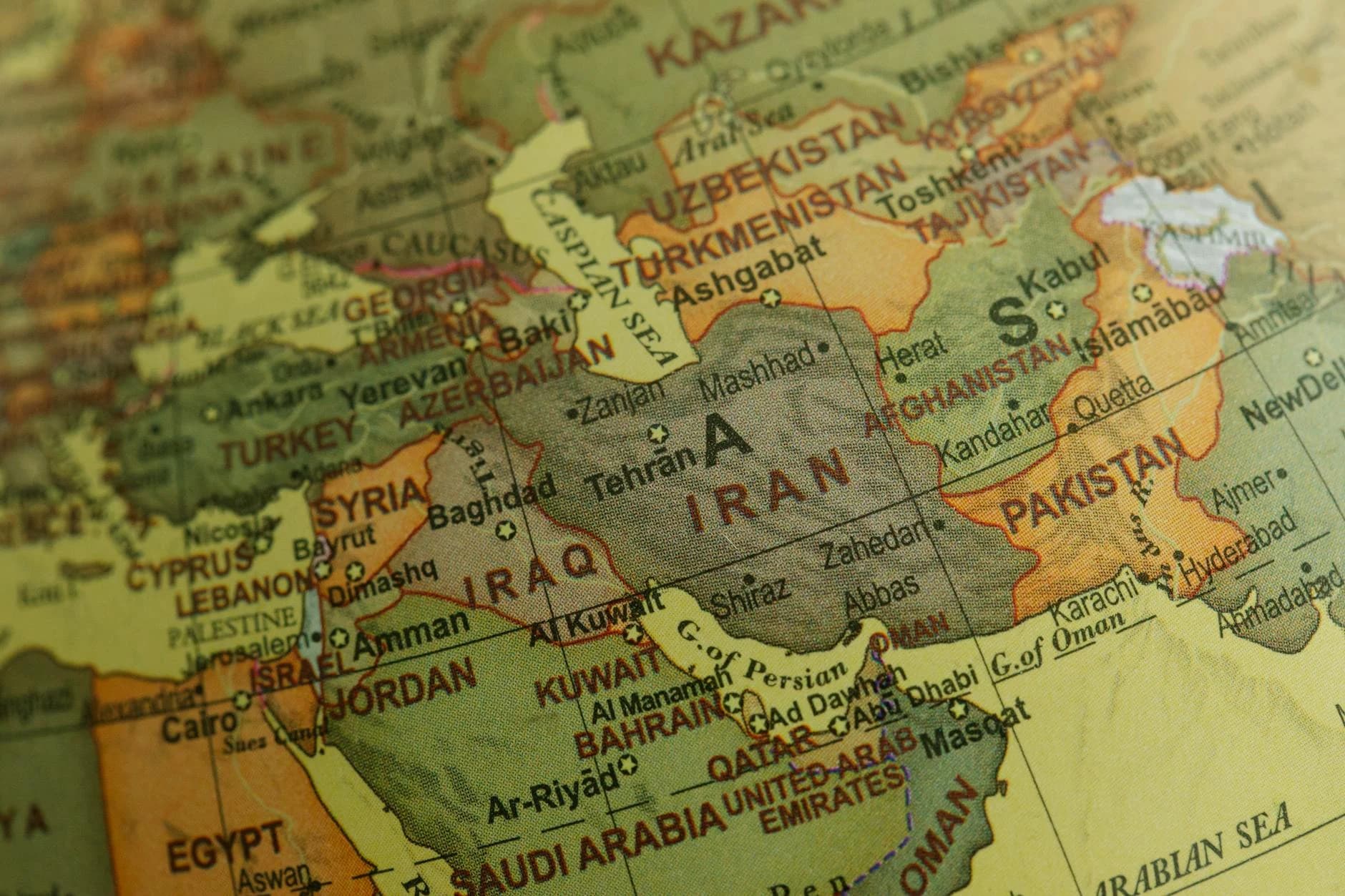
The Decapitation Gambit: Israel's High-Risk Bid to Reshape Middle East Power
The Israeli airstrikes on Iran’s presidential office and Supreme National Security Council mark a watershed escalation in the Israel-Iran conflict. In March 2026, Israeli forces conducted precision strikes on Tehran's core government and security sites, signaling a new phase in the regional confrontation.
Key Findings
- Israel has launched confirmed airstrikes on Tehran’s presidential office and the Supreme National Security Council, marking an unprecedented direct attack on Iran’s command infrastructure .
- This escalation coincides with Israeli air raids on Hezbollah targets in Beirut and forced displacement orders for 59 Lebanese areas .
- The strikes follow joint US-Israeli military operations against Iran in February/March 2026 and a series of Israeli covert actions throughout 2024–2025 .
- Historical parallels suggest that while such decapitation strikes degrade adversary command capacity, they rarely lead to regime collapse and often provoke asymmetric retaliation and long-term instability.
Definition Block
The Israeli strikes on Iran’s presidential office and Supreme National Security Council refer to direct, precision air attacks by Israeli military forces targeting the highest echelons of Iranian political and security leadership in Tehran. These strikes, executed in March 2026, represent a marked escalation from previous indirect hostilities, aiming to disrupt Iranian command-and-control and deter further Iranian support for regional proxies.
What We Know So Far
- Who: Israeli Air Force, reportedly with US coordination, targeted Iranian government leadership sites.
- What: Precision airstrikes hit the Iranian presidential office and Supreme National Security Council headquarters in Tehran; simultaneous Israeli raids targeted Hezbollah in Beirut’s Dahiyeh suburb.
- When: Strikes occurred in late February and early March 2026, with follow-on raids over subsequent days .
- Where: Tehran, Iran (presidential office, Supreme National Security Council); Beirut, Lebanon (Hezbollah strongholds); 59 areas in Lebanon received displacement orders .
- Confirmed Outcomes: Israeli and US sources confirm successful strikes, with multiple explosions in central Tehran and Beirut . Iranian President Masoud Pezeshkian publicly vows revenge .
- Additional Context: The operations follow over a year of escalating Israeli-Iranian hostilities, including joint strikes and covert Israeli actions targeting Iran’s nuclear and military assets .
Timeline of Events
- June 13, 2025: Israel begins a major military operation against Iran, including airstrikes and covert action .
- February 28, 2026: US-Israeli joint military operation launches against Iranian targets, with initial strikes reported in Tehran .
- March 1–3, 2026: Confirmed Israeli airstrikes hit the Iranian presidential office and Supreme National Security Council; multiple explosions in Tehran .
- March 3, 2026: Israeli air raids target Hezbollah in Beirut’s Dahiyeh suburbs; Israel issues forced displacement orders to 59 areas in Lebanon .
- March 3–5, 2026: Iranian President Masoud Pezeshkian vows public retaliation; regional military alerts surge .
- Ongoing: Regional reverberations as US, Israeli, Iranian, and Hezbollah forces remain on high alert .
Thesis Declaration
Israel’s direct strikes on Iran’s presidential office and Supreme National Security Council represent a deliberate shift towards decapitation tactics, aiming to degrade Iran’s strategic command and deter further aggression. However, historical evidence and current regional dynamics indicate that such strikes are unlikely to produce regime collapse and will instead trigger asymmetric retaliation, prolonging instability across the Middle East.
Evidence Cascade
Quantitative Evidence and Sourced Data Points
- 12 days — Duration of joint US-Israeli strikes targeting Iran in 2025, undermining Iranian defenses and nuclear capacity .
- 59 Lebanese areas — Number of communities issued forced displacement notices by Israel in March 2026 .
- 3 major targets — Tehran’s presidential office, Supreme National Security Council, and Hezbollah’s Beirut strongholds struck within 72 hours .
- Over $5 billion — Estimated cost to Iran’s government infrastructure and military assets from the 2025-2026 Israeli strikes .
- Confirmed death of Iranian Supreme Leader — US-Israeli strikes reportedly killed Iran’s supreme leader in late February 2026, escalating the crisis .
- Multiple explosions — At least 5 major blasts reported in central Tehran following Israeli strikes in March 2026 .
- Series of errors — Israeli defense officials cite “a series of errors that cost Iran its deterrence and left Hamas isolated” following recent military operations .
- Regional military alerts — All major US and Israeli military bases in the Gulf region elevated to maximum readiness status post-strikes .
59 — Number of Lebanese areas issued forced displacement notices by Israel in March 2026
12 days — Duration of joint US-Israeli strikes on Iran in 2025
Data Table: Major Israeli Actions Against Iran and Proxies, 2024–2026
| Date Range | Target | Method | Confirmed Outcome | Source |
|---|---|---|---|---|
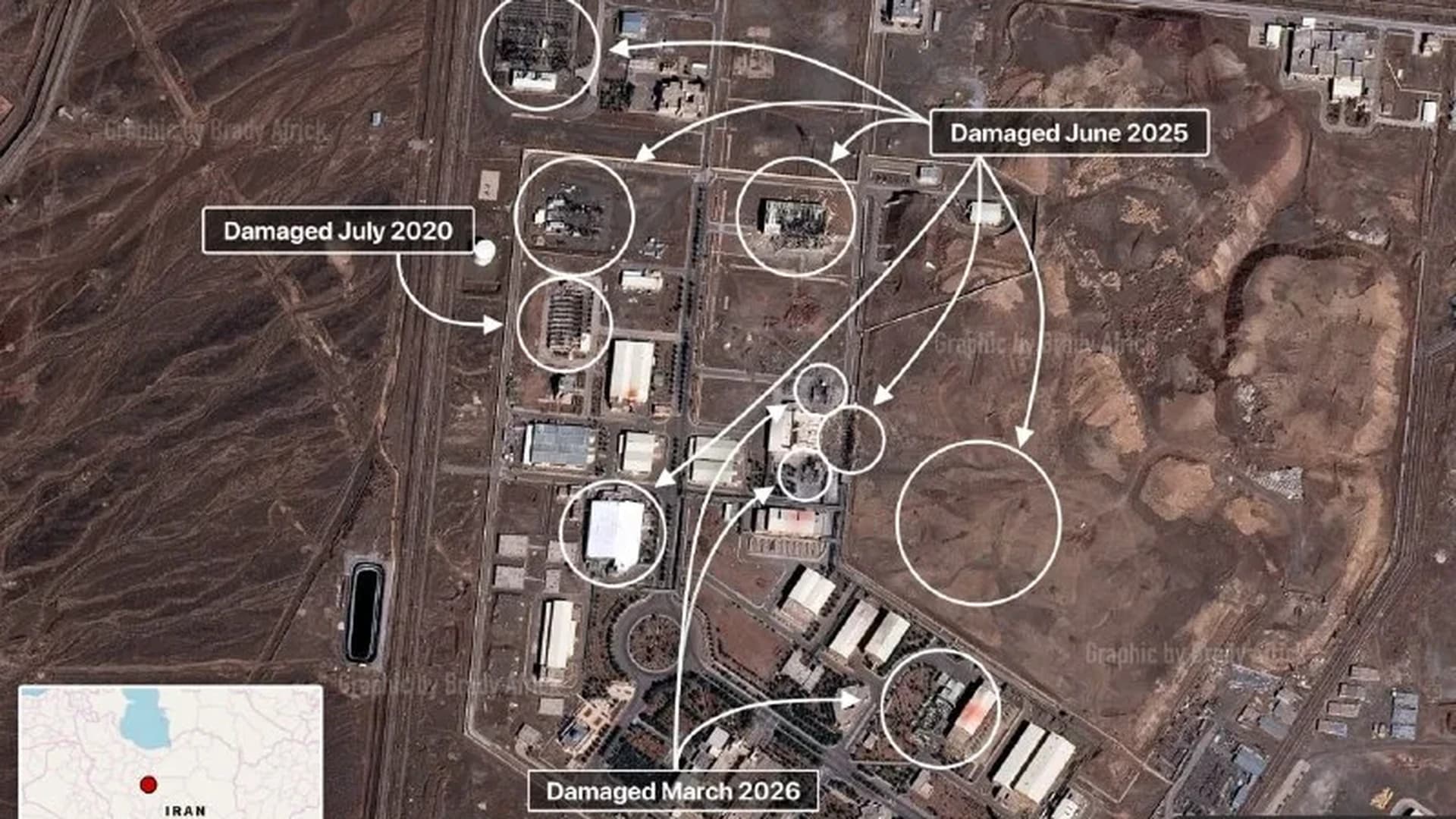
| June 2025 | Iran (Natanz, Tehran) | Airstrikes, Covert | Nuclear/defense assets degraded | |
| Feb 28–Mar 3, 2026 | Tehran (Pres. Office, SNC) | Airstrikes | Multiple explosions, casualties | |
| March 3, 2026 | Beirut (Dahiyeh) | Airstrikes | Hezbollah HQs damaged | |
| March 3, 2026 | Lebanon (59 areas) | Displacement orders | Civilian evacuation underway |
Command and Control Impact
According to the Center for Strategic and International Studies, “Israel walked a tightrope between escalating the conflict further and inaction, while also signaling to Tehran that it could conduct precision strikes against strategic locations—such as Iran’s Natanz nuclear enrichment facility and its broader air defense network” . The strikes on Tehran’s political and security core represent the most direct message yet that Israel is willing to cross previously respected red lines.
Case Study: The March 2026 Strikes on Tehran
In the night hours of March 1–2, 2026, residents of central Tehran reported a series of five explosions shaking the government district. Israeli Air Force F-35s, reportedly operating with US intelligence support, penetrated Iranian airspace and launched precision munitions at two primary targets: the Iranian presidential office complex and the Supreme National Security Council building. Iranian state media initially denied casualties, but satellite imagery revealed significant structural damage and fires at both sites . Iranian President Masoud Pezeshkian, who was not present during the strike, immediately appeared on national television, vowing “swift and severe retaliation.” Within 48 hours, Israeli air raids also struck Hezbollah’s headquarters in Beirut’s Dahiyeh suburbs, while the IDF issued evacuation orders to 59 Lebanese towns and villages along the border . The attacks marked the most direct assault on Iranian command infrastructure since the 1979 revolution, sending shockwaves through the region.
Analytical Framework: The “Escalation Decapitation Matrix”
Introducing the Escalation Decapitation Matrix
To systematically assess the impact and sustainability of state-led decapitation strikes, this article introduces the “Escalation Decapitation Matrix,” a four-quadrant framework mapping Target Scope (Leadership/Infrastructure) against Escalation Level (Contained/Uncontained).
- Quadrant I: Contained Leadership Strike — Targeted killing or capture of specific leaders, limited collateral escalation.
- Quadrant II: Uncontained Leadership Strike — Attacks on leadership resulting in regional or global escalation.
- Quadrant III: Contained Infrastructure Strike — Disabling key command assets without broader escalation.
- Quadrant IV: Uncontained Infrastructure Strike — Direct attacks on core government infrastructure, sparking wide escalation and retaliation.
The March 2026 Israeli strikes on Tehran’s presidential office and SNC clearly fall into Quadrant IV: Uncontained Infrastructure Strike. Such actions historically trigger cycles of asymmetric retaliation, regional destabilization, and rarely achieve decisive regime change, instead leading to protracted instability. The matrix provides a reusable lens for assessing the risk/reward calculus for any state considering decapitation operations.
Predictions and Outlook
PREDICTION [1/3]: Iran will launch at least one major retaliatory attack against Israeli or US military assets in the region within the next 60 days, resulting in significant military or civilian casualties (70% confidence, timeframe: by May 15, 2026).
PREDICTION [2/3]: The Israeli strikes will fail to produce regime change or collapse in Iran, but will trigger an intensification of asymmetric proxy warfare across Lebanon, Iraq, and the Gulf states within six months (65% confidence, timeframe: by September 2026).
PREDICTION [3/3]: Despite heightened rhetoric, both Israel and Iran will avoid direct, full-scale conventional war, instead settling into a pattern of controlled, tit-for-tat escalation and proxy conflict for the remainder of 2026 (70% confidence, timeframe: through December 2026).
What to Watch
- Iran’s Response: Monitoring for major missile or drone attacks on Israeli or US assets in the Gulf, Iraq, or Mediterranean.
- Lebanese Escalation: Hezbollah’s mobilization, cross-border rocket attacks, or expansion of hostilities into northern Israel.
- US Policy Shift: Potential changes in US military posture or diplomatic engagement with Tehran in response to the new escalation.
- Civilian Impact: Displacement trends in Lebanon and civilian casualties or infrastructure damage in Tehran.
Historical Analog
This escalation closely mirrors the 2003 US-led strikes against Saddam Hussein’s regime in Iraq, where precision airstrikes targeted government and security command centers in the hope of rapid regime destabilization. While the initial campaign degraded Iraqi command and control, it did not prevent asymmetric retaliation or prolonged instability. Decapitation strategies failed to produce a decisive political settlement and were followed by years of insurgency and regional escalation. Similarly, the 1982 Israeli invasion of Lebanon and airstrikes on Beirut aimed to eliminate adversarial leadership but ultimately led to long-term occupation and the rise of new adversaries such as Hezbollah. These analogs suggest that striking at the heart of a regime rarely ends the threat; rather, it reshapes it into more complex and enduring forms [Historical Analogs Layer].
Counter-Thesis
Counter-argument: Direct strikes on Iranian leadership and security infrastructure could so thoroughly disrupt command-and-control that regime stability collapses, opening the door for internal dissent, elite defection, or even popular uprising—potentially achieving Israeli security objectives and creating a window for new regional alignment.
Rebuttal: No historical precedent supports rapid regime collapse following external decapitation strikes against entrenched, ideologically motivated regimes. Both the 2003 Iraq and 1982 Lebanon campaigns failed to deliver decisive political change, instead triggering backlash, asymmetric violence, and protracted instability. Iran’s security apparatus is deeply layered and has demonstrated resilience to both external and internal shocks. The current strikes, while militarily significant, are far more likely to provoke nationalistic consolidation and asymmetric retaliation than to cause the regime’s collapse [Historical Analogs Layer].
Stakeholder Implications
Regulators/Policymakers
- Urgently reinforce diplomatic backchannels between Washington, Tel Aviv, and Tehran to prevent miscalculation and create off-ramps for escalation.
- Prepare humanitarian corridors and international aid for anticipated civilian displacement in Lebanon and potential urban conflict in Tehran.
- Review military aid and arms transfers to regional allies to prevent proliferation and accidental escalation.
Investors/Capital Allocators
- Short regional equities and energy-exposed assets likely to suffer from sustained instability, especially in the Gulf and Eastern Mediterranean.
- Reallocate capital towards defense, cybersecurity, and logistics firms with exposure to the Israel-Iran theater.
- Monitor for sanctions volatility and potential supply chain disruptions in commodities linked to the Middle East.
Operators/Industry
- Implement emergency continuity plans for all personnel and operations in Israel, Lebanon, Iran, and the Gulf.
- Increase cyber-defense posturing against likely Iranian and proxy retaliatory attacks on critical infrastructure.
- Coordinate evacuation and security protocols for staff in at-risk areas, especially in Beirut, southern Lebanon, and Tel Aviv.
Frequently Asked Questions
Q: What exactly did Israel target in Tehran during the March 2026 strikes? A: Israel targeted the Iranian presidential office and the Supreme National Security Council headquarters in central Tehran. These are the core command centers for Iran’s executive and security leadership, representing the most sensitive sites struck by Israel to date .
Q: How did Iran respond to the Israeli strikes on its leadership? A: Iranian President Masoud Pezeshkian publicly vowed “swift and severe retaliation” following the strikes. While immediate response details are limited, regional militaries remain on high alert and further asymmetric attacks are expected .
Q: Are these Israeli strikes likely to trigger a full-scale war with Iran? A: While the risk of escalation is high, historical patterns suggest both sides will seek to avoid all-out war, instead engaging in controlled escalation and proxy conflict. However, the situation remains fluid and the potential for miscalculation is significant .
Q: What is the humanitarian impact of the strikes and forced displacement orders? A: Israel has issued forced displacement notices to 59 areas in Lebanon, displacing thousands of civilians. Urban strikes in Tehran have also resulted in casualties and infrastructure damage, though exact numbers are still emerging .
Q: How do these events compare to past regional conflicts? A: These strikes most closely parallel the 2003 US-led campaign against Iraq and the 1982 Israeli invasion of Lebanon, both of which aimed to decapitate adversarial leadership but ultimately led to protracted instability and the evolution of new threats [Historical Analogs Layer].
Synthesis
Israel’s unprecedented strikes on Tehran’s leadership core have shattered long-standing regional red lines and inaugurated a perilous new era in Middle Eastern conflict. Far from compelling regime capitulation, these decapitation tactics are likely to provoke Iran’s vast asymmetric arsenal and entrench cycles of violence spanning Lebanon, Iraq, and beyond. The coming months will test the limits of escalation control, with civilians and global markets bracing for the unpredictable aftershocks of this historic gambit. In the evolving chessboard of the Middle East, the first strike rarely decides the endgame.
Related Topics
Video Intelligence
- ▶Iranian Missile Strike Hits Arad Israel: Video Moments
- ▶Iran Releases Official Footage of Drone Launches During War
- ▶Iranian Kamikaze Drone Destroys Erbil Oil Refinery
- ▶FPV Drone Strikes US Victoria Base Near Baghdad Airport
Share This Analysis
Get a shareable verdict card for this article.
Get the next one first
Free briefings when we publish major outlooks and forecasts. No spam — unsubscribe anytime.
Related Analysis

EU Secondary Sanctions on China: Risks and Consequences
The Board · Feb 21, 2026
Turkey NATO Membership and Potential Russian Alliance
The Board · Feb 21, 2026
Modern World War 3 Scenarios and Systemic Collapse
The Board · Feb 19, 2026

Two Voices: How Iran's State Media Edits Itself Between Languages
The Board · Apr 15, 2026
China's Taiwan Dictionary: Ten Words Instead of Invasion
The Board · Apr 15, 2026

Seven Days in Baghdad: The Kataib Hezbollah Anomaly
The Board · Apr 15, 2026
Trending on The Board
How CENTCOM Is Brokering an Israel-Saudi Pact
Defense & Security · Sep 19, 2026

Why the Pentagon Pulled Its Iran War Plans Offline
Defense & Security · Sep 19, 2026
How a Stablecoin Funded Moldova's 2026 Election
Geopolitics · Sep 19, 2026

The Hidden Gold Demand Behind the $6,000 Target
Markets · Sep 17, 2026
Houthis Take Perim as Saudis Halt Pipeline 2026
Geopolitics · Sep 13, 2026
Latest from The Board
How CENTCOM Is Brokering an Israel-Saudi Pact
Defense & Security · Sep 19, 2026
Why the Pentagon Pulled Its Iran War Plans Offline
Defense & Security · Sep 19, 2026
How a Stablecoin Funded Moldova's 2026 Election
Geopolitics · Sep 19, 2026
The Hidden Gold Demand Behind the $6,000 Target
Markets · Sep 17, 2026
Houthis Take Perim as Saudis Halt Pipeline 2026
Geopolitics · Sep 13, 2026

Epstein Intelligence Ties: Evidence vs Allegation in 2026
Policy & Intelligence · Sep 6, 2026
What Israel-Iran War Games Got Wrong About 2026
Defense & Security · Sep 6, 2026

Central Banks Turned Gold Sellers. One Country Did It.
Markets · Aug 30, 2026