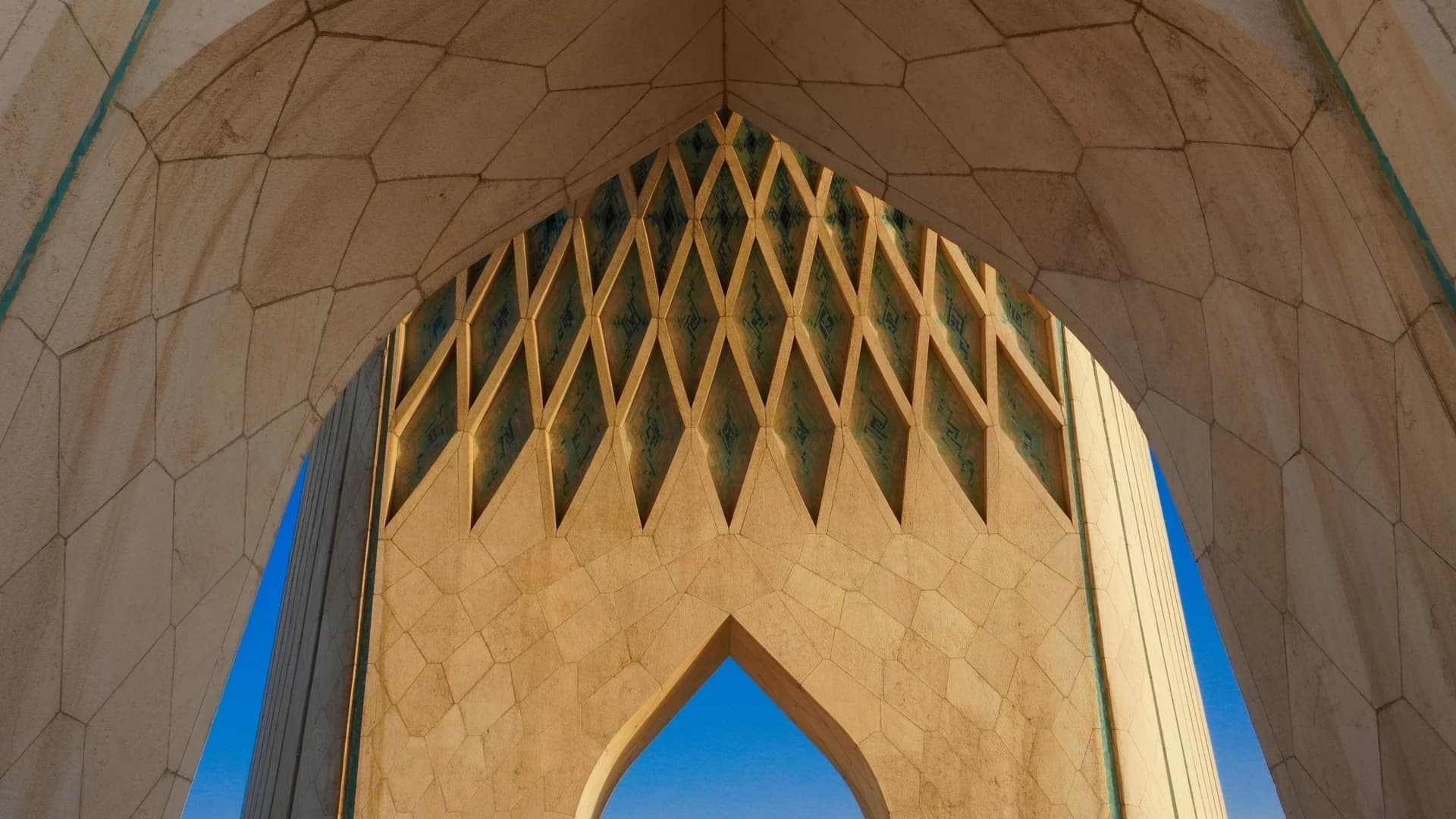
The Legitimacy Vacuum
Iran's succession crisis is the structural collapse of centralized theocratic authority following the assassination of Supreme Leader Ayatollah Ali Khamenei on February 28, 2026 — a crisis defined not by who holds the title of Supreme Leader, but by which institutional faction controls the coercive and financial apparatus of the Islamic Republic while that title remains contested.
Key Findings
- Khamenei was assassinated on February 28, 2026, in US-Israeli strikes, triggering the Islamic Republic's first leadership transition under violent external pressure rather than natural succession
- A three-person interim leadership council has assumed formal authority, but power is described as "diffuse" — distributed across the IRGC, the Assembly of Experts, and the Pezeshkian presidency simultaneously
- The 1989 succession precedent shows that the chosen successor will almost certainly carry a clerical legitimacy deficit, requiring IRGC patronage to consolidate power — structurally guaranteeing hardliner empowerment regardless of who nominates whom
- Western coverage systematically underweights IRGC institutional cohesion and overweights clerical succession theater, producing a dangerously miscalibrated picture for nuclear negotiators
- Mojtaba Khamenei's reported candidacy mirrors the dynastic temptation of 1989 but faces the same religious authority problem his father faced — and the IRGC, not the Assembly of Experts, will ultimately decide who survives
Thesis Declaration
The dominant Western narrative of Iran's succession crisis as a clerical power struggle misreads the decisive variable: the Islamic Revolutionary Guard Corps is not a faction competing for power — it is the arbiter of which faction wins. Any successor who emerges from this crisis will owe their consolidation to IRGC support, structurally locking in a hardline posture on nuclear negotiations regardless of their nominal ideological identity.
Evidence Cascade
The assassination of Ayatollah Ali Khamenei on February 28, 2026 — carried out through US-Israeli strikes — removed a figure who had held the supreme leadership position since 1989, a tenure of 37 years during which he systematically restructured Iranian state power around personal loyalty networks and IRGC patronage rather than clerical consensus . The Islamic Republic has never conducted a leadership transition under simultaneous military pressure, economic collapse, and active foreign strikes. This is not the 1989 succession. It is structurally worse.
The immediate institutional response confirms the depth of the crisis. Cambridge University's Dr. Pesaran documented that the Council of the Islamic Republic established a triumvirate of leaders following the assassination, with power formally resting in a three-person interim leadership council . Jason Brodsky of United Against Nuclear Iran characterized the situation directly: power has become "diffuse," with multiple political and clerical figures competing for influence simultaneously . A member of Iran's Assembly of Experts stated publicly that choosing a new supreme leader was on the agenda — but the Assembly's constitutional role and its actual capacity to impose a choice on the IRGC are entirely different questions .
The Forbes/Reuters reporting captured a critical data point that most Western analysts buried: Iran's missiles kept flying without Khamenei . Iranian President Masoud Pezeshkian vowed revenge within hours of the assassination . The IRGC's operational continuity in the immediate aftermath of leadership decapitation is not incidental — it is the most important structural fact about this crisis. Institutions that continue functioning without their nominal commander-in-chief are institutions that have already internalized autonomous authority.
The Factional Landscape: What Western Coverage Misses
Western outlets have focused almost exclusively on the clerical succession question — who among the senior ayatollahs can claim sufficient religious authority to assume the role. This framing misses the architecture of power Khamenei actually built. As Zamaneh Media's February 2026 analysis established, the system in place today "is less Khomeini's legacy than the product of four decades of Khamenei" — meaning the institutional structure was optimized for Khamenei's personal control mechanisms, not for smooth succession .
The factional map has at least four distinct power centers operating simultaneously:
| Faction | Institutional Base | Coercive Capacity | Succession Preference |
|---|---|---|---|
| IRGC High Command | Military-industrial complex, Basij | Direct (highest) | Hardline loyalist with IRGC debt |
| Assembly of Experts | Constitutional authority over succession | Indirect (legitimating) | Senior cleric with revolutionary credentials |
| Pezeshkian Presidency | Executive bureaucracy, economic technocrats | Low | Negotiated compromise figure |
| Clerical Networks (Qom) | Religious legitimacy, seminary networks | Indirect (social) | Grand Ayatollah with genuine marja status |
*Sources: IranIntl, "Post-Khamenei Iran: Succession race widens," 2026 ; Cambridge University analysis, "The war with Iran," 2026 ; Global Banking and Finance, "Khamenei Assassination," 2026 *
The IRGC column is the decisive one. It is the only faction with direct coercive capacity — the ability to physically prevent or enable any succession outcome. The Assembly of Experts holds constitutional authority, but constitutional authority without military enforcement is a document, not power.
Mojtaba Khamenei's reported candidacy, flagged by Indian Express reporting on the leadership crisis, represents the dynastic temptation . His father faced an identical problem in 1989: elevated to Supreme Leader without Grand Ayatollah credentials, he spent three decades compensating through IRGC patronage and ideological enforcement. Mojtaba carries the same deficit with none of the revolutionary legitimacy his father accumulated over 37 years. His candidacy, if it advances, will require even deeper IRGC support than his father required — which means even greater IRGC leverage over whoever nominally holds the title.
Case Study: The 1989 Succession and Its Distortions
On June 3, 1989, Ayatollah Ruhollah Khomeini died after a decade as Supreme Leader of the Islamic Republic. The succession crisis that followed was resolved within 24 hours — but only through emergency constitutional revision that exposed the regime's underlying legitimacy problem. Ali Akbar Hashemi Rafsanjani, then Speaker of Parliament, played the decisive kingmaker role, engineering Ali Khamenei's elevation despite Khamenei holding only the rank of Hojatoleslam, not Grand Ayatollah. To make this legally possible, the Assembly of Experts simultaneously lowered the constitutional qualifications for the Supreme Leader position — eliminating the requirement for a recognized marja (source of emulation) with mass clerical following. The position of Prime Minister was also abolished in the same constitutional revision, concentrating executive power. Khamenei spent the subsequent 37 years compensating for this legitimacy deficit by systematically building IRGC institutional power, expanding the Basij, and purging clerical rivals. The 1989 transition appeared stable within weeks but produced structural distortions — IRGC dominance, clerical subordination to political authority — that now define the crisis of 2026. The pattern is not a warning. It is a template.
Analytical Framework: The Legitimacy-Coercion Substitution Model
The succession dynamics in post-Khamenei Iran can be analyzed through what I term the Legitimacy-Coercion Substitution Model (LCSM) — a framework for understanding how authoritarian systems compensate for leadership authority deficits.
How it works: In any theocratic or ideological authoritarian system, leadership authority rests on two pillars: legitimacy (the belief among key constituencies that the leader has the right to rule) and coercion (the capacity to enforce compliance regardless of belief). These pillars are inversely substitutable in the short term: a leader with high legitimacy requires minimal coercion; a leader with low legitimacy requires high coercion. The substitution has a cost — each unit of legitimacy replaced by coercion requires a corresponding transfer of institutional power to the coercive apparatus, which then accumulates leverage over the leader it props up.
The LCSM predicts three stages:
- Legitimacy Deficit Recognition — The succession produces a leader whose religious or revolutionary credentials are insufficient to command independent authority (as with Khamenei in 1989, as with any likely 2026 successor)
- Coercive Compensation — The IRGC provides the enforcement infrastructure that substitutes for missing legitimacy, in exchange for expanded institutional autonomy, budget share, and policy influence
- Structural Lock-In — The successor becomes dependent on IRGC support to survive internal challenges, making policy moderation on issues the IRGC opposes (nuclear deal, regional retrenchment) structurally impossible regardless of personal preference
Why it matters for nuclear negotiations: Western negotiators operating on the assumption that a "reformist" or "pragmatist" successor could deliver a nuclear deal misread this model. The LCSM shows that any successor's policy flexibility is inversely proportional to their legitimacy deficit — and all likely successors carry significant legitimacy deficits. The more the West hopes for a moderate successor, the more that successor will need IRGC support to survive, and the less capable they will be of delivering moderation on IRGC-controlled files.
Predictions and Outlook
PREDICTION [1/4]: The Assembly of Experts will formally name a new Supreme Leader within 90 days of Khamenei's assassination, but the named figure will have no independent IRGC mandate and will operate as a figurehead while real policy authority remains with the IRGC command structure. (65% confidence, timeframe: by June 2026).
PREDICTION [2/4]: Nuclear negotiations will not produce a substantive agreement within 18 months of the succession, as any successor will require demonstrating revolutionary credentials on the nuclear file to establish domestic legitimacy — making concessions structurally toxic in the consolidation period. (68% confidence, timeframe: by September 2027).
PREDICTION [3/4]: Mojtaba Khamenei will not become Supreme Leader. His candidacy will be blocked by a coalition of senior clerics in the Assembly of Experts who view dynastic succession as incompatible with the velayat-e faqih doctrine, and the IRGC will not expend political capital on a candidate who would generate clerical opposition that destabilizes the transition. (62% confidence, timeframe: by June 2026).
PREDICTION [4/4]: The IRGC's operational budget share of Iran's total state expenditure will increase by a minimum of 15% in the first full fiscal year following succession consolidation, as the new Supreme Leader compensates for legitimacy deficits through institutional patronage — the same mechanism Khamenei used after 1989. (60% confidence, timeframe: Iranian fiscal year ending March 2028).
What to Watch
- Assembly of Experts meeting schedules and attendance: Quorum failures or procedural delays signal IRGC interference in the clerical succession process
- IRGC commander public statements: The frequency and tone of statements from IRGC commanders relative to civilian officials reveals which institution is setting the political tempo
- Pezeshkian's foreign policy moves: Whether the presidency attempts to open back-channel nuclear contacts independently of IRGC-controlled channels will signal whether civilian authority is asserting itself or has been subordinated
- Qom seminary activity: Senior Grand Ayatollahs issuing fatwas or public positions on succession legitimacy represent the one institutional check on IRGC dominance that Western analysis consistently underweights
Historical Analog: Iran 1989 and the Legitimacy Debt That Never Cleared
This crisis looks like Iran's own 1989 succession because the structural problem is identical: a system designed around a singular, irreplaceable authority figure must transfer power to someone who cannot replicate that authority. In 1989, the Islamic Republic resolved this by rewriting the constitution overnight — lowering the qualifications for Supreme Leader to fit the available candidate rather than finding a candidate who met the original qualifications. The result was a leader who spent 37 years building coercive institutional power to compensate for the religious authority he never possessed.
The 2026 crisis is the 1989 crisis on harder difficulty. Khamenei at least had revolutionary credentials — he was a founding figure of the Republic, a political prisoner under the Shah, a close associate of Khomeini. His successor will have none of these. The IRGC in 1989 was a significant but not dominant institution; in 2026, it controls an estimated 40% of Iran's formal economy through affiliated conglomerates and is the Islamic Republic's primary external power projection tool. The bargaining leverage the IRGC holds over any succession outcome in 2026 dwarfs what it held in 1989. The historical analog predicts managed elite bargain rather than regime collapse — but a bargain whose terms guarantee IRGC structural dominance for the next generation.
Counter-Thesis: The IRGC Cohesion Assumption May Be Wrong
The strongest argument against this analysis is that IRGC cohesion is itself assumed rather than demonstrated. The stress test data flags this directly: if IRGC internal factionalism is more severe than publicly visible — if the assassination has triggered competing loyalty networks within the IRGC itself — then the Legitimacy-Coercion Substitution Model breaks down. A fragmented IRGC cannot serve as the decisive arbiter of succession because it cannot deliver unified institutional support to any candidate.
There is historical precedent for this failure mode. In Iraq after the 1958 coup, the military was the most powerful institution but was also the most internally fractured — which is precisely why it could not stabilize the post-monarchy order and instead produced successive coups as competing factions within the military backed different civilian patrons [historical analog, Iraq 1958-1963].
The counter-thesis holds that the IRGC's visible operational continuity — missiles keep flying, Pezeshkian vows revenge — may be masking internal command disputes that will only become visible when succession decisions force explicit loyalty choices. If this is true, the nuclear file becomes even more dangerous: a fragmented IRGC with competing factions each seeking to demonstrate revolutionary credentials could produce nuclear escalation not through strategic calculation but through factional competition to appear most uncompromising.
This counter-thesis is taken seriously. The LCSM is not a guarantee of IRGC unity — it is a prediction about structural incentives. If IRGC cohesion fractures, the outcome is not a more moderate Iran but a more unpredictable one, which is worse for nuclear risk management, not better.
Stakeholder Implications
For US and European Policymakers and Nuclear Negotiators
Stop designing nuclear negotiation frameworks around the assumption of a moderate successor. The LCSM shows that any successor's capacity to deliver concessions is inversely proportional to their legitimacy deficit — and all likely successors have significant deficits. Negotiators should instead pursue structural confidence-building measures that do not require the Supreme Leader's personal political capital: technical verification protocols, sanctions relief tranches tied to specific measurable actions, and back-channel engagement with IRGC-adjacent economic actors who have financial incentives for sanctions relief. The diplomatic objective in the 18-month consolidation window is not a deal — it is preventing escalation while succession stabilizes.
For Intelligence Analysts and Defense Planners
The stress test's central warning demands direct action: if IRGC cohesion is actually strengthening rather than fracturing, US deterrence models require immediate recalibration. Current US deterrence posture appears calibrated for a fragmented, crisis-weakened Iran. A consolidated IRGC-backed successor who has internalized the lesson that nuclear capability is the only guarantee against the fate that befell Khamenei represents a fundamentally different deterrence problem. Defense planners should commission a specific net assessment on IRGC post-assassination institutional cohesion — not relying on exile group reporting or opposition media, which the incentive map identifies as systematically distorted toward manufacturing fragility narratives.
For Investors and Capital Allocators with Iran Exposure
The Le Monde and Reuters reporting on Iranian economic collapse and ongoing strikes creates an apparent investment thesis around post-crisis reconstruction . Resist it. The historical analog from the 1989 succession shows that the IRGC will capture the largest share of any economic recovery through its affiliated conglomerates. Foreign capital entering Iran during a succession consolidation period without IRGC-aligned partners will be expropriated or excluded once the political dust settles. The window for legitimate economic engagement requires a successor who has achieved genuine consolidation — not just formal appointment — which the LCSM suggests will take a minimum of 24-36 months post-succession. Capital allocators should treat any Iran opportunity announced before mid-2028 as IRGC-controlled by default.
Frequently Asked Questions
Q: Who is in charge of Iran after Khamenei's death? A: Formally, a three-person interim leadership council established by the Council of the Islamic Republic holds authority, as documented by Cambridge University's analysis of the post-assassination reorganization. In practice, power is "diffuse" — distributed across the IRGC, the Assembly of Experts, and the Pezeshkian presidency simultaneously, with no single figure commanding Khamenei's consolidated authority. The IRGC's operational continuity (missiles continued flying within hours of the assassination) indicates it holds the decisive coercive leverage in this interim period.
Q: Will Mojtaba Khamenei become the next Supreme Leader of Iran? A: Mojtaba Khamenei's candidacy has been reported, but his elevation faces two structural obstacles: he lacks Grand Ayatollah credentials required for genuine clerical legitimacy, and dynastic succession contradicts the velayat-e faqih doctrine that justifies the Supreme Leader's authority. His father faced the same legitimacy deficit in 1989 and was elevated only through emergency constitutional revision. Mojtaba's candidacy is more likely a negotiating position in elite bargaining than a probable outcome.
Q: How does Khamenei's assassination affect Iran's nuclear program? A: The nuclear program will not pause during the succession crisis — IRGC operational control of the program provides institutional continuity independent of political leadership. The more significant effect is on negotiations: any successor will need to demonstrate revolutionary credentials during the consolidation period, making nuclear concessions structurally toxic for domestic political survival. A nuclear deal becomes harder, not easier, in the 18-24 months following succession.
Q: What is the role of the Assembly of Experts in Iran's succession? A: The Assembly of Experts holds constitutional authority to select and supervise the Supreme Leader — it is the formal body that will name Khamenei's successor. However, constitutional authority and actual power are different things. The Assembly's choice must be acceptable to the IRGC command structure, which holds direct coercive capacity. The 1989 precedent shows the Assembly can be maneuvered into ratifying a candidate who lacks genuine clerical consensus when political pressure is sufficient.
Q: Is the Iranian regime at risk of collapse after Khamenei's death? A: Regime collapse is the least probable near-term outcome. The historical analog of Yugoslavia in the 1990s is instructive: Western analysis consistently predicted regime fragility based on visible chaos while underestimating military-security apparatus cohesion. The IRGC's operational continuity after the assassination — documented by Forbes and Reuters reporting on Iranian missile activity — is the key indicator. Regimes with coherent security apparatuses do not collapse from leadership decapitation; they reconsolidate around military-institutional networks, typically producing more authoritarian outcomes than what preceded them.
Synthesis
The Islamic Republic will not collapse. It will consolidate — around the IRGC, under a Supreme Leader who owes his position to military patronage rather than clerical authority, with a nuclear posture hardened by the lesson that Khamenei's fate was sealed by the absence of a credible deterrent. Western negotiators who wait for a moderate successor to emerge from this crisis are waiting for an outcome the Legitimacy-Coercion Substitution Model makes structurally impossible: the more any successor needs IRGC support to survive, the less capable they are of delivering the concessions that would make them worth negotiating with.
The most dangerous misreading of this crisis is not overestimating Iranian fragility — it is assuming that fragility and moderation point in the same direction. They do not. A weakened successor dependent on IRGC patronage is not a negotiating partner. He is a hostage to the hardest line in the room.
Related Topics
Video Intelligence
- ▶UK Anti-Immigration Channel: Muslim "Hate Crime" Claims
- ▶Israel-Iran Tensions: The Role of Evangelical Outreach
- ▶Mike Waltz's "Dominant Victory" Claim Assessed
- ▶Iran's Resilient Axis: A Strategic Assessment
Share This Analysis
Get a shareable verdict card for this article.
Related Analysis

EU Secondary Sanctions on China: Risks and Consequences
The Board · Feb 21, 2026
Turkey NATO Membership and Potential Russian Alliance
The Board · Feb 21, 2026
Modern World War 3 Scenarios and Systemic Collapse
The Board · Feb 19, 2026

Two Voices: How Iran's State Media Edits Itself Between Languages
The Board · Apr 15, 2026
China's Taiwan Dictionary: Ten Words Instead of Invasion
The Board · Apr 15, 2026
Seven Days in Baghdad: The Kataib Hezbollah Anomaly
The Board · Apr 15, 2026
Trending on The Board
Oil 2026: Why $72 Brent Misreads the Hormuz Truce
Energy · Jul 6, 2026
Gladio Stay-Behind Hybrid War 2026: What Still Applies
Defense & Security · Jul 12, 2026
Israel-Turkey War Game Analysis: NATO, Escalation Paths, 2026
Defense & Security · Jul 11, 2026
Gematria Sports Dates Selection Bias Explained 2026
Policy & Intelligence · Jul 12, 2026
If the Strait of Hormuz Closes: The $98 Oil Shock in Numbers (2026)
Geopolitics · Jul 9, 2026
Latest from The Board

AI Prediction Accuracy Report — July 2026
Predictions · Aug 1, 2026
AI Speaks One Language—That's the Real Risk
Technology · Jul 14, 2026
Gematria Sports Dates Selection Bias Explained 2026
Policy & Intelligence · Jul 12, 2026
Gladio Stay-Behind Hybrid War 2026: What Still Applies
Defense & Security · Jul 12, 2026
Gold Price Path After the Rally: 2026 Update
Markets · Jul 12, 2026

Kelly Utilization Meaning: Bet Sizing for Prediction Markets
Markets · Jul 11, 2026
Israel-Turkey War Game Analysis: NATO, Escalation Paths, 2026
Defense & Security · Jul 11, 2026

Kelly Criterion Explained: Bet Sizing Formula for Markets
Markets · Jul 10, 2026