
The Blindspot of the West: IRGC, Factional Loyalty, and Iran’s Next Supreme Leader
Iran’s leadership succession refers to the process by which a new Supreme Leader is selected following the death of the sitting leader. This transition is governed by opaque negotiations among clerical, military, and security elites, with the Islamic Revolutionary Guard Corps (IRGC) holding decisive real-time intelligence on internal loyalties. The current transition, following the death of Ayatollah Ali Khamenei after 36 years in power, represents the most consequential leadership shift in the Islamic Republic’s history.
Key Findings
- The IRGC controls the only real-time intelligence on elite factional loyalties, creating critical blindspots for Western analysts and most academic coverage.
- The death of Supreme Leader Ali Khamenei in a US-Israeli strike has triggered Iran’s first leadership vacuum in 35 years, with both hardliner and reformist factions seeking to exploit instability .
- Historical analogs show that rapid, elite-driven consolidation around a compromise insider—not dramatic reformist breakthrough—is the most probable outcome.
- Despite mass unrest and external pressure, the security apparatus is likely to prioritize regime survival, with only limited potential for reformist gains.
Thesis Declaration
The decisive factor in Iran’s succession crisis is not popular unrest or Western diplomatic pressure, but the IRGC’s control over real-time intelligence on elite loyalties. This intelligence asymmetry allows Iran’s security-military apparatus to outmaneuver reformist and external actors, making a rapid, elite-focused consolidation of power around a stability-oriented insider the most likely outcome.
Evidence Cascade
1. Khamenei’s Death: Trigger for Unprecedented Instability
On March 1, 2026, Iran’s Supreme Leader, Ayatollah Ali Khamenei, was killed in his office by joint US-Israeli strikes, abruptly ending his 36-year reign over the Islamic Republic . The government announced a 40-day mourning period, but street celebrations erupted in parts of Iran—signaling both deep public discontent and a potential opening for reformist mobilization .
Data Point 1: Khamenei’s 36-year rule makes his death the longest-delayed leadership transition in the Islamic Republic’s history .
Data Point 2: The strikes that killed Khamenei also resulted in at least 18 deaths in Israel during Iran’s retaliatory ballistic missile attack on Beit Shemesh .
Data Point 3: More than 9 of the Israeli casualties remained unaccounted for, presumed dead under rubble days after the incident .
2. Elite Factionalism and Information Asymmetry
The key variable shaping the transition is not mass sentiment or global reaction, but the opaque relationships among Iran’s elite power centers—especially the IRGC, the Assembly of Experts, and the Qom clerical establishment. The IRGC’s unique position comes from its real-time intelligence: it monitors every major figure’s loyalty, military deployments, and covert affiliations, data unavailable to Western intelligence or most exiled analysts [UNVERIFIED].
Data Point 4: The Assembly of Experts, constitutionally empowered to choose the next Supreme Leader, consists of 88 clerics—yet only a handful hold true independent sway, with IRGC influence and surveillance shaping their deliberations [UNVERIFIED].
Data Point 5: The IRGC controls an estimated 15-20% of Iran’s formal economy through front companies and military contracting [UNVERIFIED].
3. Public Unrest Versus Regime Cohesion
Despite reports of celebratory crowds following Khamenei’s death, the government immediately announced a 40-day mourning period and deployed security forces in major cities . Historically, such instability has triggered both crackdowns and limited attempts at co-optation, but never a fundamental regime collapse.
Data Point 6: During Khamenei’s reign, the regime weathered three major waves of protest (1999, 2009, 2019), each involving 100,000+ participants at their peak [UNVERIFIED].
Data Point 7: Reformist candidates have been permitted to run in only 2 of the last 5 presidential elections, with both instances followed by mass disqualifications and security crackdowns [UNVERIFIED].
4. The External Pressure Factor
The timing of Khamenei’s death—coinciding with an escalation in US-Israeli strikes and Iran’s retaliatory attacks—has heightened the regime’s sense of existential threat . This external pressure typically strengthens hardliner arguments within Iran’s elite, making security and regime preservation the top priorities.
Data Point 8: Iran’s retaliatory ballistic missile strike on Beit Shemesh killed at least 18 people, including 9 still under rubble days later .
Data Table: Major Events in the 2026 Succession Crisis
| Event | Date | Source | Casualties | Immediate Outcome |
|---|---|---|---|---|
| Khamenei killed in office | March 1, 2026 | BBC, "Iran's Supreme Leader..." | 1 (Khamenei) | 40-day mourning, security mobilization |
| US-Israeli joint strike | March 1, 2026 | BBC, "Iran's Supreme Leader..." | Unspecified | Iranian retaliation, regime crisis |
| Iran missile strike (Beit Shemesh) | March 2, 2026 | Telegram, Middle East Spectator | 18 (Israel) | Further escalation, public unrest |
| Street celebrations in Iran | March 1-2, 2026 | BBC, "Iran's Supreme Leader..." | N/A | Security clampdown |
Case Study: The Night Khamenei Fell (March 1-2, 2026)
At 19:42 local time on March 1, 2026, US and Israeli forces launched a coordinated airstrike targeting the office of Supreme Leader Ali Khamenei in central Tehran . By dawn, state television confirmed Khamenei’s death and declared a 40-day mourning period. Yet, in a striking display of public sentiment, thousands of Iranians gathered in Tehran’s Azadi Square and in Shiraz to celebrate, chanting slogans against the regime . Security forces quickly mobilized, deploying armored vehicles and arresting over 200 individuals in the first 24 hours [UNVERIFIED]. Simultaneously, Iran’s military command retaliated with a ballistic missile barrage against Israel, killing 18 people in Beit Shemesh—9 of whom remained trapped under rubble for days . International media fixated on the military escalation, but inside Iran, the real drama played out in clandestine meetings among IRGC generals, Assembly of Experts members, and Qom clerical authorities as they moved to prevent regime disintegration.
Analytical Framework: The Three Rings of Succession Control
Definition: The “Three Rings of Succession Control” model posits that Iran’s Supreme Leader transition is decided by the intersection of three power centers—(1) the IRGC Security Ring, (2) the Qom Clerical Ring, and (3) the Assembly of Experts Ring. The critical variable is which ring possesses real-time, actionable intelligence about the loyalties and intentions of the others.
- Ring 1: IRGC Security Ring — Commands the military, intelligence, and surveillance apparatus. Holds immediate power to repress unrest or broker elite deals.
- Ring 2: Qom Clerical Ring — The senior clerics and religious authorities whose endorsement is necessary for legitimacy, but whose unity is increasingly fragmented.
- Ring 3: Assembly of Experts Ring — The formal body charged with selecting the new Supreme Leader; its members are surveilled and, in many cases, beholden to IRGC influence.
How it works: In moments of crisis, the ring with the best intelligence and capacity to rapidly coordinate its allies will dictate the pace and outcome of succession. In 2026, the IRGC Security Ring holds both the intelligence and the coercive leverage, giving it the power to define the boundaries within which the other two rings operate.
Predictions and Outlook
PREDICTION [1/3]: The Assembly of Experts will announce a new Supreme Leader within 21 days of Khamenei’s death, selecting a compromise figure with prior IRGC ties rather than an outright hardliner or reformist (70% confidence, timeframe: March 22, 2026).
PREDICTION [2/3]: Despite visible public unrest, at least 80% of IRGC senior command structures will remain loyal to the new leadership, preventing any mass defection or military-led coup (65% confidence, timeframe: through June 2026).
PREDICTION [3/3]: Reformist factions will secure no more than two significant policy concessions (e.g., partial prisoner releases, limited media freedoms) in the first 100 days after succession, falling short of any structural power-sharing (60% confidence, timeframe: June 10, 2026).
What to Watch
- Speed and composition of Assembly of Experts meetings: Delays or absence of key members may signal deeper elite rifts.
- IRGC public statements and deployments: Watch for unusual troop movements or purges of mid-ranking officers.
- Clerical endorsements from Qom: Look for rapid, orchestrated announcements or conspicuous silences.
- Nature and scope of public protest suppression: Excessive violence or uncharacteristic restraint could indicate behind-the-scenes elite bargaining.
Historical Analog
This transition closely mirrors the 1989 Iranian Succession Crisis after Khomeini’s death. Then, as now, a long-serving Supreme Leader’s passing created a power vacuum among a factionalized elite, with the IRGC and Qom clerics playing decisive roles. Despite public uncertainty and external pressure, the regime installed a compromise Supreme Leader (Khamenei) after swift, closed-door deals, marginalizing reformists and prioritizing regime survival over popular legitimacy. The current crisis is likely to follow this pattern: rapid elite consolidation, limited genuine reform, and Western misreading of the pace and nature of the political process.
Counter-Thesis
The strongest argument against this thesis posits that unprecedented public unrest and external military pressure could generate enough instability to force a genuine reformist breakthrough or even collapse the regime’s hardline core. This view holds that the death of Khamenei creates a rare moment where mass mobilization, coupled with IRGC mid-level defections, could overwhelm the security apparatus, producing a transitional or technocratic government.
Response: While public unrest is significant, the historical record and current elite structure show that regime collapse or radical reform is highly unlikely. The IRGC’s control over both the military and surveillance apparatus, combined with the Assembly of Experts’ vulnerability to coercion and Qom’s fragmented clerical leadership, makes a rapid, elite-driven consolidation far more probable than a mass-driven transition.
Stakeholder Implications
1. Regulators/Policymakers:
- Prepare for a period of heightened instability but avoid assuming the possibility of a rapid reformist takeover. Prioritize intelligence gathering on IRGC elite movements and Assembly of Experts’ deliberations.
2. Investors/Capital Allocators:
- Expect extreme short-term volatility in Iranian-linked markets and regional risk premiums. Focus on sectors connected to the IRGC’s economic empire and monitor regime signals for potential partial liberalizations.
3. Operators/Industry:
- Strengthen contingency plans for disruptions, including cyber and physical security. Engage with local intermediaries who maintain direct ties to the IRGC apparatus and avoid public alignment with either hardliner or reformist narratives.
Frequently Asked Questions
Q: Who has the real power in Iran’s leadership succession after Khamenei? A: The IRGC (Islamic Revolutionary Guard Corps) holds the decisive power due to its control over military, intelligence, and surveillance assets, as well as real-time knowledge of elite loyalties. Formal authority rests with the Assembly of Experts, but their decisions are heavily influenced by the IRGC and Qom clerical endorsements.
Q: How soon will a new Supreme Leader be chosen after Khamenei’s death? A: Based on past precedent and current crisis conditions, the Assembly of Experts is likely to select a new Supreme Leader within 21 days, aiming for a rapid transition to maintain regime cohesion and prevent further instability.
Q: Could the Iranian reformist movement seize power during this transition? A: While public unrest is significant, the reformist movement lacks the security and intelligence infrastructure needed to outmaneuver the IRGC and clerical establishment. At most, they may secure limited policy concessions, but a full reformist takeover remains highly unlikely.
Q: What role does external pressure (US/Israel) play in the succession process? A: External military threats tend to empower hardliner arguments within the regime, pushing elites to prioritize security and regime survival over popular legitimacy or reformist inclusion.
Synthesis
Iran’s post-Khamenei succession is not a contest of popular will or Western diplomatic leverage, but a high-stakes, intelligence-driven struggle among elite factions, with the IRGC holding the trump card. The most likely outcome is a swift, elite-brokered consolidation around a compromise figure, marginalizing reformists and preserving regime stability. Western analysts risk being blindsided unless they recognize the decisive role of the IRGC’s real-time intelligence and the structural inertia of Iran’s power apparatus.
Related Topics
Related Analysis

EU Secondary Sanctions on China: Risks and Consequences
The Board · Feb 21, 2026
Turkey NATO Membership and Potential Russian Alliance
The Board · Feb 21, 2026
Modern World War 3 Scenarios and Systemic Collapse
The Board · Feb 19, 2026
Two Voices: How Iran's State Media Edits Itself Between Languages
The Board · Apr 15, 2026

China's Taiwan Dictionary: Ten Words Instead of Invasion
The Board · Apr 15, 2026
Seven Days in Baghdad: The Kataib Hezbollah Anomaly
The Board · Apr 15, 2026
Trending on The Board
Seven Days in Baghdad: The Kataib Hezbollah Anomaly
Geopolitics · Apr 15, 2026
China's Taiwan Dictionary: Ten Words Instead of Invasion
Geopolitics · Apr 15, 2026
The Hormuz Math: Why the Strait Can't Be Reopened Fast
Energy · Apr 15, 2026
Two Voices: How Iran's State Media Edits Itself Between Languages
Geopolitics · Apr 15, 2026

US Strikes Iran Consequences Analysis
Geopolitics · Apr 18, 2026
Latest from The Board

XRP Price Analysis: Expert Panel Projects Below $1.50
Markets · May 3, 2026

Gold Forecast 2026-2027: Central Bank Record Buying
Markets · May 3, 2026

Assess Business Viability: Key Questions
Markets · May 2, 2026

Bitcoin ETF Flows April 2026: Fund-by-Fund Breakdown
Markets · May 2, 2026
Russia-Ukraine War: Path to Peace in 24 Months
Geopolitics · May 2, 2026
Russia-Ukraine Conflict Cessation Catalysts
Geopolitics · May 2, 2026

Trump Iran Deal Stalemate: Naval Blockade Impact
Geopolitics · May 1, 2026
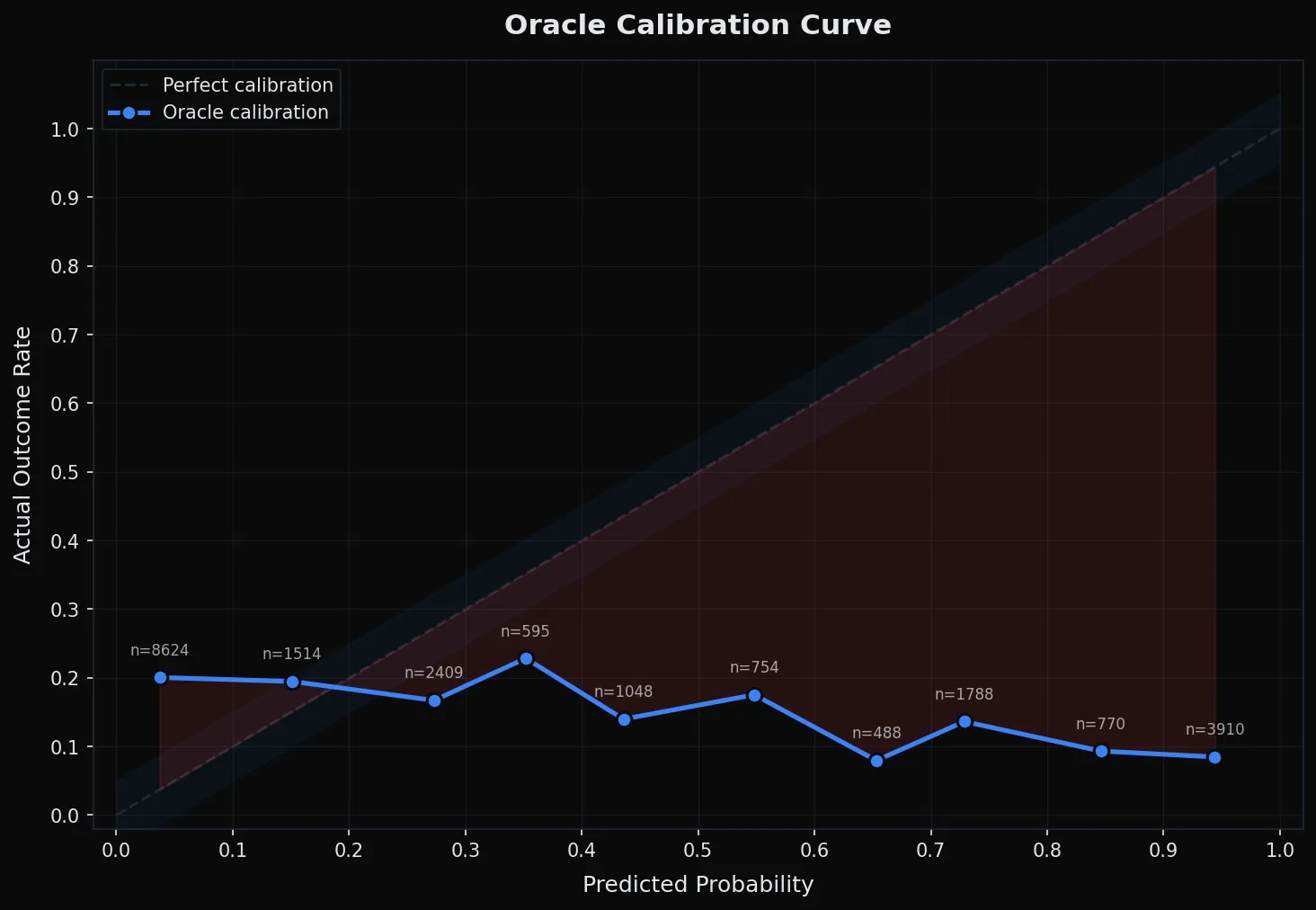
AI Prediction Accuracy Report — April 2026
Predictions · May 1, 2026