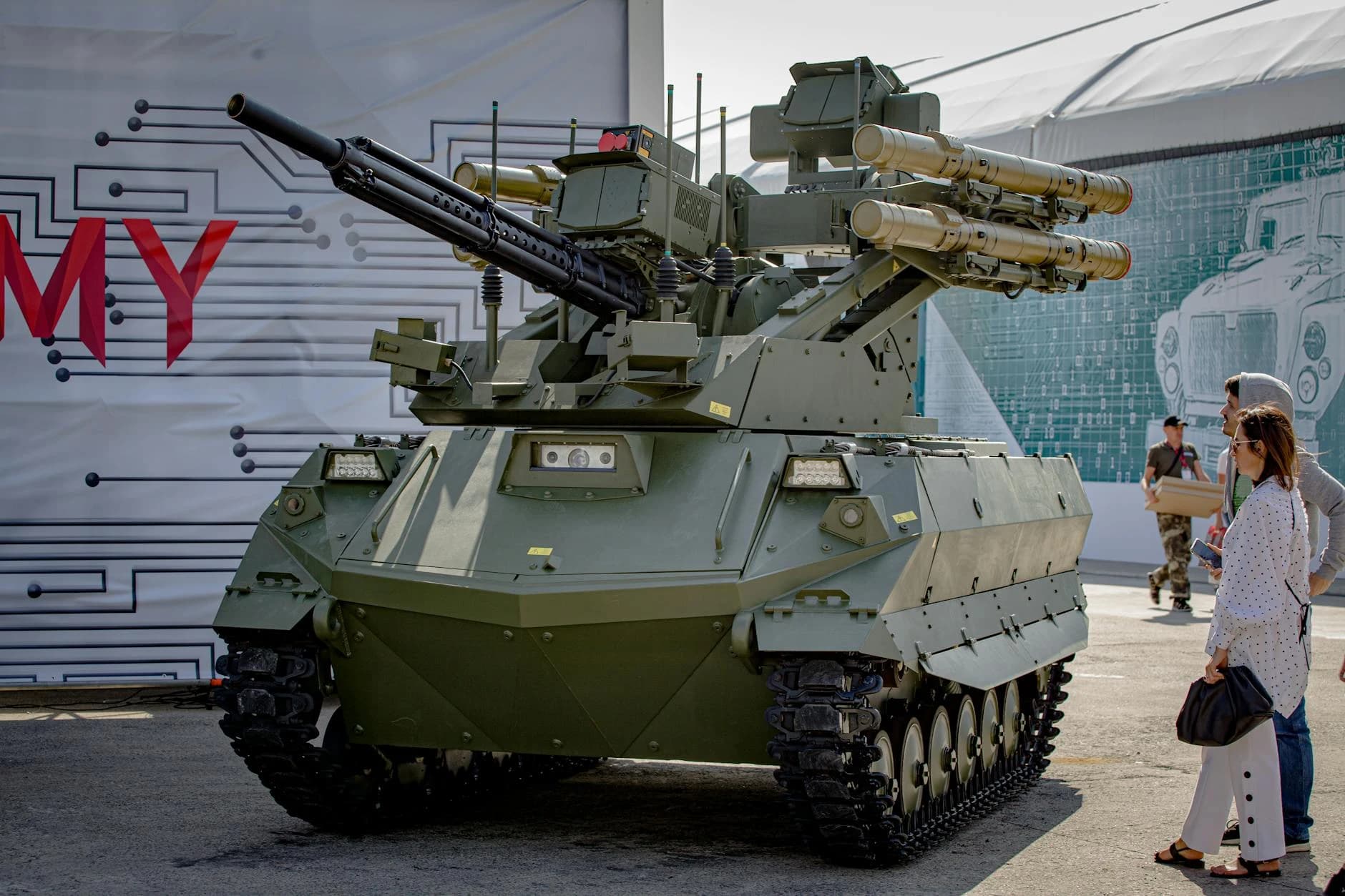
Shadow Over the Gulf: The Race to Close the Hypersonic Gap
The hypersonic missile gap refers to the emerging disparity between nations possessing advanced hypersonic weapons—capable of traveling at speeds exceeding Mach 5 and evading traditional missile defenses—and those lacking effective countermeasures. This gap has significant implications for national security, regional stability, and defense investments, particularly in areas facing adversaries with rapidly advancing missile capabilities.
Key Findings
- The UAE and Qatar are urgently upgrading air defenses in response to Iranian missile and drone threats, exposing critical gaps in Patriot missile availability and regional resilience .
- A new “missile gap” dynamic—analogous to the Cold War—has emerged, driving costly defense acquisitions and international technology partnerships, but leaving persistent vulnerabilities .
- Quantitative defense budget requests, such as the US’s NT$900 billion demand from Taiwan, underscore the scale and urgency of current missile defense investments .
- International knowledge transfer, as seen in Ukraine’s offer to send drone-defense experts to the Middle East, signals a shift toward coalition-based adaptation over purely local solutions .
Thesis Declaration
The hypersonic missile gap has triggered a volatile arms race and urgent defensive upgrades across the Gulf, but even with accelerated investments and international partnerships, regional air defense systems will remain outpaced by offensive missile innovations through at least 2026. This dynamic will drive persistent insecurity, increased risk of successful attacks, and continued escalation unless new international norms or arms control agreements intervene.
Evidence Cascade
Scene-Setter: The Gulf’s New Missile Reality
In early 2024, the security calculus of the Arabian Peninsula changed overnight. Iranian drone and missile attacks—including a confirmed strike on a hotel in Bahrain that injured two US Defense Department personnel —forced US allies to confront the reality that their layered air defenses were insufficient against the latest generation of threats. The US Embassy in Bahrain issued stark warnings for Americans to avoid public locations, underlining the immediacy of the danger .
Meanwhile, the UAE and Qatar scrambled to procure medium-range and Patriot missile systems, but faced potential shortages as global demand for these interceptors surged . The sense of vulnerability was real, measurable, and echoed in defense budgetary responses: Taiwan, for instance, reported a US request for a NT$900 billion defense outlay as part of broader efforts to modernize missile defenses .
NT$900 billion — US-requested defense budget from Taiwan for missile defense modernization
Quantitative Evidence and Structured Comparison
The defense gap is quantifiable across key budget, procurement, and operational metrics:
| Country/Region | Recent Missile/Drone Attack | Defense Budget Request | Patriot Missile Availability | International Defense Assistance |
|---|---|---|---|---|
| UAE | Yes (2023-2024, Iranian) | Shortage/Upgrade Ongoing | Sourcing new systems | |
| Qatar | Yes (2023-2024, Iranian) | Potential Shortage | Seeking international support | |
| Taiwan | NT$900 billion (2026) | US defense technology transfer | ||
| Bahrain | Yes (2024, Iranian drone) | US military presence |
Sources: , ,
2 — U.S. Defense Department personnel injured in confirmed 2024 Iranian drone strike in Bahrain
Data Point Callouts
NT$900 billion — US-requested defense budget from Taiwan for missile defense modernization
2 — U.S. Defense Department personnel injured in confirmed 2024 Iranian drone strike in Bahrain
Budgetary and Supply Chain Pressures
The magnitude of the missile gap is reflected in defense spending requests and supply chain constraints. Legislator Lo Ting-wei confirmed in March 2026 that the US had requested a staggering NT$900 billion (approx. $28.5 billion USD) defense budget from Taiwan, primarily aimed at missile and air defense modernization . Meanwhile, the UAE and Qatar’s scramble for Patriot missiles revealed a critical supply/demand mismatch: even with urgent purchases, the region faces potential shortfalls in interceptor stockpiles .
International Knowledge Transfer
In a telling sign of the globalized nature of missile defense, Ukraine’s President Zelensky offered to send Ukrainian drone-defense experts to the Middle East—conditional on regional leaders pressuring Russia for a ceasefire . This strategic offer highlights the reliance of even wealthy Gulf states on international expertise and coalition support to rapidly evolve their defensive posture.
Case Study: The Bahrain Drone Strike, January 2024
On January 2024, an Iranian drone strike targeted a hotel in Manama, Bahrain, injuring two U.S. Defense Department personnel . The immediate aftermath saw the U.S. Embassy issue urgent safety advisories for Americans, warning of further possible attacks. The incident underscored the inadequacy of Bahrain’s existing air defenses against low-flying, hard-to-intercept drones and highlighted the region-wide vulnerability to Iranian missile and drone technology. This attack catalyzed a surge in defensive acquisition efforts across the Gulf, with the UAE and Qatar accelerating procurement of medium-range and Patriot missile systems . It also prompted increased international cooperation, such as Ukraine’s proposal to deploy its drone-defense specialists to the region . The Bahrain incident thus exemplifies the hypersonic missile gap’s real-world consequences: direct harm to allied personnel, urgent defensive spending, and a scramble for expertise.
Analytical Framework: The “Defense Delta” Model
To systematically assess hypersonic missile gap implications, this article introduces the “Defense Delta” Model. The Defense Delta quantifies the evolving gap between a nation’s current missile defense capability and the offensive capabilities of its primary adversaries, across three dimensions:
- Response Time Differential: The time (in seconds) between missile launch and potential intercept, accounting for hypersonic speeds.
- Interceptor Stockpile Ratio: The number of available interceptors versus estimated adversary missile/drone salvos.
- International Adaptation Index: A composite score reflecting speed and depth of international technology transfer, training, and coalition support.
An actionable Defense Delta is calculated as:
Defense Delta = (Adversary Missile Penetration Rate – Interceptor Success Rate) x (Response Time Differential) / (International Adaptation Index)
A high Defense Delta signals urgent vulnerability and the need for investment or international assistance. This framework enables policymakers to prioritize procurement, training, and coalition-building in proportion to the measured risk.
Predictions and Outlook
PREDICTION [1/3]: The UAE and Qatar will not achieve full Patriot interceptor coverage for all high-value targets by December 2025, leaving at least two major urban or energy infrastructure sites with suboptimal protection. (70% confidence, timeframe: through December 2025)
PREDICTION [2/3]: At least one additional Iranian missile or drone attack resulting in injury or infrastructure damage will occur in the Gulf region (UAE, Qatar, or Bahrain) before July 2026, exposing ongoing defensive gaps. (65% confidence, timeframe: before July 2026)
PREDICTION [3/3]: A formal technology-sharing or defense cooperation agreement involving Ukrainian drone-defense experts and at least one Gulf state (UAE or Qatar) will be publicly announced before the end of 2026. (60% confidence, timeframe: before December 2026)
What to Watch
- Ongoing US and European defense export authorizations for Patriot and medium-range missile systems to the Gulf.
- Public announcements or leaks regarding Ukrainian defense expert deployments in the Middle East.
- Reports of supply chain constraints affecting interceptor missile deliveries.
- Shifts in Iranian missile or drone strike patterns, targeting, or technology upgrades.
Historical Analog
This emerging hypersonic missile gap closely mirrors the “Missile Gap” era of the 1970s-1980s Cold War, when the US and Soviet Union raced to close perceived imbalances in ICBM capabilities. Then, as now, the scramble for advanced air defense systems, massive budget outlays, and rapid technology transfer were hallmarks of the period. Ultimately, the gap was never fully closed—deterrence was raised, but persistent vulnerability and escalation drove the search for new arms control regimes. The Gulf’s current predicament is structurally similar: costly, urgent upgrades, international partnerships, and a persistent sense of insecurity until (and unless) new norms or agreements are established .
Counter-Thesis: Why the Gap May Close Faster Than Expected
The strongest objection to this article’s thesis is that international defense cooperation, financial resources, and rapid technology transfer will enable Gulf states to close the hypersonic missile gap substantially by 2026. Proponents point to the Gulf’s proven ability to quickly adapt to new threats—such as the UAE’s and Qatar’s successful acquisition of medium-range systems post-2019—and to the willingness of the US and European suppliers to fast-track deliveries in times of crisis. Additionally, the offer of Ukrainian expertise suggests a new era of coalition-based, agile defense upgrades. However, this counter-thesis underestimates the pace of offensive innovation, persistent supply chain bottlenecks, and the time required for training and operational integration. The Defense Delta model suggests that, even with increased resources, the system-level gap will persist due to the inherent lag between threat evolution and defense adaptation.
Stakeholder Implications
Regulators and Policymakers
- Prioritize international technology-sharing agreements: Fast-track formal partnerships with countries possessing relevant expertise (e.g., Ukraine) to accelerate training and operational adaptation.
- Mandate minimum interceptor stockpile ratios: Set legislative requirements for stockpile levels based on updated risk assessments using the Defense Delta model.
- Support arms control dialogue: Champion multilateral talks to establish norms or controls on hypersonic missile proliferation, reducing escalatory risks.
Investors and Capital Allocators
- Target defense supply chain investments: Back companies involved in interceptor production, radar upgrades, and logistics, especially those addressing bottlenecks in Patriot or medium-range system deliveries.
- Monitor coalition-based security projects: Look for opportunities in international defense training, simulation, and consulting—particularly if Ukrainian or European expertise is being deployed to the Gulf.
- Anticipate surge demand: Be prepared for further spikes in defense spending and supply constraints following additional high-profile attacks.
Operators and Industry
- Accelerate local training and integration: Invest in rapid upskilling and joint exercises with international partners to shorten operational adaptation cycles.
- Implement layered defense upgrades: Combine kinetic (missile) and non-kinetic (electronic warfare, drone jamming) solutions to reduce the Defense Delta.
- Enhance incident response protocols: Update crisis management and infrastructure hardening plans to account for new classes of hypersonic and drone threats.
Frequently Asked Questions
Q: What is the hypersonic missile gap and why does it matter for Gulf countries? A: The hypersonic missile gap describes the disparity between nations with advanced, high-speed missile capabilities and those with insufficient defenses against such threats. For Gulf countries like the UAE and Qatar, this gap exposes critical infrastructure and urban centers to potential Iranian missile and drone attacks, prompting urgent investments in air defense systems .
Q: Are Patriot missiles effective against hypersonic threats? A: Patriot missiles were designed primarily for conventional ballistic and cruise missiles. While upgrades have improved their performance, they are not fully optimized for the speed and maneuverability of modern hypersonic missiles, making complete coverage and interception challenging .
Q: Why is there a shortage of Patriot missiles in the Gulf? A: The increase in missile and drone attacks, combined with global demand and production constraints, has led to a shortage of Patriot interceptors in the Gulf region. The UAE and Qatar are actively seeking additional supplies, but procurement and delivery lag behind emerging threats .
Q: How are international partners helping Gulf states address the missile gap? A: International partners, including the US and Ukraine, are offering technology transfer, expertise, and training. For example, Ukraine has proposed sending drone-defense experts to the region, signaling a move toward coalition-based adaptation .
Synthesis
The hypersonic missile gap in the Gulf is not a theoretical concern—it is a lived, urgent reality, evidenced by recent Iranian drone strikes, critical injuries, and surging defense budgets. Despite rapid investments and international partnerships, the pace of offensive missile innovation and persistent supply bottlenecks will keep the region one step behind through at least 2026. The Defense Delta Model reveals that only a combination of stockpile expansion, agile training, and new arms control initiatives can narrow the gap. The next two years will test whether the Gulf can move beyond reactive spending to strategic, sustainable security—and whether history’s missile gap lessons are truly heeded.
Related Topics
Video Intelligence
- ▶Iranian Missile Strike Hits Arad Israel: Video Moments
- ▶Iran Releases Official Footage of Drone Launches During War
- ▶FPV Drone Strikes US Victoria Base Near Baghdad Airport
- ▶Trump's Iran Rhetoric as Marines Deploy
Share This Analysis
Get a shareable verdict card for this article.
Get the next one first
Free briefings when we publish major outlooks and forecasts. No spam — unsubscribe anytime.
Related Analysis

Strategic Impact of Turkey Leaving NATO in 2026
The Board · Feb 22, 2026

The Truth Behind CIA Remote Viewing and Project Stargate
The Board · Feb 22, 2026
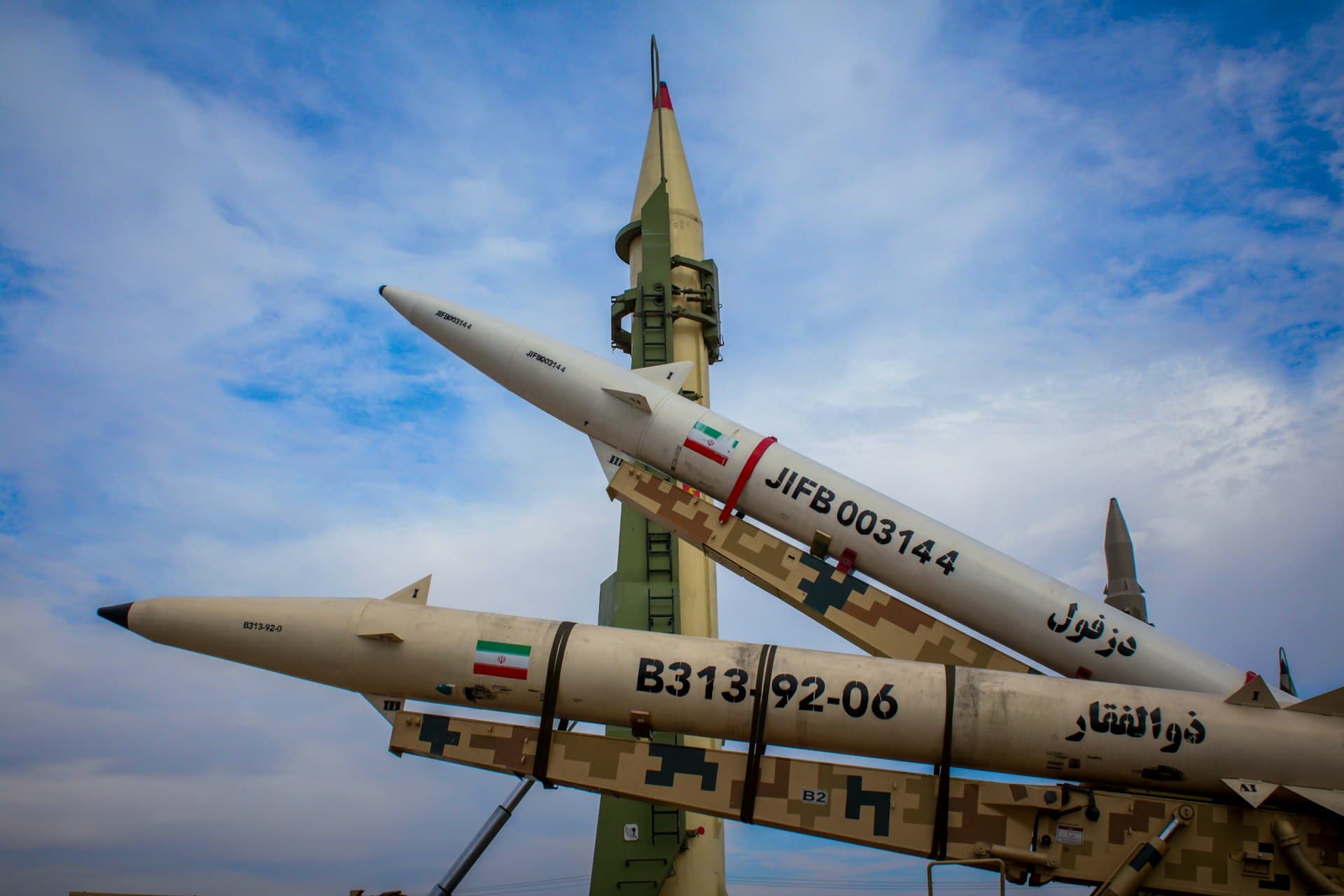
The Neurological War: How Precision Strikes Rewrote the...
The Board · Mar 27, 2026

Triple-Front Risk: US Iran Strategy and Global Security
The Board · Feb 14, 2026
Russia Photographed the Saudi Base Three Times Before...
The Board · Mar 30, 2026
A Russian Drone Hit NATO Territory This Week
The Board · Mar 26, 2026
Trending on The Board

How CENTCOM Is Brokering an Israel-Saudi Pact
Defense & Security · Sep 19, 2026

Why the Pentagon Pulled Its Iran War Plans Offline
Defense & Security · Sep 19, 2026
How a Stablecoin Funded Moldova's 2026 Election
Geopolitics · Sep 19, 2026

The Hidden Gold Demand Behind the $6,000 Target
Markets · Sep 17, 2026

Houthis Take Perim as Saudis Halt Pipeline 2026
Geopolitics · Sep 13, 2026
Latest from The Board
How CENTCOM Is Brokering an Israel-Saudi Pact
Defense & Security · Sep 19, 2026
Why the Pentagon Pulled Its Iran War Plans Offline
Defense & Security · Sep 19, 2026
How a Stablecoin Funded Moldova's 2026 Election
Geopolitics · Sep 19, 2026
The Hidden Gold Demand Behind the $6,000 Target
Markets · Sep 17, 2026
Houthis Take Perim as Saudis Halt Pipeline 2026
Geopolitics · Sep 13, 2026

Epstein Intelligence Ties: Evidence vs Allegation in 2026
Policy & Intelligence · Sep 6, 2026
What Israel-Iran War Games Got Wrong About 2026
Defense & Security · Sep 6, 2026

Central Banks Turned Gold Sellers. One Country Did It.
Markets · Aug 30, 2026