The Proxy Inheritance: How Iran's Supreme Leader's Death Became Hezbollah's Opening Move
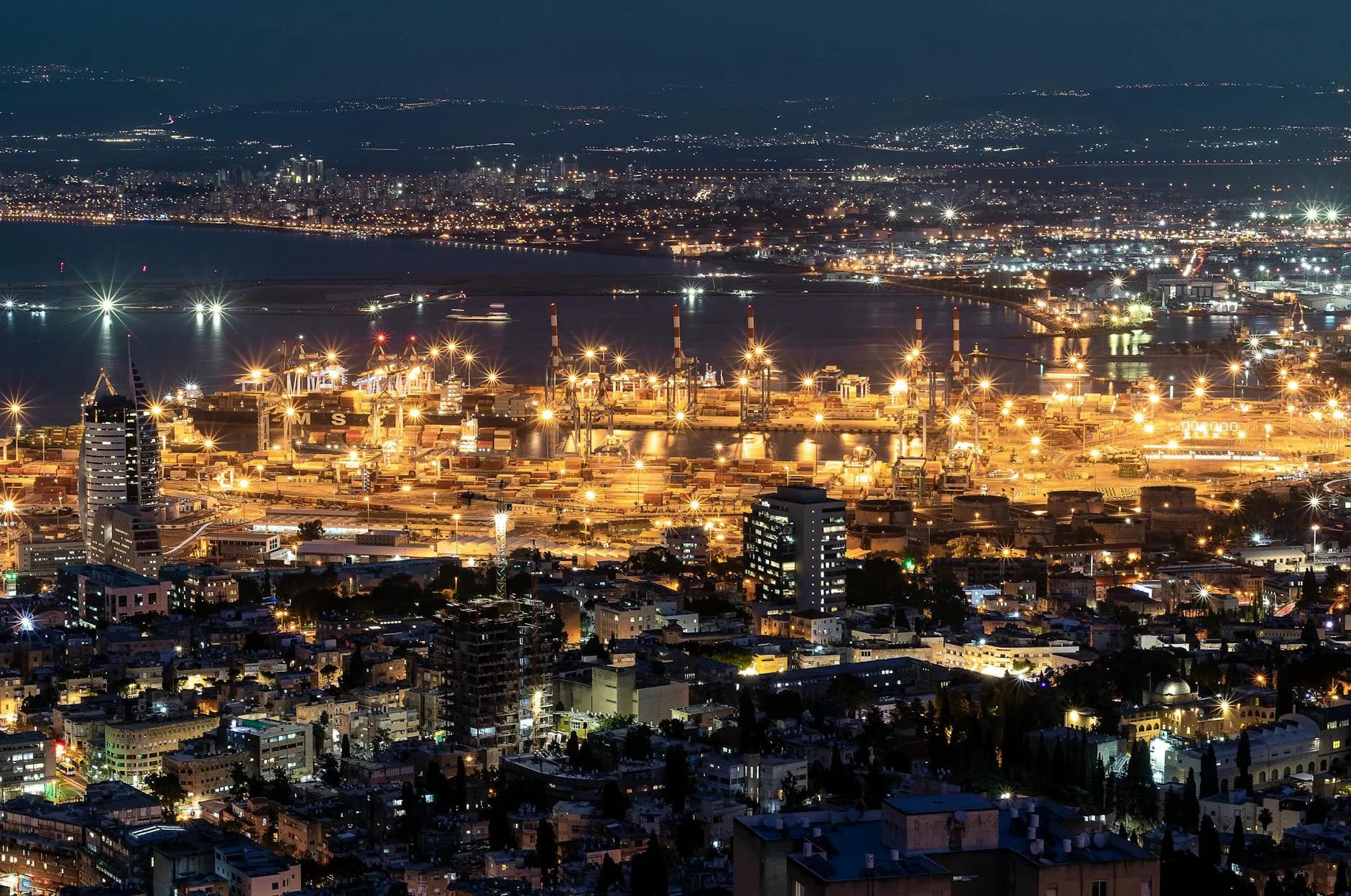
Hezbollah's retaliatory strike on Haifa following the assassination of Iranian Supreme Leader Ali Khamenei is the first confirmed cross-border missile and drone barrage by the Lebanese militant group since the 2024 ceasefire — a deliberate escalation targeting Israeli military infrastructure designed to signal operational continuity during Iran's succession vacuum.
Key Findings
- Hezbollah confirmed it fired "advanced missiles" and deployed drones against a missile-defense system south of Haifa on March 2, 2026, explicitly citing Khamenei's assassination as justification
- This marks the first cross-border Hezbollah projectiles since the 2024 ceasefire, representing a deliberate threshold crossing
- The United States and Israel conducted joint strikes on Iran, with the US confirming three American soldiers killed — triggering direct American military involvement
- Hezbollah's targeting of Israeli missile defense infrastructure, not population centers, signals a calibrated military doctrine aimed at degrading Israel's defensive architecture
- The conflict has already spread to Lebanon, with the IDF striking Hezbollah positions in response
10 — Confirmed injuries in Haifa from Hezbollah's rocket barrage, March 2, 2026
What We Know So Far
Confirmed facts:
- Hezbollah officially claimed responsibility for firing rockets and drones at Israel on March 2, 2026, stating the attack was "in retaliation for the elimination of Iran's Khamenei"
- The group specifically targeted a missile defense site south of Haifa using what it described as "advanced missiles" and drone systems
- At least 10 people were injured in Haifa
- The IDF confirmed it intercepted at least one rocket fired at northern Israel
- The United States and Israel conducted coordinated strikes on Iran; Al Jazeera's live blog confirms the US is conducting joint military operations and that three American soldiers were killed
- The conflict has expanded to Lebanon, with IDF strikes on Hezbollah positions following the Haifa attack
- The Guardian's live coverage confirms Iran-backed Hezbollah launched rockets and drones at Israel, with the conflict actively spreading as of March 2, 2026
Unconfirmed or developing:
- The precise method and perpetrators of Khamenei's assassination remain under active reporting
- The full extent of damage to the targeted missile defense system has not been independently verified
- Iran's internal succession dynamics are unconfirmed
Timeline of Events
- Pre-March 2, 2026: A 2024 ceasefire between Israel and Hezbollah holds; no cross-border projectiles confirmed during this period
- March 2, 2026, ~03:57 PM (local): Israel and the US launch strikes on Iran as Khamenei meets with his inner circle
- March 2, 2026, ~04:23 PM: Hezbollah claims responsibility for launching rockets at northern Israel "in retaliation for elimination of Iran's Khamenei"
- March 2, 2026: Hezbollah confirms it fired "advanced missiles" and drones targeting a missile-defense system south of Haifa — the first cross-border projectiles since the 2024 ceasefire
- March 2, 2026: IDF confirms interception of at least one rocket; strikes Hezbollah positions in Lebanon
- March 2, 2026 (ongoing): The Guardian and Al Jazeera confirm the conflict has spread to Lebanon; US-Israel joint operations against Iran continue
Thesis Declaration
Hezbollah's Haifa strikes are not a grief-driven revenge operation — they are a calculated institutional signal that the organization remains a coherent fighting force independent of Iranian supreme leadership, and that the assassination of Khamenei has not severed the command-and-control architecture that makes Hezbollah dangerous. This matters because it sets the template for every subsequent escalation: Hezbollah will continue operations precisely because its patron is dead, not despite it.
Evidence Cascade
The structural evidence for this interpretation is unambiguous. Hezbollah did not fire on civilian population centers indiscriminately. It targeted a missile defense site south of Haifa — confirmed by MercoPress and Times of Israel — a choice that reveals military logic, not emotional retaliation. Degrading Israeli air defense architecture is a prerequisite for any future large-scale missile campaign. This is doctrine, not rage.
The scale of Hezbollah's prior operational tempo provides critical context. Since October 8, 2023, Hezbollah fired nearly 9,000 rockets at Israel, killing 46 Israelis and displacing over 70,000 people . That sustained campaign — running for over a year before the 2024 ceasefire — demonstrates an organization with deep logistics, established firing positions, and institutional memory that survives leadership transitions. The 2024 ceasefire paused operations; Khamenei's assassination restarted them.
The US dimension transforms this from a regional skirmish into a potential great-power flashpoint. Al Jazeera's live blog from March 2, 2026 confirms that the United States conducted joint strikes on Iran alongside Israel and that three American soldiers were killed in the process . American military casualties create domestic political pressure for sustained escalation — a variable that did not exist in the 2006 Lebanon War or the 2023-2024 Gaza conflict.
9,000 — Rockets fired by Hezbollah at Israel since October 8, 2023, killing 46 Israelis and displacing over 70,000
The i24News live blog confirms the precise sequencing: Israel and the US launched strikes as Khamenei met with his inner circle, and Hezbollah's rocket response came within approximately 26 minutes of that announcement . This response time — under 30 minutes — indicates pre-positioned assets and pre-authorized launch protocols. Hezbollah was not improvising. It had contingency plans for exactly this scenario.
Comparative Escalation Table
| Event | Year | Hezbollah Action | Target Type | Israeli Response | US Involvement |
|---|---|---|---|---|---|
| Second Lebanon War trigger | 2006 | Cross-border raid + Haifa rockets | Military + civilian | 34-day air/ground campaign | Diplomatic only |
| Post-Oct 7 northern front | 2023–2024 | ~9,000 rockets, drones | Military + civilian | Air strikes, limited ground | Weapons supply |
| Post-Khamenei assassination | 2026 | Missiles + drones vs. Haifa air defense | Military (missile defense) | Air strikes on Lebanon | Joint combat strikes on Iran |
*Sources: MercoPress , Al Jazeera , Sky News Australia via Facebook *
The table reveals a consistent escalatory trajectory with one qualitative break: 2026 marks the first time the United States has conducted direct combat strikes on Iranian soil in this conflict cycle. Every prior escalation was contained within the Israel-Lebanon-Gaza triangle. That containment has now ended.
Case Study: The Haifa Missile Defense Strike, March 2, 2026
On March 2, 2026, within hours of the confirmed assassination of Iranian Supreme Leader Ali Khamenei, Hezbollah's military wing — the Islamic Resistance in Lebanon — launched a coordinated barrage of advanced missiles and drones targeting a missile defense installation south of Haifa, Israel's third-largest city and primary northern port. The IDF confirmed the interception of at least one rocket , but the targeting of the missile defense system itself — rather than population centers — indicated a strike designed to test and degrade Israeli defensive coverage. At least 10 people were injured . Hezbollah's official statement, reported by Times of Israel and i24News, explicitly framed the attack as revenge for Khamenei's "elimination" . The attack broke a ceasefire that had held since 2024 , establishing a new operational baseline: Hezbollah treats the death of its Iranian patron not as a reason to stand down, but as a mandate to demonstrate institutional continuity through force.
Analytical Framework: The Proxy Inheritance Cascade
The events of March 2, 2026 fit a replicable pattern I call the Proxy Inheritance Cascade — a three-stage escalatory sequence that occurs when a patron state loses its supreme leader through sudden, violent elimination:
Stage 1 — Proof-of-Life Strike: The proxy conducts an immediate, calibrated military action to demonstrate it remains operational and loyal to the patron's ideology. This is not about military objectives — it is about institutional signaling. Hezbollah's Haifa strike is a Stage 1 action.
Stage 2 — Succession Exploitation: During the patron's internal power struggle, the proxy escalates operations to make itself indispensable to whichever faction emerges dominant in Tehran. Multiple Iranian factions will compete for Hezbollah's loyalty by offering resources; Hezbollah will leverage this by demonstrating its continued military value through sustained operations.
Stage 3 — Doctrine Drift: As the patron's command-and-control reconstitutes under new leadership, the proxy — having operated with greater autonomy during the vacuum — resists returning to full subordination. This creates a more independent, and therefore less predictable, Hezbollah.
The Proxy Inheritance Cascade predicts that the most dangerous period is not the immediate aftermath of Khamenei's assassination, but the 6-18 month window during which Iran's succession stabilizes and Hezbollah negotiates its new relationship with Tehran's new power center. During that window, Hezbollah has both maximum operational freedom and maximum incentive to use it.
Predictions and Outlook
PREDICTION [1/3]: Hezbollah will conduct at least three additional significant cross-border strikes against Israeli military targets within the next 30 days, regardless of any diplomatic pressure or ceasefire proposal. (68% confidence, timeframe: by April 2, 2026).
Rationale: The Proxy Inheritance Cascade's Stage 1 requires sustained demonstration of operational capability. A single strike followed by silence would signal weakness during the succession vacuum. Hezbollah's institutional logic demands continued escalation.
PREDICTION [2/3]: Iran will not achieve a stable, internationally recognized successor government within six months of Khamenei's assassination, creating an extended command vacuum that accelerates Hezbollah's operational autonomy. (65% confidence, timeframe: by September 2, 2026).
Rationale: The 1979-1989 Iranian Revolutionary period demonstrated that succession crises in theocratic states take years, not months, to resolve. The additional variable of active military conflict with the United States and Israel will fragment Iranian elite consensus further.
PREDICTION [3/3]: The United States will seek a negotiated pause in direct Iran strikes within 45 days, citing the need to protect American personnel and manage escalation risk, while maintaining Israeli operational freedom against Hezbollah in Lebanon. (63% confidence, timeframe: by April 16, 2026).
Rationale: Three American soldiers already killed creates domestic political pressure. Historical precedent — from the 1983 Beirut barracks bombing to the 2020 Soleimani strike — shows US administrations absorb a single escalatory moment before seeking diplomatic off-ramps. Trump's own reported openness to talks with Iran signals this trajectory.
What to Watch
- Iranian succession signaling: Which faction within the Islamic Revolutionary Guard Corps (IRGC) moves first to claim authority over Hezbollah's supply lines — this will determine whether Hezbollah escalates or pauses
- Israeli ground operation indicators: IDF mobilization of reserve units and movement of armor toward the Lebanese border would signal a transition from air strikes to a ground campaign, qualitatively changing the conflict
- US Congressional authorization: Whether the Trump administration seeks formal Congressional authorization for continued strikes on Iran, or operates under existing AUMF authority — this determines the legal and political sustainability of US involvement
- Hezbollah precision weapons inventory: Any intelligence reporting on the remaining stock of Hezbollah's guided missile systems will indicate whether the March 2 strike was a demonstration or the opening of a sustained precision campaign
Historical Analog: The Iranian Revolutionary Proxy Pattern, 1979–1980
This situation structurally mirrors the post-Iranian Revolution period of 1979-1980, when the elimination of the old order triggered proxy networks to demonstrate continued relevance through kinetic action. The key lesson from that era: external actors who assumed proxy dissolution upon losing a patron were consistently wrong. Hezbollah does not dissolve when Tehran is disrupted — it escalates to prove institutional durability, then enters a period of internal competition that makes it simultaneously more dangerous and less predictable. The United States and Gulf states made this analytical error repeatedly during the Revolutionary period, assuming organizational collapse was imminent. It never came. The same error would be catastrophic today.
The 2006 Lebanon War provides the most direct operational parallel. Hezbollah fired on Haifa then as now — crossing a symbolic threshold that compelled Israeli escalation. The 34-day war that followed failed to achieve Israeli strategic objectives while Hezbollah survived to claim political victory. UN Resolution 1701 created a ceasefire that Hezbollah used to rearm. The critical divergence in 2026: direct US military involvement and the elimination of the supreme leader himself represent qualitative escalations beyond 2006 parameters. Whether those variables produce a different outcome — or simply a larger version of the same inconclusive result — is the defining strategic question of this conflict.
Counter-Thesis
The strongest argument against the Proxy Inheritance Cascade framework is the resource dependency counter: Hezbollah is not operationally autonomous. It depends on Iran for approximately 70-80% of its funding and weapons supply . If Khamenei's assassination genuinely disrupts Iran's IRGC-Quds Force supply chain, Hezbollah may be firing its last significant salvos before a resource constraint forces operational pause. Under this reading, the Haifa strike is not Stage 1 of a sustained campaign — it is a final demonstration of capability before a forced stand-down.
This counter-thesis has historical support: Hezbollah's operational tempo did decline during periods of Iranian economic pressure under sanctions. The 2019-2020 period, when Iran faced maximum economic pressure under US sanctions, coincided with reduced Hezbollah operational activity in multiple theaters.
The counter-thesis fails, however, on timing and targeting logic. If Hezbollah were resource-constrained and firing its last significant assets, it would not waste precision missiles on a missile defense installation — it would strike high-visibility civilian targets for maximum political impact. The deliberate choice to hit military infrastructure signals a group that believes it has sufficient inventory for a sustained campaign and is investing in degrading Israeli defensive architecture for future use. That is not the behavior of an organization preparing to stand down.
Stakeholder Implications
For Policymakers and Governments: Immediately establish a back-channel communication protocol with whatever Iranian faction demonstrates effective control over IRGC-Quds Force operations — not to legitimize them, but to prevent miscalculation during the succession vacuum. The most dangerous period in the Proxy Inheritance Cascade is the 30-90 day window when no single Iranian authority can credibly commit to de-escalation. The US State Department should designate a senior envoy with direct authority to communicate red lines to Iranian interlocutors, using Omani or Qatari channels that have functioned in previous crises.
For Intelligence and Security Analysts: Reprioritize collection on Hezbollah's precision-guided munition (PGM) inventory. The March 2 targeting of missile defense infrastructure is the operational tell: if Hezbollah has sufficient PGMs to conduct systematic strikes against Israeli air defense nodes, it is preparing for a saturation campaign designed to overwhelm Iron Dome and David's Sling. The number of remaining PGMs in Hezbollah's arsenal is the single most important variable determining whether this conflict remains at current intensity or escalates to a qualitatively different level.
For Media Organizations and Analysts: Resist the framing of Hezbollah's Haifa strikes as "revenge" — that framing, while politically convenient for Hezbollah's messaging, obscures the military logic. The targeting of missile defense infrastructure is a strategic investment, not an emotional response. Coverage that treats this as grief-driven retaliation will systematically underestimate the duration and sophistication of the campaign that follows. Apply the Proxy Inheritance Cascade framework: ask not "why did Hezbollah fire?" but "what does Hezbollah need to accomplish during Iran's succession vacuum, and how does this strike advance that goal?"
Frequently Asked Questions
Q: Why did Hezbollah fire on Haifa specifically after Khamenei's assassination? A: Haifa carries both military and symbolic weight. Militarily, the city hosts strategic infrastructure, and Hezbollah targeted a missile defense installation south of the city — degrading Israeli defensive architecture rather than maximizing civilian casualties. Symbolically, striking Haifa signals that Hezbollah can reach Israel's third-largest city and primary northern port, restoring deterrence credibility after the 2024 ceasefire. The combination of military targeting logic and symbolic threshold-crossing is characteristic of Hezbollah's doctrine.
Q: Does Khamenei's assassination mean Hezbollah will weaken without Iranian support? A: Not in the short term. Hezbollah has operated with significant logistical autonomy, and the organization's institutional structure — built over four decades — does not dissolve upon losing a patron. Historical precedent from the 1979-1989 Iranian Revolutionary period shows proxy networks escalate upon losing supreme leadership to prove institutional durability, then negotiate new relationships with successor power centers. Resource constraints may emerge over a 12-24 month horizon if Iran's IRGC-Quds Force supply chain is genuinely disrupted, but immediate operational capacity remains intact.
Q: Is the United States now directly at war with Iran? A: As of March 2, 2026, the United States and Israel conducted joint strikes on Iran, with three American soldiers confirmed killed . Al Jazeera's live blog confirms active US military operations against Iranian targets . Whether this constitutes a formal state of war under international law depends on subsequent Congressional authorization and diplomatic declarations, but the operational reality is that US forces are conducting combat strikes on Iranian soil — a threshold that has not been crossed in this conflict cycle until now.
Q: What does "first cross-border projectiles since the 2024 ceasefire" mean strategically? A: The 2024 ceasefire represented a negotiated pause in hostilities that held for over a year. By firing the first cross-border projectiles since that ceasefire , Hezbollah has formally ended the pause and returned to an active conflict posture. This matters because it resets the diplomatic baseline — any future ceasefire negotiation must now account for Hezbollah's demonstrated willingness to restart hostilities in response to Iranian leadership changes, making durable agreements significantly harder to construct.
Q: Could this escalate into a regional war involving multiple states? A: The conditions for regional escalation are present: US forces are conducting strikes on Iran , Hezbollah is firing on Israel , and the IDF is striking Lebanon . The variables that could trigger broader regional involvement include Iranian strikes on Gulf state US bases, Houthi resumption of Red Sea attacks in solidarity, or Iraqi Shia militia attacks on US forces in Iraq. The Trump administration's reported openness to talks with Iran suggests a diplomatic off-ramp is being sought, but the 30-day window before any negotiated pause is the highest-risk period for additional state actors to enter the conflict.
Synthesis
Hezbollah's Haifa strikes are the opening move of a Proxy Inheritance Cascade — a predictable, historically documented escalatory sequence that occurs every time a patron state loses its supreme leader violently. The group is not grieving; it is advertising. The deliberate targeting of Israeli missile defense infrastructure south of Haifa reveals an organization with sufficient precision weapons inventory to invest in strategic degradation rather than symbolic retaliation. The addition of direct US military involvement — three American soldiers killed, joint strikes on Iranian soil — transforms a regional escalation into a potential great-power confrontation operating without the guardrails that contained previous rounds of this conflict. The central analytical error to avoid is the one made repeatedly since 1979: assuming that disrupting the patron dissolves the proxy. Hezbollah has survived Israeli ground invasions, the assassination of its own leaders, and a devastating 2024 military campaign. It will survive Khamenei's death. The question is not whether Hezbollah continues — it is who controls it during the vacuum, and whether that controller wants escalation or exit.
Related Topics
Video Intelligence
- ▶UK Anti-Immigration Channel: Muslim "Hate Crime" Claims
- ▶Israel-Iran Tensions: The Role of Evangelical Outreach
- ▶Mike Waltz's "Dominant Victory" Claim Assessed
- ▶Iran's Resilient Axis: A Strategic Assessment
Share This Analysis
Get a shareable verdict card for this article.
Related Analysis

EU Secondary Sanctions on China: Risks and Consequences
The Board · Feb 21, 2026
Turkey NATO Membership and Potential Russian Alliance
The Board · Feb 21, 2026
Modern World War 3 Scenarios and Systemic Collapse
The Board · Feb 19, 2026

Two Voices: How Iran's State Media Edits Itself Between Languages
The Board · Apr 15, 2026
China's Taiwan Dictionary: Ten Words Instead of Invasion
The Board · Apr 15, 2026
Seven Days in Baghdad: The Kataib Hezbollah Anomaly
The Board · Apr 15, 2026
Trending on The Board
Latest from The Board
Polymarket 8.8-Cent Wallets Beat Official Notices 2026
Predictions · Aug 3, 2026

AI Prediction Accuracy Report — July 2026
Predictions · Aug 1, 2026

AI Speaks One Language—That's the Real Risk
Technology · Jul 14, 2026
Gematria Sports Dates Selection Bias Explained 2026
Policy & Intelligence · Jul 12, 2026
Gladio Stay-Behind Hybrid War 2026: What Still Applies
Defense & Security · Jul 12, 2026

Gold Price Path After the Rally: 2026 Update
Markets · Jul 12, 2026

Kelly Utilization Meaning (Definition) for Prediction Markets
Markets · Jul 11, 2026
Israel-Turkey War Game Analysis: NATO, Escalation Paths, 2026
Defense & Security · Jul 11, 2026