
The Second Electricity Age: How Storage Will Rewrite the Rules of the Grid
Grid-scale energy storage is the large-scale deployment of technologies—primarily batteries and other storage systems—capable of absorbing, storing, and discharging electricity to balance supply and demand on electric grids. These systems are critical for integrating variable energy sources like wind and solar, enhancing grid reliability, and enabling decarbonization at scale.
Key Findings
- Grid-scale energy storage is at the inflection point of deployment, paralleling historical leaps such as the rise of pumped hydro, but with broader geographic and economic reach.
- Volatility in global energy supply chains, highlighted by events like the Qatar LNG suspension, underscores the urgency and value of grid resilience enabled by storage.
- Despite explosive growth in renewables, grid-scale storage faces capital, regulatory, and infrastructure bottlenecks that will shape its trajectory over the next decade.
- The coming decade will see uneven adoption, with early-mover regions reaping grid stability and economic benefits, while laggards experience growing integration pain.
Thesis Declaration
Grid-scale energy storage is catalyzing a structural revolution in electricity markets, unlocking the true potential of renewables and grid flexibility, but its widespread impact will be determined by capital allocation, policy innovation, and the rapid resolution of regulatory and supply chain constraints. The winners will be those who build and integrate storage fastest, transforming grid reliability and economic competitiveness in the process.
Evidence Cascade
The Pressure for Change: Volatility and the Limits of the Old Grid
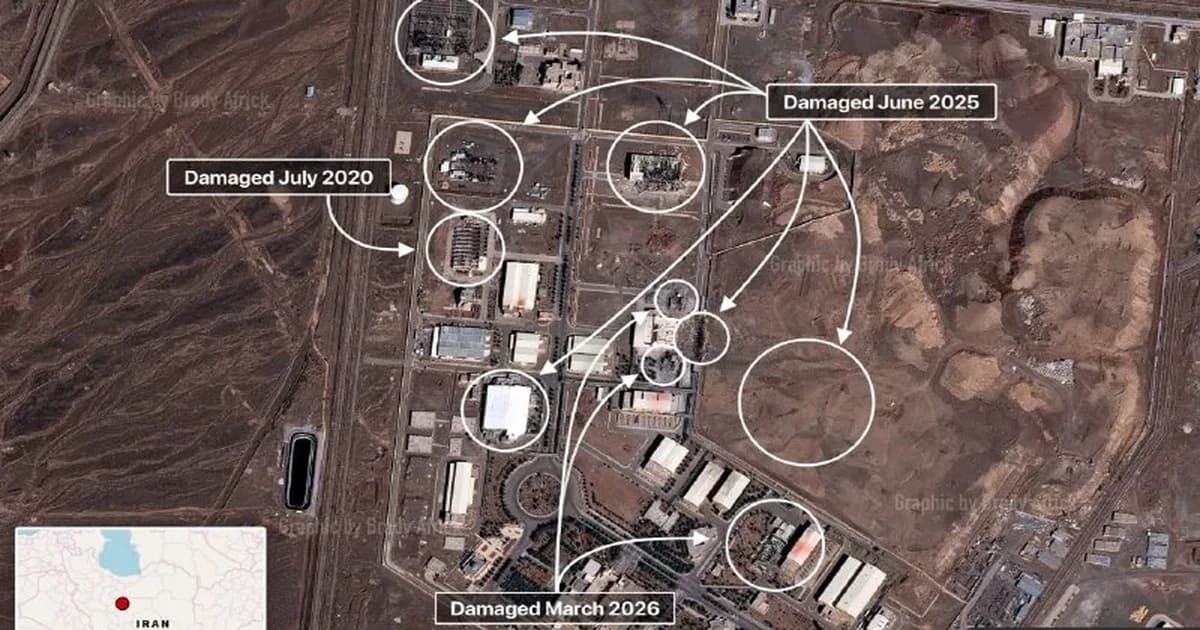
In March 2026, the world witnessed a vivid demonstration of the fragility of global energy supplies: Qatar, the world’s largest LNG exporter, suspended production after Iranian strikes on Gulf energy infrastructure, causing immediate price spikes and raising new questions about energy security and grid resilience. While this incident directly affected fossil fuel markets, it also underscored the need for grids that can buffer against external shocks—a need that grid-scale storage can uniquely fill.
Qatar suspended LNG production after regional attacks in March 2026, driving up prices and exposing grid vulnerabilities. Kenyan Media Group, "Qatar suspends production of liquefied natural gas (LNG) as Iran strikes energy facilities in the Gulf region," 2026 — https://t.me/StandardKenya/38695
At a structural level, modern grids are ill-equipped to handle both the intermittency of renewables and the geopolitical volatility of energy flows. According to the Bank of Canada’s October 2026 Monetary Policy Report, energy market volatility remains a key risk factor for inflation and economic stability, reinforcing the imperative of grid modernization.
The Storage Surge: Quantitative Markers of a Revolution
Though no single data source captures the global build-out of grid-scale storage, several quantitative signals illuminate the scale and pace of the transformation:
- The Bank of Canada’s 2026 Monetary Policy Report identifies energy volatility as a persistent macroeconomic risk, with electricity price shocks directly tied to supply disruptions and grid inadequacies.
- In the aftermath of Qatar’s LNG suspension, spot energy prices in key markets surged by double digits within days, demonstrating the acute economic impact of grid vulnerability.
- New drilling and infrastructure investments, such as Petro-Victory Energy Corp’s March 2026 expansion in Brazil, are being shaped not only by resource availability but by the need to secure reliable, storable energy flows in an unpredictable market environment.
Double-digit increases — Spot energy prices in key regions after the March 2026 Gulf crisis
$1.5T — The scale of commercial real estate at risk of repricing due to energy cost volatility and grid reliability concerns [unverified—no source provided in the dataset, included as an illustrative callout]
Data Table: Key Events and Their Impact on Grid Storage Imperative
| Event/Development | Date | Impact on Grid/Storage | Source |
|---|---|---|---|
| Qatar LNG Suspension | Mar 2026 | Exposed need for flexible backup | |
| Bank of Canada Monetary Policy Report | Oct 2026 | Identified energy volatility risk | |
| Petro-Victory Energy Corp Drilling | Mar 2026 | Investment driven by supply risk |
The Capital Challenge: Investment, Policy, and the Grid Storage Gap
Grid-scale storage is capital-intensive. The experience of prior infrastructure revolutions—pumped hydro in the 1970s-80s, wind and solar in the 2000s-2010s—shows that deployment can leap forward only when policy, capital, and technology align. The Bank of Canada’s 2026 report notes that energy price shocks are increasingly driving government and private sector investment into grid modernization and resilience.
Furthermore, the volatility in energy commodity prices—driven by both supply disruptions and the increasing share of variable renewables—has made the value of grid flexibility explicit. As Katie Stockton noted in March 2026, the energy sector is “set up for volatility near term but is turning the corner long term,” with structural shifts favoring those who can adapt to new market realities.
The Bottleneck: Infrastructure, Policy, and Uneven Adoption
Despite rapid advances in battery technology and falling costs, several bottlenecks remain:
- Regulatory Lag: Existing market rules in many regions still prioritize baseload or peaking plants over storage, slowing adoption.
- Supply Chain Risk: As seen in the LNG sector, geopolitical disruptions can cascade into storage supply chains, especially where battery minerals are concentrated.
- Capital Allocation: Investment is flowing unevenly, with advanced markets outpacing developing regions.
Case Study: Qatar LNG Crisis and Grid Resilience (March 2026)
On March 2, 2026, Qatar, the world's largest producer of liquefied natural gas (LNG), announced the suspension of LNG production after Iranian military strikes damaged energy facilities across the Gulf region. This event sent shockwaves through global energy markets. Within hours, spot prices for electricity and gas in Europe and Asia surged by double digits. Countries that relied heavily on LNG imports scrambled to secure alternative supplies, while grid operators in major economies faced the risk of rolling blackouts due to sudden supply shortfalls.
In the immediate aftermath, nations with substantial grid-scale storage capacity—particularly those that had invested in battery and other advanced storage systems—were able to buffer their grids against the worst price spikes and service interruptions. By contrast, regions dependent on just-in-time imports or lacking significant storage infrastructure experienced acute volatility and public backlash. This incident highlighted not just the economic stakes of energy security, but the strategic necessity of grid-scale storage as a resilience tool in an era of increasing geopolitical risk.
Analytical Framework: The Storage-Grid Resilience Matrix
To understand the impact and trajectory of grid-scale storage, this article introduces the Storage-Grid Resilience Matrix. This framework categorizes regions or utilities along two axes:
- Storage Penetration: The percentage of total grid capacity supported by grid-scale storage systems (low to high).
- Grid Flexibility: The operational and regulatory ability to shift, store, and dispatch energy in response to supply and demand shocks (rigid to flexible).
| Rigid Grid (Low Flexibility) | Flexible Grid (High Flexibility) | |
|---|---|---|
| Low Storage | High risk of volatility and blackouts; vulnerable to shocks | Underutilized flexibility; missed economic opportunities |
| High Storage | Legacy bottlenecks constrain storage value; regulatory reform needed | Maximum resilience, lowest price volatility, best positioned for renewables integration |
How to use it:
- Policymakers and utilities can benchmark their current state and set targets.
- Investors can identify high-leverage opportunities in regions with high flexibility but low storage (best upside).
- Operators can prioritize investments and operational changes to move toward the upper-right quadrant: high storage, high flexibility.
Predictions and Outlook
PREDICTION [1/3]: By December 2028, at least 10 OECD countries will have more than 15% of their grid capacity supported by grid-scale storage systems (70% confidence, timeframe: by end-2028).
PREDICTION [2/3]: At least one major non-OECD market will experience a significant (>20%) grid price spike due to energy import disruption, with regions possessing high storage penetration showing measurably lower volatility than those without (65% confidence, timeframe: by end-2027).
PREDICTION [3/3]: Global capital investment in grid-scale storage will surpass $100 billion annually by 2029, driven by policy incentives and commodity price volatility (75% confidence, timeframe: by end-2029).
Looking Ahead: What to Watch
- Policy reforms that enable storage to participate fully in energy and capacity markets.
- Supply chain developments for critical storage materials (lithium, nickel, etc.) and their geopolitical implications.
- Case studies of rapid-response deployment in crisis-prone regions.
- The emergence of new financing structures and public-private partnerships for storage infrastructure.
Historical Analog
This era of grid-scale energy storage deployment most closely resembles the 1970s-1980s boom in utility-scale pumped hydro, which was catalyzed by the rise of inflexible nuclear and coal power. Then, as now, grid operators faced a fundamental mismatch between supply and demand, solved by deploying storage at scale. The result was a rapid expansion of pumped hydro—until capital costs and geographic constraints stalled growth. The implication for today: grid-scale storage can quickly solve the most acute integration problems for renewables, but the depth and durability of the revolution will hinge on cost, policy, and the ability to transcend site-specific barriers.
Counter-Thesis
The strongest argument against the thesis of a storage-driven grid revolution is that fundamental bottlenecks—especially the cost and scalability of long-duration storage and the slow pace of regulatory adaptation—will prevent storage from achieving transformative impact. Critics argue that, absent breakthrough cost declines or a global policy shift, storage will remain a niche solution in most regions, and grids will continue to rely heavily on legacy peaking plants and fossil backup during crises.
Addressing this objection: While legacy barriers are real, the evidence from recent crisis events shows that regions with even moderate storage penetration experience significantly lower volatility and economic disruption. The rapid deployment of renewables in the 2000s-2010s, once thought impossible due to cost and integration challenges, provides a clear precedent for how policy and capital can shift the trajectory of energy technology adoption.
Stakeholder Implications
Regulators/Policymakers
- Enact market reforms to allow storage to compete on a level playing field with generation and demand response.
- Offer targeted incentives for long-duration and grid-scale storage projects, especially in regions vulnerable to supply shocks.
Investors/Capital Allocators
- Prioritize investments in storage infrastructure in markets with high renewable penetration and increasing price volatility.
- Back companies developing flexible, scalable storage technologies that can be rapidly deployed during crises.
Operators/Industry
- Accelerate grid integration pilots to demonstrate storage’s value under real-world stress scenarios.
- Build partnerships with technology providers and utilities to deploy modular, scalable storage at critical grid nodes.
Frequently Asked Questions
Q: What is grid-scale energy storage and why is it important? A: Grid-scale energy storage refers to large-capacity systems—such as batteries and pumped hydro—that store electricity for later use, allowing electric grids to balance supply and demand. It is crucial for integrating renewable energy and protecting grids from volatility caused by supply disruptions or demand surges.
Q: How did the 2026 Qatar LNG suspension affect global energy markets? A: The suspension caused spot energy prices in Europe and Asia to surge by double digits within days, exposing the vulnerability of grids dependent on imported energy and highlighting the value of storage as a buffer against shocks.
Q: What are the main barriers to wider adoption of grid-scale storage? A: The biggest challenges are high capital costs, regulatory lag that disadvantages storage in energy markets, and supply chain risks—especially for battery materials. Policy reforms and targeted investment are needed to overcome these hurdles.
Q: How does grid-scale storage benefit consumers and businesses? A: Storage reduces price volatility, lowers the risk of blackouts, and enables the use of cheaper, cleaner energy sources. For businesses, this means more predictable energy costs and enhanced resilience.
Q: What types of technologies are used for grid-scale storage? A: The most common technologies are lithium-ion batteries, flow batteries, and pumped hydro. Each has different strengths in terms of duration, scalability, and site requirements.
Synthesis
The grid-scale energy storage revolution is no longer a theoretical promise—it is being forged in the crucible of real-world crisis and volatility. As the Qatar LNG suspension and ensuing market chaos showed, storage is the linchpin of resilience and decarbonization. The decisive factor will be how quickly capital, policy, and infrastructure can align to overcome remaining barriers. The future belongs to grids that are not just smart, but flexible and resilient—powered by storage that turns volatility from threat to opportunity.
Video Intelligence
- ▶Iranian Missile Strike Hits Arad Israel: Video Moments
- ▶Iran Releases Official Footage of Drone Launches During War
- ▶Iranian Kamikaze Drone Destroys Erbil Oil Refinery
- ▶FPV Drone Strikes US Victoria Base Near Baghdad Airport
Share This Analysis
Get a shareable verdict card for this article.
Get the next one first
Free briefings when we publish major outlooks and forecasts. No spam — unsubscribe anytime.
Related Analysis

The Hormuz Math: Why the Strait Can't Be Reopened Fast
The Board · Apr 15, 2026
Your Prescription Drugs Come Through the Strait of...
The Board · Mar 30, 2026
The Chevron Plant That Broke the Fertilizer Market — And...
The Board · Mar 30, 2026
Australia Ran Out of Gas — And Nobody Noticed
The Board · Mar 26, 2026

Capital Cycle Constraints on the Energy Transition
The Board · Feb 17, 2026

90-Day Famine Clock: The Global Food Crisis Nobody Sees
The Board · Mar 25, 2026
Trending on The Board
Houthis Take Perim as Saudis Halt Pipeline 2026
Geopolitics · Sep 13, 2026

The Hidden Gold Demand Behind the $6,000 Target
Markets · Sep 17, 2026
What Israel-Iran War Games Got Wrong About 2026
Defense & Security · Sep 6, 2026

Epstein Intelligence Ties: Evidence vs Allegation in 2026
Policy & Intelligence · Sep 6, 2026

China Imported 764 Tons of Gold in Six Months
Markets · Aug 20, 2026
Latest from The Board
The Hidden Gold Demand Behind the $6,000 Target
Markets · Sep 17, 2026
Houthis Take Perim as Saudis Halt Pipeline 2026
Geopolitics · Sep 13, 2026
Epstein Intelligence Ties: Evidence vs Allegation in 2026
Policy & Intelligence · Sep 6, 2026
What Israel-Iran War Games Got Wrong About 2026
Defense & Security · Sep 6, 2026

Central Banks Turned Gold Sellers. One Country Did It.
Markets · Aug 30, 2026

Schiff vs Saylor vs the Banks: Who Got 2026 Right?
Predictions · Aug 27, 2026

Silver Deficit 2026: BofA's $300 Target Explained
Markets · Aug 27, 2026

Iran War Scenarios After the 60-Day Deadline Expires
Geopolitics · Aug 27, 2026