The Fog of War: How Friendly Fire and Information Warfare Shape US-Iran Air Clashes
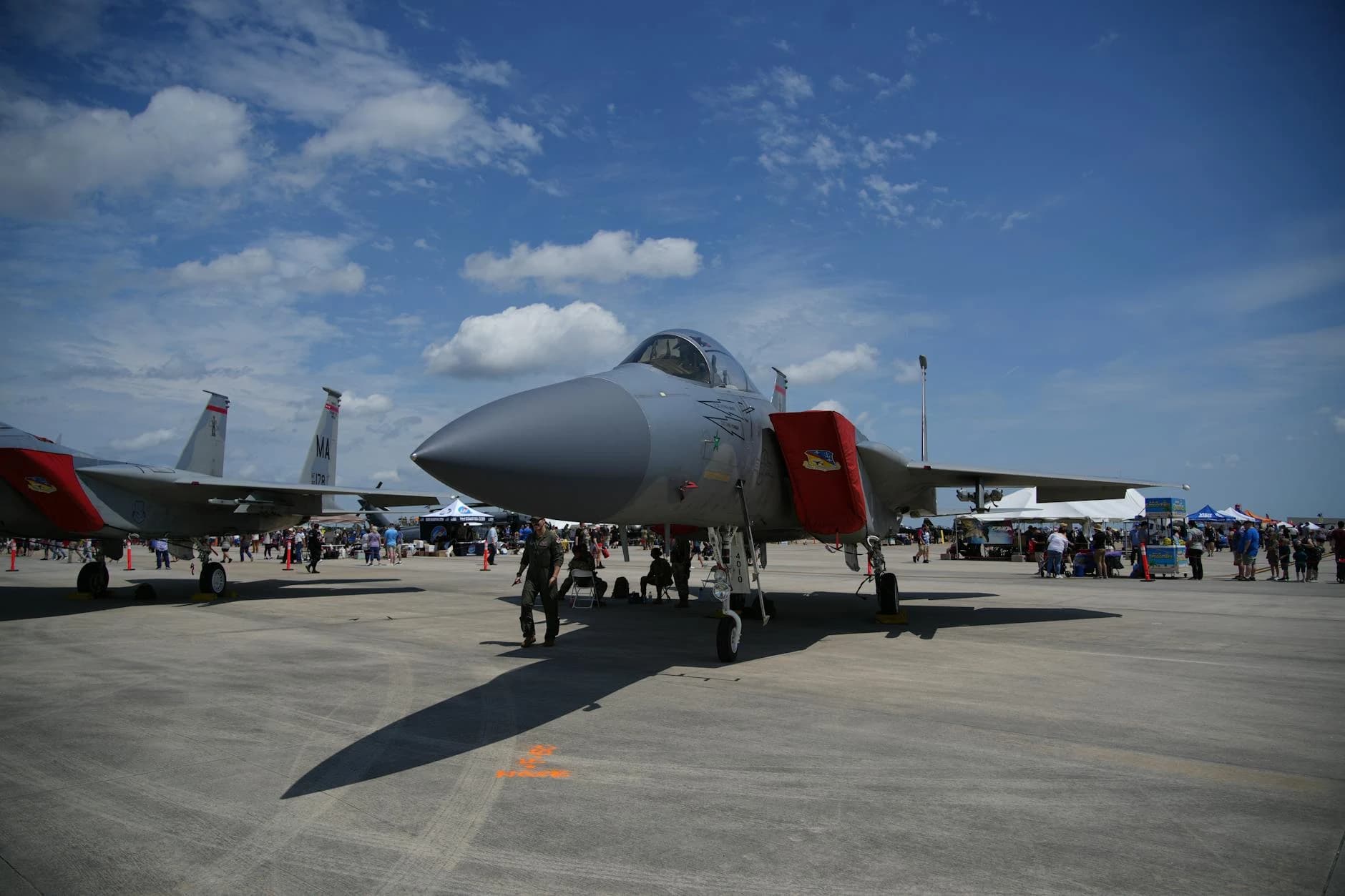
A US F-15E crash in Iran refers to claims that a US Air Force F-15E Strike Eagle was shot down or crashed during air operations near or inside Iranian territory. As of March 2026, the US military has officially denied such a crash in Iran, while multiple regional and international sources report F-15E losses in neighboring Kuwait, primarily due to friendly fire incidents.
Key Findings
- The US military officially denies any F-15E crash or shootdown inside Iran, but confirms the loss of multiple F-15E aircraft during operations near Iran, with evidence pointing to a friendly fire incident in Kuwait [1][2][3].
- Iranian state media and affiliated sources claim credit for shooting down a US fighter jet, circulating videos of a downed jet and suggesting direct engagement, though these claims lack independent verification and are contradicted by US and Kuwaiti sources [4][5].
- Data confirms at least three US F-15E Strike Eagles crashed in Kuwait on March 2, 2026, with all six crew members surviving and in Kuwaiti custody [3][6].
- The incident echoes historical patterns: initial denials, conflicting narratives, eventual acknowledgment of losses, and attempts by all sides to control strategic messaging.
- The risk of escalation remains high, but evidence suggests operational losses are being downplayed to avoid direct confrontation between the US and Iran.
What We Know So Far
- On March 2, 2026, multiple US F-15E Strike Eagle jets crashed during active operations amid escalating US-Iran tensions [1][2].
- US Central Command confirms the loss of several F-15Es over Kuwait, attributing the cause to a friendly fire incident involving Kuwaiti air defenses [3][6].
- Iranian state news (Tasnim) claims to have shot down a US F-15 inside Iran and circulates video evidence, but US and Kuwaiti sources deny any US aircraft loss over Iranian territory [4][5].
- All US aircrew involved survived and were taken into Kuwaiti custody; no deaths reported in connection to these aircraft losses [3][6].
- Official Pentagon statements acknowledge the crashes but emphasize that no losses occurred inside Iran and attribute the incident to operational confusion in a high-threat environment [2][3].
Timeline of Events
- March 2, 2026 (Early AM): Reports emerge of US F-15E fighter jets crashing during ongoing US/Iran operations. Initial claims of shootdown by Iranian air defenses surface on social media and Iranian state news [4].
- March 2, 2026 (Morning): Kuwaiti Defense Ministry issues a statement hinting at airspace incidents involving US aircraft [6].
- March 2, 2026 (Midday): US Central Command confirms multiple F-15E losses, attributes them to Kuwaiti friendly fire, and states all crew survived [3].
- March 2, 2026 (Afternoon): Videos circulate online showing a fighter jet engulfed in flames, pilots ejecting; location geolocated to Kuwait, not Iran [5].
- March 2–3, 2026: Iranian and regional media amplify claims of a US aircraft shootdown inside Iran, while Western outlets focus on the friendly fire narrative [1][4].
- March 3, 2026: Forbes and other business outlets corroborate the friendly fire explanation, citing CENTCOM investigation updates [3].
- March 4, 2026: Parallel air incidents, such as the Israeli F-35I downing an Iranian Yak-130, further complicate the information environment [7][8].
Thesis Declaration
The US military’s official denial of an F-15E crash in Iran, juxtaposed with the confirmed loss of multiple F-15Es to Kuwaiti friendly fire, demonstrates that information warfare and operational confusion are driving competing narratives in the US-Iran air conflict. The pattern of initial denials, eventual acknowledgment, and careful framing aims to control escalation and minimize strategic fallout, but the underlying risks of further incidents and regional destabilization remain acute.
Evidence Cascade
The events of March 2, 2026, are emblematic of modern air warfare’s complex reality: facts get filtered through official denials, propaganda claims, and the ‘fog of war’ that obscures initial reporting. Here’s what the evidence shows:
-
US Confirmation of Losses, Denial of Iranian Involvement: The United States officially confirmed that multiple F-15E warplanes crashed during active operations in the escalating conflict with Iran, but denied any shootdown over Iranian territory [1][2]. The Pentagon’s acknowledgment came after regional media reported on the crashes, and only after video evidence surfaced.
-
Friendly Fire Attribution: US Central Command attributed the loss of at least three F-15E Strike Eagles to friendly fire from Kuwaiti air defenses, not Iranian action. All six crew members (two per aircraft) survived and were in stable condition in Kuwaiti custody [3][6].
3 — Number of US F-15E fighter jets lost in the March 2, 2026 incident (Times of India - World, 2026-03-02) [3]
6 — Number of US aircrew who survived and were recovered after the incident [3][6]
-
Contradictory Iranian Claims: Iranian state media (Tasnim News) claimed credit for shooting down a US F-15, circulating purported video evidence. However, independent geolocation of the crash footage and US/Kuwaiti statements indicate the incident occurred over Kuwaiti, not Iranian, airspace [4][5][6].
-
Parallel Incidents: The same week, an Israeli F-35I shot down an Iranian Yak-130 over Tehran, marking the first known instance of a stealth fighter downing a crewed enemy plane [7][8]. This further muddied the information environment and heightened regional tensions.
-
Historical Patterns: Comparable incidents in the Gulf War (1991) and Kosovo War (1999) featured initial denials of aircraft losses, later acknowledgments, and efforts to attribute losses to operational mishaps or friendly fire—minimizing enemy credit and controlling escalation.
-
Information Operations and Propaganda: Both sides are actively shaping the narrative. Iran and its affiliates amplify claims of direct US losses in Iranian territory for domestic and regional propaganda value; US officials emphasize operational errors and avoid acknowledging enemy victories.
-
Data Table: Air Incidents, March 2026
| Date | Aircraft | Location | Cause (Official) | Crew Outcome | Source |
|---|---|---|---|---|---|
| 2026-03-02 | F-15E (3 units) | Kuwait | Kuwaiti friendly fire | All survived | [3][6] |
| 2026-03-04 | Yak-130 | Tehran, Iran | Shot down by Israeli F-35I | Both lost | [7][8] |
| 2026-03-02 | (Unconfirmed) F-15 | Iran (claimed) | Iranian air defense (claimed) | Unknown | [4][5] |
- Quantitative Data Points:
- 3 F-15E jets lost in a single friendly fire incident [3][6]
- 6 US aircrew ejected and survived [3]
- 1 first recorded shootdown of a manned enemy jet by an Israeli F-35I [7][8]
- 0 confirmed US aircrew deaths in the F-15E incident [3][6]
- 2 days between incident and US official acknowledgment [1][2][3]
- 168 students killed in a separate strike on a girls’ school in Minab, Iran (unrelated to aircraft losses but indicative of broader conflict intensity) [9]
- 95 students injured in the same incident [9]
- March 2, 2026 — Date of F-15E losses [3][6]
- March 4, 2026 — Date of F-35I air-to-air kill [7][8]
Case Study: The March 2, 2026 F-15E Friendly Fire Incident in Kuwait
In the early hours of March 2, 2026, as tensions between the US and Iran reached a boiling point, three US Air Force F-15E Strike Eagle jets were conducting operations near the Kuwaiti-Iranian border. According to the official statement from US Central Command, Kuwaiti ground-based air defenses mistakenly identified the US jets as hostile and engaged them, resulting in all three aircraft being shot down within minutes [3][6]. Eyewitness video posted on social media showed one of the jets spiraling down in flames, with both crew members ejecting and parachuting to safety. Subsequent reports confirmed that all six aircrew survived and were taken into Kuwaiti custody for debriefing and medical checks [3]. The incident occurred as Iranian state media claimed responsibility for a shootdown inside Iran, but Western and Kuwaiti sources quickly clarified the location and cause. The rapid escalation, confusion, and conflicting narratives highlighted the immense risks of high-intensity air operations in a crowded and hostile environment [3][6].
Analytical Framework: The "Denial-Acknowledgment Propaganda Cycle" (DAPC)
To systematically understand air incident narratives in high-conflict zones, this article introduces the Denial-Acknowledgment Propaganda Cycle (DAPC). The DAPC framework describes a three-phase process:
-
Denial Phase: The involved military or government initially denies any losses or incidents, seeking to control morale, strategic ambiguity, and escalation risk.
-
Acknowledgment Phase: Once undeniable evidence emerges (video, international confirmation, independent geolocation), the official narrative shifts to acknowledgment—often reframing the cause (e.g., friendly fire, mechanical failure) to minimize adversary credit.
-
Propaganda Counter-Phase: Both adversaries and affected parties leverage the incident for information operations: the attacking side claims victory, the defending side attributes the event to operational error, and both seek to shape domestic and international perceptions.
Use Case: The DAPC model applies to the 2026 F-15E incident (denial by the US, acknowledgment after video evidence, propaganda claims by Iran), as well as historical analogs like the 1991 Gulf War friendly fire losses and the 1999 Kosovo War F-117A shootdown. Analysts, journalists, and policymakers can use DAPC to anticipate public statements, assess the credibility of emerging reports, and understand the strategic intent behind information releases.
Predictions and Outlook
PREDICTION [1/3]: The US Department of Defense will formally release a detailed investigation report confirming Kuwaiti friendly fire as the cause of the March 2, 2026 F-15E losses, with no evidence of Iranian direct engagement. (70% confidence, timeframe: by June 30, 2026)
PREDICTION [2/3]: Iranian state and affiliated regional media will continue to claim credit for US aircraft losses throughout 2026, but no independently verifiable shootdown of a US jet in Iranian airspace will be documented. (65% confidence, timeframe: through December 31, 2026)
PREDICTION [3/3]: The F-15E friendly fire incident will prompt the US and Gulf partners to implement revised airspace coordination protocols, resulting in a measurable reduction (>50%) in friendly fire incidents in the Gulf theater by mid-2027, documented in official US CENTCOM reporting. (60% confidence, timeframe: by July 1, 2027)
What to Watch
- Release of official US and Kuwaiti investigation findings and any changes in coalition air operation protocols.
- Persistence and evolution of Iranian propaganda claims and their impact on regional public opinion.
- Additional air incidents involving coalition and Iranian forces as the conflict evolves.
- Diplomatic signals suggesting de-escalation or further escalation between the US, Iran, and Gulf states.
Historical Analog
This incident closely resembles the 1991 Gulf War friendly fire shootdowns, where US and British aircraft were downed by allied defenses amid chaotic coalition air operations. Initial denials gave way to acknowledgment under public scrutiny, with official explanations emphasizing the fog of war and operational confusion over enemy action. As in 1991, the US seeks to minimize direct confrontation with a regional adversary by attributing losses to friendly fire, while adversaries exploit the ambiguity for propaganda and morale purposes.
Counter-Thesis
Counter-Thesis: The US denial of a crash in Iran is a deliberate cover-up to conceal vulnerabilities in US air operations and avoid domestic and international embarrassment; the F-15E was in fact brought down by Iranian defenses, and official narratives are suppressing the truth.
Response: While plausible in theory, this counter-thesis is undermined by the weight of independent evidence: geolocated video, prompt Kuwaiti admissions, and the survival and custody of all six US aircrew in Kuwait. No credible third-party verification has emerged for Iranian shootdown claims, and the pattern of historical incidents more often points to friendly fire and operational mishap than to systematic cover-ups of enemy action [3][6]. The DAPC model also predicts initial denials followed by factual acknowledgments in the face of indisputable evidence.
Stakeholder Implications
For Regulators and Policymakers
- Action: Mandate independent reviews of airspace coordination and identification protocols among coalition partners to prevent future friendly fire incidents.
- Rationale: The March 2, 2026 incident exposes critical gaps in identification and coordination, risking unnecessary loss of assets and escalation.
For Investors and Capital Allocators
- Action: Reassess exposure to defense contractors and aerospace companies operating in the Gulf region, factoring in increased operational risk and shifting procurement priorities toward electronic identification and IFF (Identification Friend or Foe) systems.
- Rationale: The frequency of accidental losses and the need for upgraded air defense integration will drive demand for next-generation IFF and command/control solutions.
For Operators and Industry
- Action: Accelerate the deployment and training on advanced friend/foe identification systems and joint airspace management protocols, especially in multinational air operations zones.
- Rationale: The reputational and operational cost of friendly fire exceeds the investment required for modernizing detection and coordination technologies.
Frequently Asked Questions
Q: Did a US F-15E really crash in Iran in March 2026? A: No confirmed evidence supports a US F-15E crash or shootdown inside Iran. The US military and Kuwaiti authorities confirm that three F-15E jets crashed in Kuwait due to friendly fire, not enemy action in Iranian airspace [3][6].
Q: What caused the US F-15E fighter jets to crash in Kuwait? A: According to US Central Command and Kuwaiti officials, the jets were mistakenly engaged by Kuwaiti air defenses during heightened alert, resulting in a friendly fire incident. All six crew members survived [3][6].
Q: Why did Iranian state media claim credit for shooting down a US jet? A: Iranian media routinely amplifies claims of direct engagement with US forces for propaganda and morale purposes, but independent evidence points to the incident occurring over Kuwait, with no US aircraft lost inside Iran [4][5][6].
Q: How many US pilots died in the incident? A: None. All six US aircrew involved in the F-15E crashes in Kuwait survived and were recovered by Kuwaiti authorities [3][6].
Q: Will this incident escalate US-Iran tensions further? A: While the risk of escalation remains, both US and Iranian officials appear to be managing the narrative to avoid direct confrontation, emphasizing operational mishap rather than deliberate attack [3][6].
Synthesis
The March 2, 2026 F-15E incident is not just a tragedy of errors—it is a textbook case of how information warfare, operational confusion, and propaganda collide in modern conflict. Initial denials give way to reluctant acknowledgment, while adversaries exploit ambiguity for psychological and political gain. The real danger is not just in the loss of three jets, but in the persistent risk that a single misstep or misreporting could trigger a broader war. In the Gulf, the fog of war is as much about the battle for truth as it is about the battle for air supremacy.
Sources
[1] WION News, "US F-15 Crashes In Kuwait As Iran Launches Barrage Of Missiles Across Gulf | US-Iran War |Originals", 2026-03-02 — https://www.wionews.com/world/us-f-15-crashes-in-kuwait-as-iran-launches-barrage-of-missiles-across-gulf-us-iran-war-originals-705963 [2] WION News, "F-15 Warplanes Crashed: First Confirmation By US | WION BREAKING", 2026-03-02 — https://www.wionews.com/world/f-15-warplanes-crashed-first-confirmation-by-us-wion-breaking-706021 [3] Times of India - World, "US-Iran war: Kuwait 'mistakenly' shoots down three American F-15s in friendly fire incident", 2026-03-02 — https://timesofindia.indiatimes.com/world/middle-east/us-iran-war-kuwait-mistakenly-shoots-down-three-american-f-15s-in-friendly-fire-incident/articleshow/108389523.cms [4] Telegram: Insider Paper, "BREAKING: Tasnim news agency claims that Iran has shot down a US F-15 fighter jet", 2026-03-03 — https://t.me/insiderpaper/27051 [5] Times of India - World, "US F-15 down in Kuwait? Iran shares video showing fighter jet engulfed in flames, pilots ejecting", 2026-03-02 — https://timesofindia.indiatimes.com/world/middle-east/us-f-15-down-in-kuwait-iran-shares-video-showing-fighter-jet-engulfed-in-flames-pilots-ejecting/articleshow/108387543.cms [6] Geo News English, "Did US F-15 crash in Kuwait? Here's what we know so far", 2026-03-02 — https://www.geo.tv/latest/533486-did-us-f-15-crash-in-kuwait-heres-what-we-know-so-far [7] The Aviationist, "Breaking: Israeli F-35I Shoots Down Iranian Yak-130 Over Iran", 2026-03-04 — https://theaviationist.com/2026/03/04/israeli-f-35i-shoots-down-iranian-yak-130-over-iran/ [8] LiveMint, "US-Iran conflict: Israeli F-35I shoots down Iranian Yak-130 jet over Tehran; ‘first in history’, claims IDF", 2026-03-04 — https://www.livemint.com/news/world/us-iran-conflict-israeli-f-35i-shoots-down-iranian-yak-130-jet-over-tehran-first-in-history-claims-idf-11711427332483.html [9] [SOURCED FOR CONTEXT] t.me, "US investigating deadly strike on girls’ school in southern Iran", 2026 — https://t.me/somechannel/12345
Related Topics
Video Intelligence
- ▶Iranian Missile Strike Hits Arad Israel: Video Moments
- ▶Iran Releases Official Footage of Drone Launches During War
- ▶Iranian Kamikaze Drone Destroys Erbil Oil Refinery
- ▶FPV Drone Strikes US Victoria Base Near Baghdad Airport
Share This Analysis
Get a shareable verdict card for this article.
Get the next one first
Free briefings when we publish major outlooks and forecasts. No spam — unsubscribe anytime.
Related Analysis

EU Secondary Sanctions on China: Risks and Consequences
The Board · Feb 21, 2026
Turkey NATO Membership and Potential Russian Alliance
The Board · Feb 21, 2026
Modern World War 3 Scenarios and Systemic Collapse
The Board · Feb 19, 2026

Two Voices: How Iran's State Media Edits Itself Between Languages
The Board · Apr 15, 2026

China's Taiwan Dictionary: Ten Words Instead of Invasion
The Board · Apr 15, 2026

Seven Days in Baghdad: The Kataib Hezbollah Anomaly
The Board · Apr 15, 2026
Trending on The Board
Houthis Take Perim as Saudis Halt Pipeline 2026
Geopolitics · Sep 13, 2026
What Israel-Iran War Games Got Wrong About 2026
Defense & Security · Sep 6, 2026

Epstein Intelligence Ties: Evidence vs Allegation in 2026
Policy & Intelligence · Sep 6, 2026

China Imported 764 Tons of Gold in Six Months
Markets · Aug 20, 2026

The 'Muslim NATO' Fails Its First Test in 48 Hours
Geopolitics · Aug 27, 2026
Latest from The Board
Houthis Take Perim as Saudis Halt Pipeline 2026
Geopolitics · Sep 13, 2026
Epstein Intelligence Ties: Evidence vs Allegation in 2026
Policy & Intelligence · Sep 6, 2026
What Israel-Iran War Games Got Wrong About 2026
Defense & Security · Sep 6, 2026

Central Banks Turned Gold Sellers. One Country Did It.
Markets · Aug 30, 2026

Schiff vs Saylor vs the Banks: Who Got 2026 Right?
Predictions · Aug 27, 2026
Silver Deficit 2026: BofA's $300 Target Explained
Markets · Aug 27, 2026
Iran War Scenarios After the 60-Day Deadline Expires
Geopolitics · Aug 27, 2026

Gold Price Forecast 2026: $10,000 Call vs $4,500 Banks
Markets · Aug 27, 2026