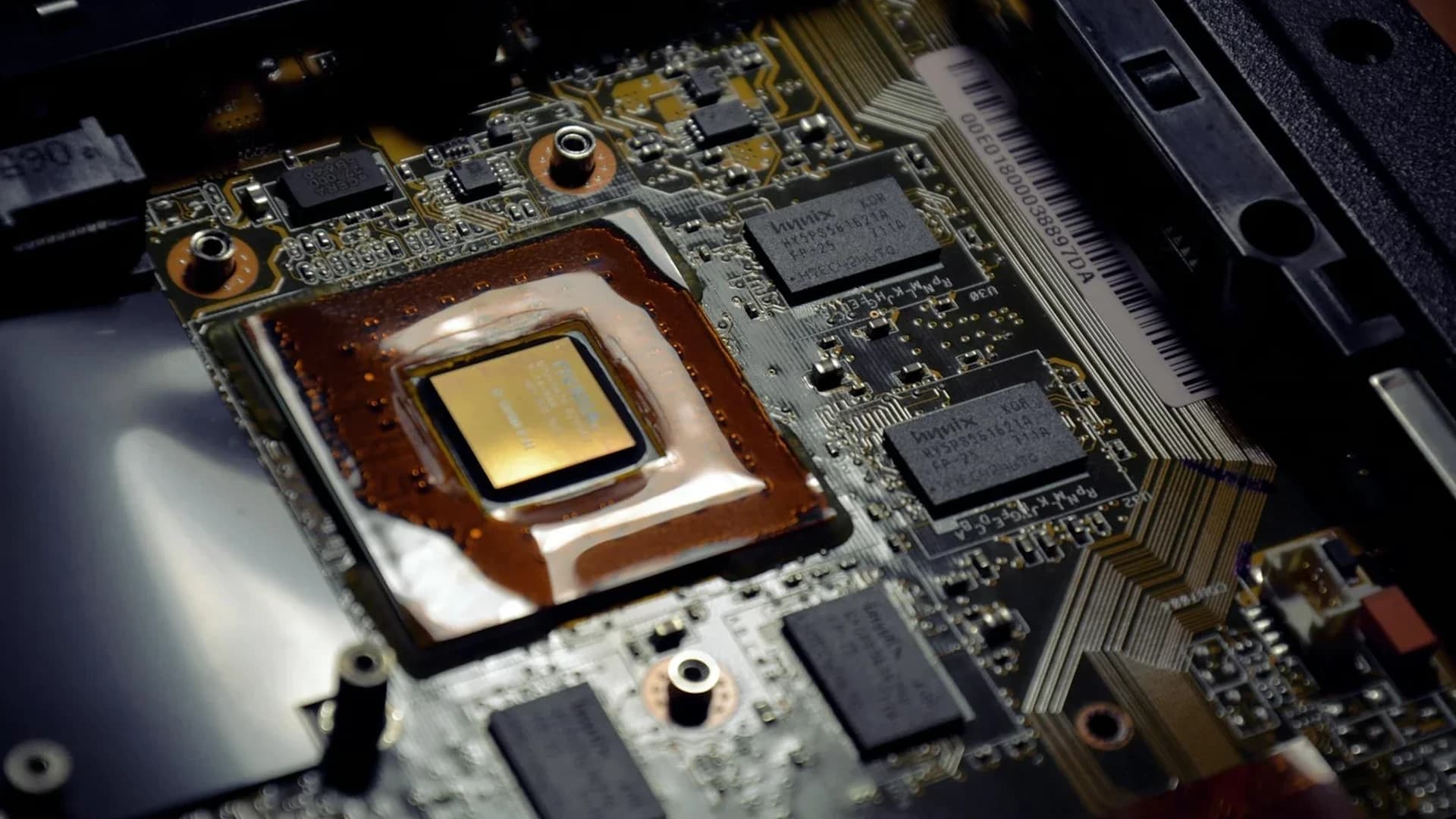
The transition to directed energy will reclassify warfare from a logistics contest of industrial mass to a physics contest of heat dissipation.
Key Findings
- The "Cost-Per-Shot" Fallacy: While defense analysts tout the "$1 per shot" economy of lasers, the true barrier is the System Lifecycle Cost of high-flux optics, which degrade rapidly under combat conditions and require clean-room maintenance.
- Heat is the New Ammo: The primary constraint on 2100-era weaponry is not beam power but "Thermal Sovereignty"—the ability of a platform to dump 60-70% of waste heat from megawatt-class bursts without throttling.
- The End of the Factory Model: Directed energy shifts defense from a Flow-Constrained system (missile production rates) to a Stock-Constrained system (energy storage capacity), moving the strategic leverage point from the ammunition plant to the power grid.
Current directed energy weapon (DEW) deployments, such as the UK’s DragonFire or the US Navy’s HELIOS, are being celebrated as "magic hit-scan" solutions to the drone crisis. This is a category error. These systems, currently struggling in the 50-100kW range, represent "early access" hardware that masks a brutal physics problem. The reality of high-energy lasers is not about light; it is about heat.
Thesis: The transition to DEWs is not merely a tactical upgrade but a fundamental shift from industrial-based logistics to energy-based sovereignty. By 2100, global military dominance will be determined not by kinetic magazine depth, but by "Thermal Sovereignty"—the capacity to generate, beam, and dissipate megawatt-scale heat loads closer to the speed of light.
The Physics of the Bottleneck: SWaP-C and the Heat Wall
The current enthusiasm for lasers ignores the "Green Lumber Fallacy"—mistaking the physics of the lab for the reality of the field. Managing a photon stream requires managing a massive thermal overhead. With solid-state fiber lasers operating at roughly 30-40% wall-plug efficiency , a 100kW beam generates nearly 200kW of waste heat. In a vacuum, this is manageable; inside the cramped chassis of a destroyer or an armored vehicle, it is a crippling limitation.
Unless the heat is dumped, the duty cycle collapses. Defense modeling suggests that without a breakthrough in phase-change material heatsinks, current systems will suffer generic thermal throttling after mere seconds of engagement . By 2100, the "tank" will effectively be an inverted radiator. Strategic forecasting indicates that future chassis designs will integrate the entire airframe as a thermal soak to allow for megawatt-class bursts.
This creates a new divide in military power: Thermal Haves and Have-Nots. Nations that master "buffer management"—the use of modular capacitor-thermal skins to allow for high-energy maneuverability—will possess a negative feedback loop where defense becomes cheaper as it scales. Those relying on external cooling will remain tethered to bulky, vulnerable infrastructure.
The Logistics Shift: From Factory Flow to Grid Stock
The most profound leveraging point of DEWs is the destruction of the 20th-century industrial warfare model. Current conflict is a "Limits to Growth" archetype: as drone swarms increase, the defender’s interceptor costs grow exponentially until economic collapse. DEWs invert this dynamic.
By 2100, the strategic pivot moves from Flow (how many missiles can we manufacture this month?) to Stock (how many gigajoules can we store locally?).
- The Industrial Model: Limited by supply chains, transport risks, and production delays.
- The Utility Model: Limited only by generation capacity and battery density.
If a forward operating base can generate 10MW locally, it possesses a theoretically "infinite" magazine depth . This "Utility Warfare" model suggests that the borders of 2100 will not be defined by lines on a map but by the "Effective Aperture Range" of direct-energy networks. This requires a 30-to-50-year retrofit of global platforms, transitioning military logistics from fuel and ammo supply chains to high-density modular energy distribution.
The 2100 Vision: Orbital Meshes and Frequency Agility
The logical endpoint of this trajectory is not a truck-mounted laser, but the Orbital Mesh. Strategic foresight envisions GW-scale solar-pumped lasers at Lagrange points, beaming power to refractive relay networks in Low Earth Orbit (LEO) .
This creates a "Photon Dome" or "Dyson Shell" doctrine. By relaying beams through orbital mirrors, nations can bypass line-of-sight curvature and deliver energy anywhere on Earth. This creates a computational monopoly on space, where the "owner" of the mesh can delete incoming kinetic threats—from ICBMs to artillery—during their boost or transit phases.
However, strict reliance on a single wavelength is a vulnerability. Atmospheric attenuation ("blooming") caused by fog, rain, or smoke remains a "No-Go" flag for current infrared lasers. To achieve the 2100 vision, systems must evolve into Frequency-Agile Lasers. These adaptive systems will shift from IR to X-ray or Ultraviolet in milliseconds, finding resonance pockets in obscurants to penetrate smoke and weather that would stop a static beam .
Counterargument: The Atmospheric Veto and "Mirror-Armor"
A robust analysis must confront the fragility of the DEW paradigm. Skeptics argue that DEWs are "concave to noise"—their effectiveness implies perfect conditions. In a "dirty" battlefield of soot and rain, a laser’s effectiveness does not drop by 10%; it drops to zero.
The Asymmetry of Defense poses the greatest risk to the DEW thesis. While a defender may spend $5 billion on an orbital mesh, an attacker can neutralize it with "low-tech" solutions:
- Reflective Chaff: A cloud of glitter or micro-mirrors costing highly negligible amounts could scatter a beam, rendering the "Cost-Per-Shot" argument moot.
- Ablative Swarms: Drones coated in cheap ablative ceramics or rotating mirror-armor could survive the dwell time of a laser long enough to impact.
If the cost to counter a laser (via spray paint or smoke) scales cheaper than the cost to increase beam intensity, the DEW revolution is a malinvestment .
Rebuttal: While valid for current tactical lasers, this ignores the Pulse Duration shift. 2100-era weapons will likely utilize ultrashort pulse (USP) lasers or X-ray frequencies that do not rely on thermal dwell time but instead ionize the target's surface or bypass the reflective coating entirely. The counter-measure to "mirror armor" is not more heat, but a different frequency.
Strategic Framework: The Photon-Kinetic Engagement Matrix (2100)
To understand where DEWs fit, we propose the following decision matrix for future engagement. The "All-Laser" military is a fiction; the 2100 military is a hybrid based on target velocity and environmental opacity.
| Target Type | Clear Atmosphere | Obscured Atmosphere (Fog/Smoke) | Strategic Implications |
|---|---|---|---|
| High Velocity / Low Mass<br>(Hypersonics, ICBMs) | DEW Dominance<br>Orbital relay hit-scan is the only viable intercept. | Frequency-Agile DEW<br>Must shift wavelength to penetrate; high failure risk. | Zones of "Optical Control" will determine nuclear stability. |
| Low Velocity / High Mass<br>(Tanks, Ships) | Kinetic Slug<br>Lasers cannot melt high-mass armor fast enough. | Kinetic Slug<br>Physical mass is robust against weather. | "Dumb" rounds remain the "Lindy" solution for ground war. |
| Swarm / High Entropy<br>(Drone clouds) | Wide-Area DEW<br>De-focus optics for "dazzling" or sensor frying. | Electronic Warfare (EW)<br>Jamming becomes the primary defense. | The end of asymmetric guerrilla drone warfare. |
What to Watch
The path to 2100 will be paved with specific technological milestones. Watch for these indicators to validate the shift toward Thermal Sovereignty.
-
Metric: Mobile Cooling Capacity.
-
Threshold: Watch for the deployment of a mobile ground vehicle capable of sustaining a 100kW beam for >5 minutes without thermal throttling.
-
Forecast: Expect this prototype by Q3 2029. (Confidence: High). If achieved, the "tank" is obsolete.
-
Metric: Orbital Relay Efficiency.
-
Threshold: Successful relay of a kilowatt-class laser via an orbital mirror with <15% atmospheric coherence loss.
-
Forecast: Expect initial tests by 2035. (Confidence: Medium). Failure here forces DEWs to remain short-range tactical tools.
-
Metric: The "Mirror-Dust" Counter.
-
Prediction: By 2028, a non-state actor will successfully neutralize a laser defense system using low-tech aerosolized obscurants (smoke/chaff). (Confidence: High). This will trigger a massive pivot toward frequency-agile R&D.
Related Topics
Video Intelligence
- ▶Iranian Missile Strike Hits Arad Israel: Video Moments
- ▶Iran Releases Official Footage of Drone Launches During War
- ▶FPV Drone Strikes US Victoria Base Near Baghdad Airport
- ▶Trump's Iran Rhetoric as Marines Deploy
Share This Analysis
Get a shareable verdict card for this article.
Get the next one first
Free briefings when we publish major outlooks and forecasts. No spam — unsubscribe anytime.
Related Analysis

Strategic Impact of Turkey Leaving NATO in 2026
The Board · Feb 22, 2026

The Truth Behind CIA Remote Viewing and Project Stargate
The Board · Feb 22, 2026

The Neurological War: How Precision Strikes Rewrote the...
The Board · Mar 27, 2026

Triple-Front Risk: US Iran Strategy and Global Security
The Board · Feb 14, 2026

Russia Photographed the Saudi Base Three Times Before...
The Board · Mar 30, 2026

A Russian Drone Hit NATO Territory This Week
The Board · Mar 26, 2026
Trending on The Board

How CENTCOM Is Brokering an Israel-Saudi Pact
Defense & Security · Sep 19, 2026

Why the Pentagon Pulled Its Iran War Plans Offline
Defense & Security · Sep 19, 2026
How a Stablecoin Funded Moldova's 2026 Election
Geopolitics · Sep 19, 2026

The Hidden Gold Demand Behind the $6,000 Target
Markets · Sep 17, 2026

Houthis Take Perim as Saudis Halt Pipeline 2026
Geopolitics · Sep 13, 2026
Latest from The Board
How CENTCOM Is Brokering an Israel-Saudi Pact
Defense & Security · Sep 19, 2026
Why the Pentagon Pulled Its Iran War Plans Offline
Defense & Security · Sep 19, 2026
How a Stablecoin Funded Moldova's 2026 Election
Geopolitics · Sep 19, 2026
The Hidden Gold Demand Behind the $6,000 Target
Markets · Sep 17, 2026
Houthis Take Perim as Saudis Halt Pipeline 2026
Geopolitics · Sep 13, 2026

Epstein Intelligence Ties: Evidence vs Allegation in 2026
Policy & Intelligence · Sep 6, 2026
What Israel-Iran War Games Got Wrong About 2026
Defense & Security · Sep 6, 2026

Central Banks Turned Gold Sellers. One Country Did It.
Markets · Aug 30, 2026