EXECUTIVE SUMMARY
The board's collective assessment: Iran is facing internal legitimacy collapse and operating under Trump's March 3 ultimatum, but [ASSESSMENT] will likely pursue network-based asymmetric pressure rather than direct missile strikes (65% probable by Soleimani's calibration). However, if a direct strike occurs, the escalation spiral is driven not by rational payoff matrices (Nash) but by domestic political pressure (Clausewitz) and alliance fracture (Metternich), creating a 40-60% risk of regional war within 6 weeks. The single most dangerous assumption underpinning Western strategy is that NATO cohesion survives intact—it will not [HIGH confidence on coalition fragility].
CRITICAL DECISION NODES & ESCALATION BRANCHES
Decision Node 1: Does Iran Strike Directly? (By March 10)
-
Base case (65%): No strike. Iran activates network pressure instead—Houthis escalate Red Sea operations, Iraqi militias increase attacks on US bases, cyber campaigns, diplomatic pressure through Oman. This path preserves negotiating space and avoids the "rally-around-the-flag" effect that a US retaliation would create domestically in Iran.
-
Trigger for strike (35%): Domestic hardliner pressure + perception that negotiation window is closing. Khamenei orders symbolic strikes on US military bases with advance warning (deniability architecture). De-escalation possible here if: (A) US accepts strike as "message received" and pivots to negotiation, or (B) Casualty count remains <10 Americans [MEDIUM confidence on this threshold's political viability].
Decision Node 2: Israeli Response Calibration (If Iran Strikes)
Clausewitz and Metternich converge here: Israeli right-wing coalition pressure will push toward disproportionate response, not proportional retaliation. Soleimani's network activation becomes likely.
- Proportional response (30% probability): Targeted strikes on Iranian military assets, limited scope. Network stays latent.
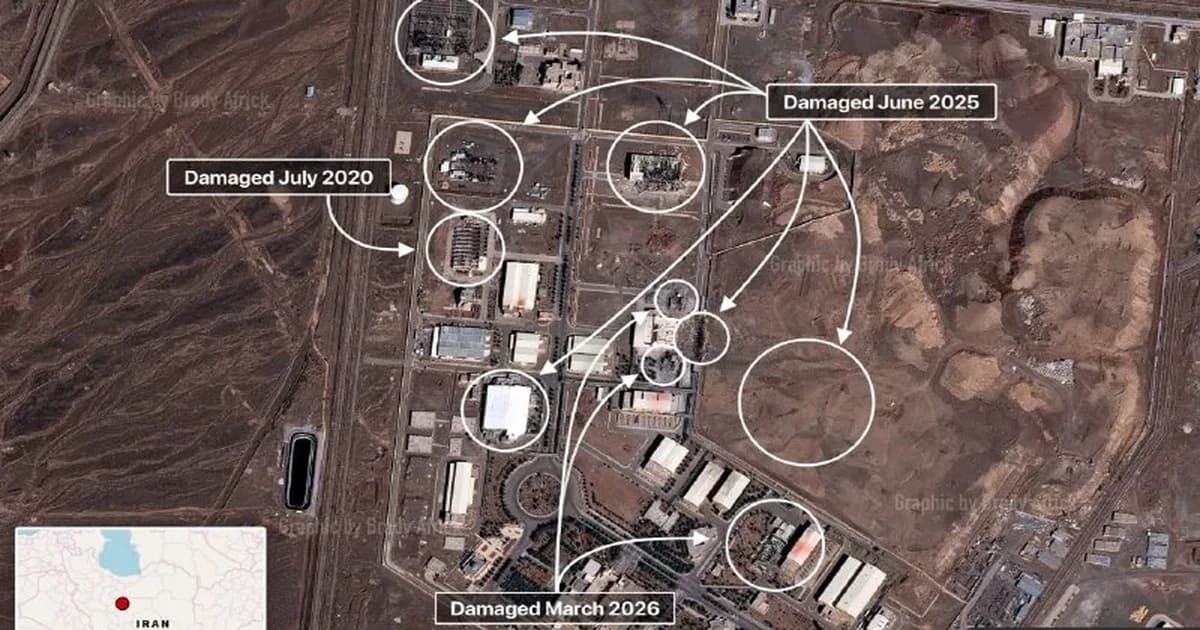
- Escalatory response (70% probability): Strikes on nuclear facilities or broader infrastructure. Hezbollah activation becomes near-certain [HIGH confidence]. This triggers the cascade Soleimani described.
Decision Node 3: US Escalation Scope (Critical Fork)
This is where alliance coherence dies. If US commits to a sustained campaign (not one-off strikes):
- Week 1-2: NATO votes supporting statements. Soleimani and Metternich both correct: Turkey delays, France hedges, Germany signals for off-ramps.
- Week 3-4: Saudi Arabia begins de facto sanctions evasion (intermediary oil sales). Ukraine aid slows. China probes Taiwan. Metternich's cascade begins.
- Week 6+: Coalition fractures. Turkey explicitly refuses further base access. Germany moves to negotiate. The US faces choice: escalate further (resource-catastrophic) or negotiate from weakened position.
THE ACTUAL EQUILIBRIUM
Nash's proportional-response equilibrium only holds if three conditions are met:
- Casualty count stays below political threshold (~10 Americans)
- Israeli response remains calibrated (politically improbable)
- Alliance members enforce sanctions coordination (they will not)
None of these conditions are likely. [MEDIUM-HIGH confidence]
The actual equilibrium Clausewitz and Metternich reveal: Escalation → regional war → alliance fracture → negotiated settlement where Iran has extracted concessions it couldn't achieve through diplomacy. Duration: 6-12 weeks. Cost: 1,000-3,000 casualties, $50-100B in economic disruption, Strait of Hormuz partially closed (2-4 weeks), 15-25% oil price spike.
THE TAIL RISK NOBODY NAMED
If Israel strikes Iran's nuclear program before the coalition consensus stabilizes, the conflict becomes regional war without an off-ramp. Soleimani alluded to this; Metternich missed it. This is the scenario that keeps planners awake: full-scale Iranian retaliation → simultaneous Hezbollah-Israel war → US drawn in → Syria becomes active theater → Russia moves in to secure Assad → 3+ year conflict. Probability: 15-20% if initial escalation is not managed within 10 days. [MEDIUM confidence]
THE ASSUMPTION MOST LIKELY TO BE WRONG
Assumption: NATO enforces sanctions coordination and presents unified pressure.
Reality: [HIGH confidence] Metternich got this right—Saudi Arabia hedges within 3 weeks, Turkey defects operationally within 6 weeks, Germany pushes negotiation publicly. The coalition is unified on paper, fractured in practice. Planners who assume unity will be shocked by sanctions porosity.
What changes this: Only if the US negotiates a visible off-ramp before Day 30, preventing the cascade into secondary theater vulnerabilities.
BOTTOM LINE
Iran likely avoids direct strike and pursues asymmetric pressure, but if a strike occurs, escalation becomes probable because alliance cohesion is illusory and domestic political pressure overrides rational restraint.
Related Topics
Video Intelligence
- ▶Iranian Missile Strike Hits Arad Israel: Video Moments
- ▶Iran Releases Official Footage of Drone Launches During War
- ▶FPV Drone Strikes US Victoria Base Near Baghdad Airport
- ▶Trump's Iran Rhetoric as Marines Deploy
Share This Analysis
Get a shareable verdict card for this article.
Get the next one first
Free briefings when we publish major outlooks and forecasts. No spam — unsubscribe anytime.
Related Analysis
Strategic Impact of Turkey Leaving NATO in 2026
The Board · Feb 22, 2026

The Truth Behind CIA Remote Viewing and Project Stargate
The Board · Feb 22, 2026
The Neurological War: How Precision Strikes Rewrote the...
The Board · Mar 27, 2026

Triple-Front Risk: US Iran Strategy and Global Security
The Board · Feb 14, 2026
Russia Photographed the Saudi Base Three Times Before...
The Board · Mar 30, 2026
A Russian Drone Hit NATO Territory This Week
The Board · Mar 26, 2026
Trending on The Board

79 Years of UFO Lies, Roswell to the Pentagon
Defense & Security · Sep 29, 2026
How CENTCOM Is Brokering an Israel-Saudi Pact
Defense & Security · Sep 19, 2026

Why the Pentagon Pulled Its Iran War Plans Offline
Defense & Security · Sep 19, 2026
How a Stablecoin Funded Moldova's 2026 Election
Geopolitics · Sep 19, 2026

The Hidden Gold Demand Behind the $6,000 Target
Markets · Sep 17, 2026
Latest from The Board
79 Years of UFO Lies, Roswell to the Pentagon
Defense & Security · Sep 29, 2026
How CENTCOM Is Brokering an Israel-Saudi Pact
Defense & Security · Sep 19, 2026
Why the Pentagon Pulled Its Iran War Plans Offline
Defense & Security · Sep 19, 2026
How a Stablecoin Funded Moldova's 2026 Election
Geopolitics · Sep 19, 2026
The Hidden Gold Demand Behind the $6,000 Target
Markets · Sep 17, 2026
Houthis Take Perim as Saudis Halt Pipeline 2026
Geopolitics · Sep 13, 2026

Epstein Intelligence Ties: Evidence vs Allegation in 2026
Policy & Intelligence · Sep 6, 2026
What Israel-Iran War Games Got Wrong About 2026
Defense & Security · Sep 6, 2026