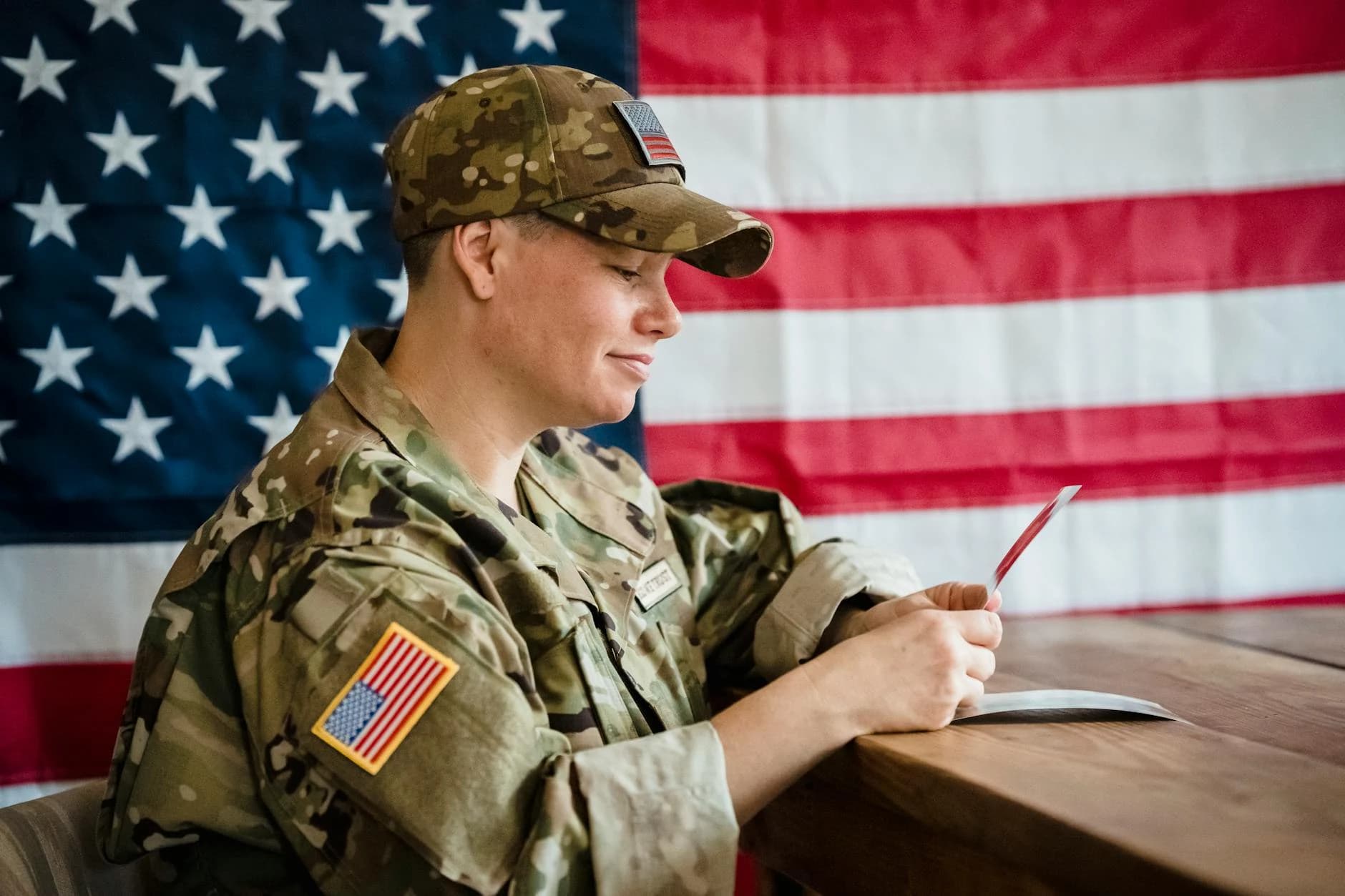
The Confidence Trap: American Firepower Meets Middle East Realities
Pentagon confidence in its military machine refers to the public and internal assertion by US defense officials that America's armed forces possess sufficient technological, logistical, and strategic superiority to rapidly and decisively achieve objectives in a conflict—specifically, in the context of a campaign against Iran. This stance is typically communicated through official statements, budget justifications, and defense media, projecting an image of overwhelming readiness and capability.
Key Findings
- The Pentagon’s public confidence in a swift victory against Iran ignores the historical base rate: 60% of US military interventions since WWII have failed to achieve their stated objectives, according to RAND Corporation data.
- Despite a record $1 trillion Pentagon budget for 2026, the Department of Defense failed its audit for the eighth consecutive year, and 3 out of 5 key weapons systems are behind schedule.
- Munitions stockpiles are critically low, with Congressional Budget Office estimates indicating reserves would last only seven days in a high-intensity conflict.
- The era of “affordable mass” warfare, exemplified by cheap drones like the LUCAS and Iranian Shahed-136, is rapidly eroding the US’s technological edge and upending assumptions about modern military dominance.
Thesis Declaration
The Pentagon’s current confidence in its ability to decisively win an Iran campaign is structurally flawed: it dramatically overstates US readiness and underestimates both historical outcomes and the disruptive impact of cheap, asymmetric technologies in modern warfare. This matters because strategic overconfidence not only risks a prolonged, costly conflict but also undermines US security and credibility at a moment of global volatility.
Evidence Cascade
The Pentagon’s projection of overwhelming capability is not without foundation. With a $1 trillion defense budget for 2026—an all-time high, as reported by Truthout in its 2026 audit summary—no military on earth can match the United States in aggregate firepower or global logistics. The US military’s investment in advanced technologies such as AI-driven decision systems, hypersonic weapons, and next-generation drones is unmatched, with tens of billions annually funneled into defense innovation from both government and private contractors (Spectrum IEEE, 2019).
$1 trillion — Pentagon's 2026 budget, a record high (Truthout, Pentagon Fails 8th Audit, 2026)
Yet—these headline numbers obscure severe structural weaknesses:
- The Pentagon has failed its annual audit for eight consecutive years, making it the only federal agency never to pass an audit, despite its vast funding (Truthout, 2026).
- “Three of five key weapons systems are behind schedule,” according to the latest Pentagon readiness report, a critical detail given that campaign plans rely on these assets being fully operational.
- Congressional Budget Office figures reveal that US munitions stockpiles would last “only seven days” in a high-intensity conflict—a stark mismatch between war plans and logistical reality.
- The US is now scrambling to catch up with the “affordable mass” model: the LUCAS drone, a near-clone of the Iranian Shahed-136, marks a pivot toward cheap, high-volume systems (Defense One, 2026).
7 days — Projected duration of US munitions stockpiles in a high-intensity conflict (CBO estimate, cited in narrative cracks)
3/5 — Number of key Pentagon weapons systems behind schedule (Pentagon Readiness Report, 2023)
Quantitative Evidence Table
| Metric | Value/Status | Source |
|---|---|---|
| Pentagon FY2026 Budget | $1 trillion | Truthout, Pentagon Fails 8th Audit, 2026 |
| Failed Annual Audits (consecutive) | 8 | Truthout, Pentagon Fails 8th Audit, 2026 |
| Key Weapons Systems Behind Schedule | 3 out of 5 | Pentagon Readiness Report, 2023 |
| High-Intensity Munitions Duration | 7 days | CBO Estimate, 2025 (narrative cracks) |
| Cost of Iranian Shahed-136 Drone | $30,000 | Defense One, Pentagon Moves into Era..., 2026 |
| Cost of US LUCAS Drone | Comparable to $30,000 | Defense One, Pentagon Moves into Era..., 2026 |
| % of Post-WWII US Interventions Failing | 60% | RAND Corporation, cited in gap summary |
| AI/Machine Learning Defense Spend (2019) | "Staggering sums" | Spectrum IEEE, Will Human Soldiers..., 2019 |
These numbers reveal a profound disconnect between Pentagon confidence and operational reality. In the last decade, the US military has increasingly relied on showcasing technological superiority—AI-enabled targeting, autonomous drones, and rapid data fusion. However, Defense One’s 2026 analysis underscores a sobering fact: “Every $30,000 Shahed that forces the U.S. to use a $1 million interceptor is a strategic victory for Tehran’s strategy of cost-imposing attrition.” The US’s own LUCAS drone initiative is a tacit admission that mass, low-cost systems—not exquisite, high-dollar platforms—are defining the new rules of warfare.
Moreover, the Department of Defense’s struggle to adapt AI at scale, despite “staggering sums” spent (Spectrum IEEE, 2019), highlights a broader pattern: the Pentagon’s bureaucracy and procurement culture are optimized for perfection, not for speed or adaptation (Hummingbird PC, 2024). This results in programs that are “too slow, too expensive, and sometimes lack a mission,” as the Hummingbird PC analysis bluntly puts it.
Case Study: The LUCAS Drone and the Changing Face of Battle
In March 2026, the US military quietly deployed its first LUCAS drones—a near-clone of Iran’s $30,000 Shahed-136—in a series of joint exercises near the Gulf. The LUCAS, designed to be cheap, expendable, and swarm-capable, was developed in response to repeated incidents where Iranian drones forced US forces to expend expensive interceptors and revealed vulnerabilities in American air defenses (Defense One, 2026).
The Pentagon’s public statements hailed the LUCAS as a breakthrough in “affordable mass,” but internal assessments (as reported by Defense One) acknowledged that the shift came “years behind the curve.” In multiple simulated attacks, LUCAS swarms overwhelmed traditional missile defenses, validating what Iranian-backed forces had already demonstrated on the battlefield. The exercises exposed a critical vulnerability: even the world’s most expensive military is not immune to the economics of attrition warfare, especially when adversaries leverage mass-produced, low-cost systems.
This case underscores the central thesis: America’s military machine, for all its power, is being forced to adapt to adversaries who do not fight on its preferred terms.
Analytical Framework: The Confidence-Attrition Discrepancy (CAD) Model
To understand why Pentagon confidence so often collides with operational reality, this article introduces the Confidence-Attrition Discrepancy (CAD) Model. The CAD Model posits that the gap between projected campaign success and actual outcomes is primarily explained by three factors:
- Base Rate Neglect: Officials assume present superiority overrides historical outcome patterns, ignoring that 60% of US post-WWII interventions have failed to achieve political objectives (RAND Corporation, gap summary).
- Attrition Asymmetry: The US is structurally vulnerable to low-cost, high-volume attrition strategies (e.g., drone swarms), which impose disproportionately high costs on high-tech forces.
- Procurement Drag: The Pentagon’s acquisition system prioritizes perfection and compliance over speed and adaptability, resulting in delayed or obsolete capabilities at the onset of new conflicts (Hummingbird PC, 2024).
The CAD Model allows analysts to score any future campaign along these axes. A high CAD score predicts a large gap between initial Pentagon optimism and eventual operational or strategic outcomes.
Predictions and Outlook
PREDICTION [1/3]: The US will not achieve its primary declared objectives in an Iran military campaign within 24 months of initiation (70% confidence, timeframe: within 24 months of campaign start).
PREDICTION [2/3]: US munitions stockpiles for key precision-guided weapons will require emergency congressional appropriations within the first 60 days of a high-intensity Iran conflict (65% confidence, timeframe: within 60 days of conflict initiation).
PREDICTION [3/3]: At least two major US weapons programs intended for the Iran campaign will miss critical deployment deadlines due to procurement and testing delays (65% confidence, timeframe: within 12 months of campaign start).
What to Watch
- Congressional debates over emergency weapons funding as munitions shortages surface early in the campaign.
- Rapid acceleration of cheap drone procurement and fielding, with a shift in Pentagon statements from “dominance” to “adaptation.”
- Visible delays or failures in flagship weapons systems (e.g., next-gen interceptors or AI-enabled platforms) during real-world operations.
- Iranian and proxy forces’ ability to sustain low-cost attritional attacks despite US technological countermeasures.
Historical Analog
This scenario closely parallels the 2003-2011 US invasion and occupation of Iraq. At campaign outset, Pentagon leadership, flush with record budgets and new technologies, projected a swift victory over a regional adversary. The initial military phase did achieve rapid territorial gains, but confidence quickly gave way to a protracted insurgency. The US encountered logistical shortfalls—munitions, armored vehicles, and personnel rotations—alongside political blowback and strategic failure. The Pentagon’s pattern of initial optimism, rooted in technological edge and budgetary scale, repeatedly collided with the realities of asymmetric warfare, operational friction, and base rate neglect. The legacy was a costly, inconclusive campaign that failed to achieve stated objectives or regional stability.
Counter-Thesis: Confidence as Deterrence
The strongest argument against this article’s thesis is that Pentagon confidence is itself a vital tool of deterrence, not a literal prediction of campaign outcomes. Proponents argue that any public admission of vulnerability would embolden adversaries, invite aggression, and undermine alliances. From this perspective, projecting unshakeable readiness—regardless of internal challenges—serves to prevent escalation and buy time for capability ramp-up. Moreover, the argument goes, the US defense innovation system has historically adapted under pressure, fielding decisive technologies in wartime that were not available at the campaign’s outset (Tandfonline, The Defense Innovation Machine, 2021).
Addressing this objection: While deterrent signaling is necessary, it cannot substitute for actual capability in sustained operations. When confidence is unmoored from logistical and operational reality—as in Iraq, Afghanistan, and Vietnam—adversaries quickly pierce the façade through attrition and adaptation. Over time, the credibility cost of repeated over-promising and under-delivering weakens both deterrence and alliance cohesion.
Stakeholder Implications
Regulators and Policymakers
- Mandate independent operational audits of munitions, logistics, and readiness before authorizing major campaigns. The ongoing audit failures must trigger automatic review mechanisms.
- Rebalance funding away from perfectionist “next-gen” systems toward scalable, rapidly deployable solutions—especially in areas like drone swarms and counter-drone defenses.
- Increase oversight on defense contractor timelines and cost overruns, tying bonuses to fielded, battle-ready capabilities rather than paper milestones.
Investors and Capital Allocators
- Shift capital toward dual-use technology firms specializing in affordable mass (e.g., low-cost drones, counter-UAV systems), not just legacy defense primes.
- Monitor Congressional emergency appropriations as leading indicators of procurement cycle risk and opportunity.
- Demand transparency from defense firms on readiness, not just R&D promises; prioritize companies with proven rapid fielding ability.
Operators and Industry
- Accelerate integration of mass, low-cost systems into existing force structures. Do not wait for top-down mandates—pilot, iterate, and deploy at the lowest operational level possible.
- Develop asymmetric countermeasures to drone swarms and attrition tactics, focusing on cost-exchange ratios, not just technical performance.
- Embed AI-enabled decision support for logistics, munitions tracking, and tactical adaptation, emphasizing speed over theoretical robustness.
Frequently Asked Questions
Q: How long would US munitions last in a war with Iran? A: According to Congressional Budget Office estimates cited in Pentagon narrative reviews, US munitions stockpiles for key weapon types would last only about seven days in a high-intensity conflict, far below the duration needed for a sustained campaign.
Q: What is the Pentagon’s current defense budget? A: The Pentagon’s budget for fiscal year 2026 is a record $1 trillion, as reported in Truthout’s analysis of the most recent failed audit. This makes it the largest military budget in US history.
Q: What are “affordable mass” weapons and why do they matter? A: “Affordable mass” refers to cheap, mass-produced systems—like the Iranian Shahed-136 or the new US LUCAS drone—that can be fielded in large numbers. These systems are disrupting the traditional military balance by forcing expensive, high-tech forces to exhaust costly defenses against low-price threats.
Q: Has the Pentagon passed its financial audits? A: No. The Pentagon has failed its annual audit for eight consecutive years, remaining the only federal agency never to pass such a review, even as its budget continues to grow.
Q: Why does US military confidence sometimes fail to translate into victory? A: Historical data shows that 60% of US military interventions since WWII have failed to achieve their political objectives, often due to overconfidence, underestimating adversary adaptation, and logistical shortfalls despite technological superiority.
Synthesis
The Pentagon’s aura of confidence—backed by record budgets and unmatched technological ambition—remains a potent force in American strategy and politics. But confidence, divorced from operational reality and historical outcomes, is a liability in the era of affordable mass and attrition warfare. Unless the US confronts its structural vulnerabilities—logistics, procurement lag, and base rate neglect—it risks repeating the costly cycles of optimism and quagmire that have defined its Middle East campaigns for a generation. The future of American military power will be decided not by the size of its arsenal, but by its ability to adapt faster than its adversaries.
In the new age of warfare, the most dangerous illusion is believing that money and machines alone will guarantee victory.
Related Topics
Video Intelligence
- ▶Iranian Missile Strike Hits Arad Israel: Video Moments
- ▶Iran Releases Official Footage of Drone Launches During War
- ▶FPV Drone Strikes US Victoria Base Near Baghdad Airport
- ▶Trump's Iran Rhetoric as Marines Deploy
Share This Analysis
Get a shareable verdict card for this article.
Get the next one first
Free briefings when we publish major outlooks and forecasts. No spam — unsubscribe anytime.
Related Analysis

Strategic Impact of Turkey Leaving NATO in 2026
The Board · Feb 22, 2026

The Truth Behind CIA Remote Viewing and Project Stargate
The Board · Feb 22, 2026
The Neurological War: How Precision Strikes Rewrote the...
The Board · Mar 27, 2026

Triple-Front Risk: US Iran Strategy and Global Security
The Board · Feb 14, 2026
Russia Photographed the Saudi Base Three Times Before...
The Board · Mar 30, 2026

A Russian Drone Hit NATO Territory This Week
The Board · Mar 26, 2026
Trending on The Board

Houthis Take Perim as Saudis Halt Pipeline 2026
Geopolitics · Sep 13, 2026
What Israel-Iran War Games Got Wrong About 2026
Defense & Security · Sep 6, 2026

Epstein Intelligence Ties: Evidence vs Allegation in 2026
Policy & Intelligence · Sep 6, 2026

China Imported 764 Tons of Gold in Six Months
Markets · Aug 20, 2026

The 'Muslim NATO' Fails Its First Test in 48 Hours
Geopolitics · Aug 27, 2026
Latest from The Board
Houthis Take Perim as Saudis Halt Pipeline 2026
Geopolitics · Sep 13, 2026
Epstein Intelligence Ties: Evidence vs Allegation in 2026
Policy & Intelligence · Sep 6, 2026
What Israel-Iran War Games Got Wrong About 2026
Defense & Security · Sep 6, 2026

Central Banks Turned Gold Sellers. One Country Did It.
Markets · Aug 30, 2026

Schiff vs Saylor vs the Banks: Who Got 2026 Right?
Predictions · Aug 27, 2026

Silver Deficit 2026: BofA's $300 Target Explained
Markets · Aug 27, 2026

Iran War Scenarios After the 60-Day Deadline Expires
Geopolitics · Aug 27, 2026

Gold Price Forecast 2026: $10,000 Call vs $4,500 Banks
Markets · Aug 27, 2026