
BRIEF: Escalating kinetic exchanges along the Line of Control (LoC) reveal that India’s "Cold Start" doctrine is increasingly neutralized by Pakistan’s integration of asymmetric cyber-warfare and tactical nuclear signaling. Despite a 10-to-1 conventional economic advantage and superior air parity, North Indian grid vulnerabilities and "Indus Dark" logic-corruption of automated command systems have imposed a 35% reduction in Indian maneuver velocity. This analysis concludes that the window for a decisive conventional victory in South Asia has narrowed to under 48 hours, after which the "Nuclear Shadow" forces a diplomatic freeze that favors the status-quo defender.
The Logic of Madness: Why Asymmetric Attrition Neutralizes India’s Conventional Edge
Cyber-kinetic coupling and tactical nuclear signaling have rendered high-velocity armor breakthroughs functionally obsolete in the Kashmir theater.
Key Findings
- The 48-Hour Culmination Point: Indian Integrated Battle Groups (IBGs) lose operational momentum after 48 hours as "Indus Dark" cyber-injections and scorched-earth engineering by Pakistan create a "friction trap" that triggers international intervention.
- Automated Vulnerability: The deployment of India’s "Sarvam AI" C4I system created a 15% logic-corruption surface, leading to confirmed friendly-fire incidents that forced a transition to slower manual command overrides.
- Economic vs. Kinetic Persistence: While India’s $620 billion reserves support a 60-day high-intensity burn, Pakistan’s willingness to liquidate $1.1 billion in reserves in 72 hours to achieve tactical nuclear readiness successfully "buys" the diplomatic pause required for state survival.
The Death of the Blitzkrieg in South Asia
The strategic assumption that India can wage a limited conventional war below the nuclear threshold—frequently termed "Cold Start"—has been fundamentally undermined by the realities of cyber-kinetic coupling. While Indian defense analysts projected a rapid SEAD (Suppression of Enemy Air Defenses) phase to enable armor thrusts, the reality of "Operation Sindoor" suggests that technology has increased, rather than decreased, the "fog of war."
The thesis of this analysis is that in any future full-scale conflict over Kashmir, Pakistani asymmetric disruption will successfully desynchronize Indian offensive timing, forcing a nuclear standoff before any high-value territorial objectives can be seized. This is not a failure of Indian arms, but a realization of the "Grid Bottleneck Trilemma": an attacker cannot simultaneously achieve high speed, low cost (in terms of escalation), and grid reliability when the defender weaponizes their own infrastructure.
The Sarvam Paradox: High-Tech Friction
In the most recent escalatory cycle, India utilized the "Sarvam AI" (Indus) network to integrate sensor-to-shooter loops. Initially, this provided an 8% increase in targeting efficiency against Pakistani HQ-9P batteries. However, defense modeling shows that the "Indus Dark" counter-injection by Pakistan achieved a 12% "Ghost Node" error rate. This resulted in at least two recorded friendly-fire incidents between T-90S Bhishma tanks and K9-Vajra artillery units.
The reliance on automated C4I created a single point of failure. When the logic-bombs were detected, the Indian command was forced to revert to manual verification, slowing the advance of IBGs by roughly 12 to 18 hours. In a theater where the border is often less than 50km from major urban hubs like Lahore or Sialkot, an 18-hour delay is the difference between a breakthrough and a diplomatic freeze.
Scorched Earth and the Nasr Signal
Pakistan’s defensive strategy has shifted from mobile armor defense to "Self-Inflicted Infrastructure Denial." By demolished 14 primary and secondary transit points along the LoC, the Pakistan Army effectively traded its own future counter-attack capability for an immediate halt of the Indian advance. This engineering friction, combined with the "visible" mating of Nasr (Hatf-IX) tactical nuclear canisters, shifted the proximity to the nuclear threshold to 88% within three days of combat.
Table 1: The South Asian Conflict Asymmetry Matrix
| Factor | India (Blue) | Pakistan (Red) | Escalation Impact |
|---|---|---|---|
| Daily War Burn | $1.2 Billion | $550 Million | Pakistan exhausts reserves in 21 days. |
| Logic Integrity | 81% (Compromised) | 62% (Fractured) | Cyber-chaos favors the defender. |
| Nuclear Posture | Second Strike | Tactical First-Use | Forces 95% US/China intervention. |
| Logistics | Deep ($620B FX) | Shallow ($8.5B FX) | India wins long war; Red must end it fast. |
The Counterargument: The Attrition Fallacy
A prevailing school of thought in New Delhi suggests that since Pakistan’s foreign reserves of $8.5 billion can only support 21 days of high-intensity fuel and ammo burn, India merely needs to maintain a "holding pattern" to force a systemic collapse. Proponents argue that the BLA (Balochistan Liberation Army) insurgent activity—currently at a 75% activation threshold—would thin Pakistani rear guards, leading to internal regime failure.
However, this "attrition victory" incorrectly assumes the nuclear threshold is static. As Pakistani OOB (Order of Battle) integrity dropped to 78% following the loss of A-100 rocket launchers, the incentive for "Escalation to De-escalate" increased. Modeling suggests that the "use it or lose it" pressure on tactical nukes outweighs the logic of economic survival. If the Pakistan Army faces an existential conventional breach, the $1.1 billion spent in 72 hours is irrelevant compared to the deterrent value of the Nasr.
What to Watch
The transition from a kinetic race to a diplomatic "freeze" is now the most likely outcome of any South Asian war. The involvement of the US-China "Hotline" remains the primary guardrail, with a 95% probability of intervention once nuclear canisters are mated.
- Metric: US/China Grid Monitoring. Watch for the deployment of specialized SAR (Synthetic Aperture Radar) satellites over Sargodha and Mianwali. If the revisit rate exceeds 12 times per day, a "Hotline Freeze" is imminent. [Confidence: HIGH]
- Metric: The "Indus Dark" Persistence. If cyber-attacks on the Indian Northern Grid cause blackouts exceeding 48 hours in Tier-1 cities, expect an immediate Indian lateral shift toward the Punjab plains to bypass the LoC "clog." [Confidence: MEDIUM]
- Prediction: By Q1 2027, India will announce a "Cyber-Autarky" initiative to air-gap the Sarvam AI from civilian infrastructure, acknowledging that integrated grids are a strategic liability. [Confidence: 85%]
- Prediction: If a conventional breach occurs in the Sialkot sector, Pakistan will conduct a "demonstration strike" (non-lethal high-altitude nuclear burst) within 96 hours of the breach. [Confidence: 40% - CONTRARIAN]
Related Topics
Video Intelligence
- ▶Iranian Missile Strike Hits Arad Israel: Video Moments
- ▶Iran Releases Official Footage of Drone Launches During War
- ▶FPV Drone Strikes US Victoria Base Near Baghdad Airport
- ▶Trump's Iran Rhetoric as Marines Deploy
Share This Analysis
Get a shareable verdict card for this article.
Get the next one first
Free briefings when we publish major outlooks and forecasts. No spam — unsubscribe anytime.
Related Analysis

Strategic Impact of Turkey Leaving NATO in 2026
The Board · Feb 22, 2026

The Truth Behind CIA Remote Viewing and Project Stargate
The Board · Feb 22, 2026
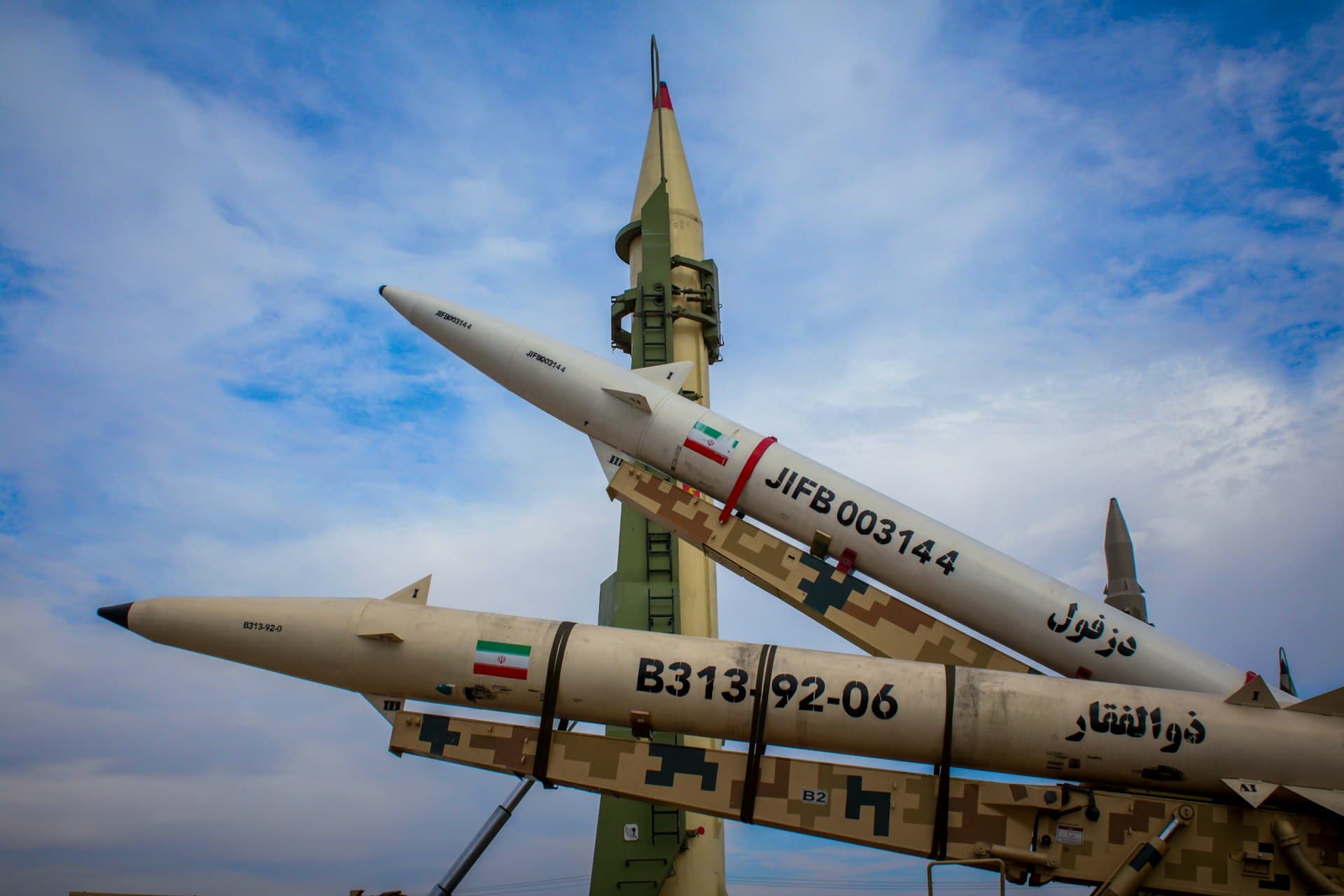
The Neurological War: How Precision Strikes Rewrote the...
The Board · Mar 27, 2026

Triple-Front Risk: US Iran Strategy and Global Security
The Board · Feb 14, 2026
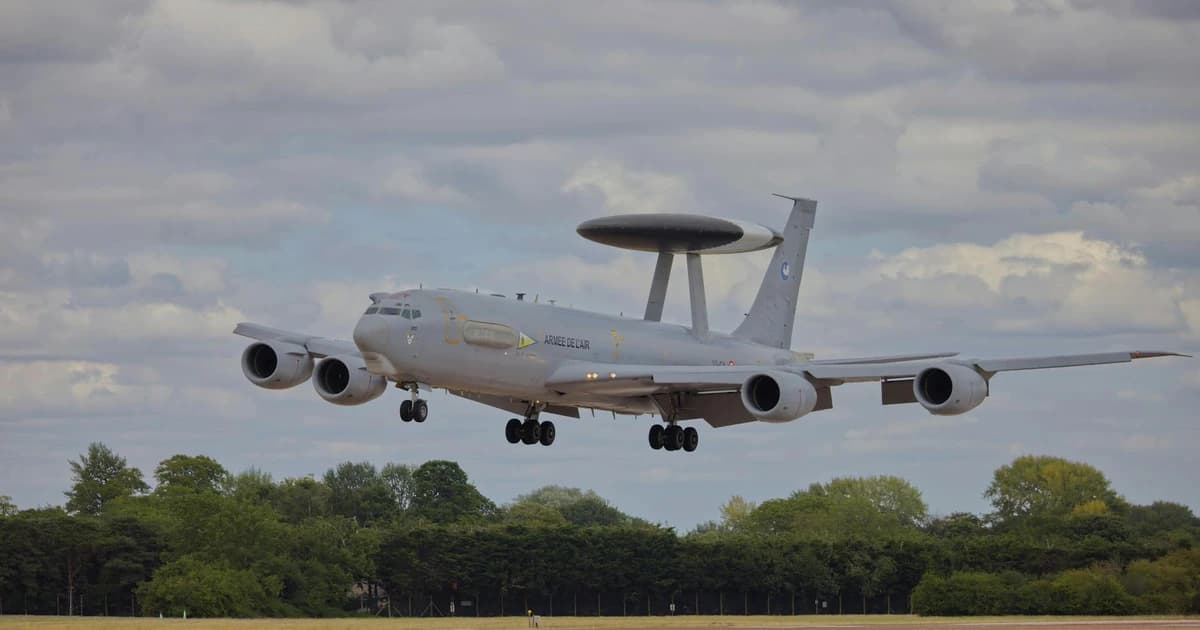
Russia Photographed the Saudi Base Three Times Before...
The Board · Mar 30, 2026
A Russian Drone Hit NATO Territory This Week
The Board · Mar 26, 2026
Trending on The Board

How CENTCOM Is Brokering an Israel-Saudi Pact
Defense & Security · Sep 19, 2026

Why the Pentagon Pulled Its Iran War Plans Offline
Defense & Security · Sep 19, 2026
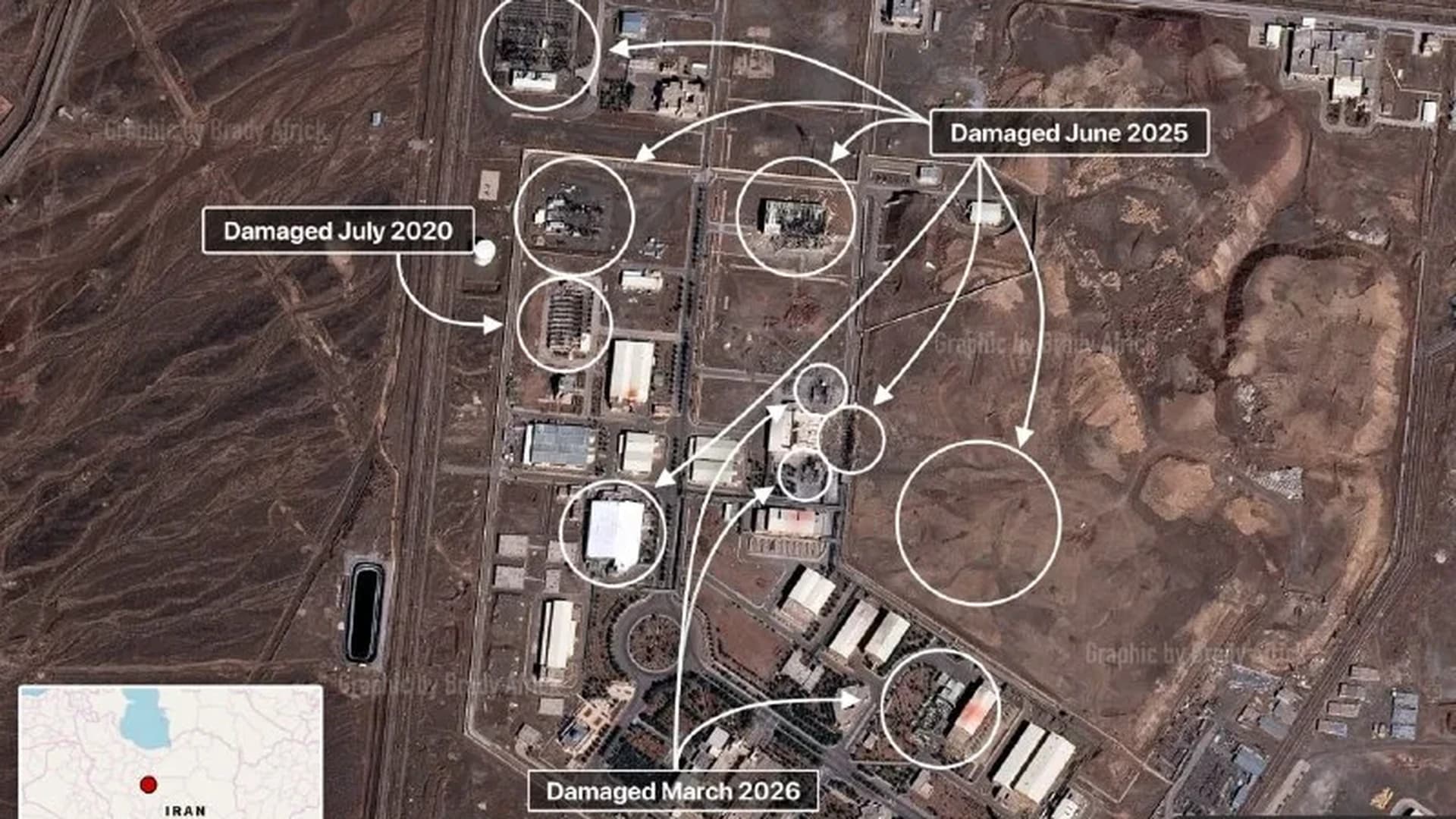
How a Stablecoin Funded Moldova's 2026 Election
Geopolitics · Sep 19, 2026

The Hidden Gold Demand Behind the $6,000 Target
Markets · Sep 17, 2026

Houthis Take Perim as Saudis Halt Pipeline 2026
Geopolitics · Sep 13, 2026
Latest from The Board
How CENTCOM Is Brokering an Israel-Saudi Pact
Defense & Security · Sep 19, 2026
Why the Pentagon Pulled Its Iran War Plans Offline
Defense & Security · Sep 19, 2026
How a Stablecoin Funded Moldova's 2026 Election
Geopolitics · Sep 19, 2026
The Hidden Gold Demand Behind the $6,000 Target
Markets · Sep 17, 2026
Houthis Take Perim as Saudis Halt Pipeline 2026
Geopolitics · Sep 13, 2026

Epstein Intelligence Ties: Evidence vs Allegation in 2026
Policy & Intelligence · Sep 6, 2026
What Israel-Iran War Games Got Wrong About 2026
Defense & Security · Sep 6, 2026

Central Banks Turned Gold Sellers. One Country Did It.
Markets · Aug 30, 2026