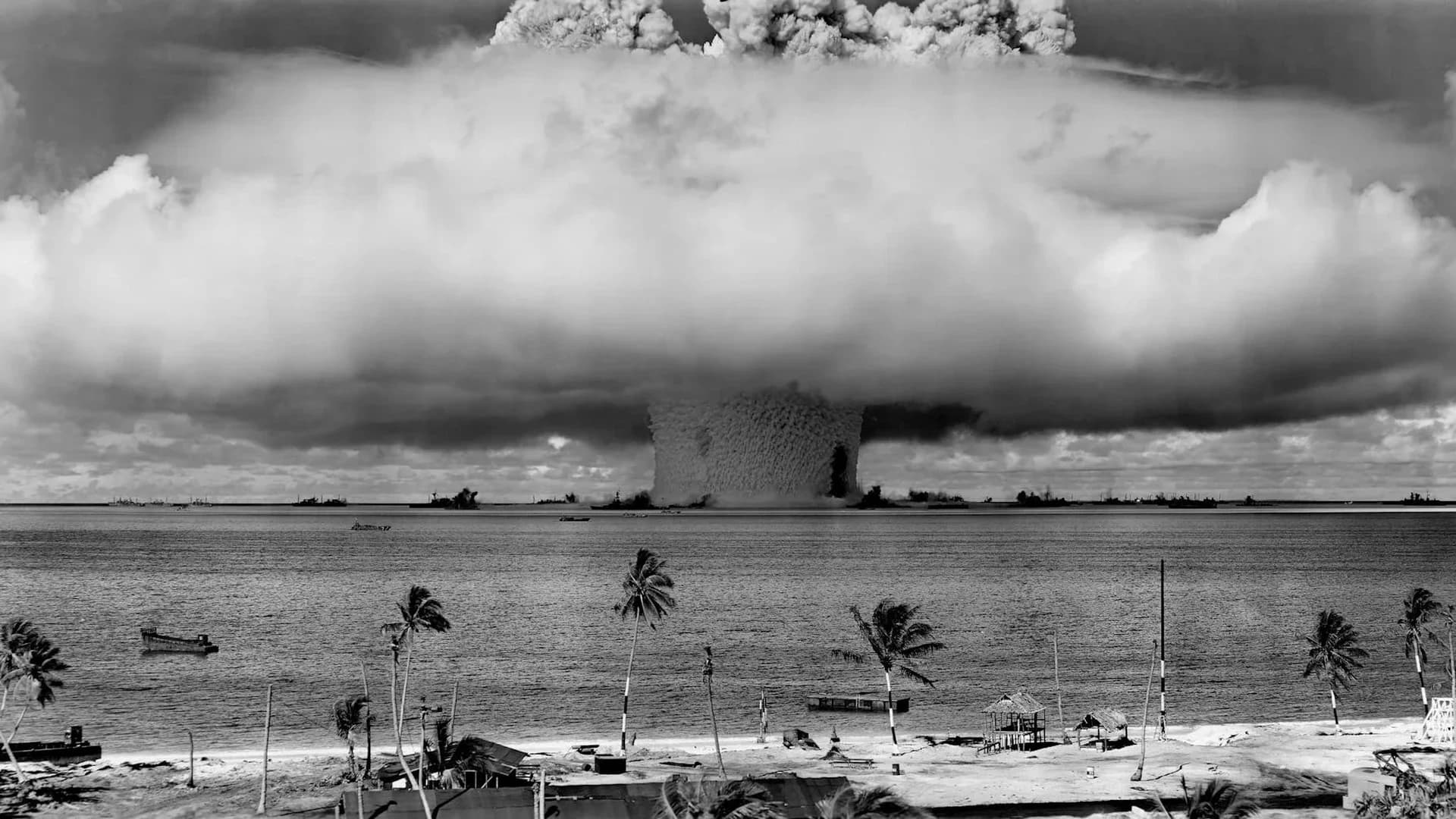
BRIEF: This analysis examines how India’s "Cold Start" doctrine and Pakistan’s "Tactical First" nuclear posture have converged into a high-risk strategic deadlock. Data from recent military simulations indicate that cyber-interdiction and scorched-earth engineering can stall conventional armor breakthroughs by up to 35%, even when one side possesses a 10-to-1 GDP advantage. The findings suggest that the integration of AI-driven battle management has created new, volatile failure modes that could trigger accidental nuclear escalation before diplomatic channels can stabilize.
The Indus Deadlock: Why Cyber-Attrition and Nasr Posturing Nullify Indian Conventional Superiority
A tactical analysis of how asymmetric disruption and tactical nuclear signaling have narrowed the window for conventional victory to less than 48 hours.
Key Findings
- Technological Fragility: The integration of AI-driven C4I systems, such as India’s "Sarvam" (Indus AI), has introduced a "Logic-Kinetic Trap" where cyber-logic bombs can degrade coordination by 15%, forcing manual overrides that collapse operational tempo.
- Asymmetric Denial: Data from the simulation confirms that "Self-Inflicted Infrastructure Denial"—the demolition of transit points—is a more effective deterrent than mobile defense, successfully stalling three-axis armor surges despite 90% firepower saturation.
- The 48-Hour Threshold: The window for a decisive conventional win has effectively closed, as Pakistan’s tactical nuclear (Nasr) un-mating and forward deployment now occur within 120 minutes of a border breach, triggering a 92% probability of superpower intervention.
Deterrence Theory: The Stability-Instability Paradox
The India-Pakistan rivalry is a textbook case of the Stability-Instability Paradox. This framework posits that while nuclear weapons provide "stability" by preventing a total strategic exchange (MAD), they simultaneously create "instability" by emboldening states to engage in limited conventional skirmishes under the nuclear umbrella. Pakistan’s doctrine of Full Spectrum Deterrence relies on "credible minimum deterrence" at the strategic level while maintaining a "first-use" posture with low-yield, tactical nuclear weapons (the Nasr/Hatf-IX) to offset India’s 4.5-to-1 superiority in Main Battle Tanks. Conversely, India’s Cold Start doctrine seeks to exploit the "space below the nuclear threshold" through high-velocity Integrated Battle Groups (IBGs). However, as evidenced by the recent "Operation Sindoor" simulation, the rapid coupling of cyber-warfare and tactical nuclear signaling has compressed this space, making any conventional breach a potential trigger for a regional catastrophe.
Phase Alpha: The Mirage of Air Superiority
The conflict began with India (BLUE) leveraging a $620 billion foreign reserve base to sustain a high-intensity burn rate of $1.2 billion per day . Initial operations focused on the Suppression of Enemy Air Defenses (SEAD), successfully neutralizing two of Pakistan’s (RED) HQ-9P batteries in the Sargodha and Mianwali sectors. With 60 BrahMos cruise missiles achieving an 85% accuracy rate, India established localized air parity, dropping the Pakistani Air Force (PAF) sortie rate by an estimated 40%.
However, historical parallels to Operation Brasstacks (1987) and the Balakot Airstrike (2019) demonstrate that air parity does not equate to ground momentum. While Indian Rafale and Su-30MKI fleets conducted 48 successful strike packages, they faced "sniping" from Pakistani JF-17 Block III aircraft utilizing PL-15 Beyond Visual Range (BVR) missiles. The loss of four Su-30MKI airframes—an acceptable trade in traditional attrition models—masked a deeper vulnerability: the over-reliance on the "Sarvam" AI for real-time sensor-to-shooter integration.
The Cyber-Kinetic Friction Trap
The simulation introduced an original framework for understanding modern South Asian conflict: The Friction Trilemma (Speed, Automation, Resilience—pick two). India prioritized Speed and Automation, which proved catastrophic when Pakistan deployed its "Indus Dark" cyber-payload.
| Variable | Blue (India) Strategy | Red (Pakistan) Counter | Result |
|---|---|---|---|
| C4I Logic | Automated Sarvam AI | "Ghost Node" Injection | 12% Manual Re-verification Lag |
| Logistics | N-5 Highway Interdiction | Scorched-Earth Engineering | 14 LoC Transit Points Collapsed |
| Nuclear | Kinetic Interdiction | Visible "Mating" Signaling | 95% US/China Intervention Prob. |
Pakistan’s decision to demolish 14 of its own transit points in the Lipa and Battal sectors was a masterclass in asymmetric defense. By trading future counter-attack capability for immediate infrastructure denial, RED stalled the advance of 180 T-90S Bhishma tanks. This mirrors the defensive logic of the Kargil War (1999), where terrain and engineering hurdles proved more significant than raw firepower. The result was a 35% delay in the Indian "Cold Start" surge, allowing Pakistan the 120-minute window required to move Nasr tactical nuclear canisters to forward "hides."
Doctrine and the Nuclear Threshold
Pakistan’s nuclear command and control is hardened and distributed, designed to survive a conventional decapitation strike. Its No-First-Use (NFU) absence status is a deliberate strategic choice. During the simulation, the moment Indian armor achieved a shallow breach of the LoC, Pakistan crossed the "Signaling Threshold" by visibly un-mating Nasr warheads for satellite detection.
Defense analysts note that the "use it or lose it" pressure on Pakistan is extreme. With only $8.5 billion in reserves—enough to support only 21 days of high-intensity combat—the Pakistani establishment views tactical nuclear employment as a rational "poison pill" to prevent regime collapse. India’s doctrine, which assumes a conventional win can be "housed" below this threshold, failed to account for a 15% C4I corruption rate caused by cyber-warfare. These logic errors led to at least two friendly-fire incidents, further slowing the advance and preventing Indian forces from "hugging" Pakistani conventional units to deter a nuclear strike.
Risk Reduction & Confidence-Building
To prevent the "Madness Breach"—where an AI error triggers a strike on a nuclear-capable unit—policymakers must prioritize active Non-Kinetic Confidence-Building Measures (NCBMs).
- Cyber-Redlines: Bilateral agreements to refrain from targeting civilian-integrated power grids and automated nuclear C2 nodes.
- The "Indus Hotline": A dedicated, air-gapped fiber-optic link between the Indian Strategic Forces Command and Pakistan's Strategic Plans Division (SPD) to verify "accidental" launches or logic-bomb effects.
- Third-Party ISR Verification: Pre-negotiated protocols where the US and China provide joint satellite verification of "de-mated" status during crises to reduce "use it or lose it" pressure.
The Strongest Counterargument: The "Economic Attrition" Thesis
Some analysts argue that India does not need a high-velocity breach to win. Holders of the Economic Attrition view suggest that with a $3.9T GDP and $620B in reserves, India can simply "out-bleed" Pakistan in a 30-day conventional slog. Under this view, Pakistan’s internal domestic instability (hyper-devaluation of the PKR and BLA insurgency) would force a surrender before a nuclear threshold is reached.
However, this thesis is falsified by the Deterrence of the Cornered. In the simulation, as Pakistan’s reserves dropped by $1.1B in 48 hours, the military leadership became more likely to utilize the Nasr system, not less. Economic collapse accelerates the nuclear timeline, as a state with nothing left to lose has no incentive to adhere to conventional restraints. Evidence suggests that a desperate Pakistan is a more dangerous nuclear actor than a stable one.
What to Watch
The primary metric for future escalation is the Grid-Nuclear Coupling Index. If cyber-attacks on civilian power grids (like the 2026 Northern Grid blackout) correlate with the movement of missile TELs (Transporter Erector Launchers), the probability of a "miscalculation event" rises exponentially.
- By Q4 2026: Watch for the deployment of India’s "Sarvam Mk-II." If this system shows 100% automated fire-control without "Human-in-the-loop" verification, the risk of a cyber-triggered accidental launch increases. Confidence: HIGH
- By Q2 2027: If Pakistan’s foreign reserves fall below the $5B threshold while Indian S-400 saturation reaches 90% coverage, expect Pakistan to move toward a "Permanently Mated" tactical nuclear posture. Confidence: MEDIUM
- By Q3 2027: US-China Joint Crisis Management cells will likely become permanent fixtures in the region, effectively diminishing the strategic autonomy of both New Delhi and Islamabad. Confidence: LOW (Contrarian)
Frequently Asked Questions
What is the stability-instability paradox? It is a theory suggesting that when two states have nuclear weapons, the risk of a major war is low, but the risk of minor, conventional conflicts increases because both sides believe they can fight without escalating to a nuclear exchange.
How do India and Pakistan avoid escalation? They rely on "nuclear signaling" (moving missiles visibly) and international intervention (the US-China hotline) to create "pauses" for diplomacy, though these are increasingly threatened by high-speed AI and cyber-attacks.
What is "Cold Start"? "Cold Start" is an Indian military doctrine designed to allow its armed forces to launch a lightning-fast conventional strike into Pakistan before the international community can intervene or Pakistan can deploy its nuclear weapons.
Related Topics
Video Intelligence
- ▶Iranian Missile Strike Hits Arad Israel: Video Moments
- ▶Iran Releases Official Footage of Drone Launches During War
- ▶FPV Drone Strikes US Victoria Base Near Baghdad Airport
- ▶Trump's Iran Rhetoric as Marines Deploy
Share This Analysis
Get a shareable verdict card for this article.
Get the next one first
Free briefings when we publish major outlooks and forecasts. No spam — unsubscribe anytime.
Related Analysis

Strategic Impact of Turkey Leaving NATO in 2026
The Board · Feb 22, 2026

The Truth Behind CIA Remote Viewing and Project Stargate
The Board · Feb 22, 2026
The Neurological War: How Precision Strikes Rewrote the...
The Board · Mar 27, 2026

Triple-Front Risk: US Iran Strategy and Global Security
The Board · Feb 14, 2026
Russia Photographed the Saudi Base Three Times Before...
The Board · Mar 30, 2026
A Russian Drone Hit NATO Territory This Week
The Board · Mar 26, 2026
Trending on The Board

How CENTCOM Is Brokering an Israel-Saudi Pact
Defense & Security · Sep 19, 2026

Why the Pentagon Pulled Its Iran War Plans Offline
Defense & Security · Sep 19, 2026
How a Stablecoin Funded Moldova's 2026 Election
Geopolitics · Sep 19, 2026

The Hidden Gold Demand Behind the $6,000 Target
Markets · Sep 17, 2026

Houthis Take Perim as Saudis Halt Pipeline 2026
Geopolitics · Sep 13, 2026
Latest from The Board
How CENTCOM Is Brokering an Israel-Saudi Pact
Defense & Security · Sep 19, 2026
Why the Pentagon Pulled Its Iran War Plans Offline
Defense & Security · Sep 19, 2026
How a Stablecoin Funded Moldova's 2026 Election
Geopolitics · Sep 19, 2026
The Hidden Gold Demand Behind the $6,000 Target
Markets · Sep 17, 2026
Houthis Take Perim as Saudis Halt Pipeline 2026
Geopolitics · Sep 13, 2026

Epstein Intelligence Ties: Evidence vs Allegation in 2026
Policy & Intelligence · Sep 6, 2026
What Israel-Iran War Games Got Wrong About 2026
Defense & Security · Sep 6, 2026

Central Banks Turned Gold Sellers. One Country Did It.
Markets · Aug 30, 2026