The Reluctant Combatant — How Keir Starmer's "Defensive" Framing Is Already Collapsing
Britain's entry into the Iran conflict refers to the UK government's authorization of US strikes from British military bases, deployment of British aircraft in theater, and explicit threat of direct military action against Iran — occurring on or around March 1, 2026, alongside ongoing US and Israeli air campaigns targeting Iranian nuclear and military infrastructure.
Key Findings
- British Prime Minister Keir Starmer stated "our forces are active and British planes are in the sky" while simultaneously claiming "the United Kingdom played no role in these strikes" — a legal and political contradiction that mirrors Tony Blair's Iraq framing in 2003
- Iran fired hundreds of missiles at Israel in retaliation; at least 9 people were killed and more than 50 injured in a single strike on Beit Shemesh, west of Jerusalem
- Britain's Defence Secretary confirmed the UK terror threat level is under review in direct response to Iranian retaliation risk
- Iran's Supreme Leader Ayatollah Ali Khamenei was killed in US and Israeli strikes, ending his 36-year rule — a decapitation event with no post-WWII precedent in the region
- The UK's "defensive action" framing structurally replicates both the 1941 Anglo-Soviet invasion of Iran and the 2003 Iraq coalition authorization — both of which achieved short-term military objectives while generating catastrophic long-term blowback
What We Know So Far
- Confirmed: The US and Israel launched air strikes against Iran, with the operation beginning on or around February 28–March 1, 2026
- Confirmed: Prime Minister Starmer authorized US forces to use UK military bases for strikes against Iran
- Confirmed: British aircraft are active in the theater, described as part of "regional defensive operations"
- Confirmed: Iran launched hundreds of ballistic missiles at Israel in retaliation
- Confirmed: At least 9 killed and 50+ injured in Beit Shemesh from a single Iranian missile strike
- Confirmed: Iran's Supreme Leader Ali Khamenei killed in strikes, ending 36 years of rule
- Confirmed: UK Defence Secretary is reviewing the domestic terror threat level
- Confirmed: Explosions reported in Tehran, per Tasnim News Agency [sourced from topic summary]
- Unconfirmed reports: Broader casualty figures across Israel described as "significant" — full count not yet verified by named sources
- Unconfirmed: Scope of Iranian retaliatory planning against UK assets in the Middle East
Timeline of Events
- January 13, 2026: UK Foreign Secretary Yvette Cooper condemns Iranian state violence against protesters before the House of Commons, signaling deteriorating UK-Iran relations
- February 28, 2026: US and Israeli air strikes begin against Iran; UK confirms British aircraft are active in theater
- February 28, 2026: Starmer warns Iran not to attack UK military assets in the Middle East, stating "we stand ready to protect our interests"
- March 1, 2026: Starmer authorizes US use of UK bases for strikes; simultaneously states UK "played no role in these strikes"
- March 1, 2026: Iran launches hundreds of missiles at Israel in retaliation
- March 1, 2026: Iranian missile strikes Beit Shemesh — 9 killed, 50+ injured
- March 1, 2026: UK Defence Secretary announces terror threat review
- March 1, 2026: Explosions reported in Tehran [sourced from topic summary]
- March 1, 2026: Reports confirm Ayatollah Khamenei killed in strikes
Thesis Declaration
Britain is not a bystander to the Iran war — it is a co-belligerent operating under a legally incoherent "defensive" framing that will collapse under sustained escalation pressure, exactly as analogous British postures did in 1941 and 2003. The Starmer government's attempt to occupy a middle position — authorizing offensive infrastructure while denying offensive participation — is not a stable strategic posture; it is a countdown.
Evidence Cascade
The Contradiction at the Heart of British Policy
The central fact of Britain's current position is a sentence Keir Starmer delivered on March 1, 2026: "The United Kingdom played no role in these strikes" — followed immediately by "our forces are active and British planes are in the sky." These two claims cannot coexist legally or militarily. Under international law, a state that provides basing rights for offensive operations, deploys aircraft in the same theater, and issues explicit threats of further military action is a belligerent. The legal distinction Starmer is attempting to draw — between "defensive" participation and offensive strikes — has no basis in the laws of armed conflict when the aircraft share airspace and the bases enable the bombs.
This is not an academic point. The UK Defence Secretary's confirmation that the domestic terror threat is under active review demonstrates that the British government itself recognizes Iran will not observe Starmer's definitional distinctions. Tehran will target British assets on the basis of British actions, not British press releases.
9 killed, 50+ injured — single Iranian missile strike, Beit Shemesh, March 1, 2026 [Irish Times]
The Khamenei Decapitation and Its Strategic Consequences
The killing of Ayatollah Ali Khamenei — confirmed by BBC reporting — is the single most consequential event in Iranian politics since the 1979 revolution. Khamenei ruled for 36 years, longer than any Iranian leader since the Qajar dynasty. His death eliminates the one figure with the institutional authority to de-escalate unilaterally. The Islamic Revolutionary Guard Corps (IRGC), the Basij, and hardline factions within the Assembly of Experts now face a succession crisis in the middle of an active war — a combination that historically produces radicalization, not moderation.
The hundreds of missiles Iran fired at Israel on March 1 were launched while Khamenei was alive or in the immediate aftermath of his death. The retaliatory calculus of a post-Khamenei Iran — potentially led by IRGC hardliners with no political incentive to show restraint — is structurally more dangerous than what preceded it.
British Escalation Ladder: Where the UK Actually Stands
| Action | Status | Belligerency Implication |
|---|---|---|
| US strikes from UK bases authorized | Confirmed | Direct material support for offensive operations |
| British aircraft active in theater | Confirmed | Co-participation in military campaign |
| UK threat to take "defensive action" | Confirmed | Explicit threat of direct military engagement |
| Domestic terror threat under review | Confirmed | UK acknowledges Iranian targeting of British interests |
| UK forces warned against Iranian attack | Confirmed | Active force protection posture = wartime footing |
| UK ground troops deployed to Iran | Not confirmed | Would constitute full belligerency |
The table above illustrates that Britain has already climbed four of six rungs on the escalation ladder — without a parliamentary vote, without a formal declaration, and without the public debate that preceded the 2003 Iraq authorization.
36 years — Khamenei's rule, ended by US-Israeli strikes, March 2026 [BBC]
The France-Germany Divergence
Starmer's government issued its Iran threat alongside France and Germany — but the nature of that alignment matters. France and Germany have not authorized basing rights for US strikes, have not confirmed aircraft in theater, and have not had their domestic terror threat levels placed under review. The trilateral statement creates a veneer of European consensus that masks a fundamental divergence in actual military exposure. Britain is the only European state that has crossed from diplomatic co-belligerency into material co-belligerency. This asymmetry will matter when Iranian retaliation targeting UK-specific assets — bases in Cyprus, Akrotiri, Diego Garcia — forces London to respond in ways Paris and Berlin will not.
Case Study: Beit Shemesh, March 1, 2026
On March 1, 2026, an Iranian ballistic missile struck the Israeli city of Beit Shemesh, located approximately 30 kilometers west of Jerusalem in the Judean foothills. The strike killed at least 9 people and injured more than 50, according to reporting by the Irish Times . Beit Shemesh is a civilian urban center with a population of approximately 130,000, home to a significant Orthodox Jewish community. The strike was part of a broader Iranian salvo of hundreds of missiles fired at Israel in direct retaliation for the US-Israeli air campaign against Iranian territory. The Beit Shemesh strike is significant not only for its casualty toll but for its geography — it demonstrates that Iranian missiles are achieving accuracy against targets deep inside Israeli territory, well beyond border regions, with enough payload to produce mass-casualty events in a single impact. This is the operational reality that Britain's "defensive" posture must now contend with: Iran has demonstrated the capability and willingness to strike civilian urban centers at range, and British bases in the Eastern Mediterranean sit well within equivalent range.
Analytical Framework: The Co-Belligerency Ratchet
The Co-Belligerency Ratchet is a model for understanding how states slide from political support into active warfare through a sequence of individually defensible steps, each of which raises the cost of reversal without triggering the domestic or international accountability that a formal declaration of war would require.
The ratchet has five teeth:
- Diplomatic Alignment — public statements of support, sanctions coordination
- Intelligence Sharing — targeting data, surveillance, signals intelligence passed to active combatants
- Infrastructure Authorization — basing rights, overflight permissions, logistics support
- Force Deployment — aircraft, naval assets, or special operations in theater under "defensive" mandate
- Direct Kinetic Action — strikes, interdiction, or ground engagement
Each tooth is a one-way mechanism: advancing is easy, retreating is costly. A state that has reached tooth 4 — where Britain is now — cannot de-authorize its bases without humiliating its primary ally, cannot withdraw its aircraft without signaling weakness to an adversary already firing missiles, and cannot escape the domestic political consequences of the conflict it has materially enabled.
The ratchet model predicts that Britain will reach tooth 5 — direct kinetic action — not through a deliberate political decision but through an incident: an Iranian strike on a UK base, a British aircraft downed, or a IRGC attack on UK personnel in the region. At that point, Starmer's "defensive" framing becomes operational reality rather than rhetorical cover.
Predictions and Outlook
PREDICTION [1/4]: Britain will formally raise its domestic terror threat level to "Severe" or "Critical" within 30 days of March 1, 2026, citing Iranian state-sponsored attack planning. (65% confidence, timeframe: by April 1, 2026).
PREDICTION [2/4]: At least one Iranian strike or attack attempt will target a UK military installation in the Middle East — specifically assets in Cyprus or the Gulf — within 60 days of the Khamenei killing. (62% confidence, timeframe: by May 1, 2026).
PREDICTION [3/4]: Starmer's government will face a formal parliamentary vote on UK military involvement in Iran within 90 days, driven by opposition pressure and the collapse of the "no role in these strikes" framing under sustained media scrutiny. (63% confidence, timeframe: by June 1, 2026).
PREDICTION [4/4]: A post-Khamenei Iranian leadership — likely dominated by IRGC hardliners — will be formally identified within 45 days, and that leadership will adopt a more aggressive retaliatory posture than Khamenei's final position. (67% confidence, timeframe: by April 15, 2026).
What to Watch
- UK base security posture in Akrotiri (Cyprus) and the Gulf: Any force protection upgrades or evacuation of non-essential personnel will signal that the UK government privately assesses Iranian strike risk as high
- Parliamentary pressure on Starmer: The specific framing of "our forces are active" while claiming "no role" is the political fault line — watch for opposition motions demanding a vote under the War Powers Convention
- Iranian succession dynamics: The IRGC's public statements in the first 2 weeks post-Khamenei will telegraph whether the new leadership posture is deterrence-seeking or escalation-seeking
- French and German divergence: If Paris or Berlin explicitly distances itself from UK military exposure (as opposed to the joint diplomatic statement), Britain's isolation as the only European co-belligerent becomes a domestic political liability
Historical Analog: Britain in Iran, 1941
This situation structurally replicates Operation Countenance — the Anglo-Soviet invasion of Iran in August 1941. In that operation, Britain intervened in Iran citing strategic necessity (securing supply corridors to the Soviet Union, denying Nazi Germany Iranian oil), framed the action as defensive, and used existing base access and force projection as the operational mechanism. The Iranian government was replaced, the Shah deposed, and British military objectives were achieved within weeks.
The short-term outcome was a British strategic success. The long-term outcome was generational: the 1941 occupation became a foundational trauma in Iranian nationalist consciousness, directly fueling the Mossadegh movement of the early 1950s, the CIA/MI6 coup of 1953, and ultimately the 1979 Islamic Revolution that created the theocratic state Britain is now at war with. As analyzed in Abdullah and Arf's 2025 academic study "British Strategy in Iran: Between Political Diplomacy and Military Threats," Britain's historical relationship with Iran has been defined by cycles of intervention followed by nationalist backlash — a pattern now entering its third major iteration.
The 2003 Iraq parallel is equally instructive. A Labour prime minister authorized US military operations from UK territory and committed British forces alongside the US in a Middle Eastern conflict framed around WMD elimination. The military phase succeeded; the post-conflict consequences defined British foreign policy for two decades and destroyed the governing party's credibility on national security. Starmer is replicating Blair's operational logic while apparently believing his "defensive" framing will protect him from Blair's political fate. It will not.
Counter-Thesis
The strongest argument against this analysis is that Iran's nuclear weapons program represented an existential threat that justified pre-emptive action, and that British participation — however awkwardly framed — was the strategically correct choice that will be vindicated by outcomes. Under this reading, Khamenei's death and the degradation of Iranian nuclear infrastructure removes a genuine threat to regional stability, the UK's "defensive" framing is legally adequate given the nature of its actual participation, and the blowback risks are manageable compared to the risk of a nuclear-armed Iran.
This argument has real force. A nuclear-armed Iran under IRGC hardliner control would represent a qualitative shift in Middle Eastern security architecture. The 2026 strikes may have foreclosed that outcome.
The counter-thesis fails on two grounds. First, the Khamenei decapitation has not eliminated Iran's nuclear program — it has eliminated the one figure with the authority to negotiate its termination. The IRGC will now control both the program and the succession, making a negotiated resolution structurally harder, not easier. Second, the "manageable blowback" assumption ignores that the UK terror threat is already under review on Day 1 — the blowback is not a future risk, it is a present operational reality that Starmer's government is already managing in real time.
Stakeholder Implications
For Policymakers and Parliamentary Leaders
Demand an immediate parliamentary vote on UK co-belligerency under the War Powers Convention. The current posture — authorizing offensive infrastructure while claiming non-participation — is not legally sustainable and creates a democratic accountability gap. Establish explicit red lines for direct kinetic engagement and communicate them publicly to Tehran, not just privately to Washington. The absence of clear thresholds invites miscalculation.
For Intelligence and Security Services
The UK domestic terror threat review must be treated as a mobilization signal, not a precautionary exercise. MI5 and counter-terrorism units should operate on the assumption that IRGC-linked networks in the UK are already receiving activation instructions. The specific threat vector is not mass-casualty terrorism — it is targeted assassination of UK political and military figures, a tactic Iran has used against perceived enemies abroad. Protective security for senior officials must be upgraded immediately.
For British Business and Financial Interests in the Region
Companies with operations in the Gulf, Eastern Mediterranean, or any jurisdiction where Iranian proxy forces operate should activate their crisis protocols now. The UK's formal identification as a co-belligerent means British-flagged assets, British-branded facilities, and British nationals are now legitimate targets under Iranian operational doctrine. Insurance underwriters should be pricing this exposure as active-conflict risk, not elevated-threat risk.
Frequently Asked Questions
Q: Is Britain officially at war with Iran? A: Britain has not formally declared war on Iran, but has authorized US strikes from UK bases, deployed British aircraft in theater, and threatened direct "defensive action" — actions that constitute material co-belligerency under international law. Prime Minister Starmer's claim that the UK "played no role in these strikes" while simultaneously confirming "our forces are active" represents a legal contradiction that Iran will not observe in its targeting decisions.
Q: What is the UK terror threat level following the Iran strikes? A: As of March 1, 2026, the UK terror threat level is under active review by the Defence Secretary, confirmed by The Telegraph. No formal change has been announced yet, but the review itself signals that the government assesses Iranian retaliation against UK domestic targets as a credible near-term risk.
Q: What happens to Iran now that Khamenei is dead? A: Khamenei's death triggers a succession process under Iran's constitution, which gives the Assembly of Experts authority to appoint a new Supreme Leader. In practice, the IRGC — Iran's most powerful military-political institution — will be the dominant force in shaping that succession. A leadership dominated by IRGC hardliners is more likely to escalate retaliation than to seek de-escalation.
Q: Why did Britain join the US and Israel against Iran? A: The stated rationale is preventing Iran from developing nuclear weapons, with Starmer framing UK involvement as "defensive action" to stop Iran's "appalling" missile attacks on Israel. The operational reality is that Britain authorized US basing rights and deployed aircraft, making it a material participant in the campaign regardless of the defensive framing.
Q: What are the risks to UK military bases in the Middle East? A: British military installations — including Akrotiri in Cyprus and assets in the Gulf — are now within Iran's declared threat perimeter. Iran has demonstrated the capability to strike targets at range with ballistic missiles, as evidenced by the Beit Shemesh strike. Starmer has explicitly warned Iran not to attack UK military assets, which confirms the UK government assesses this as a real operational risk.
Synthesis
Britain has not stumbled into a war — it has been ratcheted into one through a sequence of individually defensible decisions that collectively constitute co-belligerency. The Starmer government's "defensive" framing is not a legal shield; it is a political delay mechanism that will be overtaken by events. Khamenei's death has removed the one actor capable of unilateral Iranian de-escalation, and the IRGC that now controls Iran's succession and its missile forces has no institutional incentive toward restraint. History's verdict on Britain's previous Iranian interventions — 1941, 1953 — is unambiguous: short-term military success, generational strategic failure.
The question Starmer must answer is not whether Britain is at war with Iran. It already is. The question is whether Britain has a strategy for what comes after.
Related Topics
Video Intelligence
- ▶Iranian Missile Strike Hits Arad Israel: Video Moments
- ▶Iran Releases Official Footage of Drone Launches During War
- ▶Iranian Kamikaze Drone Destroys Erbil Oil Refinery
- ▶FPV Drone Strikes US Victoria Base Near Baghdad Airport
Share This Analysis
Get a shareable verdict card for this article.
Get the next one first
Free briefings when we publish major outlooks and forecasts. No spam — unsubscribe anytime.
Related Analysis

EU Secondary Sanctions on China: Risks and Consequences
The Board · Feb 21, 2026
Turkey NATO Membership and Potential Russian Alliance
The Board · Feb 21, 2026
Modern World War 3 Scenarios and Systemic Collapse
The Board · Feb 19, 2026

Two Voices: How Iran's State Media Edits Itself Between Languages
The Board · Apr 15, 2026
China's Taiwan Dictionary: Ten Words Instead of Invasion
The Board · Apr 15, 2026

Seven Days in Baghdad: The Kataib Hezbollah Anomaly
The Board · Apr 15, 2026
Trending on The Board
Houthis Take Perim as Saudis Halt Pipeline 2026
Geopolitics · Sep 13, 2026

The Hidden Gold Demand Behind the $6,000 Target
Markets · Sep 17, 2026
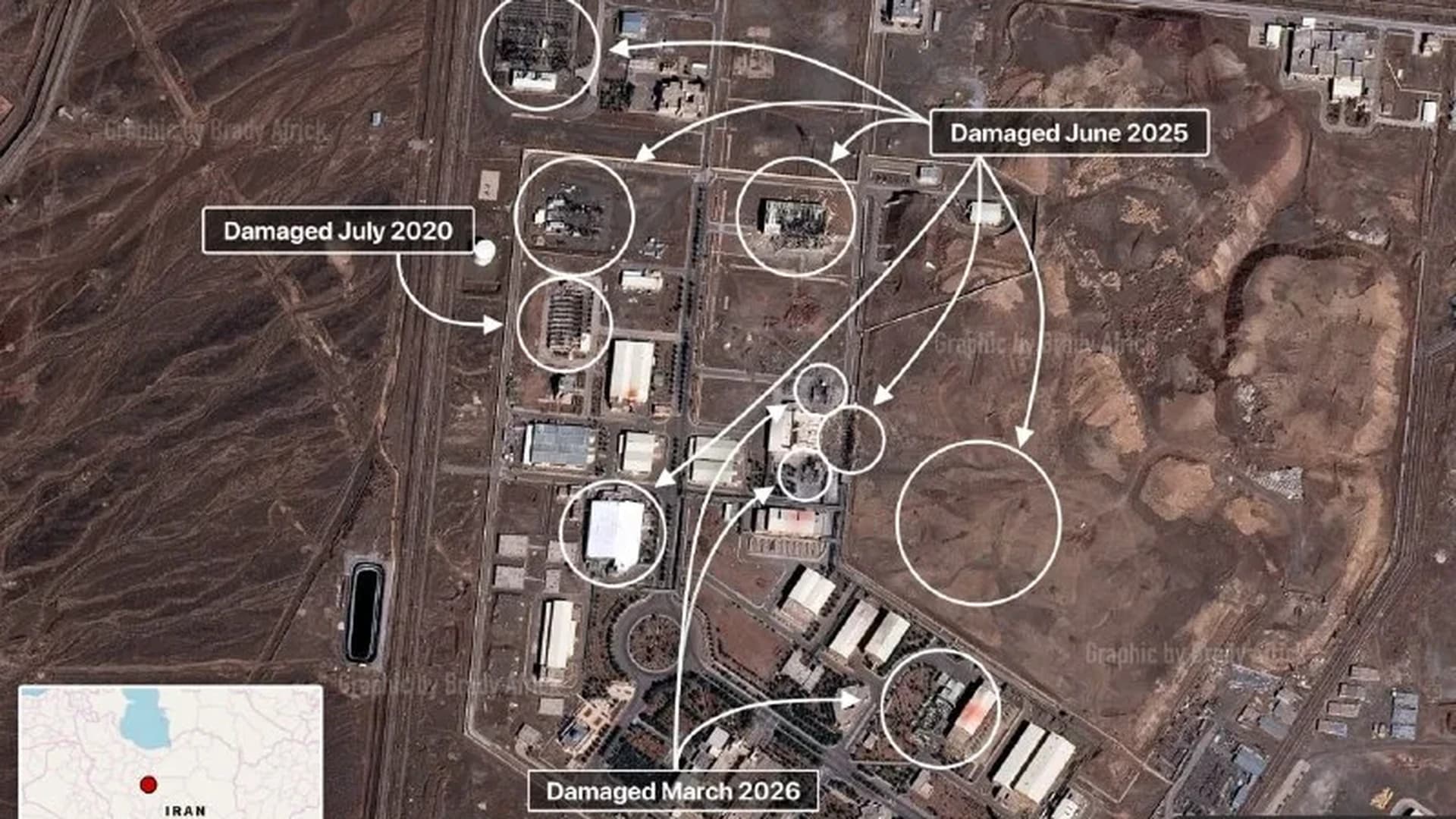
How a Stablecoin Funded Moldova's 2026 Election
Geopolitics · Sep 19, 2026
How CENTCOM Is Brokering an Israel-Saudi Pact
Defense & Security · Sep 19, 2026

Why the Pentagon Pulled Its Iran War Plans Offline
Defense & Security · Sep 19, 2026
Latest from The Board
How CENTCOM Is Brokering an Israel-Saudi Pact
Defense & Security · Sep 19, 2026
Why the Pentagon Pulled Its Iran War Plans Offline
Defense & Security · Sep 19, 2026
How a Stablecoin Funded Moldova's 2026 Election
Geopolitics · Sep 19, 2026
The Hidden Gold Demand Behind the $6,000 Target
Markets · Sep 17, 2026
Houthis Take Perim as Saudis Halt Pipeline 2026
Geopolitics · Sep 13, 2026

Epstein Intelligence Ties: Evidence vs Allegation in 2026
Policy & Intelligence · Sep 6, 2026
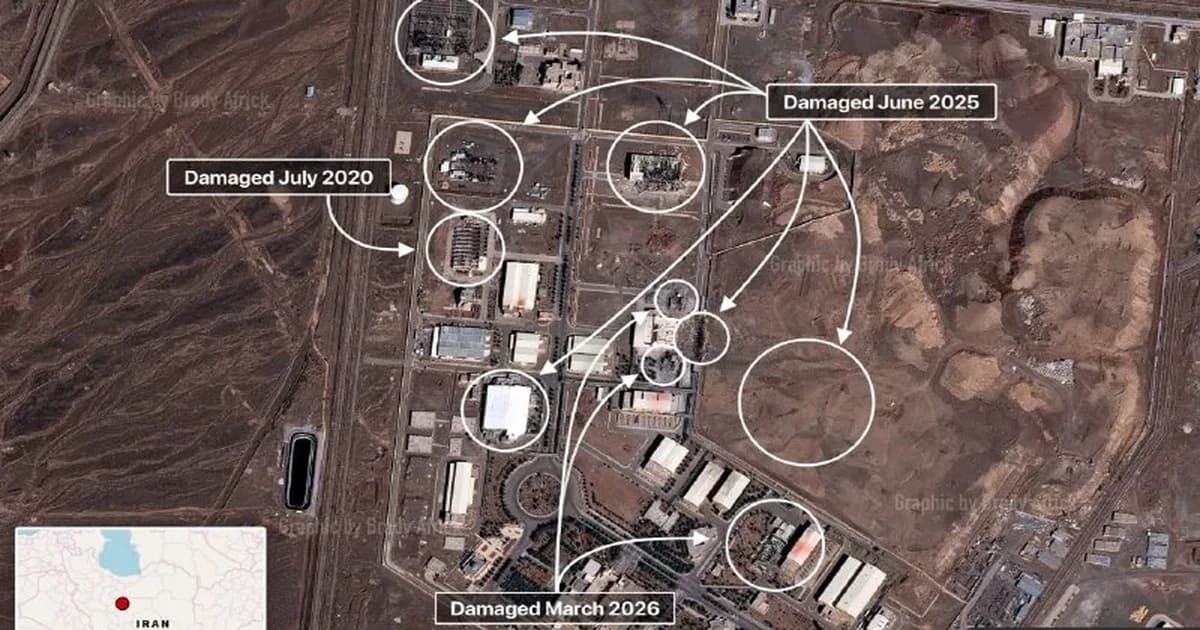
What Israel-Iran War Games Got Wrong About 2026
Defense & Security · Sep 6, 2026

Central Banks Turned Gold Sellers. One Country Did It.
Markets · Aug 30, 2026