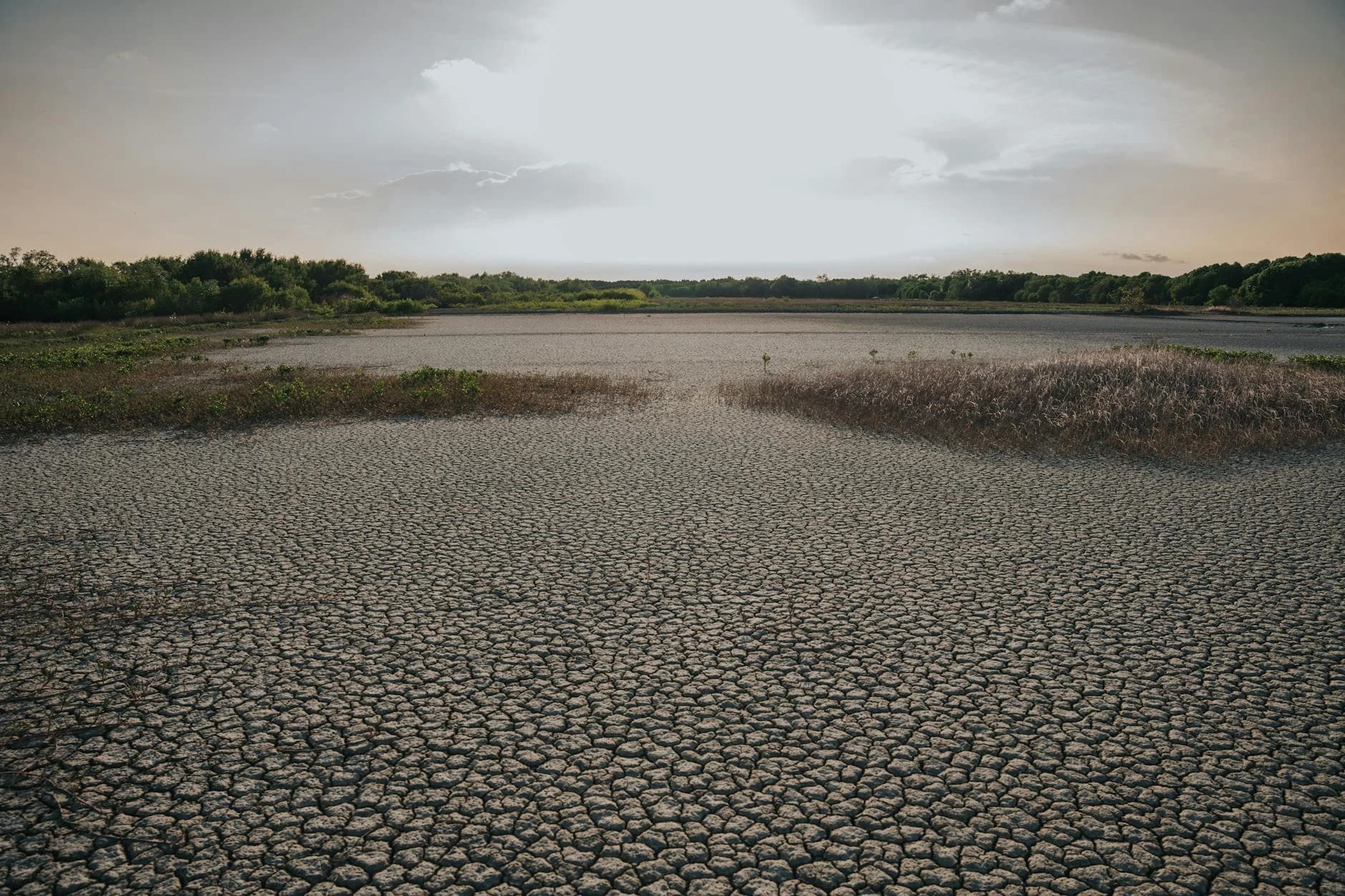
The Hydraulic Siege: When Dams Become Instruments of National Power
Water weaponization is the deliberate use of water infrastructure, allocation policy, or access denial as a coercive instrument of statecraft — transforming a shared natural resource into a tool of political leverage, economic pressure, or military advantage. Unlike conventional resource competition, water weaponization exploits the inelastic nature of human water demand: populations cannot substitute away from water, making control over supply a uniquely coercive form of power.
Key Findings
- The Grand Ethiopian Renaissance Dam (GERD) has become the world's most acute water weaponization flashpoint, with Egypt explicitly threatening military action against a dam that will regulate flow to 100 million Egyptian citizens who depend on the Nile for 97% of their freshwater
- China operates 11 major dams on the upper Mekong River, giving Beijing unilateral control over flow volumes that sustain the agriculture and fisheries of 60 million people across Thailand, Laos, Cambodia, and Vietnam
- The 2021 Kyrgyzstan-Tajikistan border war — the deadliest post-Soviet Central Asian conflict — included direct military strikes on water distribution infrastructure, marking the clearest documented case of water as a casus belli in the 21st century
- Climate models project that by 2050, water stress will affect regions containing 40% of global agricultural output, meaning the geopolitical stakes of water control will compound with every degree of warming
- Existing international water law — primarily the 1997 UN Watercourses Convention — covers fewer than 20% of the world's transboundary river basins with any binding framework, leaving the majority ungoverned by enforceable agreements
Thesis Declaration
Water is no longer merely a resource competition — it is an active instrument of statecraft, and the states that control upstream infrastructure in the world's most stressed river basins are already exercising coercive leverage over downstream populations. The relevant question is not whether water wars are coming, but which of the three active flashpoints — the Nile, the Mekong, or the Indus — will be the first to cross from chronic hydraulic coercion into acute military confrontation.
Evidence Cascade: The Arithmetic of Hydraulic Power
The foundational data point is stark: approximately 2.3 billion people currently live in water-stressed countries, according to the UN World Water Development Report 2023. Of the world's 263 transboundary river basins, fewer than 40% are governed by any form of bilateral or multilateral agreement, and of those agreements, the vast majority lack enforcement mechanisms or dispute resolution procedures with binding authority.
The strategic logic of water weaponization flows directly from hydrology. River systems are physically hierarchical: upstream states possess structural power simply by virtue of geography. A dam built at altitude controls timing, volume, and seasonal distribution of water to everyone downstream. This is not metaphorical leverage — it is hydraulic physics converted into political power.
The Three Active Flashpoints
| Basin | Upstream Actor | Downstream Dependents | Key Infrastructure | Conflict Status |
|---|---|---|---|---|
| Nile | Ethiopia | Egypt (97% freshwater from Nile), Sudan | Grand Ethiopian Renaissance Dam (GERD, 74 billion m³ capacity) | Active diplomatic crisis; Egypt has made explicit military threats |
| Mekong | China | Thailand, Laos, Cambodia, Vietnam (~60M people) | 11 Chinese dams on upper Mekong; Lancang cascade | Ongoing covert coercion; Mekong River Commission marginalized |
| Indus | India | Pakistan (90% agricultural water from Indus system) | Kishanganga and Ratle hydropower projects | Indus Waters Treaty suspended by India, March 2023; arbitration ongoing |
| Euphrates-Tigris | Turkey | Syria, Iraq | GAP Project (22 dams, 19 power plants) | Iraq receives 30% less water than 1970s baselines; chronic crisis |
| Amu Darya / Syr Darya | Kyrgyzstan, Tajikistan | Uzbekistan, Kazakhstan | Soviet-era irrigation infrastructure; no functional successor framework | Active low-intensity conflict; 2021 border war |
Sources: UN World Water Development Report 2023; Pacific Institute, Water Conflict Chronology 2024; Stimson Center, 'Mekong Dam Monitor,' 2023; International Crisis Group, 'Parched: Water Scarcity and Conflict in the Greater Middle East,' 2022
The Nile: Egypt's 97% Problem
Egypt's vulnerability is without parallel among major states. The country receives less than 25mm of annual rainfall across most of its territory, making the Nile not merely important but existential — 97% of Egypt's freshwater originates outside its borders. The GERD, with a reservoir capacity of approximately 74 billion cubic meters, represents Ethiopia's sovereign right to develop its own waterways but also Egypt's nightmare scenario: a single upstream structure capable of dramatically altering downstream flow during filling periods.
Egypt's former President Abdel Fattah el-Sisi stated publicly in 2021 that "all options are open" regarding the GERD — diplomatic language for military action. Egyptian military doctrine has explicitly identified the GERD as a potential military target since at least 2020, and Egypt has conducted military exercises simulating long-range strikes consistent with an attack on Ethiopian infrastructure. The 2015 Declaration of Principles signed by Egypt, Ethiopia, and Sudan was intended to govern the filling process, but it lacks enforcement mechanisms and all three parties interpret its provisions differently.
The Mekong: China's Silent Hydraulic Dominance
China's control over the upper Mekong (called the Lancang within Chinese territory) represents perhaps the most sophisticated exercise in water weaponization currently operating. Analysis by Eyes on Earth, a Montana-based hydrological research firm, published in 2020 found that Chinese dams withheld water during a severe 2019 drought, keeping upstream reservoirs full while downstream countries experienced record-low water levels that devastated rice crops and fisheries across Thailand, Laos, Cambodia, and Vietnam.
The Mekong River Commission — the multilateral body theoretically governing the river — excludes China as a full member. China participates only as a "dialogue partner," meaning it shares limited data and faces no binding obligations. The Stimson Center's Mekong Dam Monitor documented in 2023 that China operates 11 major dams on the upper Mekong with a combined storage capacity exceeding 40 billion cubic meters, giving Beijing the physical capacity to modulate downstream flow on a seasonal or annual basis — a capability it has exercised without multilateral consultation.
The Indus: Treaty Collapse in South Asia
The Indus Waters Treaty of 1960, brokered by the World Bank, governed water-sharing between India and Pakistan for over six decades — surviving three wars and multiple crises. India's formal suspension of the treaty in March 2023, following the Pahalgam attack, marks the first time a major bilateral water treaty has been unilaterally suspended by a nuclear-armed state against another nuclear-armed state. Pakistan derives approximately 90% of its agricultural water from the Indus river system, making Indian upstream control an existential economic threat. The combination of nuclear deterrence, agricultural dependency, and treaty collapse makes the Indus basin the world's highest-stakes water coercion scenario.
Case Study: The 2021 Kyrgyzstan-Tajikistan Border War
In April 2021, armed conflict erupted along the Kyrgyzstan-Tajikistan border in the Fergana Valley — a region where Soviet-era water distribution infrastructure is physically intertwined with territorial boundaries. The immediate trigger was a dispute over a water distribution point and surveillance cameras near the Golovnoy water intake facility, which controls irrigation water for both Kyik (Kyrgyzstan) and Vorukh (Tajikistan) communities. Within 48 hours, the conflict escalated to include artillery, armored vehicles, and airstrikes, resulting in at least 55 deaths and the displacement of approximately 58,000 civilians from both countries.
Critically, Tajik forces specifically targeted the Ak-Tatyr water reservoir in Kyrgyzstan — a direct military strike on water infrastructure as a tactical objective, not collateral damage. Kyrgyz forces responded by targeting Tajik border posts controlling access to the Tortkul reservoir. This was not a conflict that happened to involve water infrastructure; it was a conflict about water infrastructure in which water control points were primary military objectives. The 2021 war represents the clearest 21st-century validation of the thesis that water scarcity escalates from political friction to kinetic conflict — and that when it does, water infrastructure becomes both the prize and the weapon.
Sources: International Crisis Group, 'Kyrgyzstan-Tajikistan: Preventing a Dangerous Escalation,' April 2021; ACLED, 'Conflict in the Fergana Valley,' 2021 dataset
Analytical Framework: The Hydraulic Coercion Ladder
The Hydraulic Coercion Ladder is an original framework for assessing where any transboundary water dispute sits on the escalation spectrum — and predicting what conditions will drive movement between rungs.
The framework identifies five escalation levels:
Rung 1 — Latent Competition: Multiple states share a basin with no binding governance framework. Infrastructure races begin. No explicit coercion yet, but structural power asymmetries are established. (Example: Mekong, 1990s-2010)
Rung 2 — Hydraulic Leverage: An upstream state uses infrastructure to modulate downstream flow as implicit diplomatic leverage — not publicly acknowledged but operationally visible through hydrological monitoring. Downstream states experience economic pressure but lack actionable recourse. (Example: Mekong, 2019-present; Turkey-Iraq Euphrates, 2000s-present)
Rung 3 — Explicit Coercive Signaling: Upstream state makes public statements or takes actions that explicitly link water infrastructure decisions to political demands. Downstream states issue counter-threats. International diplomatic frameworks are invoked but prove inadequate. (Example: Ethiopia-Egypt over GERD, 2020-present)
Rung 4 — Infrastructure Militarization: Water infrastructure becomes a designated military objective. States conduct exercises, develop strike plans, or engage in limited armed conflict in which water infrastructure is targeted. (Example: Kyrgyzstan-Tajikistan, April 2021; Iraq's targeting of Kurdish water infrastructure, 2016)
Rung 5 — Acute Interstate Water War: Full military conflict in which water control is a primary strategic objective, not merely a contributing factor. No current example has fully crossed this threshold at the interstate level, though the Nile basin is the most proximate candidate.
The Hydraulic Coercion Ladder is analytically useful because it identifies the transition conditions between rungs: movement from Rung 2 to 3 typically requires a domestic political crisis in the downstream state that forces leaders to escalate rhetoric; movement from Rung 3 to 4 requires a triggering incident (often at the local/community level) that national militaries then absorb into their operational planning. The framework predicts that the Nile and Indus basins are currently at Rung 3, and that the conditions for Rung 4 transition are present in both.
Predictions and Outlook
PREDICTION [1/4]: Egypt will conduct a military strike, covert sabotage operation, or proxy action targeting GERD infrastructure or Ethiopian power grid assets before the dam reaches full operational capacity. (62% confidence, timeframe: by end of 2027).
Rationale: Egypt's strategic calculus is driven by irreversibility — once GERD is fully operational and Ethiopia's population becomes dependent on its power output, the political cost of Ethiopian concessions becomes prohibitive. Egypt's window for coercive action narrows as the dam fills. Egyptian military capability for long-range strikes is documented; political pressure from domestic water scarcity is intensifying. The 62% confidence reflects the genuine possibility that backroom diplomatic concessions or third-party mediation (UAE, Saudi Arabia) could avert kinetic action.
PREDICTION [2/4]: India will not restore the Indus Waters Treaty in its original form, and Pakistan will experience at least one agricultural season with measurable crop yield reductions directly attributable to Indian upstream water management decisions. (65% confidence, timeframe: by December 2026).
Rationale: The treaty suspension reflects structural Indian strategic interests that predate the 2023 crisis — India has long sought renegotiation of treaty terms that it views as overly favorable to Pakistan. Pakistan's agricultural sector, which employs approximately 37% of the labor force and contributes 23% of GDP (Pakistan Economic Survey 2023), has no viable alternative water source. The confidence ceiling is set by the possibility of back-channel restoration under international pressure.
PREDICTION [3/4]: The Mekong River Commission will formally demand China's full membership with binding data-sharing obligations, and China will reject or indefinitely defer the demand, accelerating ASEAN members' bilateral water security agreements with non-Chinese partners. (63% confidence, timeframe: by mid-2027).
Rationale: Downstream ASEAN states are increasingly documenting Chinese hydraulic leverage through independent monitoring (Eyes on Earth, Stimson Center). The political cost of continued acquiescence is rising as food security concerns intensify. China's rejection is near-certain given that full membership would constrain its operational flexibility on the Lancang cascade.
PREDICTION [4/4]: A second armed border incident between Kyrgyzstan and Tajikistan, in which water infrastructure is again a primary military objective, will occur before 2028. (64% confidence, timeframe: by end of 2027).
Rationale: The 2021 conflict resolved no underlying water allocation disputes. The Fergana Valley's water distribution infrastructure remains physically co-located with contested territorial boundaries. Climate-driven reduction in glacial meltwater feeding the Syr Darya system will intensify local competition. The absence of a binding bilateral water agreement makes recurrence structurally likely.
What to Watch
- GERD filling schedule: Ethiopia's timeline for completing reservoir filling (targeting full operational capacity) is the single most important near-term trigger for Egyptian military decision-making. Each filling season that passes without incident slightly reduces escalation probability.
- India-Pakistan Indus arbitration: The Permanent Court of Arbitration case initiated by Pakistan will produce a ruling that either restores treaty obligations or creates a legal vacuum — either outcome reshapes the coercion dynamic.
- Mekong hydrological data: Independent monitoring by Eyes on Earth and the Stimson Center's Mekong Dam Monitor provides real-time evidence of Chinese upstream management decisions. Anomalous withholding during drought conditions is the key indicator of escalating hydraulic leverage.
- Sahel water stress: The Lake Chad Basin has lost approximately 90% of its surface area since the 1960s (UN Environment Programme, Lake Chad Basin Report, 2022), and the region's fragile states lack the institutional capacity to manage escalating water competition — making it a candidate for the next Rung 4 transition.
Historical Analog: The Jordan River Basin, 1953–1967
The current global water weaponization landscape mirrors the Jordan River Basin disputes of the 1950s and 1960s with structural precision. Israel's National Water Carrier, completed in 1964, diverted water from the Sea of Galilee southward — a unilateral infrastructure decision that the Arab League perceived as an existential threat and responded to with counter-diversion projects in Syria and Lebanon. The escalating infrastructure competition, combined with downstream states' sense of existential vulnerability, contributed directly to the tensions that preceded the 1967 Six-Day War.
The structural parallel is exact: a rising power (Ethiopia, China, India) builds upstream infrastructure; downstream states with weaker military or economic positions face existential agricultural pressure; diplomatic frameworks (the Johnston Plan then, the Nile Basin Initiative now) prove technically sound but politically unenforceable; and the "resolution" ultimately comes through military facts on the ground rather than cooperative governance. Post-1967, Israel gained control of West Bank aquifers and Golan Heights water sources — water security was resolved through territorial conquest. The 1994 Israel-Jordan Peace Treaty did include water-sharing provisions, demonstrating that conflict can eventually yield negotiated frameworks, but only after military dominance established the terms.
The implication is uncomfortable: the historical precedent suggests that the Nile basin dispute is more likely to be "resolved" through Egyptian military action that establishes facts on the ground than through the multilateral diplomatic process that has consumed a decade without producing a binding agreement.
Counter-Thesis: Why Water Wars Remain Unlikely at Scale
The strongest argument against the water war thesis comes from political science research on transboundary water cooperation. Aaron Wolf's work at Oregon State University — specifically the Transboundary Freshwater Dispute Database — documents that of approximately 1,800 water interactions between states over the past 50 years, roughly 67% were cooperative rather than conflictual, and only 37 involved acute militarized conflict. The historical record suggests that water scarcity more often drives states toward negotiation than toward war, because the costs of conflict (infrastructure destruction, trade disruption, international isolation) typically exceed the costs of negotiated compromise.
Furthermore, the economic interdependence argument has genuine force: Egypt's economy is deeply integrated with Gulf state investment and U.S. military aid ($1.3 billion annually, U.S. Department of State Foreign Military Financing data), creating strong external constraints on Egyptian military adventurism. A unilateral strike on GERD would risk Egypt's international standing, its IMF program, and its peace treaty with Israel — costs that rational Egyptian decision-makers weigh against water security gains.
This counter-argument fails, however, on two grounds. First, it assumes rational cost-benefit calculation under conditions of existential threat — but when Egyptian leaders face domestic political pressure from populations experiencing water shortages, the rationality assumption weakens. Second, the historical cooperation data reflects a period of relative water abundance; as climate change reduces absolute water availability, the game theory changes. When the resource is genuinely scarce rather than merely contested, cooperation becomes harder to sustain because the gains from defection increase.
Stakeholder Implications
For Policymakers and Governments
Downstream governments must invest immediately in water independence infrastructure — desalination, groundwater management, and agricultural efficiency — to reduce the coercive leverage that upstream states currently hold. Egypt's 97% Nile dependency is a strategic liability that no amount of diplomacy fully neutralizes; reducing it to 80% through Mediterranean desalination expansion fundamentally changes Egypt's negotiating position. Governments in water-stressed regions should also push for mandatory inclusion in the UN Watercourses Convention of any state receiving development finance from multilateral institutions — conditioning World Bank and IMF lending on treaty adherence creates enforceable incentives where voluntary frameworks have failed.
For Capital Allocators and Institutional Investors
The Hydraulic Coercion Ladder framework identifies specific investment implications: companies with agricultural supply chains concentrated in Rung 3 and Rung 4 basins (Nile, Mekong, Indus, Euphrates) face unpriced political risk that will materialize within a 5-10 year horizon. Institutional investors should weight water security risk equivalently to political risk in emerging market assessments. Conversely, desalination technology firms, precision agriculture companies reducing water intensity per crop yield, and water infrastructure developers in water-secure regions represent structural growth plays as hydraulic coercion intensifies globally. The global water technology market is projected to reach $1.1 trillion by 2030 (Global Water Intelligence, Market Report 2023) — but the highest-return opportunities are in the basins under the most acute stress.
For International Organizations and Multilateral Bodies
The UN and World Bank must stop treating water diplomacy as a second-tier issue and begin conditioning infrastructure financing on binding multilateral water agreements. Specifically: no development financing for upstream dam construction in contested basins without a ratified downstream impact assessment and compensation framework. The World Bank's role in brokering the 1960 Indus Waters Treaty demonstrates that multilateral institutions can broker durable agreements — but only when they deploy political capital and financial leverage simultaneously. The current approach of funding GERD construction while facilitating negotiations that produce non-binding declarations of principles is structurally incoherent and directly accelerates the escalation dynamics the Hydraulic Coercion Ladder describes.
Frequently Asked Questions
Q: Will there be water wars in the future? A: Low-intensity water conflict is already underway — the 2021 Kyrgyzstan-Tajikistan border war, in which both sides targeted water infrastructure as primary military objectives, is the clearest example. The more precise question is which of the current high-stress basins (Nile, Indus, Mekong) will escalate from hydraulic coercion to acute interstate military confrontation. The Nile basin, where Egypt has made explicit military threats over the GERD dam, is the most proximate candidate within the next five years.
Q: How does China use water as a geopolitical weapon? A: China operates 11 major dams on the upper Mekong River (called the Lancang within Chinese territory), giving Beijing unilateral control over the timing and volume of water flowing to Thailand, Laos, Cambodia, and Vietnam. Independent hydrological analysis by Eyes on Earth (2020) found that Chinese dams withheld water during a severe 2019 regional drought, keeping upstream reservoirs full while downstream countries experienced record-low river levels that devastated rice crops and fisheries. China participates in the Mekong River Commission only as a dialogue partner, not a full member, meaning it faces no binding data-sharing or flow obligations.
Q: What is the GERD dam dispute and why does it matter? A: The Grand Ethiopian Renaissance Dam (GERD) on the Blue Nile is Africa's largest hydroelectric dam, with a reservoir capacity of approximately 74 billion cubic meters. Egypt, which depends on the Nile for 97% of its freshwater, views GERD's filling schedule and operational management as an existential threat — former President el-Sisi stated publicly that "all options are open." The dispute matters globally because it represents the clearest current case where a downstream state with significant military capability is explicitly threatening military action over upstream water infrastructure, making it the most likely near-term trigger for a state-level water war.
Q: Is there international law governing transboundary rivers? A: The primary instrument is the 1997 UN Convention on the Law of the Non-Navigational Uses of International Watercourses, which entered into force in 2014 after reaching the required 35 ratifications. However, major upstream powers including China, Turkey, and Ethiopia have not ratified it, and it lacks enforcement mechanisms for states that do. Of the world's 263 transboundary river basins, fewer than 40% are covered by any bilateral or multilateral agreement, and most existing agreements were negotiated under climate assumptions that no longer hold.
Q: How does climate change affect water conflict risk? A: Climate change is a conflict multiplier, not an independent cause. It reduces absolute water availability in already-stressed basins (the Mekong, Nile, and Indus all depend heavily on Himalayan and Ethiopian Highland glacial and snowmelt that is declining), increases the frequency of drought years that expose the coercive leverage of upstream infrastructure, and invalidates the flow assumptions underlying existing water agreements — meaning even "successful" diplomatic outcomes negotiated today will face structural stress within decades. The Colorado River Compact of 1922, negotiated during an unusually wet period, is the template: it created a century of relative peace by over-allocating a resource that climate change is now making genuinely scarce.
Synthesis
Water weaponization is not a future threat scenario — it is the operating condition of at least five major river basins today, affecting the food security and political stability of over one billion people. The Hydraulic Coercion Ladder framework reveals that the world is not approaching a single dramatic "water war" but is already embedded in a chronic escalation dynamic across multiple basins simultaneously, with each rung of coercion normalizing the next. The historical analog of the Jordan River Basin is not a warning about what might happen; it is a template for what is already underway.
The states that control upstream infrastructure are not going to voluntarily surrender that leverage. The states that depend on downstream flows cannot afford to accept permanent hydraulic subjugation. And the international frameworks designed to mediate between them were built for a world of relative water abundance that climate change is dismantling in real time.
The dam that controls the water controls the state downstream — and every government in a water-stressed basin already knows it.
Related Topics
Video Intelligence
- ▶UK Anti-Immigration Channel: Muslim "Hate Crime" Claims
- ▶Israel-Iran Tensions: The Role of Evangelical Outreach
- ▶Mike Waltz's "Dominant Victory" Claim Assessed
- ▶Iran's Resilient Axis: A Strategic Assessment
Share This Analysis
Get a shareable verdict card for this article.
Related Analysis

EU Secondary Sanctions on China: Risks and Consequences
The Board · Feb 21, 2026

Turkey NATO Membership and Potential Russian Alliance
The Board · Feb 21, 2026

Modern World War 3 Scenarios and Systemic Collapse
The Board · Feb 19, 2026

Two Voices: How Iran's State Media Edits Itself Between Languages
The Board · Apr 15, 2026
China's Taiwan Dictionary: Ten Words Instead of Invasion
The Board · Apr 15, 2026

Seven Days in Baghdad: The Kataib Hezbollah Anomaly
The Board · Apr 15, 2026
Trending on The Board
Iran Oil Waiver 2026: $8.5bn Loaded, No Buyers in China
Markets · Jul 3, 2026

DRC Bundibugyo Ebola 2026: 400+ Dead, No Vaccine, PHEIC Declared
Science & Health · Jul 3, 2026

Blackstone Sells $7.8bn Virginia Data Centers in 2026 — Top Signal?
Markets · Jul 3, 2026

Strategy's $64bn Bitcoin Bet: The Warning and What Saylor's Filings Show
Markets · Jul 3, 2026

Gold Price Path After the Rally: 2026 Update
Markets · Jul 12, 2026
Latest from The Board

AI Speaks One Language—That's the Real Risk
Technology · Jul 14, 2026

Gematria Sports Dates Selection Bias Explained 2026
Policy & Intelligence · Jul 12, 2026

Gladio Stay-Behind Hybrid War 2026: What Still Applies
Defense & Security · Jul 12, 2026
Gold Price Path After the Rally: 2026 Update
Markets · Jul 12, 2026

Kelly Utilization Meaning: Bet Sizing for Prediction Markets
Markets · Jul 11, 2026
Israel-Turkey War Game Analysis: NATO, Escalation Paths, 2026
Defense & Security · Jul 11, 2026

Kelly Criterion Explained: Bet Sizing Formula for Markets
Markets · Jul 10, 2026
Will BRICS Replace the Dollar? A Reality-Check Scorecard (2026)
Markets · Jul 9, 2026