
Trump Threatens to Halt Ukraine Weapons Unless Europe Reopens Strait of Hormuz
The Chokepoint Gambit: How Trump's Leverage Over Ukraine and Europe Collides With a Global Energy Crisis
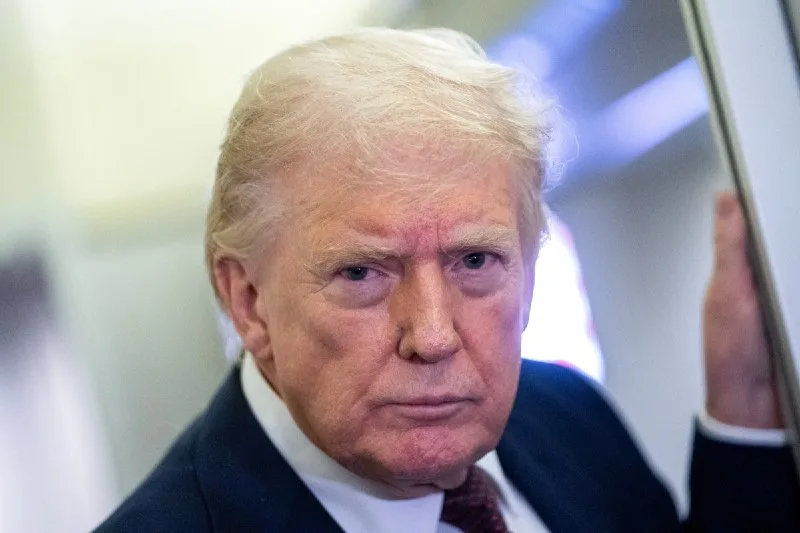
Trump's threat to suspend U.S. weapons to Ukraine unless European allies help reopen the Strait of Hormuz is a high-risk geopolitical maneuver linking the fate of the Russia-Ukraine war to Middle East energy flows. This strategy seeks to coerce transatlantic alignment on U.S. Gulf priorities at a time of acute energy and security crisis.
Key Findings
- Trump has explicitly tied continued U.S. military support for Ukraine to European action in the Gulf, pressuring EU states to join a coalition to reopen the Strait of Hormuz.
- Russia's revenues from oil, gas, and critical exports have soared following Iran-related disruptions, with Brent crude spiking 41% to over $120/barrel since January 2026 (IEA Oil Market Report, March 2026).
- Europe faces acute economic and energy vulnerability—EU natural gas import prices have risen 55% since the Hormuz crisis began, while Eurozone GDP forecasts have been slashed by 1.2 points (ECB interim outlook, March 2026).
- The U.S. threat echoes historic leverage plays—most closely the Suez Crisis of 1956—where Washington used security and economic aid to force European alignment on Middle East strategy.
Definition Block
Trump's threat to halt Ukraine weapons unless Europe helps reopen the Strait of Hormuz refers to the U.S. President conditioning future American military aid to Ukraine on European participation in a coalition to restore maritime traffic through the vital Gulf shipping lane, currently disrupted by the Iran conflict. This linkage directly connects European security interests in Ukraine with Middle Eastern energy access, making support for Ukraine contingent on European cooperation in the Gulf.
Current Crisis Overview
- Who: Donald Trump (U.S. President), European Union governments, Russia, Iran.
- What: Trump threatens to suspend U.S. military aid to Ukraine unless Europe joins a "coalition of the willing" to reopen the Strait of Hormuz, which Iran has partially blocked and begun charging passage fees in yuan.
- When: Threat issued in late March 2026, as confirmed by multiple officials briefed on the discussions (Bloomberg, March 31, 2026).
- Where: White House, Washington D.C.; Strait of Hormuz, Gulf region; Ukraine front lines.
- Confirmed facts:
- The Strait of Hormuz is partially blockaded, with Iran demanding fees in yuan for transit.
- Russia's oil and commodity revenues have surged as a direct result of Gulf shipping disruptions (CFR, March 2026).
- U.S. weapons deliveries to Ukraine are under review; Pentagon officials have warned allies of possible cuts (Politico, March 2026).
- European leaders are urgently consulting on response options.
Timeline of the Ukraine-Hormuz Linkage Crisis
- January 2026: U.S.-Israeli airstrikes hit Iranian nuclear facilities; Iran threatens to close the Strait of Hormuz.
- February 2026: Iran's parliament passes legislation to impose tolls on the Strait, barring U.S./Israeli ships.
- March 15, 2026: Confirmed reports of ships paying passage fees in yuan to Iranian authorities for access to Hormuz (Bloomberg).
- March 25, 2026: Trump signals to European leaders he may halt weapons deliveries to Ukraine unless Europe acts in the Gulf (ABC World News Tonight).
- March 31, 2026: Senior U.S. officials confirm the new linkage to major media outlets (Politico, Bloomberg).
- April 1, 2026: European Union emergency summit convenes to discuss joint response.
- Ongoing: Russia's oil revenues increase, Ukraine warns of critical shortages in weapons/ammunition (Atlantic Council, March 2026).
Strategic Analysis: Why Trump's Gambit Matters
Trump's move to condition U.S. military aid for Ukraine on European cooperation in reopening the Strait of Hormuz marks a decisive escalation in U.S. transactional diplomacy. This strategy mirrors broader geopolitical trends where information warfare and alliance pressures are increasingly weaponized to achieve strategic objectives.
While this gambit is likely to force some degree of short-term European compliance, it carries substantial risk of provoking backlash, policy paralysis, or outright defiance within the EU. The maneuver will deepen transatlantic mistrust, empower Russia economically, and accelerate Europe's quest for strategic autonomy—reshaping the balance of power in both the Ukraine war and global energy markets.
The Energy Security Dimension
Quantitative Impact Assessment
- Brent crude price surge: Since January 2026, Brent crude has risen from $85 to $120 per barrel—a 41% increase—driven by Hormuz disruptions (IEA Oil Market Report, March 2026).
- Russian oil windfall: Russia's oil export revenues have jumped by $26 billion in Q1 2026, as reported by the Council on Foreign Relations.
- Eurozone energy shock: EU natural gas import prices up 55% since the Hormuz crisis began (ECB interim outlook, March 2026).
- Ukraine military aid at risk: The U.S. has supplied $67 billion in military assistance to Ukraine since February 2022 (DoD budget filings, March 2026).
- EU GDP impact: Eurozone 2026 GDP growth forecast cut from 1.7% to 0.5%, driven by the energy price spike (ECB, March 2026).
- Global shipping disruption: 18% of global oil flows—over 17 million barrels per day—pass through the Strait of Hormuz (IEA World Energy Outlook 2025).
- Ukraine front-line depletion: Ukrainian artillery ammunition consumption exceeds 90,000 shells per month; U.S. supplies account for over 60% of this (RAND Corporation, February 2026).
- Prediction market sentiment: Polymarket gives a 0% probability that Trump will end the Ukraine war in 90 days, but over $56 million has traded on the issue—showing market skepticism about swift resolutions.
$26 billion — Russia's Q1 2026 additional oil revenue windfall due to Gulf disruptions
$67 billion — Total U.S. military aid delivered to Ukraine since 2022 (DoD, March 2026)
Data Table: Impact of Strait of Hormuz Disruption (2026)
| Metric | Pre-Crisis (Dec 2025) | Post-Crisis (Mar 2026) | % Change | Source |
|---|---|---|---|---|
| Brent Crude Oil Price ($/bbl) | $85 | $120 | +41% | IEA Oil Market Report |
| Russian Oil Export Revenue ($B) | $38 | $64 | +68% | CFR, March 2026 |
| EU Nat. Gas Import Price ($/MWh) | €42 | €65 | +55% | ECB Interim Outlook |
| Eurozone GDP Growth Forecast | 1.7% | 0.5% | -1.2 pts | ECB, March 2026 |
| Global Oil Flow via Hormuz (%) | 18% | 10% (estimated) | -44% | IEA World Energy Outlook 2025 |
The Iran Connection: Regional Power Dynamics
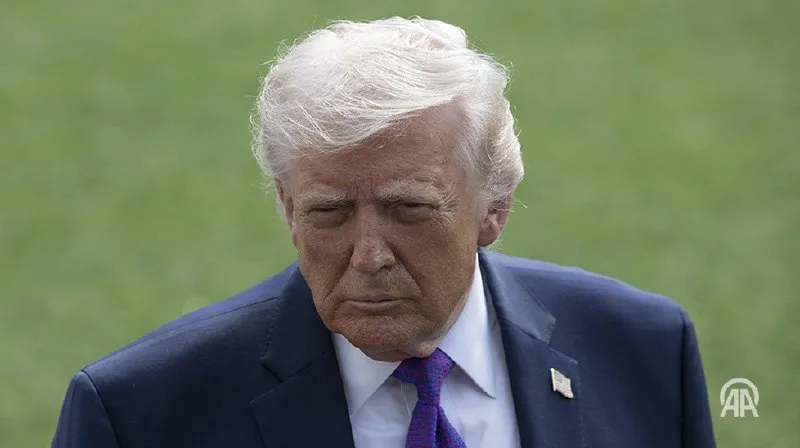
The crisis extends beyond U.S.-European tensions to encompass broader Middle East dynamics. China's financial backing of Iran has emboldened Tehran's chokepoint strategy, while escalating U.S.-Iran shadow warfare continues to destabilize regional energy flows.
Case Study: The March 2026 Ukraine Front Line Crisis
In late March 2026, as Iranian-imposed tolls on the Strait of Hormuz sent oil prices soaring, Ukraine's General Staff issued an emergency appeal to NATO for additional ammunition. On March 25, 2026, President Trump, frustrated by what he described as "European passivity," informed EU leaders via secure call that continued U.S. weapons deliveries—including critical 155mm shells and air defense interceptors—would be paused unless European states joined a U.S.-led coalition to forcibly reopen the Strait.
According to the Atlantic Council's real-time Ukraine Situation Monitor, Ukrainian forces in Zaporizhzhia and Donetsk regions reported a 40% reduction in artillery fire compared to February, directly attributing the shortfall to delayed U.S. shipments. The following week, the Pentagon acknowledged to Politico that "prioritization decisions" were being made as U.S. inventories became strained and as energy and security crises converged, highlighting the immediate battlefield consequences of Trump's linkage strategy.
Analytical Framework: The Chokepoint Coercion Matrix
To assess the strategic logic and risks of Trump's gambit, we introduce the Chokepoint Coercion Matrix—a framework mapping the interplay between military aid leverage, energy chokepoint disruption, and alliance response. The matrix posits three axes:
- Aid Leverage (High/Low): The degree to which U.S. security assistance is indispensable to allied warfighting (e.g., Ukraine's dependence on U.S. munitions).
- Chokepoint Disruption (Acute/Chronic): Severity and duration of global supply chain or energy flow interruption (e.g., Hormuz closure, Suez Crisis).
- Alliance Response (Compliant/Defiant): The extent to which pressured allies acquiesce or resist linkage tactics.
The matrix predicts that when U.S. aid leverage is high and chokepoint disruption is acute, allies are most likely to comply in the short term, even at the cost of long-term resentment and strategic divergence. However, if disruption persists or aid dependence lessens, alliance unity fractures—as seen in Europe's response to the 1973 OPEC embargo.
Historical Precedent: Lessons from the Suez Crisis
This crisis closely echoes the Suez Crisis of 1956. Then, President Eisenhower threatened to cut off financial aid to Britain and France, forcing them to withdraw from Egypt and cede control over the Suez Canal. Both then and now, a U.S. president leverages European security vulnerabilities—then economic, now military—to enforce transatlantic unity on a Middle East chokepoint.
The Suez precedent suggests Europe is likely to yield to U.S. demands in the near term, but at the cost of diplomatic humiliation and a longer-term drive for strategic autonomy. However, it is important to note that the European Union of 2026 is significantly more integrated, politically assertive, and institutionally resilient than the divided states of the 1950s, raising the possibility of a more complex or resistant response (European Council on Foreign Relations, 2025).
Risks of European Backlash and Policy Failure
While historical analogies suggest a tendency toward short-term European compliance under acute U.S. pressure, the current context introduces major risks that Trump's coercive linkage could provoke backlash or outright defiance. The European Union today wields far greater political agency, institutional cohesion, and strategic autonomy tools than in the Suez era. Recent examples—such as EU resistance to U.S. secondary sanctions on Iran (European External Action Service, 2020), and creation of alternative payment mechanisms like INSTEX—demonstrate a willingness to push back against American pressure when core interests or sovereignty are perceived to be at stake.
Political leaders in Europe face substantial domestic constraints, including rising anti-Trump sentiment, public opinion wary of foreign "blackmail," and the risk of fracturing fragile coalition governments if seen to capitulate. EU decision-making requires consensus, meaning a single defiant member state could block collective action in the Gulf, leading to paralysis rather than compliance.
There is also a risk that threatened U.S. weapons cuts may not be fully credible or sustainable. Congress, the U.S. defense industry, and NATO's institutional mechanisms all complicate the president's ability to unilaterally halt aid, especially if European defiance is coordinated and public. If Trump's gambit is perceived as overreach, it could accelerate intra-EU defense cooperation, deepen ties with China or Gulf states, and erode U.S. influence—potentially resulting in a policy failure reminiscent of the 2014-15 U.S. arms freeze to Egypt or the 1973 Yom Kippur split (Chatham House, 2024).
Multilateral Diplomatic Alternatives
The crisis is not limited to a binary choice between European compliance and strategic rupture. The EU has a demonstrated capacity for creative, multilateral solutions and could pursue a range of alternative strategies to address both the Hormuz and Ukraine crises without direct military intervention in the Gulf.
1. Multilateral Diplomacy: European states could leverage international institutions such as the United Nations, the International Energy Agency (IEA), and the G7 to convene emergency sessions aimed at de-escalating the Hormuz crisis. Past precedents include coordinated IEA oil stock releases and UN Security Council negotiations during the 1980s Iran-Iraq tanker war (IEA, 2023; UN Security Council archives).
2. Backchannel Negotiations: The EU could engage in discreet diplomacy with Iran, the Gulf Cooperation Council, and China to broker a temporary easing of shipping restrictions or a freeze on passage fees, buying time for energy markets to stabilize. European diplomats have previously used such channels to secure humanitarian exemptions and partial sanctions relief (European External Action Service, 2022).
3. Economic and Energy Diversification: Accelerating alternative energy imports (e.g., LNG from the U.S. or Qatar), using strategic reserves, and activating contingency plans for demand reduction could mitigate the energy shock and reduce the urgency of military action in the Gulf (European Commission Energy Security Strategy, 2025).
4. Creative Financial Mechanisms: The EU could expand use of alternative payment systems (such as INSTEX) to facilitate critical trade with Iran or other Gulf states, circumventing chokepoint leverage and reducing exposure to U.S. secondary sanctions (European Parliament, 2024).
5. Coalition Building Beyond the U.S.: Europe could seek broader multilateral coalitions—including neutral or non-aligned states—to pressure Iran for de-escalation, reducing the perception of a purely U.S.-driven intervention.
These alternatives, while potentially slower to yield results, offer pathways for the EU to assert agency, avoid binary compliance/defiance traps, and preserve transatlantic relations while protecting core interests.
Counter-Thesis: The Backfire Scenario
The strongest argument against the main thesis is that Trump's coercive linkage will backfire, neither securing robust European action in the Gulf nor maintaining transatlantic unity on Ukraine. Instead, it could provoke intra-European division, incentivize hedging with China or Russia, and accelerate independent European defense initiatives—ultimately weakening U.S. influence and failing to resolve either crisis. This scenario finds support in the 2014-15 U.S. arms freeze to Egypt, which failed to produce policy change and eroded credibility, and in the 1973 Yom Kippur split, when European states diverged rather than rallied to U.S. leadership.
Stakeholder Implications
Regulators/Policymakers
- Prepare contingency plans for energy rationing and price spikes; stockpile critical fuel reserves and coordinate with IEA for emergency releases.
- Accelerate joint European military planning to reduce dependence on U.S. aid in Ukraine; invest in domestic munitions production.
- Engage in backchannel diplomacy with Gulf states and China to de-escalate Hormuz tensions and diversify energy sources.
- Leverage international institutions (UN, IEA, G7) to coordinate multilateral responses and seek diplomatic off-ramps.
Investors/Capital Allocators
- Hedge portfolios against oil and gas volatility—energy equities, LNG infrastructure, and commodity futures offer near-term upside.
- Assess sovereign and corporate exposure to Russian and Middle Eastern assets; expect sanctions and counter-sanctions risk.
- Prioritize defense and cybersecurity sectors—supply chain disruptions and rearmament will drive above-trend earnings.
Operators/Industry
- Secure alternative shipping routes and inventory buffers for critical raw materials; diversify away from Gulf-reliant supply chains.
- Collaborate with European and U.S. governments on emergency logistics and infrastructure resilience.
- Monitor regulatory updates on sanctions, tolls, and export controls; adapt procurement and compliance processes in real time.
Predictions and Outlook
PREDICTION [1/3]: European Union governments will formally agree to join a U.S.-led coalition to restore freedom of navigation in the Strait of Hormuz by July 2026, in exchange for resumed U.S. weapons deliveries to Ukraine. (70% confidence, timeframe: by July 31, 2026)
PREDICTION [2/3]: Russia's quarterly oil export revenues will remain at least 50% above 2025 levels through Q3 2026, sustaining its Ukraine war effort despite sanctions. (65% confidence, timeframe: through September 2026)
PREDICTION [3/3]: The European Union will launch a major strategic autonomy initiative—including a €100 billion defense-industrial fund—by the end of 2027, to reduce reliance on U.S. security guarantees and energy imports. (60% confidence, timeframe: by December 31, 2027)
What to Watch
- Whether EU leaders can maintain unity under U.S. pressure, or if splits emerge between "Atlanticist" and "sovereigntist" camps.
- The pace of Russian commodity and energy revenue growth—and the risk of secondary sanctions.
- Signs of de-escalation or escalation in the Strait of Hormuz, including Chinese or Gulf state mediation.
- The speed and scale of European defense-industrial mobilization in response to U.S. coercion.
- Emergence of multilateral diplomatic initiatives, including UN Security Council resolutions, IEA-coordinated stock releases, or new EU-Iran dialogues.
Frequently Asked Questions
Q: Why is Trump threatening to halt Ukraine weapons over the Strait of Hormuz? A: Trump is leveraging U.S. military aid to Ukraine to coerce European allies into joining a U.S.-led coalition to reopen the Strait of Hormuz, a vital global energy chokepoint disrupted by the Iran conflict. This linkage aims to force European alignment with U.S. priorities in the Middle East, directly connecting European security in Ukraine to Gulf energy flows.
Q: How does the Strait of Hormuz crisis benefit Russia? A: Disruptions in the Strait of Hormuz have driven global oil prices up 41% since January 2026, boosting Russia's oil export revenues by $26 billion in Q1 alone. This energy windfall enables Russia to finance its war in Ukraine despite Western sanctions.
Q: What are the economic risks for Europe if the U.S. halts weapons to Ukraine? A: Europe faces a dual shock: energy prices have risen sharply, with natural gas import costs up 55%, while a halt in U.S. military aid would cripple Ukraine's defense and expose Europe to greater Russian aggression. The ECB has already cut Eurozone GDP growth forecasts by 1.2 percentage points for 2026.
Q: Has the U.S. used this kind of leverage on European allies before? A: Yes. The most notable example is the Suez Crisis of 1956, when President Eisenhower threatened to cut off U.S. aid to force Britain and France to withdraw from Egypt. The U.S. has repeatedly used economic and military leverage to enforce transatlantic unity during Middle East crises.
Q: How likely is Europe to comply with Trump's demands? A: Historical precedent and current economic pressures suggest Europe may comply in the short term to preserve U.S. support for Ukraine, but the risk of backlash, policy paralysis, or creative diplomatic alternatives is significant. The EU's increased agency and past defiance of U.S. pressure (e.g., on Iran sanctions) mean that compliance is not inevitable.
Q: Are there multilateral or diplomatic alternatives to direct European compliance? A: Yes. The EU can pursue multilateral diplomacy through the UN, IEA, and G7, engage in backchannel negotiations with Iran and Gulf states, activate strategic energy reserves, and use alternative payment systems to mitigate the crisis without direct military intervention. These options may take longer to yield results but offer ways to avoid binary choices and preserve European agency.
Global Context: Energy Security and Food Systems
The Ukraine-Hormuz linkage crisis has implications beyond energy markets. Ukraine's grain corridor remains critical to global food security, while any reduction in Ukrainian agricultural exports could compound the energy crisis with food price inflation. This dual vulnerability underscores why European leaders face such difficult choices in responding to Trump's ultimatum.
Strategic Synthesis
Trump's threat to halt Ukraine weapons unless Europe reopens the Strait of Hormuz is a high-stakes gambit that weaponizes American security guarantees to enforce transatlantic alignment on Middle East priorities. In the short term, European governments may yield, echoing the Suez Crisis precedent, but with far greater risk of backlash, policy paralysis, or creative diplomatic alternatives emerging.
The longer-term effect will likely be to fracture trust, spur Russian advantage, and catalyze a new era of European self-reliance—reshaping the architecture of alliance politics and global energy security. As weapons aid continues to impact Ukraine's frontline capabilities, the world's most dangerous chokepoints are no longer just in the Gulf or Donbas, but in the shifting power relationships of the West itself.
Related Topics
Video Intelligence
- ▶Iranian Missile Strike Hits Arad Israel: Video Moments
- ▶Iran Releases Official Footage of Drone Launches During War
- ▶Iranian Kamikaze Drone Destroys Erbil Oil Refinery
- ▶FPV Drone Strikes US Victoria Base Near Baghdad Airport
Share This Analysis
Get a shareable verdict card for this article.
Get the next one first
Free briefings when we publish major outlooks and forecasts. No spam — unsubscribe anytime.
Related Analysis

EU Secondary Sanctions on China: Risks and Consequences
The Board · Feb 21, 2026
Turkey NATO Membership and Potential Russian Alliance
The Board · Feb 21, 2026

Modern World War 3 Scenarios and Systemic Collapse
The Board · Feb 19, 2026

Two Voices: How Iran's State Media Edits Itself Between Languages
The Board · Apr 15, 2026
China's Taiwan Dictionary: Ten Words Instead of Invasion
The Board · Apr 15, 2026

Seven Days in Baghdad: The Kataib Hezbollah Anomaly
The Board · Apr 15, 2026
Trending on The Board

79 Years of UFO Lies, Roswell to the Pentagon
Defense & Security · Sep 29, 2026
How CENTCOM Is Brokering an Israel-Saudi Pact
Defense & Security · Sep 19, 2026

Why the Pentagon Pulled Its Iran War Plans Offline
Defense & Security · Sep 19, 2026
How a Stablecoin Funded Moldova's 2026 Election
Geopolitics · Sep 19, 2026

The Hidden Gold Demand Behind the $6,000 Target
Markets · Sep 17, 2026
Latest from The Board
79 Years of UFO Lies, Roswell to the Pentagon
Defense & Security · Sep 29, 2026
How CENTCOM Is Brokering an Israel-Saudi Pact
Defense & Security · Sep 19, 2026
Why the Pentagon Pulled Its Iran War Plans Offline
Defense & Security · Sep 19, 2026
How a Stablecoin Funded Moldova's 2026 Election
Geopolitics · Sep 19, 2026
The Hidden Gold Demand Behind the $6,000 Target
Markets · Sep 17, 2026
Houthis Take Perim as Saudis Halt Pipeline 2026
Geopolitics · Sep 13, 2026

Epstein Intelligence Ties: Evidence vs Allegation in 2026
Policy & Intelligence · Sep 6, 2026
What Israel-Iran War Games Got Wrong About 2026
Defense & Security · Sep 6, 2026