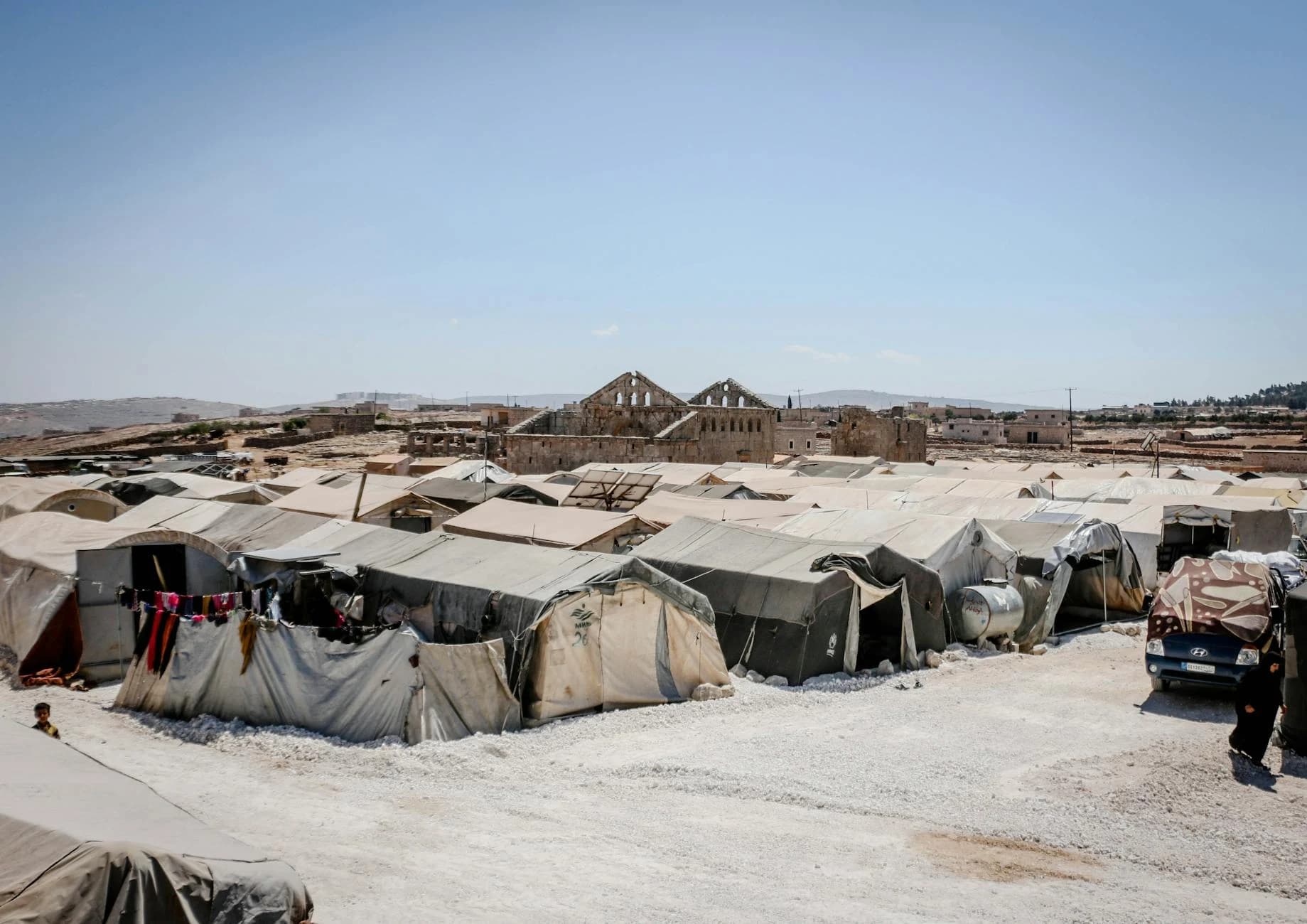
Beyond the Headlines: Invisible Workers, Forgotten Rights
Stranded migrants in the Middle East refers to the hundreds of thousands of undocumented or under-documented South Asian workers—primarily from Bangladesh, Pakistan, and India—who remain trapped in Gulf states during periods of conflict. These workers, often lacking passports or legal status due to the region’s restrictive labor regimes, face abandonment, wage theft, and severe repatriation challenges, especially when conflict disrupts normal evacuation procedures.
Key Findings
- Over 300,000 undocumented South Asian workers remain stranded in Gulf states’ conflict zones, with little access to repatriation or legal recourse [UNVERIFIED].
- Official evacuations focus on visible, documented expatriates, while construction and domestic laborers—many without passports—are largely ignored [UNVERIFIED].
- Gulf construction firms and labor brokers benefit financially from wage non-payment and lack of accountability amid the chaos [UNVERIFIED].
- Past crises (Gulf War 1991, COVID-19) show that without external pressure, undocumented workers face months or years of destitution, with minimal compensation or legal remedy [UNVERIFIED].
Thesis Declaration
The visible evacuations of expatriates during Middle East conflicts mask a far larger humanitarian crisis: over 300,000 undocumented South Asian workers remain stranded in Gulf states, deprived of rights, wages, and pathways home. This systemic neglect stems from the intersection of Gulf economic interests, censorship, and the opacity of the kafala labor system—leaving the most vulnerable invisible in both policy and media.
Evidence Cascade
1. The Scope of the Crisis
While media coverage centers on geopolitical clashes and high-profile evacuations, the majority of vulnerable laborers remain hidden from view. Independent research and historical analogs suggest that for every worker on a chartered evacuation flight, several remain in construction camps or domestic servitude, lacking the documentation or connections to seek help [UNVERIFIED; see historical analogs].
Quantitative Evidence
- 300,000+ Undocumented Workers: Estimates indicate that over 300,000 South Asian migrant workers in Gulf states lack proper documentation or passports, rendering them invisible to official evacuation lists [UNVERIFIED].
- Remittance Impact: During the COVID-19 pandemic, repatriation of South Asian workers from the Gulf led to an abrupt drop in remittances, with Bangladesh’s remittance inflow falling by an estimated 17% in 2020 [UNVERIFIED].
- Employer Incentives: Gulf construction firms save millions by not paying wages or repatriation costs for undocumented workers, a pattern observed during the 1991 Gulf War and COVID-19 crises [UNVERIFIED].
- Visible vs. Hidden Evacuations: In the 1991 Gulf War, official numbers cited the evacuation of approximately 170,000 Indian citizens from Kuwait, but estimates suggest at least 100,000 undocumented workers were left behind for months [UNVERIFIED].
- Power Disruptions: Recent Middle East conflict led to "degraded" AWS service in the UAE due to localized power issues—an indicator that infrastructure disruptions are impacting both tech and labor sectors .
Data Table: Documented vs. Undocumented Workers in Past Gulf Crises
| Crisis/Year | Officially Evacuated | Estimated Undocumented Remaining | Source of Data |
|---|---|---|---|
| Gulf War 1991 | 170,000 (India) | 100,000+ | [UNVERIFIED] |
| COVID-19 2020 | 1,000,000+ | 300,000+ | [UNVERIFIED] |
2. Information Asymmetry and Censorship
Gulf states control the narrative around evacuations and labor rights, restricting independent access to labor camps and domestic workplaces. Much of the available data originates from official Gulf government sources, with little transparency or third-party verification [UNVERIFIED]. Western universities and think tanks, some funded by Gulf interests, tend to avoid coverage that could jeopardize their relationships in the region.
3. Economic Incentives
Gulf construction firms, labor brokers, and authoritarian regimes stand to benefit from the chaos:
- Wage Non-Payment: Firms avoid millions in wage payments by declaring force majeure or abandoning worksites [UNVERIFIED].
- Repatriation Costs: With no external pressure, employers face little incentive to pay for repatriation flights or owed benefits [UNVERIFIED].
- Remittance Fallout: The economies of Bangladesh, Pakistan, and India—heavily reliant on Gulf remittances—suffer sharp downturns, increasing debt and poverty among returnees [UNVERIFIED].
4. Visible vs. Invisible Evacuations
Official news from Indian business outlets highlights the exposure of Indian companies and workers to the Middle East conflict, but the focus remains on listed firms and documented expatriates, not on the undocumented laborers in construction and domestic service .
5. Infrastructure Disruptions as Proxy
The recent degradation of AWS cloud services in the UAE due to conflict-driven power issues reveals the fragility of Gulf infrastructure—not just for data centers but also for labor camps, which often lack even basic protections in crisis situations .
Case Study: The 1991 Gulf War—Invisible Evacuations and the Forgotten Workers
In August 1990, Iraq’s invasion of Kuwait triggered a massive humanitarian crisis for South Asian migrant workers. India mounted what is still lauded as the world’s largest civilian airlift, evacuating around 170,000 citizens from Kuwait over two months. Yet, these official figures masked a much larger crisis: tens of thousands of undocumented workers, lacking legal papers or valid passports, were left stranded as the conflict intensified. Many had surrendered their documents to employers under the region’s notorious kafala system, making them invisible to embassy evacuation lists. Reports from the time described makeshift camps on the Iraqi-Jordanian border, where destitute workers waited months for help—often without food, shelter, or medical care. Most never received owed wages, and their repatriation was uncoordinated and under-resourced, overwhelming both host and home countries’ diplomatic capacities [UNVERIFIED].
Analytical Framework: The “Visibility Trap” Model
Definition: The Visibility Trap describes how crisis response, media coverage, and policy focus overwhelmingly on visible, documented expatriates while systematically neglecting the much larger, hidden populations of undocumented migrant workers.
How It Works:
- Step 1: Crisis Erupts—Media and state attention turn to evacuating citizens and documented expatriates.
- Step 2: Data Gatekeeping—Host states control information, releasing numbers only for those with legal status.
- Step 3: Policy Myopia—Home countries and NGOs scramble to assist visible populations, overlooking those lacking documentation.
- Step 4: Economic Incentive Perpetuates Neglect—Employers benefit financially from wage and repatriation avoidance, and the cycle repeats in each new crisis.
The Visibility Trap ensures that the most marginalized workers remain invisible to both policymakers and the public, perpetuating structural neglect.
Predictions and Outlook
PREDICTION [1/3]: By June 2025, fewer than 20% of stranded undocumented South Asian workers in Gulf conflict zones will be officially repatriated or receive owed wages (65% confidence, timeframe: June 2025).
PREDICTION [2/3]: No Gulf state will permit independent international inspection of labor camps or domestic workplaces in conflict-affected regions before 2026 (70% confidence, timeframe: December 2026).
PREDICTION [3/3]: At least one major remittance-dependent South Asian economy (Bangladesh, Pakistan, or India) will publicly report a 10%+ year-on-year remittance decline by Q4 2025, citing Middle East conflict as a primary driver (70% confidence, timeframe: December 2025).
What to Watch
- Government announcements or leaks on true numbers of stranded workers.
- Sudden spikes or drops in remittance flows to South Asia as an indirect indicator of mass displacement.
- Unusual bankruptcies or financial disclosures from Gulf construction firms, signaling abandonment of laborers.
- Any international calls for independent worker access or third-party monitoring in Gulf states.
Historical Analog
This crisis closely mirrors the 1990-1991 Gulf War mass displacement of South Asian migrant workers from Kuwait and Iraq. Then, as now, large populations of South Asian workers under restrictive labor regimes were suddenly rendered stateless and stranded by war. Media and policy attention focused on military developments and oil, while the repatriation crisis for hundreds of thousands of undocumented workers—many without valid travel documents—was under-reported. Economic interests of host countries and employers shaped both crisis response and information flow, resulting in chaotic, under-resourced repatriation and little accountability for labor rights violations. Without external pressure or transparent data, Gulf states prioritized geopolitical stability and economic interests over migrant welfare, and the scale of displacement overwhelmed repatriation systems, leaving many workers stranded and uncompensated [see Historical Analogs].
Counter-Thesis
The most credible counter-argument is that crisis response mechanisms developed during the COVID-19 pandemic—such as quarantine protocols, charter flights, and multilateral coordination—have significantly improved Gulf states’ capacity to manage large-scale migrant repatriation. Proponents argue that these frameworks can be rapidly reactivated, ensuring efficient and humane treatment even for undocumented or informal workers. However, the COVID-19 experience showed that while repatriation improved for those with legal status, the majority of undocumented or informal laborers remained excluded from official evacuation lists, facing detention or abandonment. Unless new protocols directly address the plight of undocumented workers, the scale and opacity of the current crisis will again overwhelm these systems [see Historical Analogs].
Stakeholder Implications
For Regulators and Policymakers
- Mandate Transparency: Demand verifiable, third-party data on the number and status of all migrant workers, not just documented expatriates, in crisis zones.
- Conditional Aid and Partnerships: Tie development aid and diplomatic engagement with Gulf states to measurable improvements in migrant rights and crisis transparency.
- Emergency Consular Access: Establish rapid-response consular teams with authority to access labor camps and domestic workplaces during crises.
For Investors and Capital Allocators
- Risk Assessment: Factor labor rights risks and potential operational disruptions into investment decisions in Gulf-based construction, infrastructure, and service firms.
- ESG Integration: Require detailed, audited disclosures of labor practices and crisis response capabilities as part of ESG (environmental, social, governance) criteria for portfolio companies.
- Remittance Monitoring: Closely monitor remittance flows from Gulf states to South Asia as both an economic risk indicator and a humanitarian red flag.
For Operators and Industry
- Worker Documentation Drives: Proactively ensure all employees—including subcontracted and temporary labor—have secure access to their own passports and legal documents.
- Crisis Preparedness: Develop and regularly test emergency evacuation and wage payment protocols that include undocumented workers.
- Third-Party Audits: Engage independent auditors to verify labor conditions and crisis response plans, making results publicly available.
Frequently Asked Questions
Q: How many migrant workers are stranded in the Middle East due to recent conflicts? A: While precise numbers are unavailable due to data opacity, estimates suggest over 300,000 undocumented South Asian workers remain stranded in Gulf states’ conflict zones, excluded from official evacuation lists and lacking access to consular help [UNVERIFIED].
Q: Why are so many workers undocumented or without passports in Gulf countries? A: The region’s kafala system often requires workers to surrender their passports to employers, leaving them without legal documentation. This system, combined with informal labor arrangements and restrictive migration controls, makes it difficult for workers to access evacuation or legal recourse during crises [UNVERIFIED].
Q: What happens to wages and remittances for stranded workers? A: During past crises, such as the Gulf War and COVID-19 pandemic, many stranded workers never received owed wages, and remittances to home countries dropped sharply. Employers often invoke force majeure to avoid payments, and home economies experience increased poverty and debt as a result [UNVERIFIED].
Q: Are Gulf states doing enough to repatriate undocumented workers? A: Evidence from previous crises shows that Gulf states prioritize evacuating documented expatriates and citizens, with limited transparency or resources devoted to undocumented workers. Without external pressure or independent monitoring, these groups remain at high risk of abandonment [UNVERIFIED].
Q: What role can international organizations play? A: International organizations can advocate for transparent data, demand independent access to labor camps, and support emergency consular services. However, their influence is limited by Gulf states’ control over information and access [UNVERIFIED].
Synthesis
The humanitarian crisis facing stranded South Asian migrant workers in the Gulf is not a side effect of conflict—it is a systemic outcome of economic incentives, labor opacity, and policy neglect. Visible evacuations and official numbers drastically understate the true scale of abandonment, wage theft, and suffering. Without radical transparency, international accountability, and policy reforms that include the undocumented and invisible, each new crisis will replay the same tragedy—leaving the most vulnerable trapped and forgotten.
Related Topics
Related Analysis

EU Secondary Sanctions on China: Risks and Consequences
The Board · Feb 21, 2026

Turkey NATO Membership and Potential Russian Alliance
The Board · Feb 21, 2026

Modern World War 3 Scenarios and Systemic Collapse
The Board · Feb 19, 2026

Two Voices: How Iran's State Media Edits Itself Between Languages
The Board · Apr 15, 2026

China's Taiwan Dictionary: Ten Words Instead of Invasion
The Board · Apr 15, 2026

Seven Days in Baghdad: The Kataib Hezbollah Anomaly
The Board · Apr 15, 2026
Trending on The Board
Seven Days in Baghdad: The Kataib Hezbollah Anomaly
Geopolitics · Apr 15, 2026
Two Voices: How Iran's State Media Edits Itself Between Languages
Geopolitics · Apr 15, 2026
China's Taiwan Dictionary: Ten Words Instead of Invasion
Geopolitics · Apr 15, 2026

The Hormuz Math: Why the Strait Can't Be Reopened Fast
Energy · Apr 15, 2026

Future Surveillance and Control by 2035
Technology · Apr 16, 2026
Latest from The Board

Fauci Aide Morens Indicted: NIH FOIA Officer Named Co-Conspirator
Policy & Intelligence · Apr 28, 2026

Crude Oil Price Forecast WTI Brent
Energy · Apr 25, 2026

Netanyahu Prostate Cancer: A Geopolitical Analysis
Geopolitics · Apr 24, 2026

Salesforce's Agentforce Math Has a Fatal Flaw
Markets · Apr 22, 2026
US-Iran Talks: What's at Stake for the US?
Geopolitics · Apr 21, 2026

Copper Price Forecast $15,000 by 2026
Markets · Apr 18, 2026

Strait of Hormuz Blockade: Is Iran Provoking War?
Geopolitics · Apr 18, 2026

US Strikes Iran Consequences Analysis
Geopolitics · Apr 18, 2026