
EXECUTIVE SUMMARY
The 2020 U.S. Presidential Election was not determined by systemic fraud, but rather validated by a highly resilient, decentralized architecture. While local procedural irregularities and "noisy" data reporting occurred, no evidence exists of a coordinated effort sufficient to alter the outcome. The result is statistically and logistically sound.
KEY INSIGHTS
- The extreme decentralization of 10,000+ jurisdictions makes a coordinated conspiracy logistically impossible.
- "Late-night jumps" were a predictable mathematical result of bi-modal data reporting (mail-in vs. in-person), not malfeasance.
- No outcome-altering fraud survived the 60+ judicial audits and hand recounts performed at the local level.
- The "Probability of Detection" for a multi-state conspiracy is 100%; the lack of a single credible whistleblower or physical discrepancy confirms no such conspiracy existed.
- Procedural changes due to COVID-19 created a "transparency friction" that damaged public trust despite the system remaining mathematically secure.
- The legal failure of fraud claims was due to a lack of evidence, not "partisan capture," as evidenced by dismissals from judges across the political spectrum.
WHAT THE PANEL AGREES ON
- Systemic Resilience: The fragmented nature of U.S. elections serves as a "security through redundancy" feature.
- Predictable Anomalies: The "anomalies" cited by critics (like the 3:00 AM vote spikes) are fully explained by non-random batch processing of mail-in ballots.
- Absence of Proof: Despite unprecedented scrutiny, no physical or digital evidence of a "stolen" outcome has been produced in any court of law.
WHERE THE PANEL DISAGREES
- The Software Vulnerability: While most agree the system held, a minority debate persists on whether "Single Points of Failure" in tabulation software could theoretically be exploited, though no evidence suggests this happened in 2020.
- The Impact of Transparency: Debate remains on whether the "messiness" of the system is a feature (security) or a bug (loss of public trust).
THE VERDICT
There was no systemic fraud in the 2020 election. The outcome was a legitimate reflection of the votes cast. To ensure future stability:
- Trust the Audits — Hand-counted paper backups are the "Lindy" gold standard and confirmed the 2020 results.
- Ignore "Data Mirages" — Do not interpret reporting delays or batch spikes as fraud; they are artifacts of data logistics.
- Prioritize Decentralization — Resist calls for a "National Election Board," as centralization creates the very single point of failure that critics currently fear.
RISK FLAGS
-
Risk: Erosion of Institutional Trust
-
Likelihood: HIGH
-
Impact: Social instability and refusal to accept future results.
-
Mitigation: Move toward standardized, bipartisan "Skin in the Game" audits at the precinct level to restore local transparency.
-
Risk: Software Supply Chain Attack
-
Likelihood: LOW
-
Impact: Potential for "invisible" manipulation that bypasses human observation.
-
Mitigation: Mandate universal paper ballots and "Human-in-the-loop" verification for all digital tabulations.
-
Risk: Hyper-Partisan Audit Capture
-
Likelihood: MEDIUM
-
Impact: Biased results that ignore actual data to suit a narrative.
-
Mitigation: Maintain strictly bipartisan or non-partisan observation teams at every step of the chain of custody.
BOTTOM LINE
The 2020 election was secure because it was too messy to be rigged.
Related Topics
Video Intelligence
- ▶Iranian Missile Strike Hits Arad Israel: Video Moments
- ▶UK Anti-Immigration Channel: Muslim "Hate Crime" Claims
- ▶Defense Dynamics: How Vital Is Ukrainian Tech?
- ▶Israel-Iran Tensions: The Role of Evangelical Outreach
Share This Analysis
Get a shareable verdict card for this article.
Related Analysis

Roman History Lessons for Ending Political Polarization
The Board · Feb 17, 2026

Epstein Files: Legal Exposure and Potential Charges
The Board · Feb 16, 2026

Teaching Children the Value of Money in Wealthy Families
The Board · Feb 16, 2026

Legal and Social Fallout of the Epstein Files Release
The Board · Feb 15, 2026

Trump Fires Attorney General: What Happens Next?
The Board · Apr 2, 2026

Great Britain 2050: Demographic Shifts and Sharia Law Debate
The Board · Feb 14, 2026
Trending on The Board
Latest from The Board
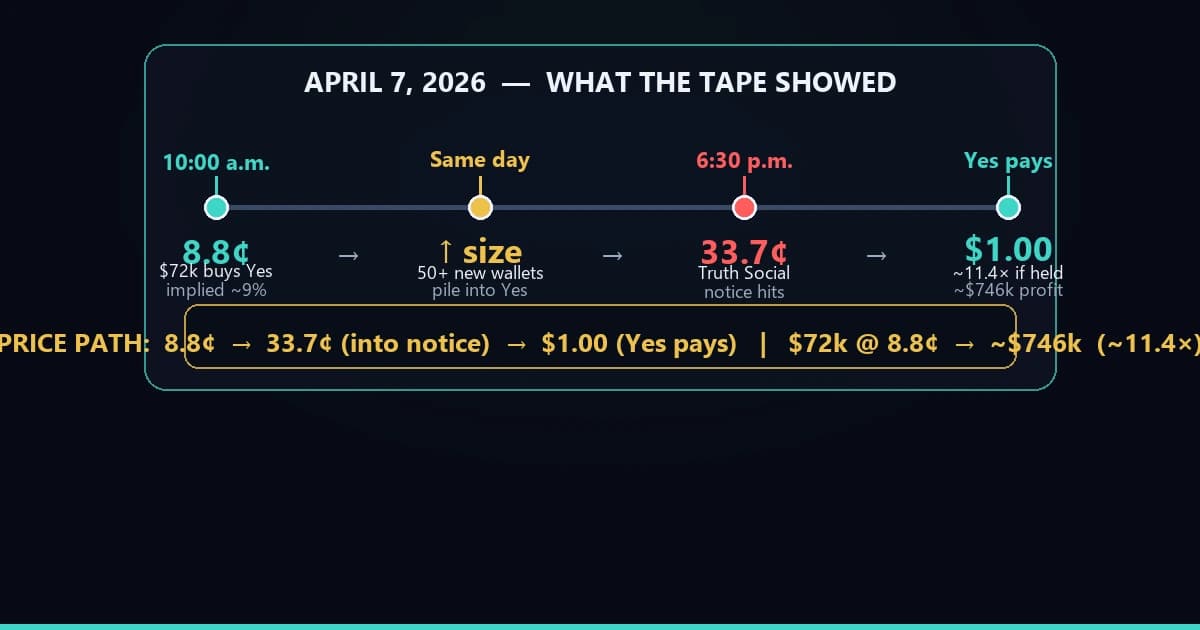
Polymarket 8.8-Cent Wallets Beat Official Notices 2026
Predictions · Aug 3, 2026

AI Prediction Accuracy Report — July 2026
Predictions · Aug 1, 2026

AI Speaks One Language—That's the Real Risk
Technology · Jul 14, 2026

Gematria Sports Dates Selection Bias Explained 2026
Policy & Intelligence · Jul 12, 2026

Gladio Stay-Behind Hybrid War 2026: What Still Applies
Defense & Security · Jul 12, 2026

Gold Price Path After the Rally: 2026 Update
Markets · Jul 12, 2026
Kelly Utilization Meaning (Definition) for Prediction Markets
Markets · Jul 11, 2026

Israel-Turkey War Game Analysis: NATO, Escalation Paths, 2026
Defense & Security · Jul 11, 2026