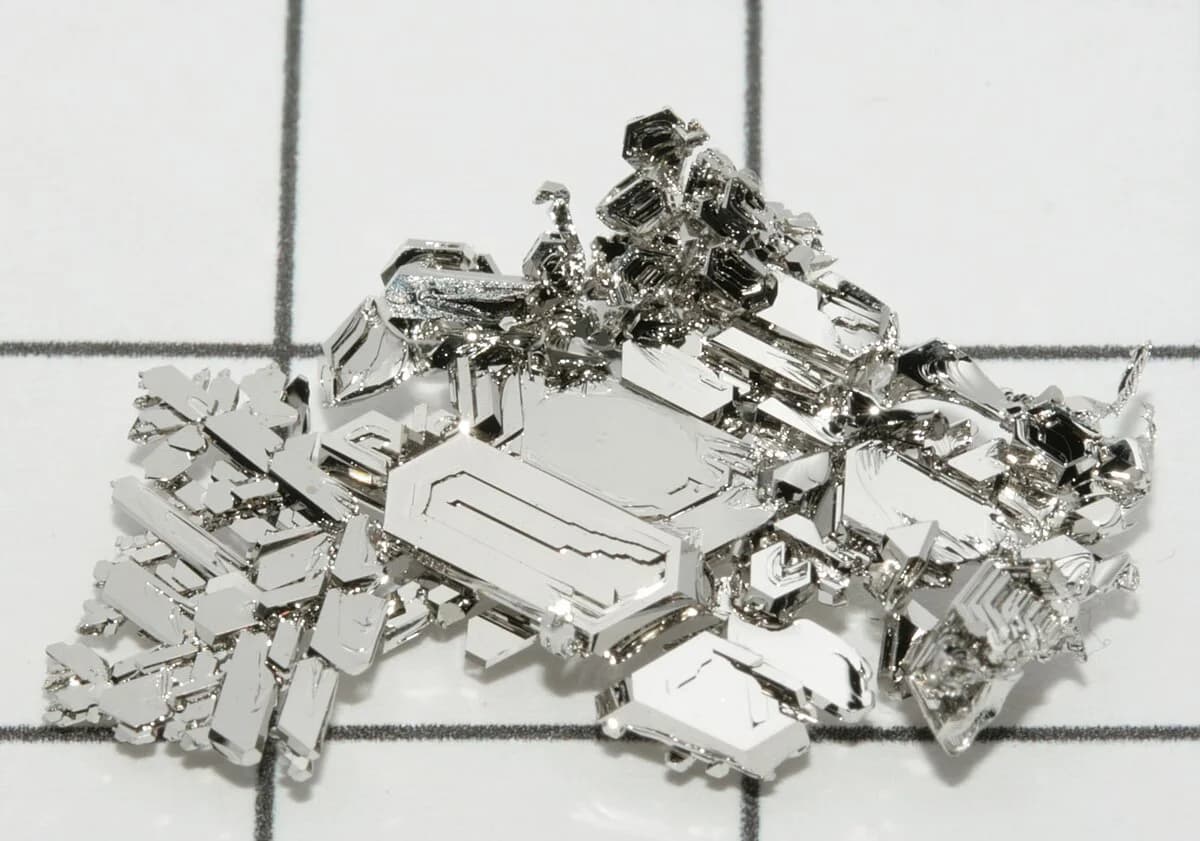
The Most Undervalued Precious Metal on Earth
Platinum is, by almost every fundamental measure, the most mispriced asset in the global commodities market. It currently trades at roughly half the price of gold — a discount that would have seemed absurd to any commodity trader from the 1970s through the 2000s. For most of modern financial history, platinum did not trade below gold. It traded above it. Sometimes far above it. The current relationship is not normal. It is an anomaly — and anomalies in commodities with hard supply constraints tend to resolve violently.
Consensus forecasts for 2026 put platinum in the $2,200-$2,300 range. FX Empire sees a breakout toward $2,300. Some bullish analysts have modeled $2,340 as a near-term ceiling if the hydrogen catalyst materializes faster than expected. These numbers matter not because they are precise predictions, but because they reflect a market that has finally begun to acknowledge what the fundamentals have been screaming for three years: platinum is dramatically undervalued.
The Supply Crisis Nobody Is Pricing In
The platinum market is running a structural deficit. Annual supply sits at approximately 7 million ounces. Demand — when you factor in automotive, industrial, jewelry, and the rapidly expanding hydrogen sector — exceeds that figure by more than 1 million ounces per year. That gap is being filled by drawing down above-ground inventories, which have fallen to levels not seen since 2015.
The World Platinum Investment Council (WPIC) projects that the supply deficit will average 620,000 ounces per year through 2029. That is not a one-year squeeze. That is a multi-year structural imbalance baked in by geology, infrastructure failure, and the slow ramp-up of recycling capacity — a pattern that mirrors the sixth consecutive supply deficit already documented in silver.
The geographic concentration of that supply is the part that should terrify anyone holding a long position in anything that depends on platinum availability. Approximately 70 percent of global platinum supply comes from South Africa. South Africa's national power utility, Eskom, has been in rolling crisis for years. Load-shedding — scheduled blackouts to prevent grid collapse — routinely cuts power to mines for hours per day. You cannot run a platinum mine without electricity. When the lights go out, production stops. When production stops for a country producing 70 percent of global supply, the world notices — eventually.
The market has not fully priced this risk. It treats South Africa's power instability as a recurring nuisance rather than a structural supply threat. That repricing, when it happens, will not be gradual.
Hydrogen: The Demand Catalyst That Changes Everything
The hydrogen economy is arriving. Not in the speculative, vaporware sense that characterized energy narratives in the early 2000s — but in the hard-capital, government-mandate, corporate-commitment sense that precedes actual industrial transformation.
Platinum is the irreplaceable catalyst in two key hydrogen technologies: proton exchange membrane (PEM) fuel cells and PEM electrolyzers. PEM fuel cells convert hydrogen into electricity. PEM electrolyzers do the reverse — use electricity to split water into hydrogen. Both require platinum. Neither works without it. No viable substitute has been commercialized at scale.
The demand numbers are extraordinary in their trajectory. In 2023, hydrogen-related platinum demand stood at roughly 40,000 ounces — a rounding error in the context of total annual demand. By 2030, forecasts project that figure reaching 900,000 ounces. That is a 22x increase in seven years, driven almost entirely by scale effects as hydrogen infrastructure moves from pilot projects to commercial deployment.
The automotive angle gets more attention, but the scale is instructive. A hydrogen fuel cell vehicle requires 30 to 60 grams of platinum for its fuel cell stack. A standard internal combustion vehicle uses 2 to 7 grams of platinum in its catalytic converter. That is a 4x to 30x increase in platinum intensity per vehicle. As hydrogen trucks, buses, and commercial vehicles scale — driven by zero-emission mandates in Europe, Japan, South Korea, and California — the platinum demand per mile of transportation rises dramatically.
The electrolyzer market tells an even more aggressive growth story. The global electrolyzer market was valued at approximately $3 billion in 2022. Projections for 2030 reach $78 billion — a compound annual growth rate of 65.9 percent. Every megawatt of PEM electrolyzer capacity requires platinum. As countries race to build green hydrogen production capacity to meet climate commitments, they are quietly building a platinum demand machine.
Perhaps the most underappreciated demand driver is data centers. Microsoft, Google, and other hyperscalers are actively investing in hydrogen fuel cells as backup power systems for their facilities. Data centers cannot tolerate power interruptions. Hydrogen fuel cells offer silent, clean, long-duration backup power that batteries cannot match at scale. Each fuel cell array powering a data center requires platinum. As AI-driven data center buildout continues at its current pace, this demand vector alone could absorb significant platinum supply growth — while geopolitical risk premiums continue to reprice physical asset availability across the board.
The EV Slowdown Is Actually Bullish for Platinum
Here is the counterintuitive argument that most platinum bears have not fully processed: slower electric vehicle adoption is bullish for platinum, not bearish.
The original bear thesis on platinum ran like this — EVs replace ICE vehicles, ICE vehicles use catalytic converters with platinum, therefore EV adoption destroys platinum demand. It was a logical thesis. It was also wrong in its timing assumptions.
EV adoption has slowed significantly from the projections made in 2021 and 2022. Charging infrastructure gaps, range anxiety, high insurance costs, and raw sticker prices have all constrained adoption rates below the optimistic scenarios that drove the original bearish platinum thesis. What this means in practice: the ICE vehicle fleet is larger and longer-lived than previously projected. Catalytic converters — which use platinum, palladium, and rhodium to reduce exhaust emissions — remain the single largest source of platinum demand.
Every year that mass EV adoption is delayed is a year where automotive platinum demand remains elevated. The bear case gets pushed out. And while it is being pushed out, the hydrogen demand curve is accelerating. The window in which platinum demand was supposed to collapse has become, instead, a window in which two demand sources — automotive catalysis and hydrogen — are running simultaneously.
The Platinum-to-Gold Ratio: A Historic Anomaly
The platinum-to-gold ratio is the cleanest signal of how mispriced platinum is relative to its own history. For decades, the ratio was above 1.0 — meaning platinum cost more than gold. In 1997 platinum traded at $500 when gold was $350. In 2008, platinum briefly exceeded $2,200 while gold was around $1,000. These are not ancient data points. They reflect a well-understood relationship: platinum, being rarer and more industrially critical, deserved a premium.
The ratio began breaking down after 2014, driven by the diesel emissions scandal in Europe (diesel engines use platinum-heavy catalysts), Chinese demand softening, and the emergence of the EV narrative. The ratio fell below 1.0 and kept falling. Today, with gold trading above $4,500, platinum at roughly $2,200 represents a ratio of approximately 0.49 — the largest discount platinum has traded at in modern history.
Mean reversion alone, without any change in fundamentals, would imply platinum trading back toward parity with gold — a doubling from current levels. The fundamentals described above suggest parity is not a ceiling but a waypoint. When the hydrogen demand surge hits inventory levels that are already depleted, and South Africa's grid continues to underperform, the ratio correction could be rapid and extreme.
What Prediction Markets and Analysts Say
The analyst community is becoming more uniformly bullish. Heraeus Precious Metals, one of the most respected voices in industrial precious metals, expects platinum prices to reset higher as hydrogen demand becomes more legible to financial markets. Their thesis centers on the idea that hydrogen-related demand is currently being discounted by markets because it is still small in absolute terms — but the second-derivative of growth is accelerating.
The WPIC's most recent annual report projects that the equivalent of 8 percent of average annual demand will be in deficit every year through 2029. That is cumulative inventory drawdown at a pace that cannot be sustained indefinitely. When above-ground stocks fall below a critical threshold, spot prices move — hard and fast.
The range of 2030 price targets is wide, which itself tells a story. Conservative scenarios — where hydrogen scales slowly and South Africa somehow fixes its grid — put platinum at $1,850 to $2,000. Base case scenarios land around $2,800 to $3,500. Bullish scenarios, in which hydrogen demand hits its stated targets and South African production disappoints, reach as high as $6,138 per ounce by 2030. The range is wide because the key variables — hydrogen policy execution and South African grid stability — are genuinely uncertain. But the distribution of outcomes is skewed to the upside.
The key variable, and the one that investors should watch most carefully, is how quickly the hydrogen economy moves from government mandate to physical infrastructure. Each gigawatt of PEM electrolyzer capacity deployed converts a policy aspiration into real platinum demand. The project pipeline is large and accelerating.
The Bottom Line
Platinum has four simultaneous tailwinds that are rare to find aligned in a single commodity at the same time.
First, a structural supply deficit that is not going away — 1 million ounces per year of excess demand over supply, with above-ground inventories already depleted to decade lows.
Second, a demand revolution with no viable substitute — the hydrogen economy cannot scale without platinum in PEM fuel cells and electrolyzers. There is no palladium swap, no rhodium alternative, no synthetic replacement on the horizon.
Third, a supply concentration risk that the market is systematically underpricing — 70 percent of global supply from a country where the national power grid is in documented, ongoing failure.
Fourth, a valuation discount to gold that is the largest in modern history and has no fundamental justification that holds up under scrutiny.
The only genuine question is timing. Markets can stay wrong longer than seems rational. The platinum-gold ratio has been suppressed for a decade. But the conditions for a violent repricing — depleting inventories, accelerating demand, supply risk — are converging in a way they have not before. For investors looking at precious metals beyond gold, platinum is not just an alternative. It may be the most asymmetric opportunity in the commodity complex.
The market is pricing platinum as if the hydrogen economy is a distant dream and South Africa's mines will always deliver. Both of those assumptions are wrong. When the market figures that out, the repricing will be fast.
For investors tracking the full precious and industrial metals complex, our copper price forecast 2029-2031 examines parallel supply constraints developing across the base metals spectrum.
Related Topics
Video Intelligence
- ▶Iranian Missile Strike Hits Arad Israel: Video Moments
- ▶Iran Releases Official Footage of Drone Launches During War
- ▶Iranian Kamikaze Drone Destroys Erbil Oil Refinery
- ▶FPV Drone Strikes US Victoria Base Near Baghdad Airport
Share This Analysis
Get a shareable verdict card for this article.
Get the next one first
Free briefings when we publish major outlooks and forecasts. No spam — unsubscribe anytime.
Related Analysis
2026 Economic Crisis: Why Central Banks May Fail
The Board · Feb 22, 2026

Copper Price Forecast 2029-2031: Supply vs Green Demand
The Board · Feb 22, 2026

US Inflation Outlook and Fed Interest Rate Strategy
The Board · Feb 20, 2026

Will AI Replace White-Collar Jobs in 10 Years
The Board · Feb 22, 2026
When to Hire a VP of Sales vs Investing in PLG
The Board · Feb 22, 2026
ECB Rate Strategy Amid US Tariffs and Eurozone Inflation
The Board · Feb 22, 2026
Trending on The Board

Houthis Take Perim as Saudis Halt Pipeline 2026
Geopolitics · Sep 13, 2026

The Hidden Gold Demand Behind the $6,000 Target
Markets · Sep 17, 2026

How a Stablecoin Funded Moldova's 2026 Election
Geopolitics · Sep 19, 2026

How CENTCOM Is Brokering an Israel-Saudi Pact
Defense & Security · Sep 19, 2026

Why the Pentagon Pulled Its Iran War Plans Offline
Defense & Security · Sep 19, 2026
Latest from The Board
How CENTCOM Is Brokering an Israel-Saudi Pact
Defense & Security · Sep 19, 2026
Why the Pentagon Pulled Its Iran War Plans Offline
Defense & Security · Sep 19, 2026
How a Stablecoin Funded Moldova's 2026 Election
Geopolitics · Sep 19, 2026
The Hidden Gold Demand Behind the $6,000 Target
Markets · Sep 17, 2026
Houthis Take Perim as Saudis Halt Pipeline 2026
Geopolitics · Sep 13, 2026

Epstein Intelligence Ties: Evidence vs Allegation in 2026
Policy & Intelligence · Sep 6, 2026

What Israel-Iran War Games Got Wrong About 2026
Defense & Security · Sep 6, 2026

Central Banks Turned Gold Sellers. One Country Did It.
Markets · Aug 30, 2026