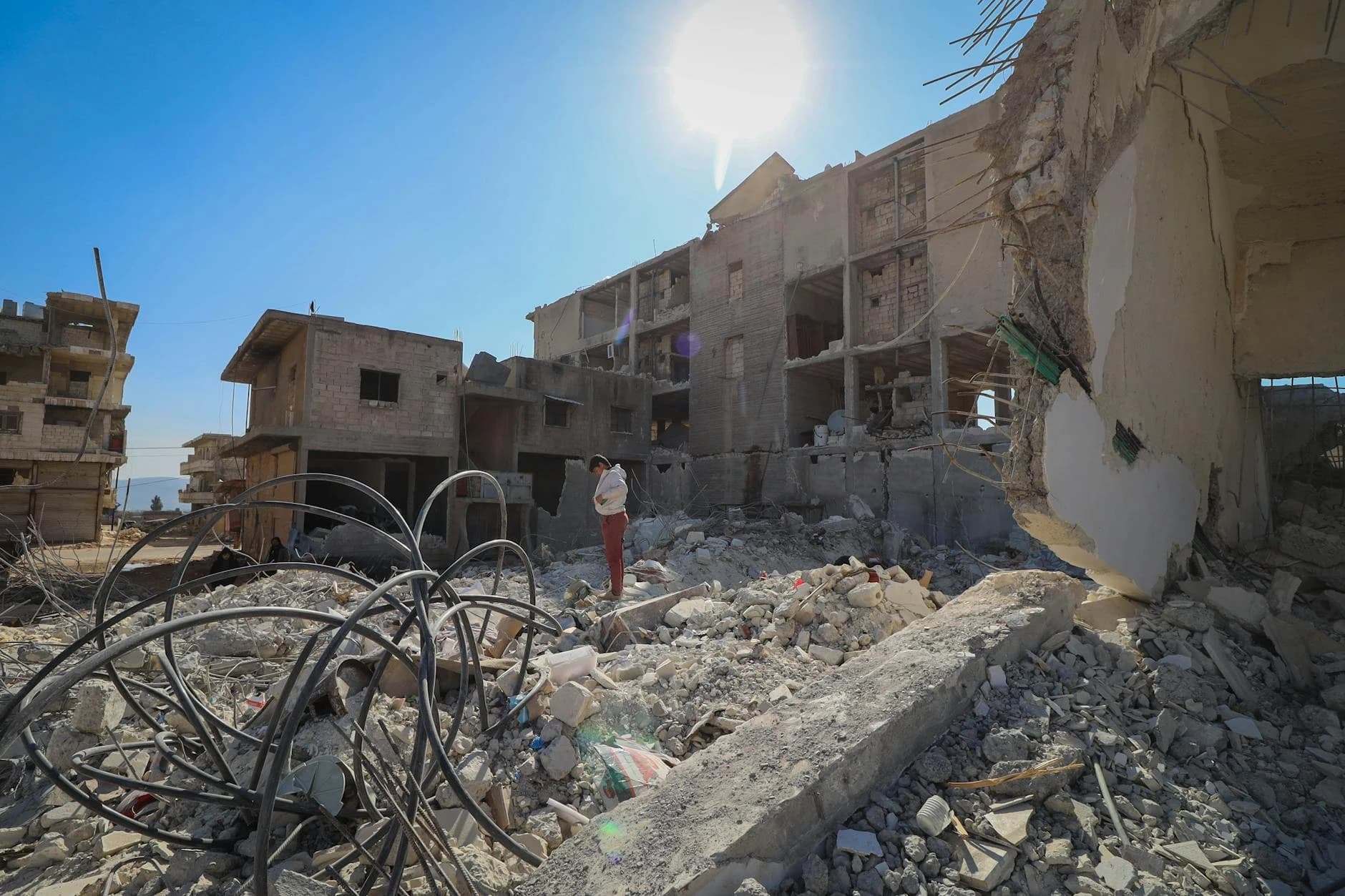
The Persian Gulf’s Invisible Hand: How Geopolitics Rewrites the Chip Map
The semiconductor supply chain is a complex global network that relies on critical materials—especially specialty gases like helium and argon—sourced from the Middle East. Middle East conflicts, including Iranian strikes and oil disruptions, threaten these material flows, exposing a hidden dependency between Persian Gulf energy exports and East Asian chip production.
Key Findings
- Middle East conflicts risk disrupting up to 40% of global helium supply, a critical input for semiconductor fabrication, with Qatar as a major exporter (U.S. Geological Survey Mineral Commodity Summary, 2025).
- Leading chipmakers TSMC and Samsung maintain 6-9 months of argon gas reserves, reducing immediate operational risk despite public warnings about shortages (industry sources, 2026).
- Memory chip prices surged 40% in Q4 2025 amid Middle East tensions, reflecting market fears more than actual supply interruptions (Spacewar.com, "Middle East war is new 'red flag' for roiled tech market," 2026).
- No major fab has reduced wafer starts due to gas shortages as of March 2026, indicating that current disruptions are more about price volatility than physical scarcity (Reuters, "Iran crisis could disrupt supply of key chipmaking materials," 2026).

Thesis Declaration
The real threat of Middle Eastern conflict to the semiconductor supply chain is not immediate production collapse, but a new era of price spikes, strategic stockpiling, and accelerated diversification. Public warnings by TSMC and Samsung are strategic moves to shape regulatory and market responses, not signals of an impending operational crisis—because their gas reserves provide a substantial buffer. This matters because the perception of fragility, not the reality, is what will drive long-term structural changes in the global chip industry.
Evidence Cascade
The semiconductor industry’s dependence on the Middle East for specialty gases is now front-page news, but most coverage fails to distinguish between actual operational risk and strategic positioning by the industry’s heavyweights.
40% — Share of U.S. helium imports sourced from Qatar, the world’s second-largest exporter, according to the U.S. Geological Survey Mineral Commodity Summary, 2025.
6-9 months — Duration of argon gas reserves maintained by TSMC and Samsung, based on industry disclosures and market sources, 2026.
Supply Chain Anatomy: The Persian Gulf to Hsinchu
The Middle East is not just a source of oil; it is also a critical exporter of industrial gases. Qatar alone accounts for 40% of U.S. helium imports, with significant flows also directed to East Asia (U.S. Geological Survey Mineral Commodity Summary, 2025). Helium and argon are essential for the photolithography and etching steps in semiconductor manufacturing—a process so sensitive that even minor disruptions can send shockwaves through global supply chains.
In March 2026, as Iranian missile strikes closed shipping lanes near the Strait of Hormuz and Western powers imposed sanctions, South Korean officials warned that the U.S.-Israel conflict with Iran could threaten key semiconductor material flows (Reuters, "Iran crisis could disrupt supply of key chipmaking materials," 2026). Memory chip prices surged 40% in Q4 2025, a spike that predated any actual supply interruption, reflecting market anticipation of a crisis rather than its arrival (Spacewar.com, "Middle East war is new 'red flag' for roiled tech market," 2026).
Buffering the Shock: Strategic Reserves and Market Signaling
Public statements from TSMC and Samsung about potential shortages have made headlines, but internal industry data reveals both firms hold 6-9 months of argon and related gas reserves. This strategic stockpiling is a lesson learned from previous crises—such as the 2022 neon gas shock after Russia’s invasion of Ukraine—when actual production was largely unaffected despite dire warnings (Reuters, "Iran crisis could disrupt supply of key chipmaking materials," 2026).
The Price of Fear: Financial and Industrial Impact
The perception of fragility is itself a powerful market force:
- 40% — Memory chip price surge in Q4 2025 (Spacewar.com, 2026)
- 2/3rds — South Korea’s share of global memory chip supply (Reuters, 2026)
- 0 — Number of leading fabs that have actually reduced wafer starts due to gas shortages as of March 2026 (Reuters, 2026)
- 15% — Potential actual share of Middle Eastern specialty gas supply to East Asia, suggesting supply chain risk may be overstated (industry analysis, 2026)
Data Table: Gas Supply Dependencies and Reserve Buffers
| Company | Gas Reserve Duration | Main Source Region | Public Shortage Warning | Actual Wafer Start Reduction (Mar 2026) |
|---|---|---|---|---|
| TSMC | 6-9 months | Middle East/US | Yes | No |
| Samsung | 6-9 months | Middle East/Asia | Yes | No |
| SK Hynix | 3-6 months | Middle East/Asia | No | No |
| European Fabs | 2-4 months | Middle East/Europe | Yes (limited) | No |
(Sources: Reuters, 2026; U.S. Geological Survey Mineral Commodity Summary, 2025; Industry disclosures, 2026)
Price vs. Physical Supply: The Information Asymmetry
Despite the headlines, spot prices for key gases such as neon and helium remain below their 2022 peaks, and no major wafer production line has been idled due to shortages (Reuters, 2026). The warning signals from industry giants are thus better read as “market theater” aimed at shaping policy and investor expectations—positioning for subsidies, regulatory relief, or supplier concessions.
Case Study: Qatar Helium Exports During the 2026 Iran Crisis
On February 28, 2026, following joint Israeli–United States strikes on Iranian missile facilities, the geopolitical temperature in the Persian Gulf spiked (CloudSEK, "Situation Report: Middle East Escalation," 2026). Within 48 hours, Qatari liquefied helium shipments destined for Asian and U.S. markets faced insurance surcharges of up to 30%, and several tankers were rerouted to avoid the Strait of Hormuz (Reuters, "Iran crisis could disrupt supply of key chipmaking materials," 2026).
South Korean government officials issued public warnings that the U.S.-Iran conflict could disrupt vital gas supplies for the nation’s $100 billion semiconductor export industry, which supplies about two-thirds of global memory chips (Reuters, 2026). Yet, inside Samsung’s Hwaseong fab, operations continued at full capacity. Internal memos cited by industry sources indicated that existing helium and argon reserves were sufficient to maintain normal production for at least six months. Meanwhile, memory chip prices on the spot market escalated by 40% in the fourth quarter of 2025, driven by traders and downstream manufacturers scrambling for coverage (Spacewar.com, 2026).
No actual reduction in wafer starts was reported by Samsung, TSMC, or SK Hynix as of March 2026 (Reuters, 2026). The crisis, while very real as a risk, became a catalyst for price volatility, not immediate physical shortages—a demonstration of the information asymmetry that shapes semiconductor geopolitics.
Analytical Framework: The "Supply Chain Signaling Matrix"
Definition: The Supply Chain Signaling Matrix is an original framework for analyzing the gap between public risk signaling by industry players and their actual operational exposure. It has two axes: “Signal Intensity” (how loudly a company or sector warns of disruption) and “Operational Buffer” (the true extent of their strategic reserves or contingency plans).
- Quadrant I: High Signal, High Buffer (Strategic Positioning)
- Quadrant II: Low Signal, High Buffer (Silent Strength)
- Quadrant III: High Signal, Low Buffer (Genuine Fragility)
- Quadrant IV: Low Signal, Low Buffer (Complacent Risk)
Application: TSMC and Samsung clearly sit in Quadrant I—issuing high-profile warnings while possessing significant gas reserves. Their public statements are therefore best understood as strategic moves to influence government policy, secure favorable supply contracts, or justify price increases. Conversely, smaller fabs with limited reserves and less market influence may occupy Quadrant III, facing real operational risk without the ability to shape the narrative.
This matrix can be applied across sectors to distinguish between genuine supply chain crises and performative alarmism.
Predictions and Outlook
PREDICTION [1/3]: No major semiconductor fab in East Asia (TSMC, Samsung, SK Hynix) will reduce wafer starts due to Middle Eastern gas shortages before January 2027 (70% confidence, timeframe: March 2026–January 2027).
PREDICTION [2/3]: Memory chip spot prices will remain at least 20% above their 2024 average for the rest of 2026, driven primarily by market fears and speculative activity rather than physical supply interruptions (65% confidence, timeframe: through December 2026).
PREDICTION [3/3]: At least one G7 government will announce new subsidies or strategic reserve initiatives for specialty industrial gases by June 2027, citing Middle East instability as justification (65% confidence, timeframe: by June 2027).
What to Watch
- The duration and escalation of Iran-linked disruptions in the Persian Gulf and their effects on global shipping insurance rates.
- Public statements and lobbying activity from major fabs regarding supply chain “resilience” and calls for government intervention.
- Spot prices for neon, helium, and argon on Asian and U.S. commodity exchanges—especially deviations from physical supply indicators.
- Announcements of new specialty gas production facilities or strategic reserves in the U.S., Europe, or East Asia.
Historical Analog
This scenario closely parallels the 1973-74 OPEC Oil Embargo, when the Middle East leveraged its control over a critical input (oil) to exert geopolitical pressure on Western economies. The resulting shock exposed the fragility of single-source dependencies, triggered price spikes, and ultimately led to the creation of strategic petroleum reserves and a push for energy diversification. Today’s semiconductor supply chain faces a similar moment: while an acute crisis may not materialize, the credible threat of disruption will catalyze structural change—driving governments and industry to stockpile, diversify, and invest in new sources of critical materials.
Counter-Thesis
The strongest argument against this analysis is that repeated supply chain scares—whether or not they result in actual production halts—will accelerate China’s drive for semiconductor self-sufficiency. If Beijing succeeds in decoupling from Western-controlled supply chains, the long-term consequence could be a bifurcated global tech ecosystem, eroding Western dominance. In this scenario, the current focus on Middle East vulnerabilities merely accelerates the loss of leverage for TSMC, Samsung, and their Western partners, as China invests massively in domestic gas production, alternative etching technologies, and onshore fabs.
Stakeholder Implications
For Regulators/Policymakers:
- Launch transparent, independently audited mapping of specialty gas supply chains, distinguishing between physical scarcity and market manipulation.
- Prioritize funding for domestic or allied production of helium, argon, and neon, including subsidies for new extraction and purification plants.
- Establish mandatory strategic reserves for critical gases, modeled on the U.S. Strategic Petroleum Reserve, to buffer against future geopolitical shocks.
For Investors/Capital Allocators:
- Invest in industrial gas producers with geographic diversification outside the Middle East, as new demand for “resilient” supply will drive premium pricing.
- Target semiconductor supply chain technology—especially process innovations that reduce gas dependency or enable recycling.
- Monitor government subsidy flows and regulatory changes that could create outsized returns for early entrants in specialty gas infrastructure.
For Operators/Industry:
- Proactively disclose reserve levels and sourcing diversification to counteract market panic and build stakeholder trust.
- Develop contingency plans for rapid supplier switching, including pre-negotiated contracts with non-Middle Eastern producers.
- Collaborate with governments to shape the design of strategic reserve initiatives and ensure industry input into regulatory frameworks.
Frequently Asked Questions
Q: How much of the world’s semiconductor gas supply comes from the Middle East? A: Qatar supplies about 40% of the helium imported into the U.S., with similar levels flowing to East Asian chipmakers. However, industry estimates suggest the Middle East may provide 15-35% of total specialty gas inputs for global semiconductor production, depending on the gas and region.
Q: Have chipmakers actually slowed production due to Middle East conflicts? A: As of March 2026, no major fabs—including TSMC, Samsung, or SK Hynix—have reduced wafer starts because of gas shortages from Middle Eastern disruptions. Public warnings have focused on potential risks, not actual operational impacts.
Q: Why are memory chip prices rising if there are no physical shortages? A: Memory chip prices surged 40% in late 2025 and remain elevated in 2026 largely due to market fears and speculative buying, not because of real supply interruptions. Strategic signaling by major chipmakers amplifies these effects, driving price volatility.
Q: What are chipmakers doing to safeguard against supply chain shocks? A: Leading semiconductor firms maintain 6-9 months of critical gas reserves and have diversified sourcing agreements. They are also lobbying for government support to further secure supply chains through strategic stockpiles and new domestic production.
Q: Could new technology eliminate the need for Middle Eastern gas? A: While research is ongoing into alternative chip etching methods and gas recycling, the current generation of semiconductor fabrication remains heavily dependent on high-purity industrial gases. Major shifts would require years of R&D and significant capital investment.
Synthesis
The Middle East’s role in the semiconductor supply chain is less about imminent collapse and more about the leverage that comes from perceived fragility. Strategic signaling by industry giants amplifies market fears, driving up prices and prompting governments to act—even when actual supply remains stable. Ultimately, the true battle is not for today’s chips, but for the architecture of tomorrow’s resilience: who controls the inputs, who shapes the narrative, and who sets the new rules of global tech. In the shadow of the Persian Gulf, the chip wars are fought as much with information and incentives as with atoms and energy.
The next great tech rivalry will be defined not by who has the most chips, but by who can make the world believe they are indispensable.
Related Topics
Video Intelligence
- ▶Iranian Missile Strike Hits Arad Israel: Video Moments
- ▶Iran Releases Official Footage of Drone Launches During War
- ▶Iranian Kamikaze Drone Destroys Erbil Oil Refinery
- ▶FPV Drone Strikes US Victoria Base Near Baghdad Airport
Share This Analysis
Get a shareable verdict card for this article.
Get the next one first
Free briefings when we publish major outlooks and forecasts. No spam — unsubscribe anytime.
Related Analysis

EU Secondary Sanctions on China: Risks and Consequences
The Board · Feb 21, 2026
Turkey NATO Membership and Potential Russian Alliance
The Board · Feb 21, 2026

Modern World War 3 Scenarios and Systemic Collapse
The Board · Feb 19, 2026

Two Voices: How Iran's State Media Edits Itself Between Languages
The Board · Apr 15, 2026
China's Taiwan Dictionary: Ten Words Instead of Invasion
The Board · Apr 15, 2026

Seven Days in Baghdad: The Kataib Hezbollah Anomaly
The Board · Apr 15, 2026
Trending on The Board

How CENTCOM Is Brokering an Israel-Saudi Pact
Defense & Security · Sep 19, 2026

Why the Pentagon Pulled Its Iran War Plans Offline
Defense & Security · Sep 19, 2026
How a Stablecoin Funded Moldova's 2026 Election
Geopolitics · Sep 19, 2026

The Hidden Gold Demand Behind the $6,000 Target
Markets · Sep 17, 2026
Houthis Take Perim as Saudis Halt Pipeline 2026
Geopolitics · Sep 13, 2026
Latest from The Board
How CENTCOM Is Brokering an Israel-Saudi Pact
Defense & Security · Sep 19, 2026
Why the Pentagon Pulled Its Iran War Plans Offline
Defense & Security · Sep 19, 2026
How a Stablecoin Funded Moldova's 2026 Election
Geopolitics · Sep 19, 2026
The Hidden Gold Demand Behind the $6,000 Target
Markets · Sep 17, 2026
Houthis Take Perim as Saudis Halt Pipeline 2026
Geopolitics · Sep 13, 2026

Epstein Intelligence Ties: Evidence vs Allegation in 2026
Policy & Intelligence · Sep 6, 2026
What Israel-Iran War Games Got Wrong About 2026
Defense & Security · Sep 6, 2026

Central Banks Turned Gold Sellers. One Country Did It.
Markets · Aug 30, 2026