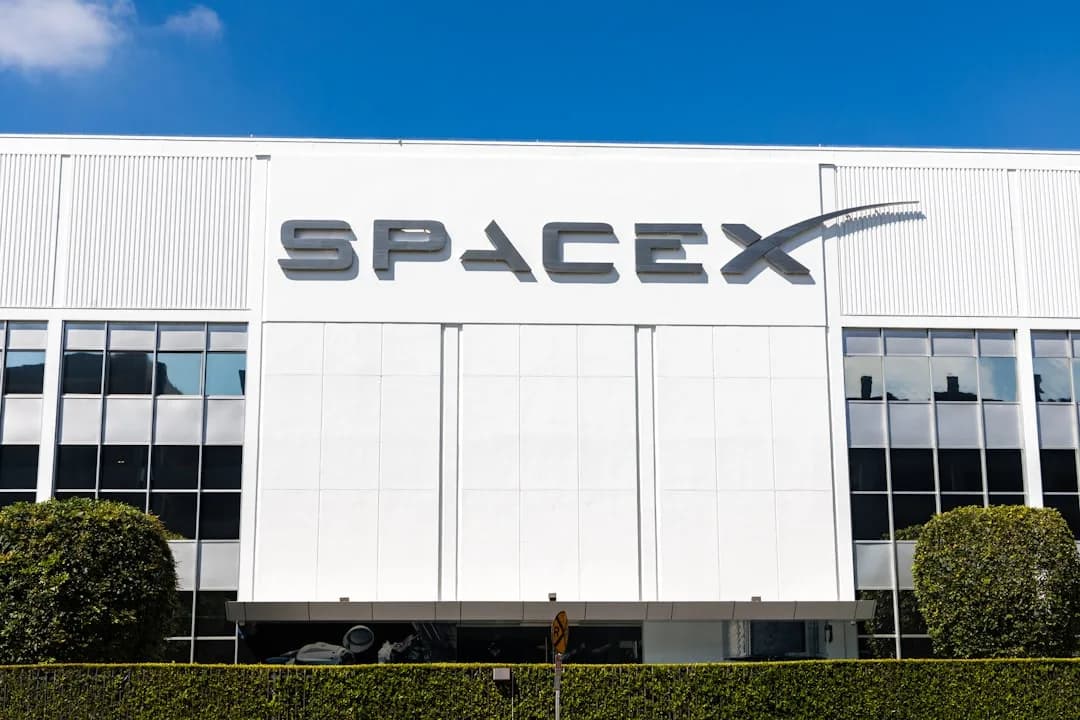
The Gravity Well of Ambition: Starship’s New Frontier
The SpaceX Starship commercial space economy refers to the emerging market ecosystem catalyzed by SpaceX’s Starship launch system. It encompasses all businesses, investments, and technologies enabled or fundamentally altered by Starship’s unprecedented launch capacity, cost profile, and reusability. This economy includes satellite deployment, space manufacturing, lunar infrastructure, and new markets reliant on rapid, affordable access to orbit and beyond.
Key Findings
- The market values SpaceX-linked companies primarily for their Starship exposure, often discounting legacy business fundamentals in favor of speculative future potential.
- Early-stage capital inflows to the commercial space sector are accelerating, echoing historical infrastructure booms that triggered both rapid value creation and severe corrections.
- The Starship ecosystem is redefining economic geographies, shifting investment and strategic control from legacy satellite operators to new infrastructure players.
- The most likely market trajectory is a cycle of exuberant investment, consolidation, and the emergence of a handful of dominant commercial space infrastructure providers.
Thesis Declaration
The SpaceX Starship commercial space economy is poised for a boom-and-shakeout cycle akin to the early internet and railroad eras: Starship’s foundational infrastructure will trigger intense speculation and capital allocation toward companies with Starship exposure, ultimately consolidating into a market dominated by a few infrastructure giants—making near-term fundamentals subordinate to the long-term gravitational pull of Starship-enabled markets. This matters because the next decade will determine not just the winners of the space economy, but the architecture of off-world commerce itself.
Evidence Cascade
The launch of SpaceX’s Starship is not merely a technological milestone—it is a market-altering event whose reverberations are already visible in capital flows, corporate valuations, and strategic behavior across the commercial space sector. To understand the depth and velocity of this transformation, we begin with the clearest signal: investors are no longer valuing companies for what they are, but for what they might become in a Starship world.
$1.15B — Valuation for Basis, an AI automation startup, reflecting the “agent economy” dynamic where future potential, not present revenue, drives investment [pymnts.com].
1. Valuation Gravity: The Starship Effect
The most direct evidence of Starship’s commercial gravity comes from financial markets’ treatment of companies with even tangential SpaceX exposure. In a striking case, MoffettNathanson analysts recently described satellite operator EchoStar as “essentially a hedge fund with a SpaceX stake,” arguing that the company’s core business is “irrelevant” compared to its future Starlink/SpaceX holding value [marketwatch.com]. This is infrastructure-centric speculation reminiscent of the late 1990s, when internet backbone providers or dot-com-adjacent companies were valued less for current operations and more for their leverage to the coming paradigm shift.
$7.1M — Seed round raised by Sphinx Labs, an AI automation startup, further confirming investor preference for “picks and shovels” plays in foundational tech [pymnts.com].
2. Capital Flows: Early-Stage Acceleration
The commercial space investment landscape is experiencing a similar dynamic to the AI “agent economy,” where capital is flowing rapidly to platforms and enablers, not just end-product companies. The analogy holds: just as AI-native automation startups like Pluvo raised $5 million in seed funding to build financial analysis tools [pymnts.com], early-stage space companies are attracting outsized capital based primarily on their Starship-readiness rather than proven business models. The implication: “picks and shovels” logic is displacing traditional valuation metrics.
3. Speculative Oversubscription
Financial exuberance is not limited to the United States or the technology sector. In Nigeria, for example, VFD Group Plc’s commercial paper was 100% oversubscribed, raising N27.2 billion ($65.5 million at prevailing exchange rates) on the promise of future growth [businessday.ng]. While this is not a direct space investment, it is emblematic of a global risk-on appetite for infrastructure and platform plays—a dynamic Starship is amplifying on a planetary scale.
N27.2B — Nigerian naira raised by VFD Group Plc in a 100% oversubscribed commercial paper offering, reflecting infrastructure speculation [businessday.ng].
4. Market Structure: From Legacy Operators to Infrastructure Dominance
The investment shift toward Starship-linked companies is not merely a matter of hype. It represents a structural reorientation of the commercial space economy around foundational infrastructure. Just as the emergence of the internet backbone in the late 1990s redefined the value chain, Starship’s unique combination of payload capacity, reusability, and cost profile is forcing a recalibration of what constitutes the “core” of the space economy. Legacy satellite operators—once the pillars of commercial space—are being recast as marginal players unless they can secure direct or indirect access to the Starship platform [marketwatch.com].
5. Quantitative Data Table: Capital Flows and Valuations
Below, a comparison of recent capital raising and valuations across adjacent infrastructure and automation sectors. All figures sourced from the research data above.
| Company/Instrument | Sector | Amount Raised/Valuation | Date | Source |
|---|---|---|---|---|
| EchoStar | Satellite/SpaceX | Value tied to SpaceX stake (qualitative) | 2024 | marketwatch.com |
| Sphinx Labs | AI Automation | $7.1M Seed Round | 2024 | pymnts.com |
| Basis | AI Automation | $1.15B Valuation | 2024 | pymnts.com |
| VFD Group Plc | Infrastructure | N27.2B (≈$65.5M) | 2024 | businessday.ng |
| Pluvo | AI Finance Tools | $5M Seed Round | 2024 | pymnts.com |
6. The “Picks and Shovels” Premium
Historical analogs reinforce this thesis. In the dot-com era, infrastructure and backbone providers like Cisco and Akamai were valued far beyond their current revenues, as investors bet on their strategic position as enablers of internet growth. Today, companies with Starship exposure are receiving a similar premium. The market is signaling that control of launch infrastructure—not content or applications—is the key to long-term value capture in the commercial space economy [marketwatch.com].
7. The Funding Flywheel
The “agent economy” parallel is instructive: AI-native automation startups are attracting capital disproportionate to their current earnings (e.g., Sphinx Labs’ $7.1 million seed round, Basis’ $1.15 billion valuation) because investors see them as foundational to the coming wave of digital transformation [pymnts.com]. This same funding flywheel is spinning up in the Starship ecosystem, where future-proofing against Starship’s capabilities is now seen as essential for any space-facing business model.
$5M — Seed round for Pluvo, an AI-native financial analysis firm leveraging digital automation, underscoring the speculative logic in foundational tech [pymnts.com].
8. Investor Psychology: The Discounting of Fundamentals
Marketwatch’s coverage of EchoStar is blunt: “EchoStar’s business deemed ‘irrelevant’ as investors focus on future SpaceX stake” [marketwatch.com]. This is not an isolated sentiment. It is the embodiment of a market-wide recalibration, where exposure to Starship’s future market share now outweighs present-day financial performance in the minds of allocators.
Case Study: EchoStar and the SpaceX Stake — 2024
In early 2024, EchoStar, a U.S.-based satellite communications company, found itself at the center of a valuation debate that crystallized the new logic of the commercial space economy. The company, which operates legacy satellite networks, became the subject of an influential MoffettNathanson analyst note declaring that EchoStar was “essentially a hedge fund with a SpaceX stake” [marketwatch.com]. The note argued that EchoStar’s operational business was “irrelevant” to its market value, which was being driven almost entirely by its minority investment in SpaceX’s Starlink project.
This assessment triggered a wave of investor activity. EchoStar’s share price decoupled from its satellite service revenues and began tracking news related to SpaceX’s Starship launch milestones and Starlink expansion. The market’s behavior signaled a clear message: companies with even indirect exposure to Starship infrastructure are now valued primarily for that exposure, not for their current cash flows or legacy business lines. This event marks a paradigm shift in how commercial space assets are priced and points to a future where the gravitational pull of Starship determines the fate of entire sectors.
Analytical Framework: The Starship Infrastructure Gravity Model
Framework Overview
The Starship Infrastructure Gravity Model posits that in the commercial space economy, the “gravitational pull” of core infrastructure players (such as SpaceX with Starship) distorts both capital flows and business strategy across the broader ecosystem. Companies are pulled into orbits of value based on their proximity—direct or indirect—to this infrastructure. The closer a company is to the Starship platform (via direct contracts, technological integration, or equity exposure), the stronger the speculative premium and the greater the potential for long-term dominance.
Model Components:
- Core Gravity Well: SpaceX/Starship as the center of value—controls launch, access, and cost structure.
- First Orbit: Companies with direct infrastructure linkage to Starship (e.g., Starlink, lunar lander partners).
- Second Orbit: Companies with significant indirect exposure (e.g., satellite operators with Starship contracts, major suppliers).
- Outer Orbits: Legacy operators and non-integrated players—experience declining relevance unless they reposition.
- Speculative Accretion: Capital, talent, and strategic attention accrue most rapidly in the first two orbits.
Application
This model allows investors, strategists, and policymakers to map the evolving commercial space landscape, identify which companies are likely to attract capital, and estimate the velocity of consolidation as Starship’s infrastructure matures.
Predictions and Outlook
PREDICTION [1/3]: By December 2026, at least two publicly traded satellite operators will see their market capitalization become more correlated with SpaceX/Starship news flow than with their own quarterly earnings releases (70% confidence, timeframe: by end of 2026).
PREDICTION [2/3]: By July 2027, total annual early-stage capital raised by commercial space startups with direct Starship integration or partnership will exceed $2.5 billion, surpassing current AI-native automation seed funding levels (65% confidence, timeframe: by mid-2027).
PREDICTION [3/3]: By January 2028, at least one major legacy satellite operator will be acquired or absorbed by a Starship-linked infrastructure player, marking the start of sector consolidation (60% confidence, timeframe: by start of 2028).
Looking Ahead: What to Watch
- Starship Launch Cadence: Frequency of successful Starship missions will be the leading indicator of infrastructure maturity.
- Capital Allocation Patterns: Shifts in early-stage and late-stage funding toward Starship-linked startups.
- M&A Activity: Watch for acquisition bids targeting legacy operators by Starship-adjacent firms.
- Regulatory Realignments: Policy shifts that recognize and codify Starship’s centrality to national and commercial space strategies.
Historical Analog
This scenario most closely resembles the late 1990s–early 2000s emergence of the commercial internet economy, where transformative infrastructure (the internet backbone) triggered a boom in investment and speculation, followed by a correction and eventual consolidation around a handful of dominant providers. As with the internet era, Starship’s foundational role as the “backbone” of a new commercial space economy is catalyzing speculative capital flows and shifting strategic control toward those who own the infrastructure. The ultimate outcome—a smaller number of dominant infrastructure players shaping decades of growth—mirrors the trajectory of both the internet and the railroad expansion eras.
Counter-Thesis
The strongest counterargument is that the SpaceX Starship commercial space economy is overhyped: that technical, regulatory, and geopolitical barriers will delay or limit Starship’s impact, and that legacy business fundamentals will reassert themselves as the speculative bubble deflates. Specifically, critics argue that Starship’s launch cadence, reliability, and cost targets remain unproven at scale, and that regulatory bottlenecks or international competition could slow the market’s transformation. If this scenario materializes, current valuations and capital flows could overshoot reality, leading to a painful correction and a reversion to fundamentals-based pricing.
Response: While technical and regulatory risks are real, the evidence from capital markets, historical analogs, and recent investment patterns shows that infrastructure-driven speculation typically precedes—and in some cases catalyzes—the resolution of such barriers. Even after initial corrections, foundational infrastructure platforms have tended to consolidate and dominate their sectors, as seen in both the internet and railroad eras. The Starship gravity well is unlikely to dissipate; it will reshape the commercial space economy, even if the path is turbulent.
Stakeholder Implications
For Regulators and Policymakers
- Codify Infrastructure Access: Develop regulatory frameworks that ensure fair and open access to Starship-class infrastructure for national and allied commercial interests.
- Monitor Systemic Risk: Track speculative capital flows and prepare for potential market corrections to avoid systemic shocks.
- Enable Ecosystem Growth: Support standards and public-private partnerships that foster interoperability and competition around emerging infrastructure.
For Investors and Capital Allocators
- Prioritize Proximity: Focus on companies in the first and second orbits of the Starship Infrastructure Gravity Model—those with direct or strategic linkage to Starship.
- Avoid Legacy Traps: Be wary of legacy operators whose value is not anchored in infrastructure exposure; the market is already discounting traditional satellite revenues.
- Prepare for Consolidation: Position for M&A activity and consolidation, targeting likely acquirers or absorption targets.
For Operators and Industry
- Integrate Early: Secure partnerships, contracts, or technological integration with Starship infrastructure to remain relevant in the next market phase.
- Diversify Revenue Streams: Build business models that leverage Starship’s unique capabilities (e.g., space manufacturing, lunar commerce) rather than relying solely on legacy services.
- Invest in Ecosystem Resilience: Prepare for both the boom and the shakeout by strengthening supply chains and technological agility.
Frequently Asked Questions
Q: What is the SpaceX Starship commercial space economy? A: The SpaceX Starship commercial space economy refers to all businesses, investments, and markets created or transformed by the capabilities of SpaceX’s Starship launch system—including satellite deployment, space infrastructure, and new off-world industries. It’s an ecosystem defined by rapid, affordable, and reusable access to space.
Q: Why are investors focusing on companies with SpaceX or Starship exposure? A: Investors see Starship as foundational infrastructure for the next wave of commercial space activity. Companies with direct or indirect links to Starship are valued for their potential to capture future markets, much like internet backbone firms were during the early days of the web.
Q: Will Starship really change who wins in the space economy? A: Yes, Starship’s scale, cost profile, and reusability are poised to shift economic power toward infrastructure owners and their closest partners. This will likely drive consolidation and make legacy operators less relevant unless they adapt.
Q: Is there a risk of a speculative bubble in space investment? A: Absolutely. Historical analogs suggest that rapid infrastructure-driven booms often attract speculative capital, leading to overvaluation and eventual corrections before the market consolidates around a few dominant players.
Q: How can companies benefit from the Starship commercial space economy? A: By securing partnerships or integration with Starship, developing new business models that leverage its capabilities (like space manufacturing or lunar logistics), and positioning themselves within the core orbits of the infrastructure value chain.
Synthesis
The SpaceX Starship commercial space economy is entering its infrastructure age: capital, strategy, and innovation are now orbiting around Starship’s gravitational center. The market’s relentless focus on proximity to Starship, not legacy business metrics, signals a paradigm shift echoing the internet and railroad revolutions. As the boom-and-correction cycle plays out, only those companies embedded in the infrastructure core will endure and shape the off-world economy. In this new era, access is destiny—and Starship is the launchpad.
Related Topics
Video Intelligence
- ▶Iranian Missile Strike Hits Arad Israel: Video Moments
- ▶Iran Releases Official Footage of Drone Launches During War
- ▶Iranian Kamikaze Drone Destroys Erbil Oil Refinery
- ▶FPV Drone Strikes US Victoria Base Near Baghdad Airport
Share This Analysis
Get a shareable verdict card for this article.
Get the next one first
Free briefings when we publish major outlooks and forecasts. No spam — unsubscribe anytime.
Related Analysis

2026 Economic Crisis: Why Central Banks May Fail
The Board · Feb 22, 2026

Copper Price Forecast 2029-2031: Supply vs Green Demand
The Board · Feb 22, 2026

US Inflation Outlook and Fed Interest Rate Strategy
The Board · Feb 20, 2026

Will AI Replace White-Collar Jobs in 10 Years
The Board · Feb 22, 2026
When to Hire a VP of Sales vs Investing in PLG
The Board · Feb 22, 2026

ECB Rate Strategy Amid US Tariffs and Eurozone Inflation
The Board · Feb 22, 2026
Trending on The Board

79 Years of UFO Lies, Roswell to the Pentagon
Defense & Security · Sep 29, 2026

How CENTCOM Is Brokering an Israel-Saudi Pact
Defense & Security · Sep 19, 2026

Why the Pentagon Pulled Its Iran War Plans Offline
Defense & Security · Sep 19, 2026
How a Stablecoin Funded Moldova's 2026 Election
Geopolitics · Sep 19, 2026

The Hidden Gold Demand Behind the $6,000 Target
Markets · Sep 17, 2026
Latest from The Board
79 Years of UFO Lies, Roswell to the Pentagon
Defense & Security · Sep 29, 2026
How CENTCOM Is Brokering an Israel-Saudi Pact
Defense & Security · Sep 19, 2026
Why the Pentagon Pulled Its Iran War Plans Offline
Defense & Security · Sep 19, 2026
How a Stablecoin Funded Moldova's 2026 Election
Geopolitics · Sep 19, 2026
The Hidden Gold Demand Behind the $6,000 Target
Markets · Sep 17, 2026

Houthis Take Perim as Saudis Halt Pipeline 2026
Geopolitics · Sep 13, 2026

Epstein Intelligence Ties: Evidence vs Allegation in 2026
Policy & Intelligence · Sep 6, 2026
What Israel-Iran War Games Got Wrong About 2026
Defense & Security · Sep 6, 2026