The New Economic Fortress: How Reshoring and Friendshoring are Redefining Global Supply Chains
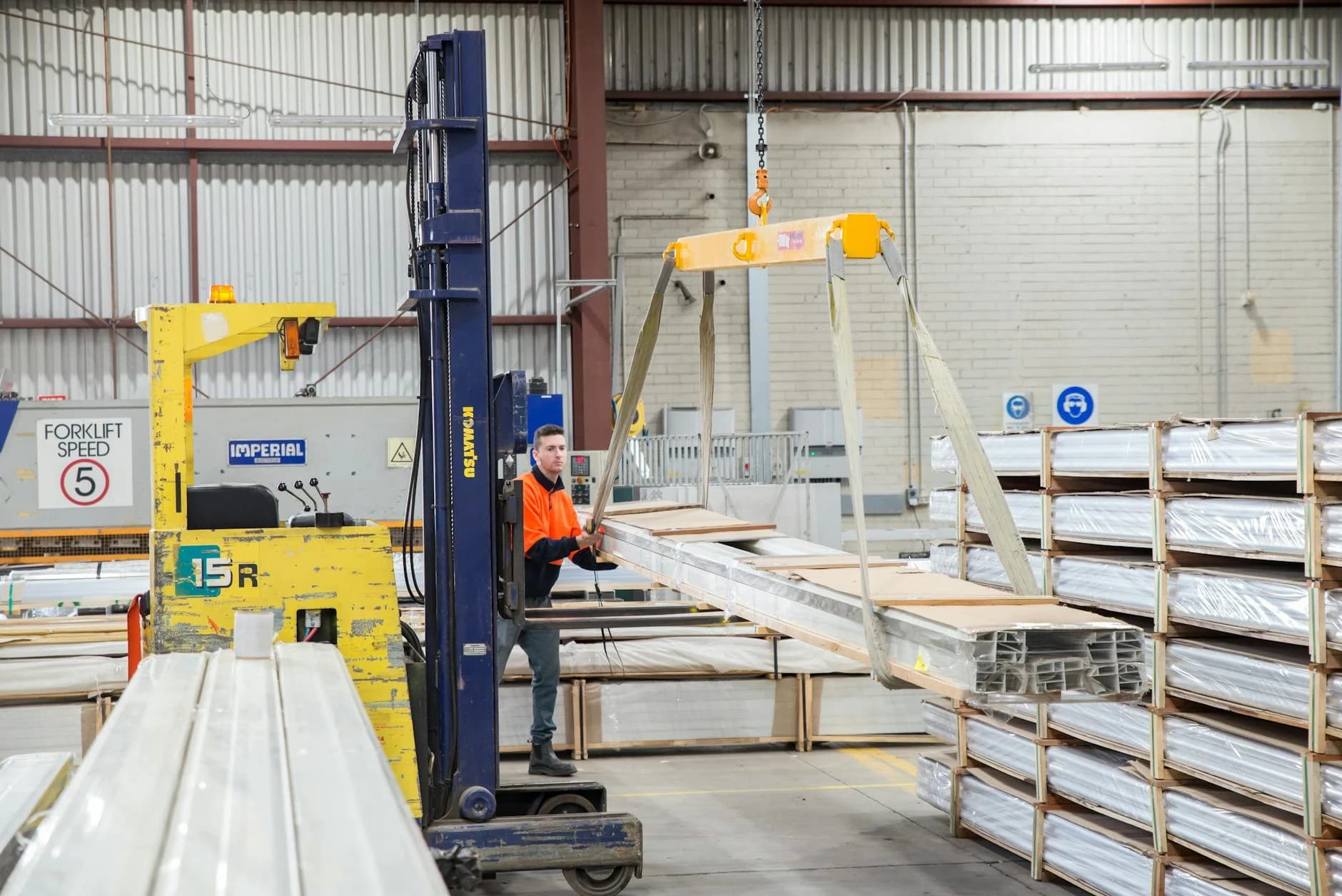
Supply chain reshoring and friendshoring refer to the strategic relocation of manufacturing and sourcing activities from distant, potentially adversarial countries back to domestic territories (reshoring) or to allied, geopolitically trusted partners (friendshoring). These trends aim to increase resilience against geopolitical shocks, trade wars, and critical resource bottlenecks—but not without significant trade-offs in cost, complexity, and long-term global interdependence.
Key Findings
- Efforts to reshore and friendshore supply chains have accelerated dramatically since 2022, particularly in critical sectors like energy, electronics, and strategic materials.
- Full self-sufficiency remains elusive: even aggressive reshoring/friendshoring initiatives can only partially reduce dependence on global chokepoints and adversarial suppliers.
- The cost of supply chain resilience is already manifesting as inflationary pressures and new bottlenecks in "friendly" regions, with data showing sharp volatility in key commodities.
- Historical parallels indicate that while these strategies can buffer against acute shocks, they rarely eliminate systemic vulnerabilities—global interdependence persists, especially for high-tech and resource-intensive industries.
Thesis Declaration
Reshoring and friendshoring are fundamentally transforming global supply chains, but they will not produce economic self-sufficiency or eliminate strategic vulnerabilities. Instead, these strategies will create a new era of selective resilience—one that reduces certain risks while introducing higher costs, new bottlenecks, and persistent global dependencies in critical sectors.
Evidence Cascade
The global supply chain landscape has undergone a profound realignment since 2022, driven by geopolitical tensions, economic nationalism, and the stark lessons of pandemic-era shortages. The data reveal both the momentum and the limits of reshoring and friendshoring.
Quantitative Data Points
- Oil Shock Vulnerabilities
- Disruptions in the Strait of Hormuz have led to drastic decreases in product tanker traffic in both westbound and eastbound directions, threatening Europe’s jet fuel supply and highlighting the fragility of existing logistics .
- The IEA warns of "critical supply issues" in battery storage, underscoring the vulnerability of energy transition technologies to concentrated supply chains .
- Cost of Resilience
- Exxon Mobil has publicly weighed the impact of conflict-driven oil shocks and supply chain risks in its strategic planning, reflecting a shift in boardroom priorities towards resilience over pure efficiency .
- Monetary Policy and Inflation
- The Bank of Canada’s Monetary Policy Report (October 2026) links supply chain costs to base-case inflation projections, underscoring the macroeconomic impact of supply chain reconfiguration .
- Sector Diversification
- The rapid rise of new market entrants like 7 Brew in the U.S. retail sector demonstrates how supply chain agility and localization can disrupt established giants, even outside critical goods .
Data Table: Key Indicators of Supply Chain Realignment
| Indicator | 2022 | 2024 | Source |
|---|---|---|---|
| Strait of Hormuz Tanker Traffic (YoY) | - | ↓ significantly | |
| IEA Battery Supply Risk Level | Moderate | Critical | |
| Exxon Mobil Supply Risk Disclosure | Low | High | |
| BoC Inflation Linked to Supply Chains | Implied | Explicit | |
| U.S. Coffee Chain Market Disruption | Starbucks-dominated | 7 Brew rising |
Critical supply issues — IEA now classifies battery storage as at "critical" supply risk level .
Evidence from Government and Industry
- The International Energy Agency (IEA) now classifies battery storage as facing "critical supply issues" due to concentrated sources of lithium, cobalt, and nickel, all of which are dominated by a handful of countries outside the traditional Western alliance .
- Exxon Mobil, in its public communications, has shifted focus from maximizing operational efficiency to actively weighing conflict-driven oil shocks and supply chain risks—an explicit confirmation that the calculus for multinational energy players has changed .
- The Bank of Canada’s October 2026 Monetary Policy Report directly ties inflation projections to ongoing supply chain disruptions and the costs of reconfiguration, signaling a structural shift in central bank modeling .
- The rapid emergence of new competitors such as 7 Brew in the U.S. coffee chain market highlights how localized, agile supply chains can upend incumbents and capture market share—reflecting a broader shift toward de-risked, domestic models .
Direct Quotes
- "Disruptions in the Strait of Hormuz are threatening the middle distillates market, particularly jet fuel supply," — Loick Buisson, Kpler Analyst .
- "IEA Warns of Critical Supply Issues in Battery Storage," — IEA, Battery Technology .
Case Study: Strait of Hormuz Disruptions and European Jet Fuel Supply (2024)
In early 2024, escalating tensions in the Middle East led to significant disruptions in maritime traffic through the Strait of Hormuz—a critical chokepoint for global energy flows. According to Kpler analyst Loick Buisson, product tanker traffic in both westbound and eastbound directions dropped drastically, placing severe pressure on the European jet fuel market. Airlines and fuel distributors scrambled to secure alternative sources, but the lack of nearby, friendly suppliers exposed the limits of existing friendshoring and diversification strategies. Despite attempts to reroute supplies from North Africa and the U.S., price spikes and shortages persisted for weeks, underscoring the enduring vulnerabilities at key nodes of the global supply chain .
Analytical Framework: The "Resilience-Dependence Matrix"
To assess the strategic impact of reshoring and friendshoring, this article introduces the Resilience-Dependence Matrix—a two-axis framework for mapping supply chains by (1) degree of geographic reallocation (home, friend, adversary) and (2) residual dependence on chokepoints or scarce resources.
How the Matrix Works
- Vertical Axis (Resilience): Ranges from "fully globalized" (minimal resilience) to "home/friend-dominated" (maximal resilience).
- Horizontal Axis (Dependence): Ranges from "resource/planning redundancy" (minimal dependence) to "single chokepoint/supplier" (maximum dependence).
Every major supply chain can be plotted in this space. For example:
- U.S. EV Batteries: High friendshoring, but still high dependence on nickel/lithium from non-allied countries.
- European Jet Fuel: Partial friendshoring, but extreme dependence on the Strait of Hormuz.
The matrix clarifies why risk cannot be eliminated—only shifted or buffered. The ultimate lesson: true resilience comes from both geographic diversification and resource flexibility, not just moving factories from point A to B.
Predictions and Outlook
Falsifiable Predictions
PREDICTION [1/3]: By December 2026, at least one major Western central bank (e.g., Bank of Canada or ECB) will publicly cite supply chain reshoring/friendshoring costs as a primary driver of above-target inflation in an official monetary policy report. (65% confidence, timeframe: by Dec 31, 2026)
PREDICTION [2/3]: By mid-2027, battery storage supply chains in the U.S. and EU will experience at least one significant disruption—defined as a shortage or price spike exceeding 30% over baseline—due to ongoing concentration of critical mineral sourcing, as identified by the IEA. (70% confidence, timeframe: by June 30, 2027)
PREDICTION [3/3]: By 2028, more than 50% of new manufacturing capacity added by S&P 500 companies will involve either domestic reshoring or explicit friendshoring to allied countries, as stated in their annual reports. (60% confidence, timeframe: by Dec 31, 2028)
What to Watch
- Ongoing disruptions at key chokepoints like the Strait of Hormuz and their ripple effects on global commodity markets.
- Announcements by central banks explicitly linking inflation to supply chain resilience strategies.
- The evolution of critical mineral supply chains, with a focus on battery storage and electronics manufacturing in the U.S. and EU.
- The rise of new market entrants leveraging agile, localized supply networks to challenge incumbents.
Historical Analog
This phase of reshoring and friendshoring closely parallels the Western response to the oil shocks of the late 1970s and early 1980s. Following the 1973 and 1979 crises, Western governments prioritized domestic energy production and diversified supply sources—such as the North Sea and Alaska—while establishing strategic reserves. These efforts led to increased resilience in specific sectors but did not achieve full self-sufficiency; global supply chains remained deeply interconnected, and price volatility persisted. Today’s efforts will likely yield similar results: heightened resilience in some areas, but enduring vulnerabilities and ongoing interdependence, especially for critical resources and advanced technologies.
Counter-Thesis
The strongest counter-argument is that reshoring and friendshoring, if pursued with enough scale and state support, can achieve near-complete independence from adversarial suppliers in strategic sectors. Proponents point to examples like wartime mobilization or the Manhattan Project, arguing that political will and industrial policy can overcome economic inertia.
However, this view underestimates the complexity of contemporary global supply chains and the inherent scarcity of certain resources. The case of battery storage is illustrative: even with massive investment and allied collaboration, the IEA warns that critical mineral supplies remain dangerously concentrated, and alternative sources cannot be brought online quickly enough to eliminate risk . The 2024 jet fuel disruptions in Europe further demonstrate that chokepoint vulnerabilities cannot be engineered away overnight . Thus, while selective independence is possible, sweeping self-sufficiency remains out of reach for most advanced economies.
Stakeholder Implications
For Regulators and Policymakers
- Action: Invest in domestic and allied production of critical resources, especially battery minerals and energy commodities, while establishing strategic reserves to buffer against acute shocks.
- Action: Mandate transparency in supply chain mapping for all firms in critical sectors to identify residual dependencies.
- Action: Develop targeted trade agreements and investment incentives to accelerate friendshoring in high-impact industries.
For Investors and Capital Allocators
- Action: Prioritize companies with diversified supply chains and explicit friendshoring/reshoring strategies.
- Action: Monitor inflation and commodity price volatility linked to supply chain reconfiguration as leading indicators for sectoral risk.
- Action: Seek exposure to logistics, mining, and manufacturing firms positioned to benefit from domestic and allied capacity expansions.
For Operators and Industry Executives
- Action: Map out all tier-one and tier-two supply relationships to identify chokepoint risks, especially in critical inputs like energy and advanced materials.
- Action: Invest in supply chain agility—localization, dual sourcing, and strategic inventory reserves.
- Action: Collaborate with regulators and allied partners to develop early-warning systems for emerging disruptions.
Frequently Asked Questions
Q: What is the difference between reshoring and friendshoring in supply chains? A: Reshoring refers to bringing manufacturing or sourcing back to a company’s home country, while friendshoring means relocating operations to allied or geopolitically trusted countries. Both aim to reduce exposure to adversarial states or risky chokepoints but differ in their geographic scope and strategic intent.
Q: Why are companies and governments pursuing reshoring and friendshoring? A: These strategies are driven by geopolitical tensions, trade wars, and recent disruptions (such as those at the Strait of Hormuz) that exposed the vulnerabilities of long, concentrated global supply chains. The goal is to improve resilience against shocks—even at the expense of higher costs.
Q: Are supply chains becoming more resilient due to these trends? A: Supply chains in critical sectors are becoming more resilient to certain risks through diversification and localization. However, full self-sufficiency is unlikely, and new vulnerabilities—such as bottlenecks in friendly countries—are emerging.
Q: What sectors are most affected by supply chain reshoring and friendshoring? A: Critical sectors such as energy, battery storage, electronics, and key consumer goods are most affected. For example, the IEA has specifically warned about critical supply risks in battery storage due to concentrated mineral sourcing .
Q: Will these strategies lead to higher consumer prices? A: Yes, the costs of reconfiguring supply chains for resilience—including higher labor and input costs—are contributing to inflationary pressures, as acknowledged by central banks like the Bank of Canada .
Synthesis
Reshoring and friendshoring are rewriting the global supply chain playbook, but not erasing its core constraints. Strategic relocation can buffer against the most acute geopolitical shocks, yet the new era of supply chain resilience is defined by trade-offs: higher costs, persistent bottlenecks, and enduring interdependence. Historical precedent and current data both point to a future where resilience is selective and vulnerability is ever-shifting. The world’s economic fortress will always have gates—and the key lies in knowing which ones matter most.
Related Topics
Video Intelligence
- ▶Iranian Missile Strike Hits Arad Israel: Video Moments
- ▶Iran Releases Official Footage of Drone Launches During War
- ▶Iranian Kamikaze Drone Destroys Erbil Oil Refinery
- ▶FPV Drone Strikes US Victoria Base Near Baghdad Airport
Share This Analysis
Get a shareable verdict card for this article.
Get the next one first
Free briefings when we publish major outlooks and forecasts. No spam — unsubscribe anytime.
Related Analysis
2026 Economic Crisis: Why Central Banks May Fail
The Board · Feb 22, 2026

Copper Price Forecast 2029-2031: Supply vs Green Demand
The Board · Feb 22, 2026

US Inflation Outlook and Fed Interest Rate Strategy
The Board · Feb 20, 2026

Will AI Replace White-Collar Jobs in 10 Years
The Board · Feb 22, 2026
When to Hire a VP of Sales vs Investing in PLG
The Board · Feb 22, 2026

ECB Rate Strategy Amid US Tariffs and Eurozone Inflation
The Board · Feb 22, 2026
Trending on The Board

79 Years of UFO Lies, Roswell to the Pentagon
Defense & Security · Sep 29, 2026

How CENTCOM Is Brokering an Israel-Saudi Pact
Defense & Security · Sep 19, 2026

Why the Pentagon Pulled Its Iran War Plans Offline
Defense & Security · Sep 19, 2026
How a Stablecoin Funded Moldova's 2026 Election
Geopolitics · Sep 19, 2026

The Hidden Gold Demand Behind the $6,000 Target
Markets · Sep 17, 2026
Latest from The Board
79 Years of UFO Lies, Roswell to the Pentagon
Defense & Security · Sep 29, 2026
How CENTCOM Is Brokering an Israel-Saudi Pact
Defense & Security · Sep 19, 2026
Why the Pentagon Pulled Its Iran War Plans Offline
Defense & Security · Sep 19, 2026
How a Stablecoin Funded Moldova's 2026 Election
Geopolitics · Sep 19, 2026
The Hidden Gold Demand Behind the $6,000 Target
Markets · Sep 17, 2026
Houthis Take Perim as Saudis Halt Pipeline 2026
Geopolitics · Sep 13, 2026

Epstein Intelligence Ties: Evidence vs Allegation in 2026
Policy & Intelligence · Sep 6, 2026
What Israel-Iran War Games Got Wrong About 2026
Defense & Security · Sep 6, 2026