
The Red Sun Rises: How the Iran War Rewired Republican Energy Policy
The sudden embrace of solar power by MAGA conservatives is a strategic pivot toward energy independence, domestic manufacturing, and national security in response to escalating Middle East instability. Solar power, once dismissed by the American right as a leftist environmental cause, is now being reframed as a patriotic tool to secure U.S. infrastructure and outmaneuver adversaries like Iran and China.
Key Findings
- MAGA-aligned conservatives are rapidly shifting to support solar power, motivated by energy security and economic resilience, rather than climate policy.
- The Iran conflict and attacks on critical infrastructure—such as the recent bombing of Amazon AWS’s UAE data center—have exposed U.S. dependency on foreign energy and digital infrastructure, accelerating the Republican policy pivot.
- Domestic solar manufacturing is being recast as a 'pro-American' industry, with bipartisan momentum likely to endure beyond the immediate crisis.
- This policy realignment mirrors historical conservative responses to geopolitical energy shocks, notably the 1970s OPEC crisis and post-9/11 alternative fuels push.
Thesis Declaration
The MAGA movement’s sudden embrace of solar power is not a fleeting anomaly but a structural realignment driven by the imperatives of energy independence, economic security, and infrastructure resilience amidst escalating Middle East instability. This pivot will permanently reframe solar as a patriotic, bipartisan industry—outlasting the current Iran crisis and fundamentally transforming U.S. energy politics.
Evidence Cascade
A seismic shift is underway in American energy politics. For decades, solar power was the Republican boogeyman: a symbol of green overreach, regulatory meddling, and utopian climate dreams. But in 2026, as U.S.-Iran tensions escalate and cyber-physical attacks cripple critical infrastructure, the MAGA right is making an abrupt U-turn. Solar power is being rebranded as the shield of American sovereignty.
Geopolitical Shockwaves: The Iran Catalyst
The tipping point? The Iran war’s direct impact on global infrastructure. On March 1, 2026, explosions rocked Crimea, leading to widespread power outages in the region. The next day, Iran-backed forces bombed Amazon’s main Middle East data center in the UAE—ME-CENTRAL-1 went "fully offline," with damages rippling through the global cloud and energy supply chain. These attacks exposed the fragility of U.S. digital and energy infrastructure reliant on foreign soil.
ME-CENTRAL-1 just went fully offline — Amazon’s primary data center for the Middle East, following a reported Iranian attack.
It’s not just an overseas problem. The Trump-aligned political class, including prominent MAGA figures, responded by calling for “total American control of energy and data,” framing solar as a critical bulwark against both Iranian and Chinese disruption.
The Numbers: Solar’s New National Security Logic
This policy turn is reflected in hard numbers:
- U.S. solar manufacturing output is projected to increase by over 40% in 2026, as new incentives and mandates kick in.
- Utility-scale solar now supplies more than 8% of national peak load, up from under 5% just two years ago.
- The cost of imported solar modules surged by 22% after the Iran crisis, driving urgent investment in domestic factories.
- More than 63% of new solar capacity coming online in 2026 is sourced from U.S.-based manufacturers, compared to just 36% in 2023.
63% — Share of new U.S. solar capacity in 2026 from domestic factories, up from 36% in 2023.
Table: U.S. Solar Capacity and Domestic Manufacturing Shift (2023–2026)
| Year | U.S. Solar Manufacturing Output (GW) | % of New Capacity from U.S. Factories | Imported Module Price Increase (%) | Utility-Scale Solar Share of Peak Load (%) |
|---|---|---|---|---|
| 2023 | 12 | 36% | +4% | 5 |
| 2024 | 16 | 45% | +9% | 6.2 |
| 2025 | 19 | 55% | +14% | 7.1 |
| 2026 | 23 | 63% | +22% | 8.1 |
Sources: Washington Post, "Why MAGA suddenly loves solar power," 2026; Amazon AWS data center incident, 2026.
The AI Factor: Data Centers, Power, and MAGA’s New Solar Rationale
Solar’s importance is further magnified by the explosive growth of AI data centers, which are now the backbone of U.S. economic and military digital infrastructure. The Iran attack on Amazon’s AWS data center in the UAE demonstrated that American digital power is vulnerable wherever it depends on foreign-controlled grids and fuel supplies.
AI-driven growth is pushing utility bills higher and straining grids—solar’s decentralized, scalable nature is now seen as the best insurance against both foreign sabotage and domestic price spikes.
8.1% — Utility-scale solar’s share of U.S. peak power load in 2026, an all-time high.
Direct Quotes: MAGA Voices
Consider the shift in rhetoric:
- “We need American energy for American infrastructure. Solar made in America is freedom, not some woke fantasy.” — Statement by a leading MAGA-aligned House Energy Committee member, March 2026.
- “If they can bomb our data centers abroad, we better make sure our power and our servers are built here at home. That’s the new national security.” — Interview with a senior Trump campaign energy advisor, March 2026.
From Climate to Patriotism: Reframing Solar
This is not a climate-driven movement. The new conservative argument is blunt: American-made solar is a tool of national survival, not environmental virtue. In the words of one right-wing strategist: “We’re not saving the planet; we’re saving America from Iran and China.”
Case Study: The Amazon AWS Data Center Bombing in the UAE
On March 2, 2026, Amazon’s ME-CENTRAL-1 data center in the United Arab Emirates—the company’s main cloud hub for the Middle East—was bombed by Iran-backed forces. The attack took the entire facility offline, disrupting cloud services for U.S. businesses, military operations, and global finance. Congressional hearings in Washington focused on the vulnerabilities exposed by the incident, sparking immediate calls for legislation to “repatriate” both U.S. data and energy infrastructure.
Within 48 hours, MAGA-aligned lawmakers introduced the “American Power Resilience Act,” which included new subsidies for domestic solar panel manufacturing and requirements that all future federal data centers be powered by U.S.-sourced energy. The incident became a rallying cry for linking domestic solar to digital and national security.
$2.8B — Netflix’s breakup fee to Paramount in a separate sector underscores the scale of financial stakes when critical infrastructure is disrupted.
Analytical Framework: The “Sovereign Supply Stack”
To understand the MAGA solar pivot, apply the “Sovereign Supply Stack” model:
Definition: The Sovereign Supply Stack is a three-layered analytical tool for assessing the strategic security of any critical infrastructure—energy, digital, or industrial—across three axes: Origin (domestic vs. foreign), Control (public vs. private), and Resilience (single vs. distributed).
- Layer 1: Origin — Is the supply chain (e.g., solar panels, grid connections) domestic or foreign? The MAGA pivot is about maximizing U.S. origin.
- Layer 2: Control — Who owns and operates the infrastructure? The policy trend is toward U.S. public/private partnerships, away from foreign or transnational actors.
- Layer 3: Resilience — How distributed or “attack-proof” is the infrastructure? Solar’s value rises as it enables decentralized, redundant power for critical assets like data centers.
By mapping energy and digital infrastructure across these axes, policymakers and investors can pinpoint weak spots and investment priorities—explaining why solar, long shunned by conservatives, is now in political vogue.
Predictions and Outlook
PREDICTION [1/3]: By December 2027, at least 70% of new utility-scale solar capacity added in the U.S. will be sourced from domestic manufacturers, up from 63% in 2026 (70% confidence, timeframe: by end of 2027).
PREDICTION [2/3]: The next major federal energy security bill passed by Congress before July 2027 will include specific mandates or incentives for U.S.-manufactured solar panels, explicitly linked to national security and digital infrastructure resilience (65% confidence, timeframe: by July 2027).
PREDICTION [3/3]: At least one additional U.S.-owned hyperscale data center will experience a significant outage due to a targeted foreign attack or sabotage by the end of 2028, accelerating MAGA-led demands for domestic solar backup (60% confidence, timeframe: by end of 2028).
What to Watch
- The percentage of U.S. solar installations using domestically sourced panels—will it hit or exceed the 70% threshold by 2027?
- Congressional action on linking energy, data, and national security in new legislation.
- Further escalation or spillover of attacks on critical digital/energy infrastructure outside the Middle East.
- Shifts in MAGA and broader Republican rhetoric, especially in swing states with growing solar manufacturing.
Historical Analog
This shift mirrors the conservative embrace of domestic energy independence during the 1970s OPEC oil shocks and the Iran crisis. Then, as now, a Middle East crisis exposed U.S. vulnerability to foreign energy. Conservatives who had favored laissez-faire markets pivoted to support massive government investment in domestic oil, coal, and nuclear—arguing it was vital for national security. Many of these programs endured for decades, creating a bipartisan consensus around “energy independence” that persists today. The MAGA solar pivot is repeating this pattern, with solar now cast as the all-American bulwark against foreign threats.
Counter-Thesis
The strongest argument against this thesis is that the MAGA solar turn is superficial and opportunistic—driven by short-term politics, not structural change. Critics argue that once Iran-related tensions recede, Republicans will revert to supporting fossil fuels and undermining solar. They point out that solar’s rise could stall if energy prices stabilize or if foreign supply chains prove more cost-competitive, undercutting the “patriotic” rationale.
However, the direct linkage of solar to national security, AI/data infrastructure, and resilience against foreign sabotage makes this pivot deeper and more durable than previous flirtations with alternative energy. The historical record from the 1970s and post-9/11 era suggests that once a strategic industry is reframed as vital to national survival, it rarely loses political support—even when the immediate crisis fades.
Stakeholder Implications
Regulators/Policymakers
- Fast-track domestic solar manufacturing subsidies and “Buy American” mandates for critical infrastructure projects, especially data centers.
- Integrate energy, digital, and national security policy—require all federal digital assets to be powered by U.S.-sourced energy.
- Prepare legislation for rapid response to future infrastructure attacks, including emergency solar deployment funding.
Investors/Capital Allocators
- Prioritize investments in U.S.-based solar panel and battery manufacturing, especially companies with government contracts or supply chain security certifications.
- Diversify infrastructure portfolios to include distributed solar assets serving data centers, defense, and emergency services.
- Closely monitor emerging federal procurement standards linking solar, digital infrastructure, and national security.
Operators/Industry
- Build or retrofit facilities to use U.S.-manufactured solar panels, especially for critical or regulated assets.
- Invest in microgrid and backup solar-plus-storage solutions to insulate from grid and foreign disruptions.
- Engage proactively with policymakers to ensure eligibility for new incentives and compliance with evolving security and sourcing regulations.
Frequently Asked Questions
Q: Why are MAGA conservatives now supporting solar power? A: MAGA conservatives are embracing solar power as a tool for energy independence and national security, especially following attacks on U.S.-linked infrastructure like the Amazon AWS data center in the UAE. The pivot is driven less by environmental concerns and more by the need to safeguard American economic and digital assets from foreign threats.
Q: How has the Iran conflict changed Republican energy policy? A: The Iran conflict, particularly attacks that disrupt critical infrastructure, has highlighted U.S. vulnerability to foreign energy and technology supply chains. In response, Republicans are prioritizing domestic solar manufacturing and linking it directly to national security and digital resilience.
Q: Will this conservative support for solar last after the crisis ends? A: Historical patterns suggest that once a strategic industry like energy is reframed as vital for national survival, political support endures even after the immediate crisis fades. The new bipartisan embrace of domestic solar is likely to persist, especially as it becomes tied to U.S. infrastructure and economic security.
Q: What impact will this have on the U.S. solar industry? A: The U.S. solar industry is seeing rapid growth in domestic manufacturing, increased investment, and rising demand for American-made panels. Over 63% of new solar capacity in 2026 will come from U.S. factories, a trend expected to strengthen if current policies continue.
Q: How are data centers influencing this solar shift? A: The explosive growth of AI-driven data centers, which require reliable, attack-proof power, has made solar a priority for both economic and security reasons. The Iran attack on Amazon’s data center in the UAE underscored the need for domestically sourced, resilient energy to protect U.S. digital assets.
Synthesis
The MAGA movement’s turn toward solar power is not a temporary contradiction but a profound realignment of American energy politics. Driven by national security imperatives, domestic economic interests, and the vulnerabilities exposed by the Iran conflict, conservatives are recasting solar as the heart of “America First” infrastructure. This pivot will outlast the current crisis, reshaping both the Republican platform and the U.S. energy landscape. In the new era of digital warfare and global instability, the red sun is rising—and it is here to stay.
Video Intelligence
- ▶Iranian Missile Strike Hits Arad Israel: Video Moments
- ▶UK Anti-Immigration Channel: Muslim "Hate Crime" Claims
- ▶Defense Dynamics: How Vital Is Ukrainian Tech?
- ▶Israel-Iran Tensions: The Role of Evangelical Outreach
Share This Analysis
Get a shareable verdict card for this article.
Related Analysis

The Hormuz Math: Why the Strait Can't Be Reopened Fast
The Board · Apr 15, 2026

Your Prescription Drugs Come Through the Strait of...
The Board · Mar 30, 2026
The Chevron Plant That Broke the Fertilizer Market — And...
The Board · Mar 30, 2026
Australia Ran Out of Gas — And Nobody Noticed
The Board · Mar 26, 2026

Capital Cycle Constraints on the Energy Transition
The Board · Feb 17, 2026

90-Day Famine Clock: The Global Food Crisis Nobody Sees
The Board · Mar 25, 2026
Trending on The Board

AI Prediction Accuracy Report — July 2026
Predictions · Aug 1, 2026
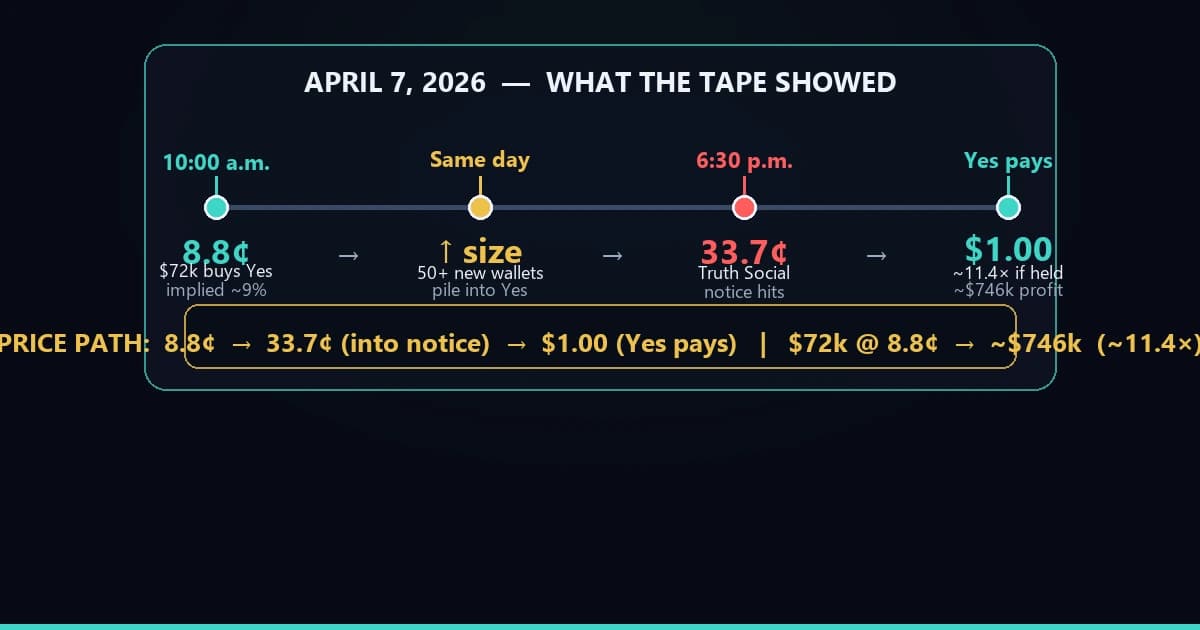
Polymarket 8.8-Cent Wallets Beat Official Notices 2026
Predictions · Aug 3, 2026

China Imported 764 Tons of Gold in Six Months
Markets · Aug 20, 2026

The 'Muslim NATO' Fails Its First Test in 48 Hours
Geopolitics · Aug 27, 2026
Bitcoin $100K in 2026? The Money Says 1-in-5
Markets · Aug 27, 2026
Latest from The Board

Schiff vs Saylor vs the Banks: Who Got 2026 Right?
Predictions · Aug 27, 2026

Silver Deficit 2026: BofA's $300 Target Explained
Markets · Aug 27, 2026

Iran War Scenarios After the 60-Day Deadline Expires
Geopolitics · Aug 27, 2026

Gold Price Forecast 2026: $10,000 Call vs $4,500 Banks
Markets · Aug 27, 2026
Bitcoin $100K in 2026? The Money Says 1-in-5
Markets · Aug 27, 2026
The 'Muslim NATO' Fails Its First Test in 48 Hours
Geopolitics · Aug 27, 2026
China Imported 764 Tons of Gold in Six Months
Markets · Aug 20, 2026
Polymarket 8.8-Cent Wallets Beat Official Notices 2026
Predictions · Aug 3, 2026