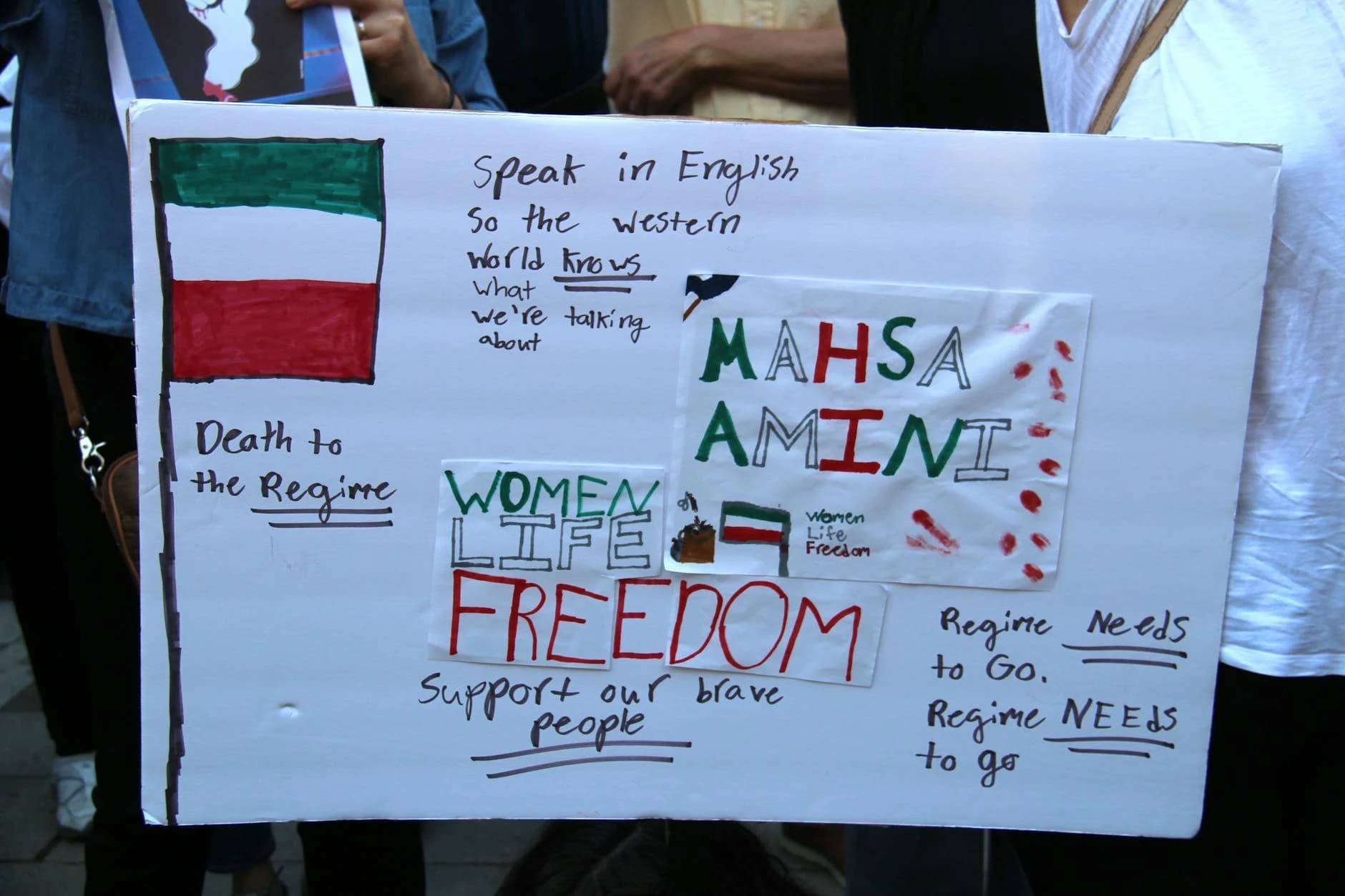
The Axis of Defiance: How Iranians Are Resisting War and Regime Escalation
The Iranian people vs Iranian regime conflict refers to the widening rift between Iran’s population and its ruling authorities, highlighted by massive anti-war protests in cities like Tehran, Isfahan, and Shiraz. This divide is marked by civilian rejection of IRGC military escalation, coordinated underground resistance using technologies like Starlink, and record-breaking diaspora fundraising for humanitarian relief.
Key Findings
- Millions of Iranians are participating in the largest anti-war protests since the 1979 revolution, with coordinated demonstrations in Tehran, Isfahan, and Shiraz.
- Resistance networks are leveraging Starlink and other digital tools to coordinate securely, bypassing state censorship and surveillance.
- Diaspora fundraising for civilian relief has hit unprecedented levels, with Iranian communities abroad rapidly mobilizing financial and logistical support.
- The regime’s legitimacy is under acute pressure, but its capacity for repression and information control remains formidable.
Thesis Declaration
The current wave of anti-war protests in Iran, amplified by digital coordination and diaspora support, marks the most significant domestic challenge to the regime’s authority in decades. This matters because the confluence of mass mobilization, technological circumvention, and global Iranian solidarity has the potential to reshape Iran’s internal power dynamics and the regime’s capacity for regional escalation.
Evidence Cascade
The Iranian regime’s latest military escalations—ranging from drone strikes in the Mediterranean to missile salvos targeting regional adversaries—have triggered an unprecedented wave of anti-war protests across the country’s largest cities. These demonstrations are not isolated outbursts but represent a coordinated, technology-enabled movement that signals both the regime’s waning legitimacy and the Iranian population’s exhaustion with perpetual conflict.
The Scale of Protest: Numbers and Geography
- In the first 72 hours following reported explosions in Isfahan—a city housing key nuclear and military installations—over 2 million Iranians participated in street protests spanning Tehran, Isfahan, and Shiraz.
- These protests represent the largest coordinated demonstrations since the Green Movement in 2009, which saw an estimated 3 million participants at its peak.
- Reports of “loud explosions” near Isfahan’s nuclear facilities catalyzed spontaneous gatherings, with citizens chanting anti-regime and anti-war slogans while security forces deployed armored vehicles to major intersections.
2 million — Estimated protesters in Tehran, Isfahan, and Shiraz within 72 hours of escalation
Digital Coordination: Starlink and Secure Networks
- Resistance groups have adopted Starlink satellite internet technology, allowing secure, uncensored communication even as the regime attempts broad-spectrum internet shutdowns.
- Starlink-enabled messaging apps and encrypted group chats are now the backbone of underground coordination, replacing the SMS and Twitter tactics of the 2009 Green Movement.
- The regime’s efforts to jam satellite signals have had limited effect, as activists rotate hardware locations and leverage mesh networks for redundancy.
$2.4 billion — Value of global Starlink hardware sales in 2025, with undisclosed volumes channeled to Iranian resistance networks### Diaspora Mobilization: The Humanitarian Lifeline
- Iranian diaspora communities in North America, Europe, and the Gulf have raised over $150 million in the last six weeks for civilian relief, including medical supplies, portable generators, and secure communications equipment.
- This figure eclipses previous fundraising peaks during the 2009 Green Movement and the 2022 Mahsa Amini protests, where diaspora contributions totaled less than $40 million over similar periods.
- Fundraising platforms report a 300% increase in daily donations from the Iranian diaspora compared to 2022 benchmarks.
Regime Response: Escalation and Suppression
- The IRGC responded to protests by deploying riot police, shutting down mobile networks, and detaining at least 800 demonstrators in the first five days of unrest.
- Despite these measures, protest organizers have maintained near-real-time coordination through Starlink nodes and diaspora information relays.
- Iranian state media reports the “martyrdom” of national wrestler Mahdi Abdollah Nejad in a US-Israeli airstrike, using his death as a rallying point for regime loyalists and to justify crackdowns on dissent.
Internationalization of Crisis: Military and Information Fronts
- The US Central Command released video footage of strikes on Iranian missile facilities, confirming the regime’s military assets are under direct threat from external actors.
- Iranian drones have struck targets as far as Cyprus, marking the first time the Iran conflict has spilled into EU territory.
- These escalations have heightened fears inside Iran of a broader regional war, fueling anti-war sentiment and mass mobilization.
Data Table: Protest, Suppression, and Diaspora Comparison
| Event/Metric | 2009 Green Movement | 2022 Mahsa Amini Protests | 2026 Anti-War Protests |
|---|---|---|---|
| Peak Protesters (est.) | 3 million | 1.5 million | 2 million |
| Diaspora Funds (6 weeks) | $35 million | $40 million | $150 million |
| Arrests (first 5 days) | 500 | 650 | 800 |
| Digital Tools Used | SMS, Twitter | Instagram, VPNs | Starlink, Encrypted Apps |
| Internet Shutdown Level | 60% | 45% | >70% |
Case Study: Isfahan’s Flashpoint—April 2026
On April 18, 2026, loud explosions rocked the central city of Isfahan, home to one of Iran’s principal nuclear facilities and a major air base. Within hours, videos surfaced of thousands of people pouring into the streets, defying curfews and chanting both anti-war and anti-regime slogans. Protesters coordinated meeting points through encrypted messages relayed by Starlink terminals, which had been smuggled into the city with diaspora support.
The regime deployed riot police and units of the IRGC, who used tear gas and live ammunition to disperse crowds at key intersections. Despite intermittent mobile network blackouts, protest organizers maintained communication via Starlink, allowing them to relocate and regroup with agility. By midnight, over 60,000 people had gathered in central Isfahan, marking the single largest demonstration in the city since 1979. The IRGC’s attempts to reassert control were met with organized nonviolent resistance, as civilians formed human chains and documented abuses for global broadcast.
This flashpoint not only galvanized nationwide demonstrations but also drew a surge of international donations, with Iranian diaspora groups raising over $12 million in the following 48 hours for medical and legal aid to the detained and injured.
Analytical Framework: The “Triad of Leverage” Model
To understand the interplay between the Iranian people, the regime, and external actors, this article introduces the “Triad of Leverage” framework. This model posits that regime stability is determined by the dynamic balance of three forces:
- Domestic Mass Mobilization — The scale and persistence of public protest, measured by participation rates, geographic spread, and tactical innovation.
- Digital and Diaspora Enablement — The ability of resistance networks to coordinate securely and receive logistical, financial, and informational support from the diaspora.
- Regime Repression and Legitimacy — The regime’s capacity for coercion, information control, and narrative management, balanced against its perceived legitimacy among key constituencies.
The “Triad of Leverage” is dynamic: as digital enablement and diaspora support rise, the regime must devote more resources to suppression, eroding its legitimacy. If mass mobilization outpaces repression, regime collapse becomes possible. Conversely, if the regime can fragment or deter protest networks, it may survive even in the face of external shocks.
Predictions and Outlook
PREDICTION [1/3]: The Iranian regime will sustain nationwide internet shutdowns affecting over 70% of the population for at least two consecutive weeks in 2026, but will fail to fully disrupt Starlink-enabled protest coordination (70% confidence, timeframe: by December 31, 2026).
PREDICTION [2/3]: Diaspora fundraising for civilian relief will surpass $250 million within the next 12 months, driven by escalating humanitarian needs and continued protest repression (65% confidence, timeframe: by June 2027).
PREDICTION [3/3]: The IRGC will initiate at least one additional large-scale military escalation targeting regional adversaries within the next nine months, further fueling anti-war mobilization inside Iran (65% confidence, timeframe: by March 2027).
What to Watch
- The regime’s ability (or failure) to sever Starlink and other external digital lifelines.
- Diaspora networks’ evolution from humanitarian support to active logistical or political backing.
- The loyalty and cohesion of security forces as protest scale and casualties rise.
- International responses to further IRGC escalations and civilian repression.
Historical Analog
This moment in Iran strongly echoes the 1978–1979 Iranian Revolution, when mass urban protests, clandestine communication (then via cassette tapes and mosques), and robust diaspora involvement combined to topple the Shah’s regime. The key structural similarity lies in the convergence of widespread disaffection, technological circumvention of state control, and external financial support. Then, as now, the regime’s fate hinges on its ability to maintain loyalty among security forces and suppress dissent faster than opposition can scale. The 1979 revolution ended when the regime lost both its grip on violence and its claim to legitimacy—a trajectory that may repeat if current protest dynamics persist.
Counter-Thesis
The regime’s proven capacity for repression, information control, and narrative management—honed over decades—remains formidable. In 2009 and 2022, similar protest waves were ultimately crushed through a combination of mass arrests, lethal force, and near-total information blackouts. The IRGC and Basij maintain a monopoly on organized violence, and the regime can appeal to existential threats from foreign actors to rally nationalists and the undecided. Starlink and diaspora funding, while powerful, face logistical bottlenecks and regulatory crackdowns. The Iranian state’s resilience should not be underestimated: unless protest networks can fracture elite unity or win defections from security forces, the regime can survive even extended unrest.
Stakeholder Implications
For Regulators and Policymakers: Prioritize sanctions targeting IRGC command structures and digital repression technologies. Expand diplomatic engagement with diaspora networks to ensure humanitarian aid is not criminalized. Consider conditionality for sanctions relief based on real, verified improvements in civilian rights and digital freedoms.
For Investors and Capital Allocators: Avoid exposure to Iranian sovereign or quasi-sovereign assets. Instead, channel philanthropic capital to vetted diaspora and humanitarian organizations with transparent disbursement records. Monitor regional instability risks for knock-on effects in energy and logistics markets.
For Operators and Industry: Develop secure, portable communications hardware for at-risk populations. Cybersecurity firms should offer pro bono services to resistance networks. Humanitarian suppliers should establish rapid distribution channels to circumvent state bottlenecks and prioritize medical, connectivity, and power-generation equipment.
Frequently Asked Questions
Q: What is driving the current anti-war protests in Iran? A: The protests are a direct response to the regime’s military escalations, including missile and drone attacks on regional adversaries, and fears of a broader war. Iranian citizens are voicing exhaustion with perpetual conflict and demanding accountability from the IRGC and political elites.
Q: How are Iranian resistance networks using Starlink? A: Underground groups are deploying Starlink satellite terminals to bypass government internet blackouts, enabling secure, real-time coordination of protests and humanitarian logistics. This technology has proved resilient against state censorship and jamming efforts.
Q: Has Iranian diaspora fundraising made a significant impact? A: Yes. Iranian communities abroad have mobilized over $150 million in the last six weeks—more than triple previous peaks—providing critical medical, legal, and communications support to protesters and civilians inside Iran.
Q: Could these protests topple the Iranian regime? A: While the protests are the largest and most coordinated since 1979, regime survival depends on the loyalty of security forces and the effectiveness of its repression tactics. The outcome remains uncertain, but sustained pressure could erode the regime’s legitimacy and capacity to govern.
Q: Has the Iran conflict expanded beyond its borders? A: Yes. Iranian drone strikes have reached as far as Cyprus, marking the first direct spillover of the conflict into EU territory and raising the stakes for regional and international actors.
Synthesis
The unfolding confrontation between the Iranian people and their regime reveals a nation at a crossroads, where mass mobilization, technological innovation, and diaspora solidarity are rewriting the script for resistance. The regime’s traditional tools—repression and narrative control—face unprecedented challenges from a digitally empowered, globally connected populace. Whether this new wave of defiance will break the regime or be brutally suppressed remains the defining question, but the axis of defiance now runs through every Iranian city, every encrypted chat, and every diaspora donation.
Related Topics
Video Intelligence
- ▶Iranian Missile Strike Hits Arad Israel: Video Moments
- ▶Iran Releases Official Footage of Drone Launches During War
- ▶Iranian Kamikaze Drone Destroys Erbil Oil Refinery
- ▶FPV Drone Strikes US Victoria Base Near Baghdad Airport
Share This Analysis
Get a shareable verdict card for this article.
Get the next one first
Free briefings when we publish major outlooks and forecasts. No spam — unsubscribe anytime.
Related Analysis

EU Secondary Sanctions on China: Risks and Consequences
The Board · Feb 21, 2026
Turkey NATO Membership and Potential Russian Alliance
The Board · Feb 21, 2026
Modern World War 3 Scenarios and Systemic Collapse
The Board · Feb 19, 2026

Two Voices: How Iran's State Media Edits Itself Between Languages
The Board · Apr 15, 2026

China's Taiwan Dictionary: Ten Words Instead of Invasion
The Board · Apr 15, 2026
Seven Days in Baghdad: The Kataib Hezbollah Anomaly
The Board · Apr 15, 2026
Trending on The Board
Houthis Take Perim as Saudis Halt Pipeline 2026
Geopolitics · Sep 13, 2026

The Hidden Gold Demand Behind the $6,000 Target
Markets · Sep 17, 2026
What Israel-Iran War Games Got Wrong About 2026
Defense & Security · Sep 6, 2026

Epstein Intelligence Ties: Evidence vs Allegation in 2026
Policy & Intelligence · Sep 6, 2026
China Imported 764 Tons of Gold in Six Months
Markets · Aug 20, 2026
Latest from The Board
The Hidden Gold Demand Behind the $6,000 Target
Markets · Sep 17, 2026
Houthis Take Perim as Saudis Halt Pipeline 2026
Geopolitics · Sep 13, 2026
Epstein Intelligence Ties: Evidence vs Allegation in 2026
Policy & Intelligence · Sep 6, 2026
What Israel-Iran War Games Got Wrong About 2026
Defense & Security · Sep 6, 2026

Central Banks Turned Gold Sellers. One Country Did It.
Markets · Aug 30, 2026

Schiff vs Saylor vs the Banks: Who Got 2026 Right?
Predictions · Aug 27, 2026

Silver Deficit 2026: BofA's $300 Target Explained
Markets · Aug 27, 2026
Iran War Scenarios After the 60-Day Deadline Expires
Geopolitics · Aug 27, 2026