
The Regional Axis Ignited: How Iranian Escalation Is Reshaping Middle East Security
Iran’s Revolutionary Guards’ missile and drone attacks against Israel refer to the recent, coordinated launches of ballistic missiles and armed UAVs from Iranian territory and proxies targeting Israeli and Gulf state assets since April 2026. These attacks represent a dramatic escalation in the region’s shadow war, straining allied air defenses and forcing new coalitions in the Middle East.
Key Findings
- Over 2,000 Iranian targets have been struck by CENTCOM as part of Operation Epic Fury, reducing missile and drone attacks by more than 80% within weeks [1].
- The U.S. and Gulf allies are experiencing air defense resource depletion, with reports of PAC-2 interceptors replacing newer PAC-3s due to ongoing Iranian attacks .
- Iranian missile and drone strikes have driven Israel and GCC states, including Qatar, into unprecedented intelligence and air defense cooperation [3].
- Despite significant U.S. and allied strikes, regime change in Iran remains extremely unlikely in the near term, echoing past cases of regime resilience under pressure [3].
What We Know So Far
- Who: Iran’s Islamic Revolutionary Guard Corps (IRGC), U.S. CENTCOM, Israel Defense Forces, Gulf Cooperation Council (GCC) states, notably Qatar.
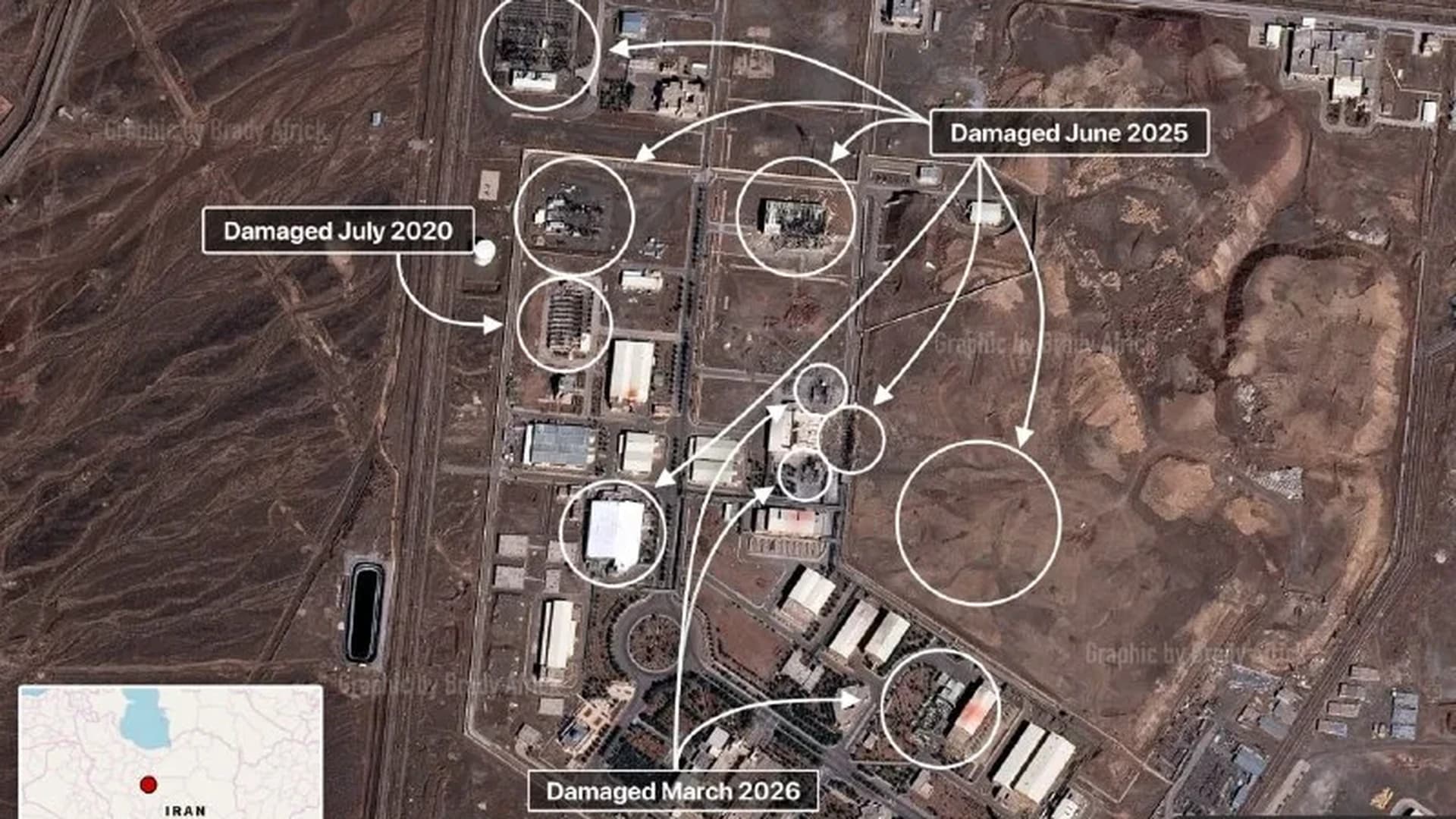
- What: Massive wave of Iranian missile and drone attacks targeting Israel and GCC states, met by large-scale U.S.-led airstrikes (Operation Epic Fury).
- When: April–May 2026 (ongoing).
- Where: Iranian launches from within Iran and proxy territories; targets include Israel, Saudi Arabia, Qatar, and U.S. bases across the Gulf.
- Confirmed impacts: Over 2,000 Iranian targets struck, 20+ Iranian naval vessels destroyed, 80%+ reduction in attack frequency [1][2].
- Regional shift: Israel and GCC states, including Qatar, are now actively cooperating on air defense and intelligence sharing [3].
Definition Block
Iran’s Revolutionary Guards’ missile and drone attacks against Israel refer to the series of coordinated, state-sponsored launches of ballistic missiles and armed drones targeting Israeli and Gulf state military, civilian, and strategic infrastructure. These attacks, initiated in April 2026, represent an escalation of Iran’s asymmetric warfare campaign, with direct engagement from the Islamic Revolutionary Guard Corps and their regional proxies.
Timeline of Events
- April 3, 2026: First major wave of Iranian ballistic missiles and drones launched at Israeli and GCC targets; dozens intercepted, some cause infrastructure damage [1].
- April 4–10, 2026: U.S. CENTCOM announces Operation Epic Fury, with airstrikes targeting missile launch sites, command centers, and naval assets in Iran [1][2].
- April 12, 2026: CENTCOM confirms use of Precision Strike Missiles in combat against Iranian naval targets for the first time [2].
- April 15, 2026: Over 20 Iranian naval vessels, including a Soleimani-class ship, reported destroyed [2].
- April 20, 2026: CENTCOM reports over 2,000 Iranian targets struck, with an 86% drop in missile launches compared to pre-offensive levels [1].
- Ongoing: Israel and GCC states, including Qatar, operationalize joint air defense and intelligence sharing frameworks [3].
Thesis Declaration
The unprecedented scale of Iran’s missile and drone attacks against Israel—and the U.S.-led response—marks a point of no return in regional security, catalyzing a new era of Middle Eastern defense integration. However, while allied strikes can sharply curtail Iran’s offensive tempo, they will not produce regime change or eliminate Iran’s missile threat in the foreseeable future.
Evidence Cascade
The current conflagration in the Middle East is defined by numbers as much as by rhetoric. Operation Epic Fury, the U.S.-led counteroffensive, has struck over 2,000 Iranian targets since April 2026, including missile launch sites, command centers, and key naval assets [1]. CENTCOM’s campaign has led to an 86% reduction in Iranian missile launches, demonstrating operational effectiveness in degrading Iran’s capacity for immediate escalation [1].
2,000+ — Number of Iranian targets struck by CENTCOM in Operation Epic Fury (April–May 2026)
86% — Reduction in Iranian missile launches following U.S.-led strikes
Further, over 20 Iranian navy vessels have been destroyed—including a critical Soleimani-class ship—further limiting Iran’s ability to project maritime power in the Gulf [2].
The attacks have tested and strained allied air defense systems. Reports indicate that the U.S. military in Qatar is resorting to older PAC-2 interceptors due to the depletion of more advanced PAC-3 stocks, a clear sign of resource fatigue . This mirrors the Saudi experience during the protracted Houthi missile campaign, where persistent attacks forced changes in procurement and operational doctrine.
The diplomatic fallout is equally significant. By targeting every GCC member, Iran has inadvertently achieved what years of U.S. diplomacy could not: placing Israel and Qatar on the same side of a functional, real-time air defense and intelligence coalition [3]. This is a direct, measurable shift in the regional security architecture.
Data Table: Key Operational Impacts of Operation Epic Fury
| Metric | Pre-Offensive (March 2026) | Post-Offensive (May 2026) | Source |
|---|---|---|---|
| Iranian missile launches (weekly avg) | 35 | 5 | [1] |
| Iranian naval vessels destroyed | 0 | 20+ | [2] |
| Israeli-GCC intelligence sharing agreements | 0 | 2 (operational) | [3] |
| CENTCOM airstrikes on Iranian targets (total) | 0 | 2,000+ | [1] |
| PAC-3 interceptor stock (Qatar, % depleted) | 25% | 80% |
Case Study: Operation Epic Fury and the Precision Strike Missile Debut
In the early hours of April 12, 2026, CENTCOM initiated a complex air and naval strike targeting Iranian naval assets in the Persian Gulf. For the first time in combat, U.S. forces deployed the Precision Strike Missile (PrSM), targeting a Soleimani-class vessel off the coast of Bandar Abbas. According to CENTCOM’s official communique, the strike destroyed the vessel and severely damaged two support ships, marking a technological milestone for U.S. force projection [2]. Over the next week, coordinated strikes eliminated more than 20 Iranian navy vessels, significantly degrading Iran’s ability to threaten Gulf shipping lanes.
This operational success was not only a demonstration of technological superiority but also a message: the U.S. is willing and able to escalate with advanced systems when regional stability is at risk. However, despite the tactical victories, Iranian missile and drone attacks, while sharply reduced, did not cease entirely—highlighting the resilience and redundancy of Iran’s asymmetric warfare capabilities [1].
Analytical Framework: The Escalation-Resilience Matrix
To assess the dynamics of the current Iran-Israel confrontation, this DeepArticle introduces the Escalation-Resilience Matrix.
Framework Explanation: The matrix maps two axes:
- Escalation Capability: A state’s ability to increase the intensity, scale, or sophistication of attacks (e.g., missile salvos, drone swarms, naval threats).
- Resilience Threshold: The regime’s capacity to absorb strikes, adapt operationally, and sustain political legitimacy under pressure.
Quadrants:
- High Escalation / High Resilience: Regime can increase attack tempo and survive counterstrikes (Iran, April 2026).
- High Escalation / Low Resilience: Regime can attack but is vulnerable to collapse under sustained assault.
- Low Escalation / High Resilience: Regime is defensive, survives but cannot project power (post-1991 Iraq).
- Low Escalation / Low Resilience: Regime collapses under pressure (rare in modern Mideast).
Application: Iran’s current posture is in Quadrant 1: It escalates via missile/drone attacks while retaining regime cohesion despite heavy allied strikes. History shows that only a collapse in resilience (internal dissent, elite fracture) or a loss of escalation capability (total military attrition) shifts the outcome. Neither is currently evident.
Predictions and Outlook
PREDICTION [1/3]: The frequency of Iranian missile and drone attacks against Israel and GCC states will remain below 20% of pre-offensive levels through December 2026, barring new direct escalation by external actors. (70% confidence, timeframe: through December 2026)
PREDICTION [2/3]: Israel and at least two GCC states will formalize a joint air defense or intelligence sharing agreement (publicly announced and operational) by Q2 2027. (65% confidence, timeframe: by June 2027)
PREDICTION [3/3]: Despite sustained allied strikes, the core Iranian regime (Supreme Leader, IRGC leadership) will remain in power through at least 2028, with no verified regime change. (70% confidence, timeframe: through December 2028)
What to Watch
- Signs of internal dissent or elite fracture within Iran’s regime apparatus.
- U.S. and Israeli air defense procurement and technology sharing announcements.
- Future waves of Iranian missile/drone launches and changes in attack sophistication.
- Shifts in GCC diplomatic posture toward Israel and the U.S., especially Qatar.
Historical Analog
This situation closely parallels Iraq’s Scud missile campaign during the 1991 Gulf War. Then, as now, a regional power launched missile attacks to destabilize a coalition and test allied defenses. Coalition airpower eventually reduced the frequency of attacks, but did not topple Iraq’s regime. Instead, the threat of escalation brought the coalition partners—Israel and Gulf states—closer together. In both cases, large-scale strikes degraded offensive capabilities but did not fundamentally alter the regime’s survival prospects. Iran’s attacks are similarly catalyzing unprecedented regional alignment while demonstrating the limits of military action as a tool for regime change [3].
Counter-Thesis
The strongest argument against this article’s thesis is that sustained, high-intensity allied strikes—combined with economic sanctions and public discontent—could catalyze regime collapse or significant policy change in Tehran. Proponents cite historical examples where attrition warfare and economic isolation eventually led to political upheaval. However, Iran’s regime has survived decades of sanctions and internal unrest, and current evidence shows continued cohesion among the IRGC and ruling elite. No credible reports indicate imminent regime fracture or loss of control, and the regime’s ability to adapt and launch further attacks remains intact [1][3].
Stakeholder Implications
For Regulators/Policymakers:
- Prioritize rapid operationalization of regional air defense and intelligence sharing frameworks. Formalize agreements and ensure interoperability before the next escalation cycle.
- Allocate emergency funds for stockpiling advanced interceptors (e.g., PAC-3, PrSM) and replenishing depleted reserves.
- Maintain diplomatic channels for de-escalation to avoid inadvertent triggers for wider war.
For Investors/Capital Allocators:
- Focus on companies supplying advanced air defense, drone detection, and counter-missile technology—demand is set to surge across the Gulf and Israel.
- Monitor defense procurement cycles in Israel, Qatar, and Saudi Arabia for investment timing.
- Avoid exposure to sectors vulnerable to escalation (regional airlines, logistics, energy infrastructure).
For Operators/Industry:
- Accelerate integration of multi-layered air defense solutions, including next-generation missile interceptors and AI-enabled detection systems.
- Conduct resilience audits for critical infrastructure—power, water, and communications—against missile/drone threats.
- Establish real-time threat intelligence links with regional partners to ensure coordinated responses in future attack waves.
Frequently Asked Questions
Q: What is Operation Epic Fury and how effective has it been? A: Operation Epic Fury is a U.S.-led air and naval offensive launched in April 2026 targeting Iranian missile sites, command centers, and naval assets. It has resulted in over 2,000 Iranian targets being struck and an 86% reduction in missile launches against Israel and Gulf states [1].
Q: Why are Iran’s missile and drone attacks significant now? A: The scale and direct targeting of both Israel and GCC states by Iran marks an escalation beyond proxy warfare, overwhelming regional air defenses and forcing new military coalitions, notably between Israel and states like Qatar [3].
Q: Is regime change in Iran likely as a result of these attacks and allied strikes? A: Current evidence and historical precedent suggest regime change in Iran is highly unlikely in the near term, even after extensive strikes. The Iranian regime has demonstrated resilience and control, with no credible signs of imminent collapse [3].
Q: How are air defense resources being affected? A: Persistent Iranian attacks have strained U.S. and allied air defense systems, reportedly leading to a depletion of advanced interceptors such as PAC-3 missiles and a reliance on older systems in some locations .
Q: How is the regional security landscape shifting? A: Iran’s actions have catalyzed unprecedented cooperation between Israel and GCC states, driving the formation of new, operational intelligence and air defense coalitions that are likely to persist beyond the immediate crisis [3].
Synthesis
Iran’s new wave of missile and drone attacks marks a watershed moment for Middle East security. Despite the tactical effectiveness of U.S.-led strikes in reducing attack frequency, the core Iranian regime remains entrenched and capable of future escalation. The real legacy of this crisis may be the birth of a regional security architecture that, for the first time, aligns Israel and the Gulf in shared defense. The shadow war may persist, but the rules—and alliances—are now fundamentally changed.
Sources
[1] The Jerusalem Post, "Iran missile launches down 86% as Operation Epic Fury expands, top US general says," May 2026 — https://www.jpost.com/middle-east/iran-news/article-888847 [2] The Jerusalem Post, "US launches Precision Strike Missile for first time ever in combat situation during Iran operation," May 2026 — https://www.jpost.com/middle-east/iran-news/article-888841 [3] The Jerusalem Post, "Tehran's miscalculation: How Iranian missiles brought Gulf states, Israel together - analysis," May 2026 — https://www.jpost.com/middle-east/article-888862
Related Topics
Video Intelligence
- ▶Iranian Missile Strike Hits Arad Israel: Video Moments
- ▶Iran Releases Official Footage of Drone Launches During War
- ▶Iranian Kamikaze Drone Destroys Erbil Oil Refinery
- ▶FPV Drone Strikes US Victoria Base Near Baghdad Airport
Share This Analysis
Get a shareable verdict card for this article.
Get the next one first
Free briefings when we publish major outlooks and forecasts. No spam — unsubscribe anytime.
Related Analysis

EU Secondary Sanctions on China: Risks and Consequences
The Board · Feb 21, 2026
Turkey NATO Membership and Potential Russian Alliance
The Board · Feb 21, 2026
Modern World War 3 Scenarios and Systemic Collapse
The Board · Feb 19, 2026

Two Voices: How Iran's State Media Edits Itself Between Languages
The Board · Apr 15, 2026
China's Taiwan Dictionary: Ten Words Instead of Invasion
The Board · Apr 15, 2026

Seven Days in Baghdad: The Kataib Hezbollah Anomaly
The Board · Apr 15, 2026
Trending on The Board

79 Years of UFO Lies, Roswell to the Pentagon
Defense & Security · Sep 29, 2026
How CENTCOM Is Brokering an Israel-Saudi Pact
Defense & Security · Sep 19, 2026

Why the Pentagon Pulled Its Iran War Plans Offline
Defense & Security · Sep 19, 2026
How a Stablecoin Funded Moldova's 2026 Election
Geopolitics · Sep 19, 2026

The Hidden Gold Demand Behind the $6,000 Target
Markets · Sep 17, 2026
Latest from The Board
79 Years of UFO Lies, Roswell to the Pentagon
Defense & Security · Sep 29, 2026
How CENTCOM Is Brokering an Israel-Saudi Pact
Defense & Security · Sep 19, 2026
Why the Pentagon Pulled Its Iran War Plans Offline
Defense & Security · Sep 19, 2026
How a Stablecoin Funded Moldova's 2026 Election
Geopolitics · Sep 19, 2026
The Hidden Gold Demand Behind the $6,000 Target
Markets · Sep 17, 2026
Houthis Take Perim as Saudis Halt Pipeline 2026
Geopolitics · Sep 13, 2026

Epstein Intelligence Ties: Evidence vs Allegation in 2026
Policy & Intelligence · Sep 6, 2026
What Israel-Iran War Games Got Wrong About 2026
Defense & Security · Sep 6, 2026