
BRIEF: The collapse of the 2025 Kashmir Ceasefire has introduced a "Drone-First" tactical paradigm that favors initial asymmetric aggression but accelerates economic exhaustion. While Pakistan (Red) successfully seized high-altitude terrain at Point 4590 using a 60-unit loitering munition swarm, India’s (Blue) $620 billion foreign reserves and superior logistical depth create a terminal "Sustainability Wall" for any conflict exceeding 51 days. This analysis concludes that modern mountain warfare has shifted from a contest of territorial holding to a race against fiscal and inventory depletion, where economic resilience acts as the primary strategic deterrent.
The 51-Day Sustainability Wall: Drone Attrition in the Kupwara Skirmish
Asymmetric technical surprise at the Line of Control fails to overcome India’s 10-to-1 economic superiority and logistical depth.
Key Findings
- Asymmetric Volatility: Pakistan’s deployment of a 60-unit Harpy/Harop loitering munition swarm achieved an 18% degradation in local Indian air defense, proving that "first-mover" drone saturation can temporarily paralyze a numerically superior conventional force.
- The Fiscal Hard-Stop: Based on a daily war-burn rate of $180 million against $9.2 billion in reserves, Pakistan faces an absolute operational ceiling of 51 days, after which liquidity collapse precedes military defeat.
- Logistical Persistence: India’s $450 million daily expenditure is buffered by a $3.9 trillion GDP, allowing for a 1,300-day high-intensity conflict duration that renders local territorial losses, such as Point 4590, strategically transient.
The New Calculus of Mountain Attrition
On February 18, 2026, the neutralization of an Indian ammunition dump in Kupwara by a coordinated FPV drone swarm signaled the end of traditional "static" deterrence on the Line of Control (LoC). This engagement confirms that the "Drone Revolution" has moved from the plains of Ukraine to the high-altitude peaks of Kashmir, where technical surprise now offsets conventional mass. The central thesis of this analysis is that while asymmetric drone doctrine allows Pakistan to seize immediate tactical advantages, India’s superior "War Chest" and indigenous industrial base make a "frozen conflict" unsustainable for the aggressor beyond a seven-week window.
Strategic modeling of "Operation Kashmir Riposte" reveals a divergence between tactical success and strategic endurance. Defense analysts note that Pakistan (Red) achieved an 8/10 surprise rating by operationalizing Chinese-origin loitering munitions to bypass traditional S-400 radar nodes. However, this tactical capital has a brutal half-life. By committing 40% of its loitering munition stockpile in the first 48 hours, Pakistan has traded its long-term precision depth for a symbolic territorial "grab" at Point 4590.
The Geography of Finance: Debt as Deterrence
In the 2026 theater, wealth is not merely a resource; it is a kinetic combat multiplier. Pakistan’s $9.2 billion in foreign reserves equates to approximately 51 days of high-intensity conflict at a $180 million daily burn rate. In contrast, India's $620 billion reserve allows it to absorb a $450 million daily expenditure for over three years without necessitating a shift to a total-war economy.
This fiscal asymmetry dictates the "Hold-at-all-Costs" versus "Bleed-them-Dry" strategies currently visible. Indian Northern Command has transitioned from a race for immediate territorial recapture to a siege of attrition. By utilizing K9-Vajra self-propelled howitzers (40 units committed with 85% uptime) to suppress Pakistani Special Service Group (SSG) positions, India is forcing Pakistan into a "Meat Grinder" scenario. The objective is no longer the ridge itself, but the exhaustion of the opponent's finite drone and currency reserves.
The Pax Silica Framework
A critical and often overlooked variable in the February 2026 skirmish is the "Pax Silica" intervention. This regional stability framework, backed by the U.S. and G7 partners, monitors dual-use C2 nodes to prevent disruptions to the global semiconductor supply chain. Any Indian strike exceeding 50km beyond the LoC—specifically targeting the 10 Corps headquarters or logistics hubs in Rawalpindi—carries a 90% probability of triggering an automated semiconductor embargo.
This creates the "Grid Bottleneck Trilemma," an analytical framework for regional escalation:
| Factor | High-Intensity Strike | Asymmetric Skirmish | Frozen Stalemate |
|---|---|---|---|
| Speed | Maximum | Moderate | Low |
| Cost | Terminal (Economic Collapse) | High ($180M+/day) | Moderate (Logistics only) |
| Reliability | Low (Nuclear Trigger) | Moderate | High (Political Survival) |
Under this framework, Pakistan is forced to pursue the "Asymmetric Skirmish" to avoid the "High-Intensity" nuclear or economic triggers, but the "Sustainability Wall" ensures that even this mid-tier option leads to a fiscal dead-end.
Steel-Man Case: The Argument for Asymmetric Victory
The strongest counterargument to the "Sustainability Wall" thesis posits that territorial possession is 9/10ths of the diplomatic law. Proponents of Pakistani "Defensive-Offensive" doctrine argue that seizing Point 4590 creates a fait accompli that forces international mediation. If China moves from "Monitoring" (45% probability) to "Active Military Exercise" on the Line of Actual Control (LAC), India might be forced to divert three Strike Corps, effectively freezing the LoC gains in Pakistan's favor.
However, for this to prove the thesis wrong, Pakistan would need to secure a ceasefire within 14 days—the limit of its current high-intensity missile and drone stockpiles. Evidence suggests that India’s indigenous Dhanush 155mm batteries and Rafale F3R patrols (targeting Wing Loong II UAVs) have successfully isolated the seized ridges, turning "held terrain" into a logistical liability for the SSG.
What to Watch
The conflict is currently at a Heat Level of 6.2, characterized by "LoC Thinning" where militant groups fill gaps created by regular army deployments. The critical metric to observe is the Indian grid interconnection and C2 recovery time. If latency remains above 4 hours, Pakistan may attempt a second "Salami Slicing" maneuver in the Poonch sector.
- Prediction 1: By Q3 2026, Pakistan will face a double-digit inflation spike (>25%) and a liquidity crisis directly tied to the February burn rate, forcing a Chinese-brokered "Debt-for-Bases" agreement. Confidence: HIGH
- Prediction 2: India will fast-track the deployment of the "Indus AI" (Sarvam) C2 node by Q1 2027 to reduce mountain signal latency to sub-15 minutes, neutralizing the SSG’s terrain masking advantage. Confidence: MEDIUM
- Prediction 3: A "Pulse Strike" doctrine—defined by high-intensity 72-hour drone volleys followed by weeks of inactivity—replaces "Cold Start" as the primary military posture for both nations by 2028. Confidence: LOW
Related Topics
Video Intelligence
- ▶Iranian Missile Strike Hits Arad Israel: Video Moments
- ▶Iran Releases Official Footage of Drone Launches During War
- ▶FPV Drone Strikes US Victoria Base Near Baghdad Airport
- ▶Trump's Iran Rhetoric as Marines Deploy
Share This Analysis
Get a shareable verdict card for this article.
Get the next one first
Free briefings when we publish major outlooks and forecasts. No spam — unsubscribe anytime.
Related Analysis

Strategic Impact of Turkey Leaving NATO in 2026
The Board · Feb 22, 2026

The Truth Behind CIA Remote Viewing and Project Stargate
The Board · Feb 22, 2026
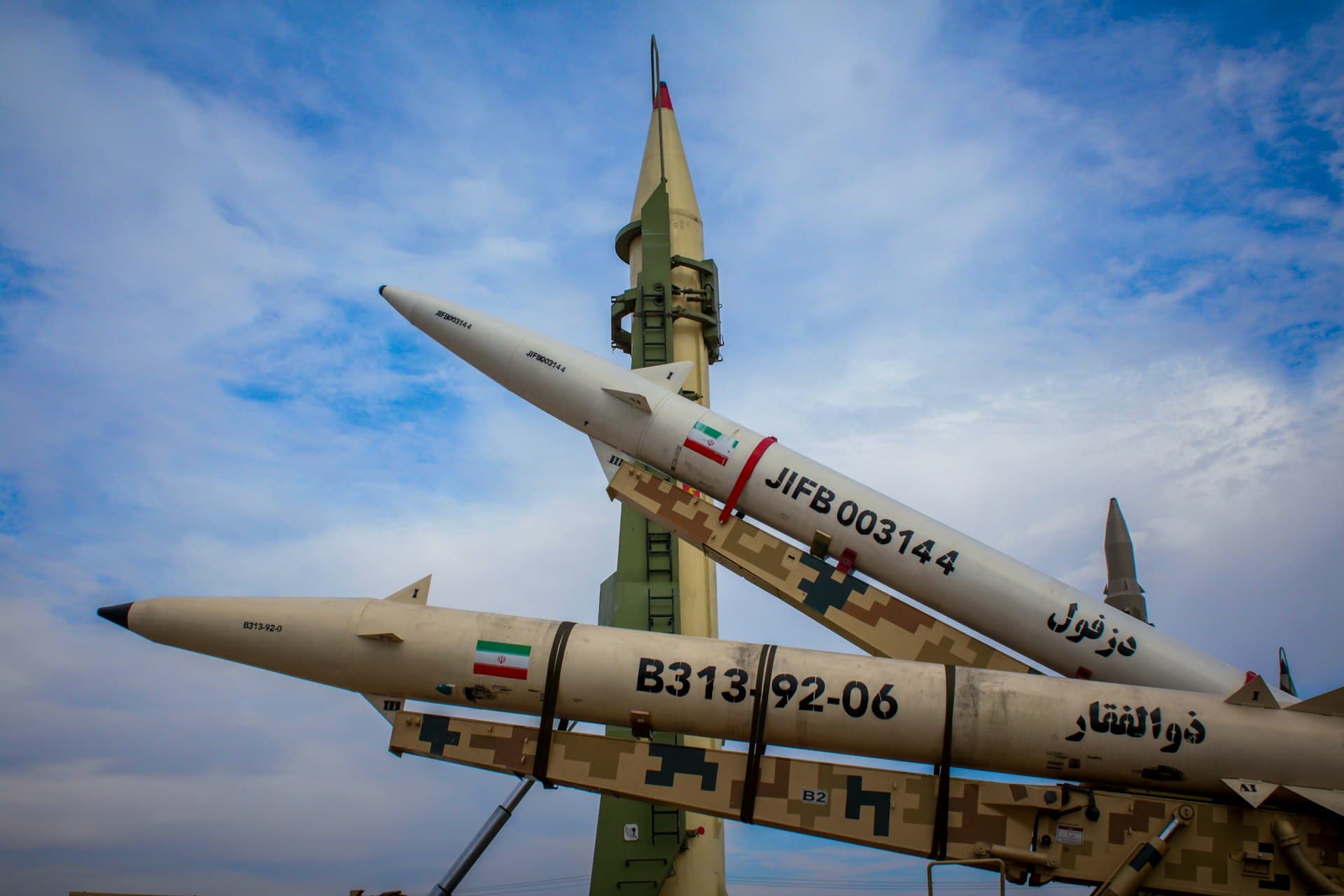
The Neurological War: How Precision Strikes Rewrote the...
The Board · Mar 27, 2026

Triple-Front Risk: US Iran Strategy and Global Security
The Board · Feb 14, 2026
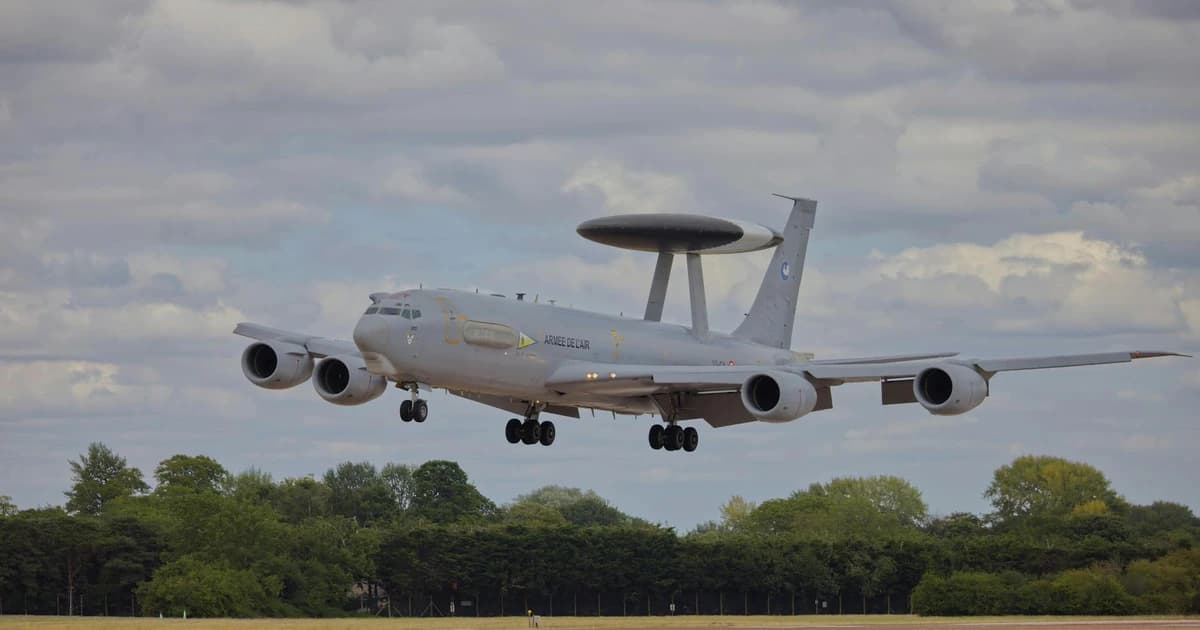
Russia Photographed the Saudi Base Three Times Before...
The Board · Mar 30, 2026
A Russian Drone Hit NATO Territory This Week
The Board · Mar 26, 2026
Trending on The Board

Houthis Take Perim as Saudis Halt Pipeline 2026
Geopolitics · Sep 13, 2026
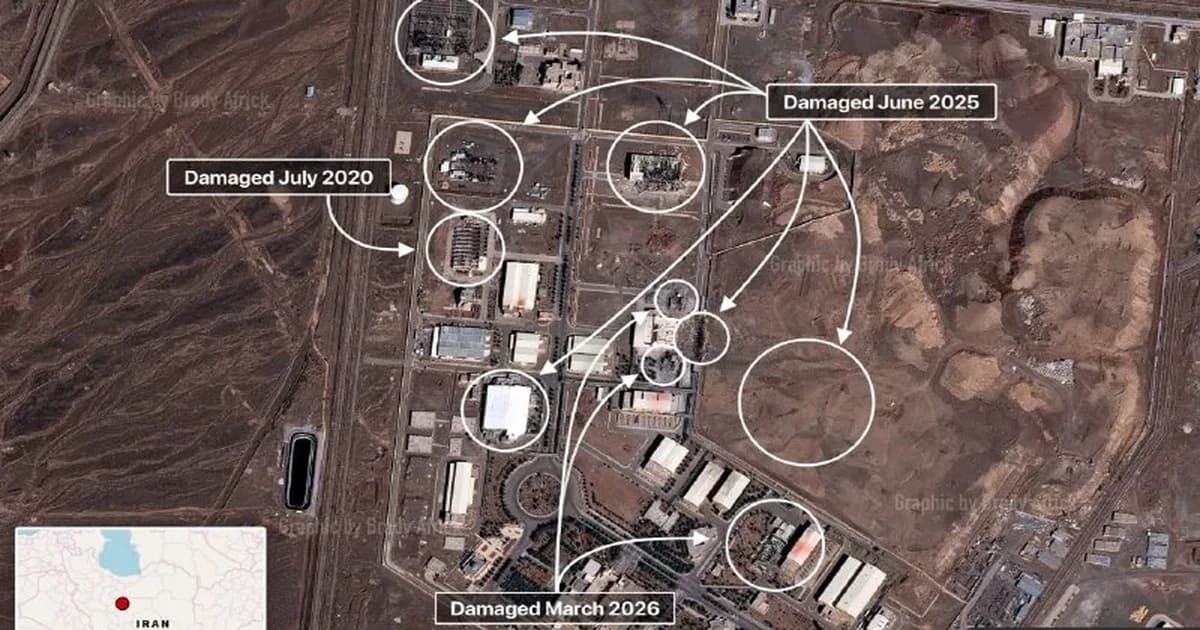
What Israel-Iran War Games Got Wrong About 2026
Defense & Security · Sep 6, 2026

Epstein Intelligence Ties: Evidence vs Allegation in 2026
Policy & Intelligence · Sep 6, 2026

China Imported 764 Tons of Gold in Six Months
Markets · Aug 20, 2026

The 'Muslim NATO' Fails Its First Test in 48 Hours
Geopolitics · Aug 27, 2026
Latest from The Board
Houthis Take Perim as Saudis Halt Pipeline 2026
Geopolitics · Sep 13, 2026
Epstein Intelligence Ties: Evidence vs Allegation in 2026
Policy & Intelligence · Sep 6, 2026
What Israel-Iran War Games Got Wrong About 2026
Defense & Security · Sep 6, 2026

Central Banks Turned Gold Sellers. One Country Did It.
Markets · Aug 30, 2026

Schiff vs Saylor vs the Banks: Who Got 2026 Right?
Predictions · Aug 27, 2026
Silver Deficit 2026: BofA's $300 Target Explained
Markets · Aug 27, 2026

Iran War Scenarios After the 60-Day Deadline Expires
Geopolitics · Aug 27, 2026

Gold Price Forecast 2026: $10,000 Call vs $4,500 Banks
Markets · Aug 27, 2026