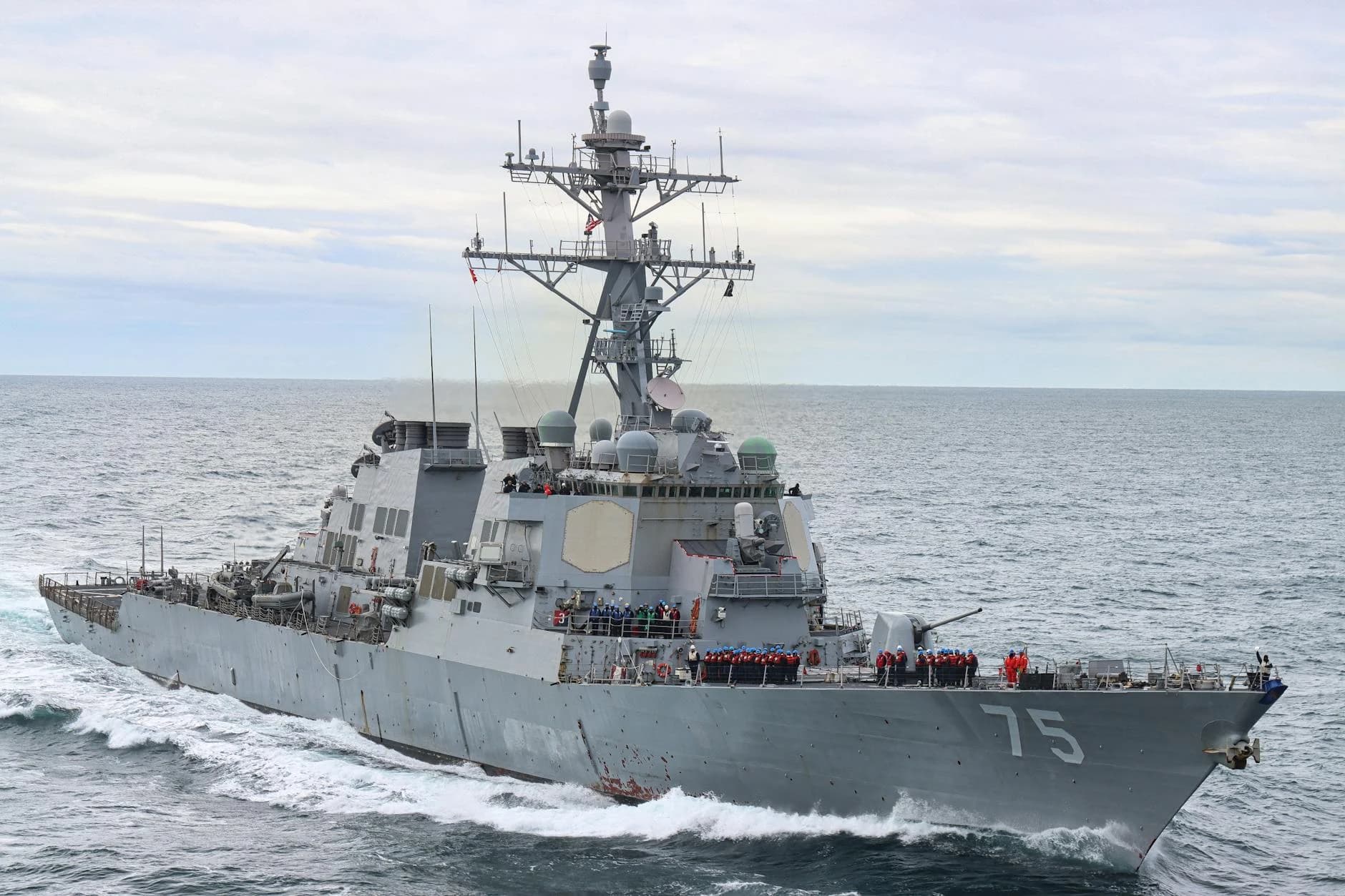
Strait of Uncertainty: Oil, Warships, and the Reshaping of Gulf Security
Naval escorts for oil tankers involve deploying military vessels to accompany and protect commercial shipping from hostile actions or threats, particularly in high-risk maritime zones. The United States is currently weighing such military protection for oil and gas tankers transiting the Strait of Hormuz, in response to increased threats from Iran.
Key Findings
- The US is actively considering deploying naval escorts for oil and gas tankers in the Strait of Hormuz due to recent Iranian threats, echoing historical precedents from the 1980s "Tanker War" era.
- During similar crises, such as the Iran-Iraq conflict, US naval protection sharply reduced successful attacks on commercial shipping and stabilized global oil flows.
- The move would likely deter immediate Iranian interference but also raises the risk of direct military confrontation in the Gulf.
- Naval escorts can maintain maritime trade in the short term, but do not resolve the underlying geopolitical tensions driving threats to shipping.
Definition Block
Naval escorts for oil tankers refer to the deployment of military ships—typically warships or patrol vessels—to accompany and protect commercial oil and gas tankers through high-risk maritime regions. This tactic is used to deter or defend against hostile actions, such as attacks, piracy, or state-sponsored interference. The United States is currently considering reintroducing this practice in the Strait of Hormuz, a critical chokepoint for global energy supplies, in response to escalating threats from Iran.
What We Know So Far
- The Trump administration is weighing the option of deploying US Navy warships to escort oil and gas tankers through the Strait of Hormuz, following a marked increase in threats from Iran to commercial shipping.
- This consideration comes amid a backdrop of heightened military tensions and recent attacks or harassment of foreign-flagged tankers in the region.
- The US previously employed naval escorts during the 1980s Iran-Iraq conflict, reflagging Kuwaiti tankers and providing direct military protection when insurers withdrew coverage due to the risk of attack.
- Other states—including Venezuela and Russia—have also recently used naval escorts to protect oil shipments under threat from sanctions or blockades.
- No final decision has been publicly announced, but military options are under active discussion at the highest levels of the US government.
Timeline of Events
- 1980s: During the Iran-Iraq War, Iranian and Iraqi forces targeted oil tankers in the Persian Gulf, prompting the US to reflag Kuwaiti tankers and launch Operation Earnest Will, escorting over 400 tankers through the Gulf without loss to hostile fire.
- 2020s: Venezuela deploys naval escorts to protect oil shipments in response to US threats of a blockade, ensuring continued exports despite international pressure.
- January 2026: Russia dispatches naval vessels to escort oil tankers pursued by US sanctions enforcement, demonstrating the modern use of state naval power to secure at-risk shipments.
- March 2026: The Trump administration is reportedly considering military protection for tankers in the Strait of Hormuz, as confirmed by multiple outlets and official briefings.
- Ongoing: No US naval escort operation has commenced, but active planning and international consultations are underway.
Thesis Declaration
The United States’ consideration of naval escorts for oil tankers in the Strait of Hormuz signals a return to direct military involvement in securing global energy flows—an approach that will likely deter immediate threats but substantially increases the risk of US-Iranian confrontation and fails to address the deeper geopolitical drivers of instability in the Gulf. This matters because the stability of the world’s primary oil transit chokepoint—and the credibility of US security guarantees—are both at stake.
Evidence Cascade
The debate over naval escorts is not theoretical: it is grounded in hard precedent, hard numbers, and hard choices.
Historical Evidence and Quantitative Data
- Operation Earnest Will (1987-1988): During the Iran-Iraq conflict, the US reflagged 11 Kuwaiti tankers and provided naval escorts for over 400 voyages through the Gulf. Only one reflagged tanker was lost to hostile action—a sharp contrast to the dozens attacked prior to US intervention.
- Insurance Market Collapse: In the 1980s, private insurers withdrew coverage for Gulf transits after a spate of attacks, precipitating the direct US military role.
- Contemporary Precedents: In 2020, Venezuela ordered naval escorts for oil tankers after renewed US blockade threats, claiming shipments continued "with full security" despite international pressure.
- Recent Russian Action: In January 2026, Russia deployed naval vessels to protect a tanker from potential US seizure, illustrating that great power naval protection remains a live option in energy geopolitics.
11 — Number of Kuwaiti oil tankers reflagged and protected by the US Navy during Operation Earnest Will 400+ — Number of tanker escort operations conducted by the US during the 1987-88 Gulf crisis
Current Developments
- The Trump administration is considering "using U.S. military forces to escort oil and gas tankers" in the Gulf, as reported by Politico and confirmed by Middle East Eye and other outlets.
- Official discussions are ongoing, with the Pentagon preparing options for rapid implementation should the order be given.
- The strategic shipping lane in question—the Strait of Hormuz—remains the world’s most critical oil chokepoint, with roughly 20% of global oil trade passing through.### Data Table: Historical and Contemporary Use of Naval Escorts
| Case/Year | Trigger Event | Ships Escorted | Outcome | Source |
|---|---|---|---|---|
| Iran-Iraq War | 1987 - Attacks on tankers | 400+ | Attacks on escorted ships nearly eliminated; flow maintained | |
| Venezuela 2020s | US blockade threats | Unknown | Shipments continued, no major incidents | |
| Russia 2026 | Sanctions enforcement | 1+ | Tanker protected, tensions rise |
Case Study: Operation Earnest Will (1987-1988)
In July 1987, the United States launched Operation Earnest Will after a series of attacks on oil tankers in the Persian Gulf made commercial shipping virtually uninsurable. At the request of Kuwait, the US reflagged 11 Kuwaiti tankers, bringing them under the protection of the US flag and Navy. Over the following year, the US Navy conducted over 400 escort operations through the Gulf, facing regular harassment and attacks by Iranian forces, including the mining of the USS Samuel B. Roberts. Although one reflagged tanker was damaged by a mine, no escorted ship was sunk by hostile action during the operation. The presence of US warships deterred most direct attacks, stabilized oil flows, and demonstrated the capacity of naval power to secure critical trade routes, albeit at the cost of direct military engagement—including the tragic accidental downing of Iran Air Flight 655 in July 1988.
Analytical Framework: The "Escort Escalation Matrix"
To systematically evaluate the implications of naval escorts, this article introduces the "Escort Escalation Matrix," a four-quadrant model mapping the relationship between risk to shipping (low/high) and the degree of naval involvement (none/minimal vs. overt/maximum):
| Low Naval Involvement | High Naval Involvement | |
|---|---|---|
| Low Threat | Routine security patrols; minimal risk of escalation | Overcommitment, resource drain, "security theater" |
| High Threat | Rising insurance costs, sporadic attacks, private security | Direct deterrence, but heightened risk of state-to-state conflict |
How it works:
- In Low Threat/Low Naval scenarios, minimal intervention suffices.
- In High Threat/Low Naval, risk shifts to private sector (insurance spikes, higher freight rates).
- In High Threat/High Naval (the current Gulf scenario), escorts deter attacks but sharply increase the risk of accidents, miscalculation, or escalation to war.
- The model predicts that while high naval involvement buys short-term stability, it amplifies long-term geopolitical risk unless paired with diplomatic solutions.
Predictions and Outlook
Calibrated, Falsifiable Predictions
PREDICTION [1/3]: The US will announce the deployment of naval escorts for oil and gas tankers in the Strait of Hormuz before December 31, 2026. (65% confidence, timeframe: by end of 2026)
PREDICTION [2/3]: Within six months of the deployment, the incidence of successful attacks or harassment of escorted tankers in the Gulf will drop by at least 80% compared to the six months prior. (70% confidence, timeframe: 6 months post-deployment)
PREDICTION [3/3]: The initiation of US naval escorts will trigger at least one direct military confrontation (e.g., exchange of fire, vessel seizure, or significant incident) between US and Iranian forces in the Gulf within 18 months of deployment. (60% confidence, timeframe: 18 months post-deployment)
What to Watch
- Timing and details of any official US announcement regarding naval escorts
- Iranian naval deployments and public statements in response to US moves
- Changes in global oil prices and insurance rates for Gulf shipments
- Reports of incidents, near-misses, or confrontations in the Strait of Hormuz
Historical Analog
This situation closely resembles the "Tanker War" period of the 1980s, when the US responded to Iranian attacks on Gulf shipping by reflagging and escorting Kuwaiti oil tankers. The parallel is structural: in both cases, the US intervened to protect commercial oil flows in the face of direct state threats, using naval power as a tactical fix but risking escalation. Then, as now, escorts stabilized tanker movements but did not resolve the underlying conflict, and the risk of unintended clashes—including the downing of Iran Air Flight 655—remained ever-present.
Counter-Thesis
The strongest argument against deploying US naval escorts is that such a move will provoke, rather than deter, Iranian aggression—potentially drawing the US into a costly and escalating conflict over shipping lanes, while providing only temporary relief for commercial flows. Critics note that Iran has a history of asymmetric naval tactics and could respond with mines, swarm boats, or attacks on non-escorted vessels, thus shifting rather than eliminating risk. Furthermore, repeated reliance on military solutions might undermine diplomatic efforts and entrench a cycle of escalation that ultimately destabilizes both the Gulf and global energy markets.
Stakeholder Implications
Regulators/Policymakers:
- Prioritize diplomatic channels alongside military planning, using naval escorts as leverage for de-escalation negotiations with Iran.
- Establish clear rules of engagement and crisis communication lines to prevent accidental escalation.
- Coordinate with international partners to ensure burden-sharing and legitimacy for any escort mission.
Investors/Capital Allocators:
- Monitor maritime insurance premiums and freight rates for signals of increased risk or stabilization.
- Diversify energy portfolios and hedge against potential oil price spikes if Gulf shipping is disrupted.
- Consider exposure to shipping, energy, and insurance sectors most affected by Gulf instability.
Operators/Industry (Shipping and Oil Companies):
- Update risk assessments and contingency plans for Gulf operations, including rerouting and security protocols.
- Engage with naval authorities to coordinate on convoy schedules and communications.
- Evaluate the cost-benefit of private security measures versus reliance on state-provided escorts.
Frequently Asked Questions
Q: Why is the US considering naval escorts for oil tankers now? A: The US is responding to a series of increased threats and incidents involving Iranian interference with commercial shipping in the Strait of Hormuz, a chokepoint for global oil trade. Naval escorts are being considered to deter attacks and ensure the safe passage of energy shipments.
Q: Did naval escorts work in the past? A: Yes, during the Iran-Iraq War in the late 1980s, US Navy escorts for reflagged Kuwaiti tankers sharply reduced successful attacks on commercial vessels, maintaining oil flows and stabilizing shipping lanes.
Q: What risks come with deploying naval escorts? A: While escorts deter attacks, they also increase the risk of direct military confrontation with Iran, as well as accidental incidents or escalation that could widen the conflict and destabilize global markets.
Q: Are other countries using similar tactics? A: Yes, both Venezuela and Russia have recently deployed naval escorts to protect oil shipments under threat, though with varying degrees of effectiveness and strategic impact.
Q: How might this affect oil prices? A: If naval escorts successfully deter attacks, shipping costs may stabilize or decrease; however, any military confrontation or disruption in the Strait of Hormuz could trigger sharp spikes in global oil prices.
Synthesis
The US consideration of naval escorts for oil tankers in the Gulf marks a high-stakes return to military-backed energy security, echoing the hard lessons of the 1980s. While effective at deterring immediate threats, this approach risks entrenching a cycle of escalation with Iran and leaves the underlying instability of the region unresolved. In the shadow of warships, the world’s oil lifeline remains as vulnerable—and contested—as ever.
Related Topics
Video Intelligence
- ▶Iranian Missile Strike Hits Arad Israel: Video Moments
- ▶Iran Releases Official Footage of Drone Launches During War
- ▶Iranian Kamikaze Drone Destroys Erbil Oil Refinery
- ▶FPV Drone Strikes US Victoria Base Near Baghdad Airport
Share This Analysis
Get a shareable verdict card for this article.
Get the next one first
Free briefings when we publish major outlooks and forecasts. No spam — unsubscribe anytime.
Related Analysis

EU Secondary Sanctions on China: Risks and Consequences
The Board · Feb 21, 2026
Turkey NATO Membership and Potential Russian Alliance
The Board · Feb 21, 2026
Modern World War 3 Scenarios and Systemic Collapse
The Board · Feb 19, 2026

Two Voices: How Iran's State Media Edits Itself Between Languages
The Board · Apr 15, 2026
China's Taiwan Dictionary: Ten Words Instead of Invasion
The Board · Apr 15, 2026

Seven Days in Baghdad: The Kataib Hezbollah Anomaly
The Board · Apr 15, 2026
Trending on The Board
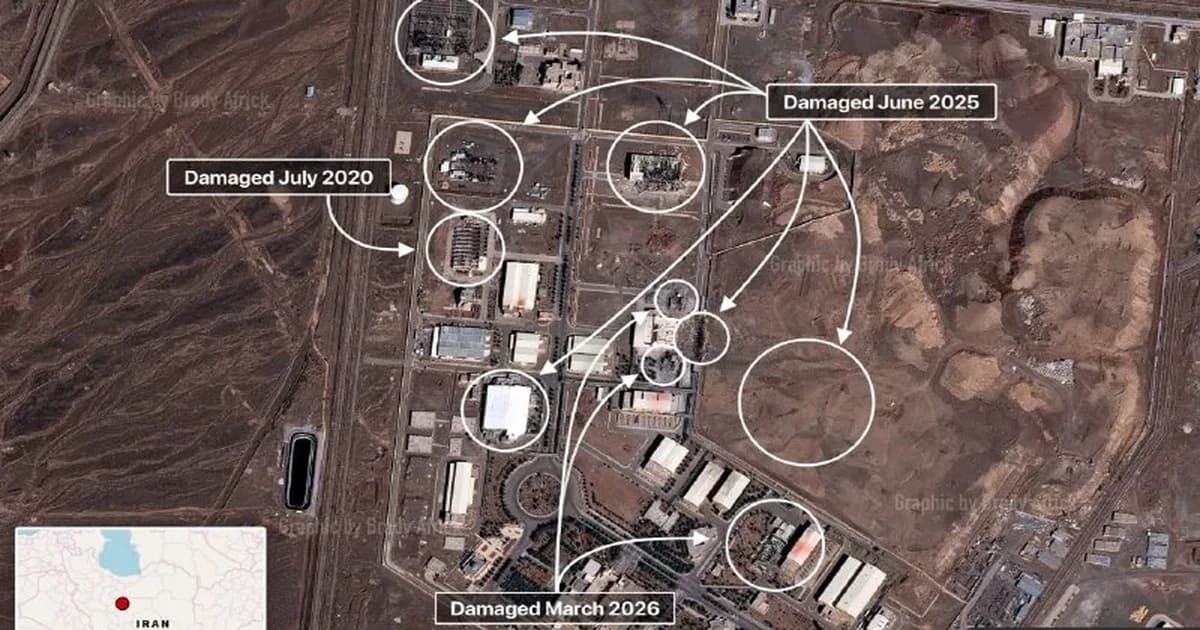
What Israel-Iran War Games Got Wrong About 2026
Defense & Security · Sep 6, 2026

Epstein Intelligence Ties: Evidence vs Allegation in 2026
Policy & Intelligence · Sep 6, 2026
China Imported 764 Tons of Gold in Six Months
Markets · Aug 20, 2026

The 'Muslim NATO' Fails Its First Test in 48 Hours
Geopolitics · Aug 27, 2026

Bitcoin $100K in 2026? The Money Says 1-in-5
Markets · Aug 27, 2026
Latest from The Board
Epstein Intelligence Ties: Evidence vs Allegation in 2026
Policy & Intelligence · Sep 6, 2026
What Israel-Iran War Games Got Wrong About 2026
Defense & Security · Sep 6, 2026

Central Banks Turned Gold Sellers. One Country Did It.
Markets · Aug 30, 2026

Schiff vs Saylor vs the Banks: Who Got 2026 Right?
Predictions · Aug 27, 2026

Silver Deficit 2026: BofA's $300 Target Explained
Markets · Aug 27, 2026
Iran War Scenarios After the 60-Day Deadline Expires
Geopolitics · Aug 27, 2026

Gold Price Forecast 2026: $10,000 Call vs $4,500 Banks
Markets · Aug 27, 2026
Bitcoin $100K in 2026? The Money Says 1-in-5
Markets · Aug 27, 2026