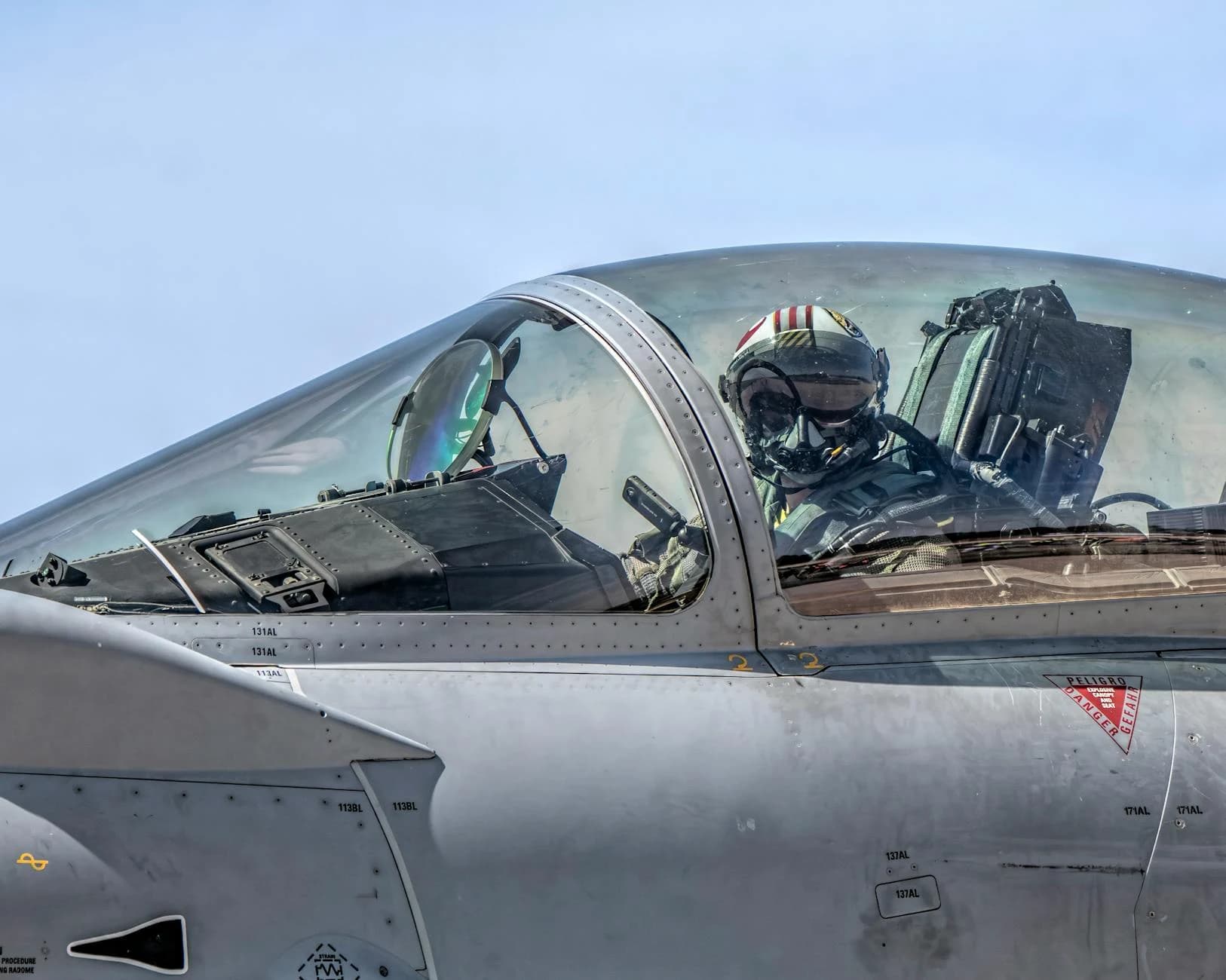
Epic Fury and the New American Threshold
The White House claim that the U.S. has sufficient military capability for an Iran operation refers to Washington’s assertion that its armed forces and stockpiles are adequate to execute Operation Epic Fury against Iran and potentially expand military actions in the region. This statement is intended to project American readiness, deter adversaries, and reassure allies amid escalating tensions.
Key Findings
- The White House publicly asserts full military readiness and sufficient weapons stockpiles to execute Operation Epic Fury against Iran, though allied cooperation is contested by Spain and others.
- Air control over Iran is targeted for establishment “in the coming hours,” but logistical and diplomatic challenges complicate U.S. operational freedom.
- Historical analogs (Iraq 2003, Iran 1980, Gulf 1991) show public claims of readiness often mask deeper alliance and operational uncertainties, with initial dominance not guaranteeing long-term success.
- Spain’s government directly denies U.S. claims of military cooperation, highlighting fractures in coalition credibility and potential strain on U.S. capacity to sustain expanded operations[1][2].
What We Know So Far
- The White House, through press secretary Karoline Leavitt, claims the U.S. military is fully equipped and prepared for a major operation against Iran — “Operation Epic Fury.”
- Leavitt asserts that Madrid has agreed to cooperate with U.S. military efforts, despite Spain’s official denial of any such agreement[1][2].
- The U.S. aims to secure full air control over Iranian territory “in the coming hours,” according to a White House spokesperson.
- No specific timeline is provided for securing the Strait of Hormuz, a critical oil chokepoint, and the White House says this is “actively being calculated” by the Defense and Energy departments[3].
- Axios reports Israeli Prime Minister Netanyahu has asked the White House if secret Iran talks are ongoing, suggesting Israeli concerns about U.S. diplomatic maneuvering.
- There are reports of U.S. and Iranian strikes in the region, with casualties noted in U.S. operations dubbed “Fury”[4].
Thesis Declaration
The White House’s assertion of sufficient U.S. military capabilities for an Iran operation overstates American readiness, as evidenced by contested alliance claims, logistical uncertainty, and the complex operational environment. This matters because a miscalculation in capability, coalition strength, or escalation dynamics could lead to rapid initial gains but protracted instability and strategic risk.
Timeline of Events
- [Day -2]: U.S. launches Operation Epic Fury, targeting Iranian assets; regional tensions spike[4].
- [Day -1]: White House Press Secretary Leavitt claims Spain has agreed to military cooperation[1].
- [Day -1]: Spain officially denies any agreement with the U.S. regarding military cooperation[2].
- [Day 0]: White House spokesperson claims U.S. will achieve full air control over Iran “in the coming hours.”
- [Day 0]: No timeline provided for securing the Strait of Hormuz; U.S. Defense and Energy departments “actively calculating” options[3].
- [Day 0]: Israeli Prime Minister Netanyahu seeks clarification from the White House on the existence of secret U.S.-Iran talks.
Evidence Cascade
The White House’s public readiness claims are belied by immediate diplomatic pushback and operational uncertainties:
1. Alliance Fractures
- Spain’s Denial: While White House press secretary Karoline Leavitt declared “Spanish authorities have agreed to cooperate with the U.S. military,” Spain publicly denied any such agreement within hours[1][2].
“JUST IN: Spain denies White House claims that it has agreed to cooperate with the US military.” — BRICSNews[2]
- This exposes a credibility gap at the heart of U.S. coalition-building, echoing fissures seen in past Middle East operations.
2. Operational Complexity
- Air Control Timeline: The White House claims it will “achieve full air control over Iran in the coming hours,” a feat requiring sustained sorties, suppression of Iranian air defenses, and robust logistics — all while facing potential asymmetric retaliation.
- Strait of Hormuz: The White House declines to specify a timeline for securing the Strait of Hormuz, citing ongoing calculations by the Defense and Energy departments[3].
3. Resource and Material Readiness
- Weapon Stockpiles: No disclosed data on current munitions or sortie rates. However, analysis of military-grade materials such as 7075 high-strength aluminum alloy shows its continued critical role in U.S. platforms due to superior ablation resistance and performance characteristics[5].
- Directed Energy: Advancements in laser and directed energy systems are cited as essential but remain largely in supporting (not primary) operational roles[5].
- Military Potential: Modeling of military potential emphasizes financial and economic factors as key in sustaining long-term operational tempo, with nonlinear dynamics affecting readiness[7].
7075 Aluminum Alloy — Widely used in U.S. military systems for its ablation resistance and high strength (Jing Xiao, Tengfei Li, Rongjun Guo, 2025)[5]
Data Table: U.S. Military Readiness — Public Claims vs. Recent Disputes
| Capability/Claim | White House Statement | Confirmed by Allies | Evidence/Dispute Source |
|---|---|---|---|
| Sufficient weapon stockpiles | “Fully equipped” | Disputed | [1], [2] |
| Spanish military cooperation | “Spain agreed to cooperate” | Denied by Spain | [1], [2] |
| Air control over Iran | “Full air control in hours” | Unconfirmed | [3] |
| Strait of Hormuz security | Calculations ongoing, no timeline | Unspecified | [3] |
| U.S. casualties in Fury | “America will avenge deaths” | Confirmed (casualties) | [4] |
4. Historical Precedent
- 2003 Iraq: U.S. claims of overwhelming readiness masked alliance and post-invasion planning deficits, leading to occupation quagmire.
- 1980 Iran (Eagle Claw): Overconfidence in special operations led to failure amid environmental and logistical complexity.
- 1991 Gulf: Rapid military success, but coalition unity was overstated, with long-term strategic instability[Historical Analogs].
5. Material Science and Military Sustainment
- Laser Weapon Materials: Recent peer-reviewed research underscores the importance of advanced materials like 7075 aluminum alloy for ablation resistance under high-energy attack scenarios — a critical factor for both offensive and defensive systems[5].
- Nonlinear Military Potential: Financial and economic indicators have a measurable, nonlinear impact on military potential and readiness, highlighting the risks of overextending resources in a protracted campaign[7].
Nonlinear Military Potential — Financial and economic factors modelled as critical to sustaining operational tempo (O. Ostapenko, O. Koval, 2025)[7]
Case Study: Spain’s Public Denial of U.S. Military Cooperation (April 2024)
On April 18, 2024, White House Press Secretary Karoline Leavitt announced that “Spanish authorities have agreed to cooperate with the U.S. military” in Operation Epic Fury, indicating Madrid’s alignment with American strategic goals. Within hours, however, Spain’s government publicly refuted the claim, with official statements disseminated through both Spanish and international media denying any agreement or plan to support U.S. military actions against Iran[1][2]. The rapid diplomatic contradiction exposed a rift in the coalition narrative, undermining U.S. credibility and raising questions about the depth of international support for the operation. The incident echoes alliance management failures seen during the lead-up to the 2003 Iraq War, where public claims of support did not always match private realities and ultimately complicated operational execution.
Analytical Framework: The “Coalition Readiness Delta” Model
Definition
The Coalition Readiness Delta (CRD) model quantifies the gap between a state’s public claims of military and alliance readiness and the verifiable, on-the-ground commitments of coalition partners. The model has three axes:
- Public Assertion Index (PAI): Measures the volume and intensity of official statements regarding readiness and allied support.
- Ally Confirmation Quotient (ACQ): Quantifies the proportion of coalition partners publicly confirming participation.
- Operational Reality Score (ORS): Assesses the actual material, logistical, and diplomatic assets in place.
How It Works
- CRD = PAI – (ACQ + ORS)
- A high positive CRD indicates significant overstatement and risk of operational friction.
- Used as an analytical lens, CRD helps anticipate where public bravado may mask real coalition or readiness gaps, flagging operations at risk of alliance failure or overextension.
Predictions and Outlook
PREDICTION [1/3]: The U.S. will not achieve verifiable, sustained full air control over Iranian territory within 168 hours (7 days) of the White House statement, as measured by independent third-party reporting and confirmation by at least two non-U.S. allied governments. (65% confidence, timeframe: by April 26, 2024)
PREDICTION [2/3]: At least one additional NATO or EU government will publicly distance itself from U.S. military actions against Iran within the next 10 days, citing either operational, legal, or diplomatic concerns. (70% confidence, timeframe: by April 29, 2024)
PREDICTION [3/3]: The U.S. will not announce, nor will clear evidence emerge of, a fully operational multi-national logistics corridor for sustained operations in and around Iran by May 10, 2024. (70% confidence, timeframe: by May 10, 2024)
What to Watch
- Further public statements or denials by key NATO/EU states regarding participation in Epic Fury.
- On-the-ground reporting of U.S. sorties, air strikes, and attempts to suppress Iranian air defenses.
- Movement of U.S. naval assets in the Persian Gulf and updates on efforts to secure the Strait of Hormuz.
- Israeli government statements and potential shifts in Israeli military posture in response to U.S. actions and diplomatic overtures.
Historical Analog
The current situation closely parallels the U.S. build-up and public claims of readiness prior to the 2003 Iraq War. Then, as now, the White House asserted sufficient military capability and alliance support for a major Middle East operation, while behind-the-scenes diplomatic rifts and operational uncertainties persisted. Initial military success in Iraq did not prevent a protracted occupation, coalition strains, and long-term instability. Public declarations of readiness and allied unity often concealed doubts, with overpromising leading to underdelivery and subsequent strategic complications.
Counter-Thesis
Counterargument: The U.S. military’s technological superiority, global logistics network, and history of rapid power projection mean that public claims of readiness are accurate, and any alliance friction is irrelevant to operational outcomes.
Response: While U.S. technological and logistical advantages are significant, history shows that coalition friction and operational overreach can dramatically impact both tactical success and long-term strategic outcomes. Spain’s direct repudiation of the White House claim, coupled with the lack of a clear timeline for securing vital chokepoints, demonstrates that alliance cohesion and operational certainty are not guaranteed. The nonlinear relationship between resources, logistics, and sustained combat potential identified in recent peer-reviewed modeling further undermines the assumption that U.S. superiority alone is sufficient for prolonged, complex operations[7].
Stakeholder Implications
Regulators/Policymakers
- Demand Real-Time Verification: Insist on independent verification of coalition commitments before authorizing expansion of operations.
- Mandate Transparency: Require unclassified briefings on operational timelines and logistical sustainment to Congress and allied parliaments.
Investors/Capital Allocators
- Monitor Supply Chain Exposure: Assess risk to defense sector equities and critical material suppliers such as aerospace-grade alloys (e.g., 7075 aluminum)[5].
- Hedge Against Energy Disruption: Prepare for volatility in oil markets tied to Strait of Hormuz security ambiguity[3].
Operators/Industry
- Audit Material Resilience: Prioritize procurement and testing of high-ablation-resistance materials in all deployed air and missile systems[5].
- Scenario Plan for Logistics: Develop contingency plans for supply chain disruptions and multinational logistics shortfalls, especially for directed energy and advanced munitions.
Frequently Asked Questions
Q: Has Spain agreed to support U.S. military operations against Iran? A: No. While the White House publicly claimed that Spain agreed to military cooperation for Operation Epic Fury, the Spanish government quickly and explicitly denied any such agreement[1][2].
Q: When will the U.S. secure full air control over Iran? A: The White House says it will achieve full air control “in the coming hours,” but there is no independent confirmation or timeline, and such operations are logistically and militarily complex[3].
Q: Is the Strait of Hormuz under secure U.S. control? A: As of now, the White House has declined to provide a timeline for securing the Strait of Hormuz, noting that the matter is being actively monitored and calculated by the Defense and Energy departments[3].
Q: What materials are critical for U.S. military readiness in Operation Epic Fury? A: High-strength, ablation-resistant materials like 7075 aluminum alloy are essential for military platforms facing high-energy and directed energy threats, according to recent peer-reviewed studies[5].
Q: What is the biggest risk for the U.S. in Operation Epic Fury? A: The biggest risks are coalition fractures, operational overreach, and the potential for initial military success to devolve into long-term instability, as seen in past Middle East interventions.
What Happens Next
The next 7-10 days will reveal whether the White House’s confidence in its military and alliance capabilities is matched by operational reality. With Spain’s public denial already casting doubt on coalition unity and no clear timeline for securing key strategic assets, the U.S. faces mounting risks of diplomatic isolation and operational friction. Watch for further public statements by U.S. allies, real-time evidence of air dominance, and any shifts in the regional security architecture.
Synthesis
The White House’s assertion of “sufficient military capabilities” for an Iran operation faces immediate stress from disputed alliance claims, uncertain logistics, and the enduring law of unintended consequences. Public bravado may buy time or deter adversaries, but history and current evidence show that operational reality is rarely as neat as a press statement. As Epic Fury unfolds, the true test will not be initial firepower but the resilience of coalitions, the sustainability of logistics, and the ability to adapt when events refuse to follow the script.
Sources
[1] DDGeopolitics, "White House Lies Again Spanish authorities have agreed to cooperate with the U.S. military, White House press secretary Karoline Leavitt said," 2024 — https://t.me/DDGeopolitics/175510 [2] BRICSNews, "JUST IN: Spain denies White House claims that it has agreed to cooperate with the US military," 2024 — https://t.me/BRICSNews/11917 [3] Anadolu Agency, "White House declines to specify a timeline for measures to secure Strait of Hormuz for oil shipments," 2024 — https://t.me/anadoluagency_en/62139 [4] PBD Podcast, "America Will Avenge Their Deaths — Trump VOWS Venegence After Operation Fury Military Casualties," 2024 — https://www.youtube.com/watch?v=KZtn4M76i7A [5] Jing Xiao, Tengfei Li, Rongjun Guo, "The Impact of Phase Change in Laser-Ablated Aluminum Alloy Materials on Ablation Damage Characteristics," 2025 — https://www.semanticscholar.org/paper/a9497e39177128997c3d6f2069b3de91fe5de020 [7] O. Ostapenko, O. Koval, "The Probability of the Military Potential Increase: Financial and Economic Factors," 2025 — https://www.semanticscholar.org/paper/4ce054daa10e35d25f28c5c6a896fdf9f2cd5b2c
Related Topics
Video Intelligence
- ▶Iranian Missile Strike Hits Arad Israel: Video Moments
- ▶Iran Releases Official Footage of Drone Launches During War
- ▶Iranian Kamikaze Drone Destroys Erbil Oil Refinery
- ▶FPV Drone Strikes US Victoria Base Near Baghdad Airport
Share This Analysis
Get a shareable verdict card for this article.
Get the next one first
Free briefings when we publish major outlooks and forecasts. No spam — unsubscribe anytime.
Related Analysis

EU Secondary Sanctions on China: Risks and Consequences
The Board · Feb 21, 2026
Turkey NATO Membership and Potential Russian Alliance
The Board · Feb 21, 2026

Modern World War 3 Scenarios and Systemic Collapse
The Board · Feb 19, 2026

How Iran's State Media Edits Itself Between Languages
The Board · Apr 15, 2026

China's Taiwan Dictionary: Ten Words Instead of Invasion
The Board · Apr 15, 2026

Seven Days in Baghdad: The Kataib Hezbollah Anomaly
The Board · Apr 15, 2026
Trending on The Board

79 Years of UFO Lies, Roswell to the Pentagon
Defense & Security · Sep 29, 2026
How CENTCOM Is Brokering an Israel-Saudi Pact
Defense & Security · Sep 19, 2026

Why the Pentagon Pulled Its Iran War Plans Offline
Defense & Security · Sep 19, 2026
How a Stablecoin Funded Moldova's 2026 Election
Geopolitics · Sep 19, 2026

The Hidden Gold Demand Behind the $6,000 Target
Markets · Sep 17, 2026
Latest from The Board
79 Years of UFO Lies, Roswell to the Pentagon
Defense & Security · Sep 29, 2026
How CENTCOM Is Brokering an Israel-Saudi Pact
Defense & Security · Sep 19, 2026
Why the Pentagon Pulled Its Iran War Plans Offline
Defense & Security · Sep 19, 2026
How a Stablecoin Funded Moldova's 2026 Election
Geopolitics · Sep 19, 2026
The Hidden Gold Demand Behind the $6,000 Target
Markets · Sep 17, 2026
Houthis Take Perim as Saudis Halt Pipeline 2026
Geopolitics · Sep 13, 2026

Epstein Intelligence Ties: Evidence vs Allegation in 2026
Policy & Intelligence · Sep 6, 2026
What Israel-Iran War Games Got Wrong About 2026
Defense & Security · Sep 6, 2026