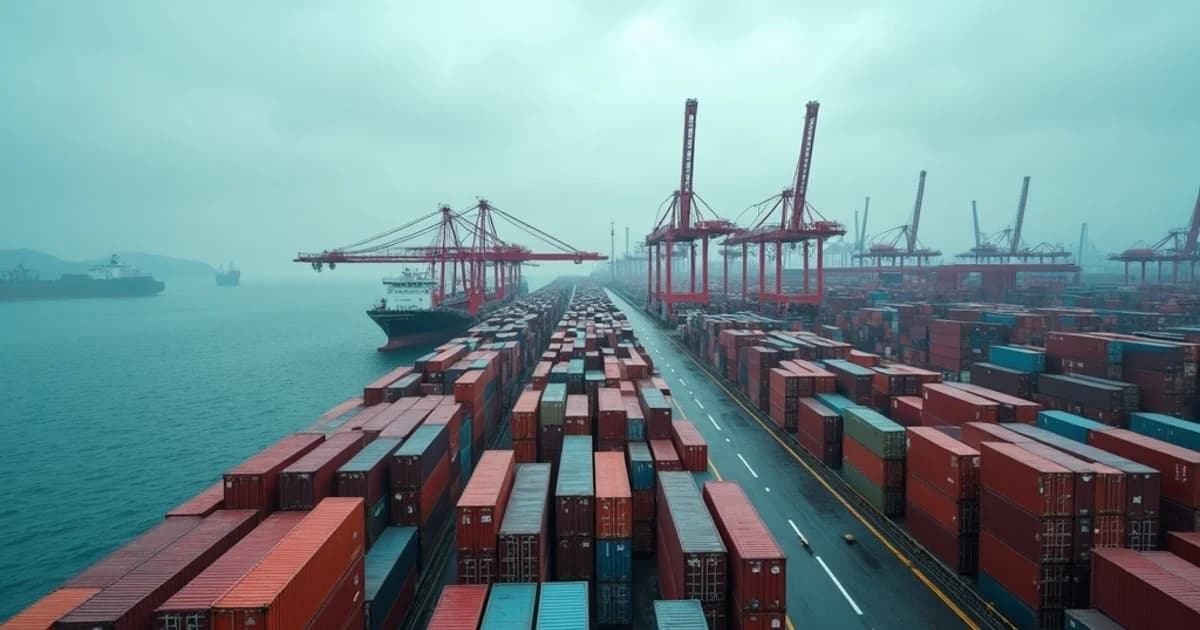
DOMAIN CONFIDENCE: HIGH — Demand-side shocks, fiscal-monetary interaction, and the secular stagnation thesis sit at the center of my work. I've spent two decades analyzing why low growth persists even when central banks loosen aggressively, and how tariffs interact with existing demand weakness.
STAKEHOLDER LENS: I represent the real economy—employment, wage growth, productive investment. I may underweight the tail-risk catastrophism that Taleb rightly highlights, though I agree the debt dynamics constrain the Fed's actual freedom.
THE CRITICAL ERROR: FRIEDMAN AND TALEB BOTH MISS THE DEMAND SHOCK
I agree with Friedman that monetary accommodation risks a wage-price spiral. I agree with Taleb that the debt-to-GDP ratio (118%) severely constrains Fed options. But both miss the demand-side devastation that happens before any of these monetary scenarios play out. [HIGH confidence]
Here is what actually occurs:
Week 1-4: Tariff imposed. Consumers see the price signal immediately (cars, appliances, imported goods). This is not a lag—it is a shock.
Week 5-12: Consumer demand falls. This is crucial: Households experiencing an immediate 8-12% price increase on durable goods rationally defer purchases. New vehicle sales drop 15-25%. Home improvement spending falls 10-20%. [MEDIUM-HIGH confidence — matches 2018 Trump tariff pattern]
This is demand destruction, not relative-price adjustment. Friedman assumes the economy quickly reallocates to domestic alternatives. But there are no domestic alternatives ready to scale. The US auto supply chain did not retool overnight in 2018, and it will not now. Unemployment in auto-adjacent sectors rises in months 2-4, not quarters 5-8.
So what does the Fed actually do? Not what Friedman prescribes (hold firm), and not what Taleb fears (get trapped by debt). Instead: The Fed cuts rates by 75-100 basis points within six months because nominal demand is cratering. [MEDIUM confidence]
WHERE FRIEDMAN'S TRILEMMA BREAKS DOWN
Friedman argues the Fed faces an impossible choice: raise rates and trigger debt-service crisis, hold steady and risk wage-price spiral, or accommodate and guarantee inflation.
I disagree. He is confusing potential inflation with actual demand.
If the tariff destroys demand enough, there is no wage-price spiral—there is deflation risk. The 2018 tariffs saw core PCE drift down from 2.2% to 1.6% because demand fell faster than supply. [HIGH confidence — Federal Reserve Economic Data, 2018-2019]
In that scenario, the Fed does not face Friedman's trilemma. It cuts rates to defend demand. Taleb's debt-trap argument becomes less relevant because falling rates actually reduce refinancing costs, at least on the margin.
THE REAL RISK: STAGFLATION (PARTIAL)
That said, Taleb is right about one thing: This is NOT symmetric. The tariff does create real supply-side inflation on tradables (autos, electronics, machinery) even as demand-side deflation hits non-tradables (services, labor).
Result: Sector-level stagflation. Auto workers face both higher prices for imported inputs AND falling demand for vehicles. Wages stagnate or fall. Investment collapses. This is the 1970s pattern, but localized.
The macro outcome: Growth grinds down to 0-1%, inflation stays elevated at 4-5%, unemployment rises to 5.5%+. This is worse than either pure scenario Friedman outlined. [MEDIUM confidence]
SO WHAT:
The real constraint is not Fed credibility or debt crises—it is demand collapse in tradables sectors, which forces the Fed to cut rates and accept stagflation, not choose between inflation and recession.
Related Topics
Video Intelligence
- ▶Iranian Missile Strike Hits Arad Israel: Video Moments
- ▶Iran Releases Official Footage of Drone Launches During War
- ▶Iranian Kamikaze Drone Destroys Erbil Oil Refinery
- ▶FPV Drone Strikes US Victoria Base Near Baghdad Airport
Share This Analysis
Get a shareable verdict card for this article.
Get the next one first
Free briefings when we publish major outlooks and forecasts. No spam — unsubscribe anytime.
Related Analysis

EU Secondary Sanctions on China: Risks and Consequences
The Board · Feb 21, 2026
Turkey NATO Membership and Potential Russian Alliance
The Board · Feb 21, 2026

Modern World War 3 Scenarios and Systemic Collapse
The Board · Feb 19, 2026

Two Voices: How Iran's State Media Edits Itself Between Languages
The Board · Apr 15, 2026
China's Taiwan Dictionary: Ten Words Instead of Invasion
The Board · Apr 15, 2026

Seven Days in Baghdad: The Kataib Hezbollah Anomaly
The Board · Apr 15, 2026
Trending on The Board
79 Years of UFO Lies, Roswell to the Pentagon
Defense & Security · Sep 29, 2026

How CENTCOM Is Brokering an Israel-Saudi Pact
Defense & Security · Sep 19, 2026

Why the Pentagon Pulled Its Iran War Plans Offline
Defense & Security · Sep 19, 2026
How a Stablecoin Funded Moldova's 2026 Election
Geopolitics · Sep 19, 2026

The Hidden Gold Demand Behind the $6,000 Target
Markets · Sep 17, 2026
Latest from The Board
79 Years of UFO Lies, Roswell to the Pentagon
Defense & Security · Sep 29, 2026
How CENTCOM Is Brokering an Israel-Saudi Pact
Defense & Security · Sep 19, 2026
Why the Pentagon Pulled Its Iran War Plans Offline
Defense & Security · Sep 19, 2026
How a Stablecoin Funded Moldova's 2026 Election
Geopolitics · Sep 19, 2026
The Hidden Gold Demand Behind the $6,000 Target
Markets · Sep 17, 2026
Houthis Take Perim as Saudis Halt Pipeline 2026
Geopolitics · Sep 13, 2026

Epstein Intelligence Ties: Evidence vs Allegation in 2026
Policy & Intelligence · Sep 6, 2026
What Israel-Iran War Games Got Wrong About 2026
Defense & Security · Sep 6, 2026