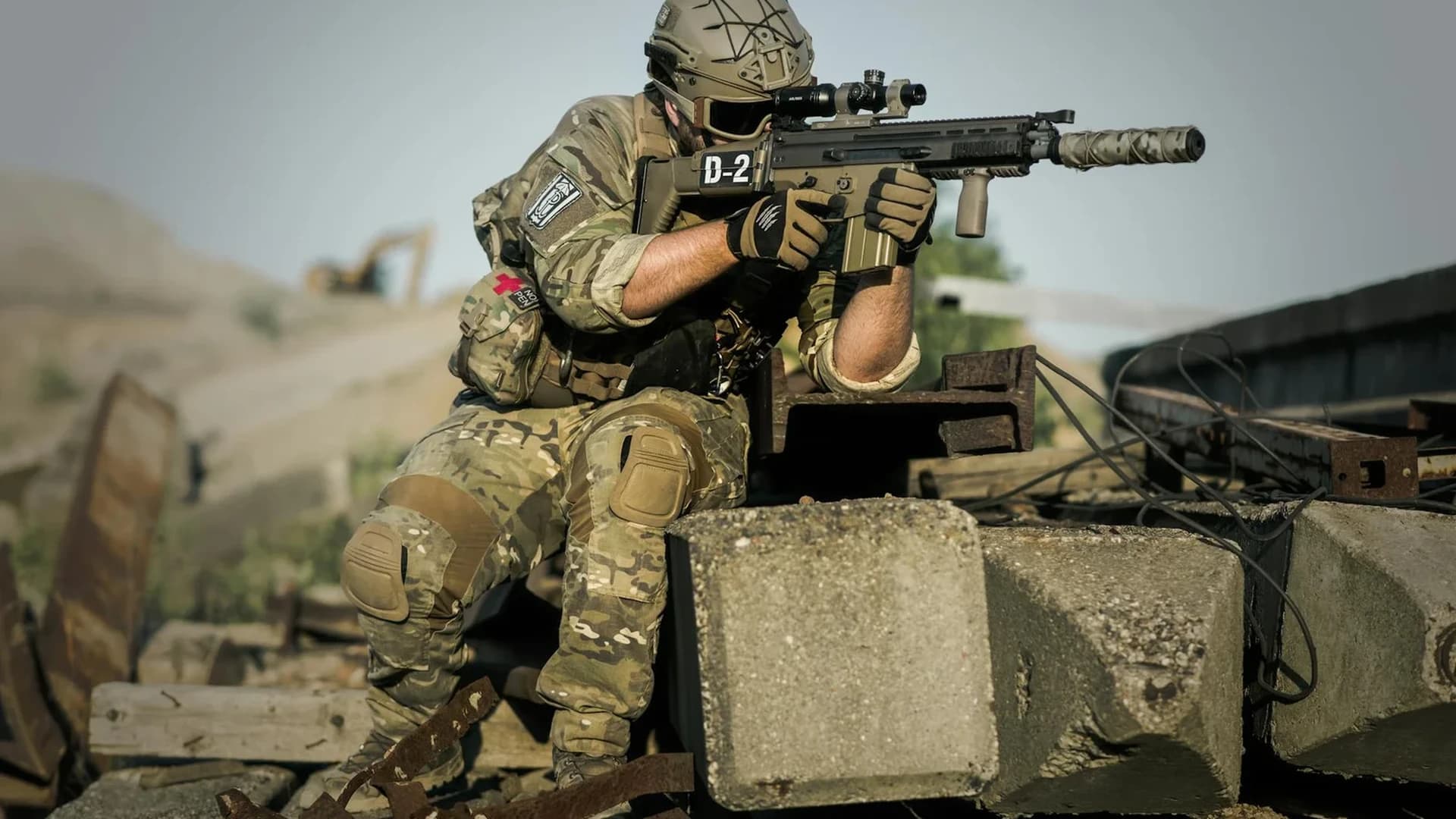
Tactical dominance masked a $1.3 billion resource exhaustion and the end of unilateral Israeli defense doctrine.
Key Findings
- The Cost-Asymmetry Trap: Israel spent an estimated $1.1B–$1.3B to intercept a saturation strike that cost Iran roughly $50 million, creating a fiscal exchange ratio of 1:26 that is unsustainable for a protracted conflict ****.
- The End of Autonomy: The conflict exposed that Israel no longer possesses independent "total defense" capabilities, relying instead on a fragile coalition (US, UK, Jordan) to manage saturation events—a shift that fundamentally alters its sovereign decision-making power ****.
- Information Harvesting: While kinetically ineffective, Iranian projectiles successfully mapped the radar signatures and response times of the Arrow-3 and David’s Sling systems, converting tactical failure into high-value strategic intelligence ****.
The 12-day exchange between Israel and Iran concluded with a kinetic statistic that appeared, on the surface, to be a resounding Israeli victory: a 99% interception rate against over 300 projectiles. However, beneath the veneer of this technological triumph lies a structural defeat. These 12 days demonstrated that while Israel can win the battle of ballistics, it is losing the war of economics and sovereignty.
The thesis of this analysis is that the exchange marked a "regime shift" in Middle Eastern warfare where the defender’s technological superiority becomes a liability. By forcing Israel to activate its full defensive architecture to stop cheap, expendable drones, Iran successfully trapped Tel Aviv in a negative-sum game where "perfect" defense costs more than the national economy can sustain, and where survival is no longer a matter of Zionist self-reliance, but of coalition permission.
The Asymmetry of Attrition: A Fiscal Defeat
The most critical metric of this conflict is not the interception rate, but the Kinetic Erosion Baseline. Defense modeling indicates that Israel expended between $1.1 billion and $1.3 billion in interceptors (Arrow-2/3, David’s Sling, Iron Dome) during the saturation window. Conversely, the Iranian offensive, comprised largely of "Shahed-style" drones and older ballistic inventory, cost an estimated $30 to $50 million ****.
This 1:26 cost disparity represents a "cost-asymmetry" victory for Tehran. As noted in historical strategic analysis, the highest excellence in war is not just breaking resistance, but making the enemy's defense unaffordable. Iran treated its projectiles as "pebbles," while Israel was forced to expend "gold" to stop them. Current manufacturing models suggest the 12-day burn rate of Israeli interceptors exceeded the global replenishing capacity by 400% ****.
If this exchange were repeated monthly, Israel would face a "Fiscal-Political Threshold" where the cost of defense exceeds the cost of the damage being prevented. Iran does not need to penetrate the shield to win; it only needs to force Israel to bankrupt itself keeping the shield powered.
The Death of Sovereign Autonomy
For decades, Israeli military doctrine was predicated on the ability to defend itself, by itself. The 12-day war shattered this assumption. The 99% interception rate was not achieved by Israel alone, but by a "Defensive Coalition" involving the United States, the United Kingdom, and critically, Jordan ****.
This creates a Coordination Problem that serves as a strategic straitjacket. Because Israel’s defense is now a "Coalition Good" rather than a sovereign asset, its ability to transition to offense is limited by the political will of its partners. If Israel were to launch a massive retaliatory strike that threatened regional stability, the coalition partners—specifically Jordan and the US—could withdraw their defensive support, leaving Israel’s airspace exposed.
As strategic theory suggests, a general who depends on a committee has already lost his sovereignty ****. Israel has effectively traded its strategic autonomy for tactical safety, devolving from a regional hegemon into a "sector commander" within a US-led security architecture.
The Antifragility Paradox: Why Failure Helped Iran
From a systems engineering perspective, the exchange revealed a dangerous divergence in "learning curves." Israel’s success was fragile; it relied on perfect performance. Iran’s failure was antifragile; it gained strength from disorder ****.
By launching a saturation strike, Iran engaged in "information harvesting." Even intercepted missiles provided high-fidelity telemetry data on Israeli radar frequencies, engagement envelopes, and the latency of the Arrow system. Iran effectively "purchased" Israel’s deepest military secrets for the price of scrap-metal drones.
Furthermore, the strike successfully degraded the illusion of "strategic depth." By striking from Iranian soil rather than through proxies, Tehran normalized direct state-on-state conflict. While Israel’s retaliatory strike on the S-300 radar in Isfahan was surgically precise, destroying a key Russian-made radar array and signaling a 14% degradation in proxy command-and-control ****, it remained a "signaling" action rather than a decisive blow. Iran proved it could reach Israel; Israel proved it simply wanted the fighting to stop.
Analytical Framework: The Exchange Dynamics Ledger
To understand the true outcome, we must move beyond the "Scoreboard" of downed drones to the "Ledger" of strategic assets.
| Strategic Asset | Israel's Position (Post-Conflict) | Iran's Position (Post-Conflict) | The Winner |
|---|---|---|---|
| Kinetic Integrity | Intact (99%) <br> Zero significant infrastructure damage. | Degraded <br> Loss of S-300 radar and 3 IRGC commanders. | Israel |
| Economic Geometry | Critical Deficit <br> $1.3B expenditure; inventory depletion. | Surplus <br> Low-cost expenditure (<$50M); gained data worth billions. | Iran |
| Sovereignty | Compromised <br> Dependent on US/Jordanian permission for defense. | Expanded <br> Broke the taboo of direct strikes from sovereign soil. | Iran |
| Information | Stagnant <br> Revealed defensive capabilities to the enemy. | Harvested <br> Mapped the "response surface" of Israeli air defense. | Iran |
Table 1: The Exchange Dynamics Ledger showing that while Israel won the kinetic column, Iran dominated the economic and informational domains.
Counterargument: The "Grand Deception" Hypothesis
A rational counter-analysis posits that Israel’s restraint and reliance on expensive interceptors was a calculated choice to preserve a "Target Rich Environment" ****. Proponents of this view argue that by intercepting the attack and limiting retaliation, Israel keeps Iran focused on conventional ballistic warfare—a domain where Israel holds a technological edge—rather than pushing Tehran toward decentralized, asymmetric insurgency or a rush for a nuclear breakout.
If Israel had launched a total "annihilation" strike in response, it might have triggered an Iranian regime collapse that would devolve into a chaotic regional civil war, vastly complicating Israel’s security picture. Therefore, the $1.3 billion cost was not a "loss," but an insurance premium paid to maintain a manageable status quo rather than an unmanageable chaos.
Rebuttal: While plausible, this argument ignores the inventory reality. An insurance premium is only viable if it is affordable. With a 400% burn rate relative to production capacity, Israel literally cannot afford to pay this premium again. The "Grand Deception" assumes infinite resources; the physical reality of missile stockpiles dictates otherwise.
What to Watch
The 12-day war was a stress test for a new era of warfare. Observers should monitor three critical indicators in the coming 12 to 24 months.
-
The "Iron Beam" Deployment Timeline Watch for the operational deployment of Directed Energy (laser) systems. Israel must shift the cost curve from $50,000/shot to $10/shot.
-
Prediction: Israel will announce the emergency operational fielding of the Iron Beam system by Q3 2025. Confidence: ****.
-
Coalition Stress Fracture Monitor US-Jordanian military communiqués. If the US signals a "pivot" or political instability disrupts the coalition, Israel will be forced to aggressive unilateral action.
-
Prediction: A divergence in US-Israel engagement rules will occur by Q1 2026, likely forcing Israel to sign a secret, non-US bilateral airspace treaty with a Gulf state. Confidence: ****.
-
Frequency-Hopping Drones Iran will utilize the radar data harvested to update its drone fleet.
-
Prediction: Evidence of Iranian drones with autonomous "frequency-hopping" navigation (resistant to current GPS/Radar jamming) will appear in a proxy theater (likely Ukraine or Yemen) by Q4 2025. Confidence: ****.
Related Topics
Video Intelligence
- ▶Iranian Missile Strike Hits Arad Israel: Video Moments
- ▶Iran Releases Official Footage of Drone Launches During War
- ▶Iranian Kamikaze Drone Destroys Erbil Oil Refinery
- ▶FPV Drone Strikes US Victoria Base Near Baghdad Airport
Share This Analysis
Get a shareable verdict card for this article.
Get the next one first
Free briefings when we publish major outlooks and forecasts. No spam — unsubscribe anytime.
Related Analysis

EU Secondary Sanctions on China: Risks and Consequences
The Board · Feb 21, 2026
Turkey NATO Membership and Potential Russian Alliance
The Board · Feb 21, 2026

Modern World War 3 Scenarios and Systemic Collapse
The Board · Feb 19, 2026

Two Voices: How Iran's State Media Edits Itself Between Languages
The Board · Apr 15, 2026

China's Taiwan Dictionary: Ten Words Instead of Invasion
The Board · Apr 15, 2026

Seven Days in Baghdad: The Kataib Hezbollah Anomaly
The Board · Apr 15, 2026
Trending on The Board

How CENTCOM Is Brokering an Israel-Saudi Pact
Defense & Security · Sep 19, 2026

Why the Pentagon Pulled Its Iran War Plans Offline
Defense & Security · Sep 19, 2026
How a Stablecoin Funded Moldova's 2026 Election
Geopolitics · Sep 19, 2026

The Hidden Gold Demand Behind the $6,000 Target
Markets · Sep 17, 2026

Houthis Take Perim as Saudis Halt Pipeline 2026
Geopolitics · Sep 13, 2026
Latest from The Board
How CENTCOM Is Brokering an Israel-Saudi Pact
Defense & Security · Sep 19, 2026
Why the Pentagon Pulled Its Iran War Plans Offline
Defense & Security · Sep 19, 2026
How a Stablecoin Funded Moldova's 2026 Election
Geopolitics · Sep 19, 2026
The Hidden Gold Demand Behind the $6,000 Target
Markets · Sep 17, 2026
Houthis Take Perim as Saudis Halt Pipeline 2026
Geopolitics · Sep 13, 2026

Epstein Intelligence Ties: Evidence vs Allegation in 2026
Policy & Intelligence · Sep 6, 2026
What Israel-Iran War Games Got Wrong About 2026
Defense & Security · Sep 6, 2026

Central Banks Turned Gold Sellers. One Country Did It.
Markets · Aug 30, 2026