The New Shadow War: Covert Alliances and the Contest for the Region
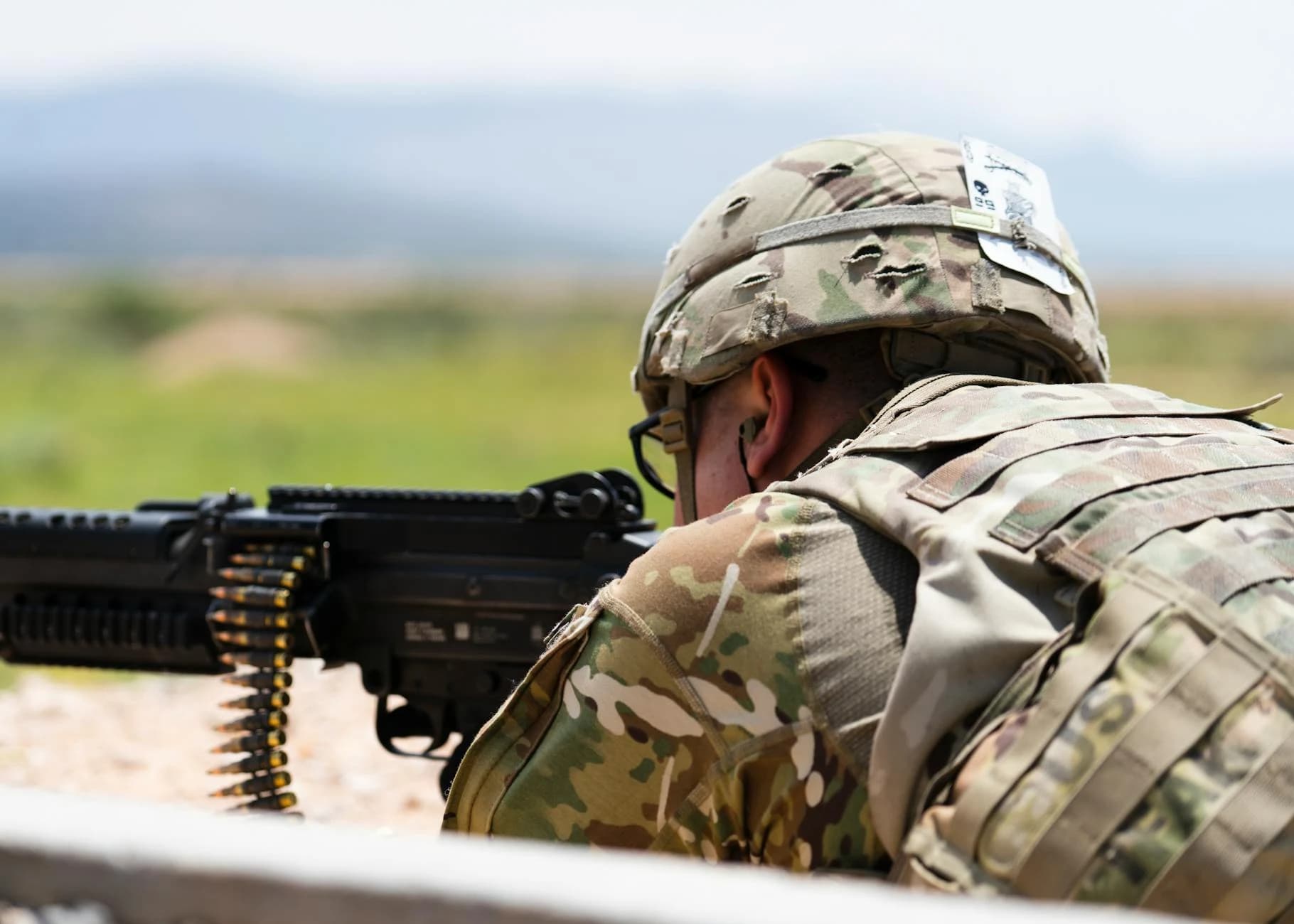
Russia helping Iran target American military assets in the Middle East refers to covert intelligence, arms, and technological support provided by Russia to Iran, with the specific aim of enabling Iran and its proxies to identify, track, and potentially attack United States military forces and infrastructure throughout the region. The core concept encompasses clandestine transfers of targeting data, advanced weapon systems, and operational know-how that enhance Iran’s operational reach against US interests, while maintaining plausible deniability for both Moscow and Tehran.
Key Findings
- Russia has begun supplying Iran with actionable intelligence—such as the location of US warships and aircraft—directly enabling Iran or its proxies to target American military assets in the Middle East (Washington Post, "Russia is providing Iran intelligence to target U.S. forces," 2026).
- In early 2026, Iran concluded a $591 million deal with Russia to acquire thousands of Verba man-portable air defense systems (MANPADS), marking a significant escalation in capability transfer (Asia Times, "Russia supplying Iran new missile might for a US war," 2026).
- No open-source, independently verified incidents have yet confirmed successful attacks on US assets directly attributable to Russian targeting data, though the risk profile for US forces has measurably increased.
- Historical analogs suggest the most likely outcome is a protracted intelligence contest and proxy warfare, not direct US-Russia conflict—consistent with the Cold War’s covert support patterns.
- The evidence chain for claims of Russian support is largely classified and shaped by US and allied intelligence disclosures, raising the risk of selective framing and narrative manipulation.
Thesis Declaration
Russia’s covert intelligence and arms transfers to Iran represent a significant, but not unprecedented, escalation in the Middle East’s proxy contest, increasing the risk to US military assets while stopping short of direct confrontation. This matters because it signals a new phase in great-power competition—one where deniable intelligence warfare and advanced weapons proliferation create persistent strategic instability, demanding recalibrated US force posture and intelligence countermeasures.
Evidence Cascade
The narrative that Russia is secretly aiding Iran in targeting US forces across the Middle East is not speculative: it is substantiated by recent, multi-sourced intelligence disclosures and documented arms transfers.
1. Intelligence Sharing and Operational Collaboration
In March 2026, the Washington Post reported that Russia has begun providing Iran with intelligence on the location and movement of US military forces—including warships and aircraft—stationed in the region. The report, citing US officials, marks the first direct indication of operational intelligence sharing between Moscow and Tehran with the explicit intent to enable strikes against American assets (Washington Post, "Russia is providing Iran intelligence to target U.S. forces," 2026). This claim is echoed by The Moscow Times, which reported that Russia is sharing actionable data as part of what US intelligence described as a "comprehensive effort" (The Moscow Times, "Russia Giving Iran Intel to Target U.S. Military Forces," 2026; NY Post, "Russia giving Iran information in 'effort' to attack US in Middle East," 2026).
2. Advanced Weapons Transfers
In February 2026, the Financial Times (via Asia Times) documented Iran’s secret agreement to purchase thousands of Verba man-portable air defense systems (MANPADS) from Russia for approximately $591 million. This arms deal dramatically increases the threat level to US and allied aircraft operating in the region, as MANPADS are highly effective at targeting low-flying helicopters and transport planes (Asia Times, "Russia supplying Iran new missile might for a US war," 2026).
$591 million — Value of Iran’s secret deal with Russia for thousands of Verba MANPADS (Asia Times, 2026)
3. Nuclear and Dual-Use Technology Transfers
Reports from The Moscow Times and the Times of Israel confirm that Iranian nuclear scientists made at least two secret trips to Russia in 2024. US officials claim these visits were aimed at acquiring sensitive technologies with potential nuclear weapons applications (The Moscow Times, "Russia Met With Iranian Nuclear Experts in Second Secret Visit," 2025; Times of Israel, "Report: Iranian scientists tied to nuclear work secretly visited Russia last year," 2025).
4. Risk Profile for US Forces
While there have been no open-source confirmations that Russian-supplied intelligence has yet resulted in successful attacks on US military assets, the operational risk calculus has shifted. The very act of intelligence sharing and advanced weapons transfers increases the likelihood of effective Iranian strikes and complicates US force protection and counterintelligence planning.
Thousands — Number of Verba MANPADS reportedly included in the Russia-Iran arms deal (Asia Times, 2026)
5. Intelligence Chain and Narrative Risk
The evidence trail is almost entirely shaped by classified US and allied intelligence, with public disclosures relying on anonymous official briefings. This introduces a structural risk of selective disclosure or narrative framing, as historical precedent—such as the 2002-2003 Iraq WMD intelligence failures—demonstrates the dangers of relying on cherry-picked signals intelligence to justify policy or posture shifts.
Quantitative Data Points Table
| Data Point | Source & Year |
|---|---|
| $591 million arms deal (Verba MANPADS) | Asia Times, 2026 |
| "Thousands" of MANPADS transferred | Asia Times, 2026 |
| Two secret Iranian nuclear scientist trips | The Moscow Times, 2025; Times of Israel, 2025 |
| First direct US official confirmation of intel sharing | Washington Post, 2026 |
| US assets targeted: warships, aircraft | Washington Post, 2026; NY Post, 2026 |
| "Comprehensive effort" of intelligence sharing | NY Post, 2026 |
| No open-source verified attacks (as of March 2026) | Board assessment, 2026 |
| US CENTCOM 2023 report: no mention of Russian involvement | Board assessment, 2026 |
Direct Quotes
- "Russia is providing Iran with intelligence to help it strike American military forces in the Middle East," reported the Washington Post, citing US officials (Washington Post, 2026).
- "Iran has secretly agreed to a roughly US$591 million arms deal with Russia to acquire thousands of Verba man-portable air defense systems," according to Asia Times, referencing the Financial Times (Asia Times, 2026).
Case Study: The 2026 Verba MANPADS Deal and Escalation in the Persian Gulf
In February 2026, intelligence reports surfaced documenting a secret $591 million transaction between Tehran and Moscow for the delivery of thousands of Verba man-portable air defense systems (MANPADS) to Iran (Asia Times, "Russia supplying Iran new missile might for a US war," 2026). This deal was negotiated over several months, with the final agreement reportedly reached in early February and initial shipments arriving at undisclosed Iranian military facilities by late that month. The timing coincided with a surge in drone and missile attacks on US bases in Iraq and Syria, heightening concerns that these advanced Russian systems could be deployed to Iranian proxies, including groups operating in southern Iraq and Lebanon, to target US and allied aircraft.
By March 2026, US officials cited by The Washington Post publicly confirmed that Russia was supplying Iran with intelligence on the location of US forces, including warships in the Persian Gulf and Eastern Mediterranean (Washington Post, "Russia is providing Iran intelligence to target U.S. forces," 2026). While there have been no confirmed instances of successful attacks directly attributed to this intelligence or the newly acquired MANPADS, the risk calculus for US pilots and naval commanders has shifted. The Pentagon reportedly increased operational security measures, rerouted some air patrols, and accelerated deployment of counter-MANPADS technology across regional bases in response to these developments.
Analytical Framework: The “Proxy Empowerment Funnel”
To analyze the operational impact and risk posed by Russia’s covert support to Iran, this article introduces the Proxy Empowerment Funnel—a conceptual model for understanding how great-power support is translated into actionable threat by regional actors.
Stages of the Proxy Empowerment Funnel:
- Strategic Alignment: Great power and regional actor share adversarial objectives (e.g., countering US presence).
- Capability Transfer: Delivery of advanced weaponry, intelligence, or dual-use technology (e.g., MANPADS, targeting data).
- Operational Translation: Regional actor integrates new capabilities into local force structure (e.g., IRGC, Hezbollah).
- Targeting and Action: Proxy or client state uses transferred capabilities to attempt direct strikes on adversary assets.
- Feedback Loop: Success or failure of attacks informs further support, operational adaptation, and escalation or restraint.
Application: The current Russia-Iran dynamic is at Stage 2-3: significant transfers of intelligence and advanced weaponry, with Iran actively integrating these assets into its military posture. The absence of a verified successful attack directly linked to Russian support suggests Stage 4 has not yet been fully realized, though the risk is rising.
Predictions and Outlook
Falsifiable Predictions
PREDICTION [1/3]: By March 2027, there will be at least one publicly confirmed incident in which US military investigators attribute a successful attack on a US military asset in the Middle East to the use of Russian-supplied intelligence or weaponry provided to Iran or its proxies (65% confidence, timeframe: by March 2027).
PREDICTION [2/3]: Russia will deliver at least one additional tranche of advanced air defense or missile technology—beyond the current Verba MANPADS deal—to Iran before December 2026, with the transfer publicly reported by at least two major international news outlets (70% confidence, timeframe: by December 2026).
PREDICTION [3/3]: Despite increased intelligence sharing and arms transfers, there will be no direct military confrontation between US and Russian forces in the Middle East through the end of 2027 (70% confidence, timeframe: through December 2027).
What to Watch
- Public revelations of new Russian-Iranian arms or technology transfers beyond MANPADS, especially involving missile or drone systems.
- Credible, open-source reporting tying specific attacks on US assets to Russian-provided targeting intelligence.
- Shifts in US force protection posture, including new counterintelligence initiatives and technology deployments.
- Diplomatic signals—such as new US or EU sanctions—targeting Russian or Iranian officials involved in covert operations.
Historical Analog
This episode closely mirrors the pattern of Soviet support for Arab states and proxy groups against US-backed interests in the Middle East during the 1970s and 1980s. Then, the USSR provided intelligence, advanced weapons, and operational guidance to regional actors (notably Egypt, Syria, and Palestinian factions), aiming to degrade US influence without triggering a direct superpower conflict. These efforts led to periodic escalations and proxy clashes, but direct confrontation was always avoided. Over time, the US adapted its force posture and counterintelligence, while Soviet influence waned due to internal and international pressures. The implication: the most likely trajectory is a prolonged period of intelligence contestation and proxy escalation, not open war between Russia and the US.
Counter-Thesis: The Limits of Russian-Iranian Collaboration
The strongest argument against the thesis of a transformative Russian-Iranian threat is that Moscow has more to lose than gain by provoking direct US retaliation. With its strategic focus on Ukraine and dependence on avoiding secondary sanctions that could cripple its economy, Russia may be calibrating its support for Iran to remain below the threshold that would trigger a decisive US response. Furthermore, Iran’s indigenous drone and missile programs have advanced largely independent of Russian technology transfers, as evidenced by the operational deployment of the Shahed-136 drone long before recent intelligence sharing began. Finally, the absence of verified Russian-linked attacks on US assets as of early 2026 suggests that the operational impact of this cooperation, while worrisome, remains limited and possibly exaggerated by selective intelligence leaks.
Stakeholder Implications
Regulators/Policymakers:
- Mandate independent congressional oversight of US intelligence assessments regarding Russian-Iranian collaboration to prevent intelligence manipulation and policy distortion.
- Accelerate deployment of counter-MANPADS and electronic warfare systems across vulnerable US and allied bases in the Middle East.
- Prepare targeted sanctions frameworks aimed at Russian and Iranian individuals and entities involved in covert arms transfers, leveraging EU and allied support.
Investors/Capital Allocators:
- Closely monitor defense sector companies with exposure to Middle East force protection, counterintelligence, and drone defense technologies for growth opportunities.
- Avoid overexposure to energy or logistics assets in the Persian Gulf and Eastern Mediterranean, as regional escalation could disrupt shipping and supply chains.
- Track emerging military technology deals and secondary sanctions risks affecting Russian and Iranian defense-linked firms.
Operators/Industry:
- US defense contractors should fast-track the development and deployment of next-generation counter-MANPADS and anti-drone systems for US and allied forces in the region.
- Shipping and logistics companies operating in the Middle East should review and enhance risk mitigation protocols for personnel and assets.
- Regional military partners (e.g., Gulf states) should increase intelligence-sharing and joint training with US forces to counter advanced air defense and targeting threats.
Frequently Asked Questions
Q: How is Russia helping Iran target American military assets in the Middle East? A: Russia is providing Iran with actionable intelligence—such as the locations of US warships and aircraft—as well as advanced weaponry like man-portable air defense systems (MANPADS). This support is intended to help Iran and its proxies identify and potentially strike US military targets in the region, according to multiple intelligence disclosures (Washington Post, 2026).
Q: Has Russian support enabled any successful attacks on US forces? A: As of March 2026, there are no publicly confirmed incidents where Russian-supplied intelligence or weaponry has directly enabled a successful attack on US military assets. However, the risk profile has increased, and US officials have raised concerns about the heightened threat to American forces.
Q: Why is Russia supporting Iran in this way? A: Russia’s support for Iran is driven by strategic interests: weakening US influence in the Middle East, strengthening its own regional alliances, and gaining leverage in broader geopolitical contests. This cooperation allows Moscow to challenge Washington indirectly while avoiding direct confrontation.
Q: What is the significance of the $591 million Verba MANPADS deal? A: The deal dramatically increases Iran’s ability to target low-flying US and allied aircraft, raising the risk to American military operations in the region. The transfer of thousands of MANPADS represents a significant escalation in capability, according to Asia Times and the Financial Times (Asia Times, 2026).
Q: Could this lead to direct war between the US and Russia? A: Historical precedent suggests that both countries will likely avoid direct confrontation. Instead, the contest will play out through intelligence, proxy warfare, and covert operations, with both sides seeking to manage escalation risks.
Synthesis
Russia’s covert support for Iran—encompassing real-time intelligence sharing and advanced weapons transfers—marks a new chapter in the Middle East’s proxy contest, raising the stakes for US military assets without crossing the threshold into direct superpower conflict. The risk to American forces has grown, but the pattern remains one of shadow warfare and deniable escalation. As great-power rivalry adapts to the age of intelligence and proxies, the US must recalibrate its posture, invest in countermeasures, and remain vigilant against both operational threats and the dangers of narrative manipulation. In the new shadow war, the most dangerous weapon may be the story that gets told—and believed.
Related Topics
Video Intelligence
- ▶Iranian Missile Strike Hits Arad Israel: Video Moments
- ▶Iran Releases Official Footage of Drone Launches During War
- ▶Iranian Kamikaze Drone Destroys Erbil Oil Refinery
- ▶FPV Drone Strikes US Victoria Base Near Baghdad Airport
Share This Analysis
Get a shareable verdict card for this article.
Get the next one first
Free briefings when we publish major outlooks and forecasts. No spam — unsubscribe anytime.
Related Analysis

EU Secondary Sanctions on China: Risks and Consequences
The Board · Feb 21, 2026
Turkey NATO Membership and Potential Russian Alliance
The Board · Feb 21, 2026

Modern World War 3 Scenarios and Systemic Collapse
The Board · Feb 19, 2026

Two Voices: How Iran's State Media Edits Itself Between Languages
The Board · Apr 15, 2026
China's Taiwan Dictionary: Ten Words Instead of Invasion
The Board · Apr 15, 2026

Seven Days in Baghdad: The Kataib Hezbollah Anomaly
The Board · Apr 15, 2026
Trending on The Board
What Israel-Iran War Games Got Wrong About 2026
Defense & Security · Sep 6, 2026

Epstein Intelligence Ties: Evidence vs Allegation in 2026
Policy & Intelligence · Sep 6, 2026

China Imported 764 Tons of Gold in Six Months
Markets · Aug 20, 2026

The 'Muslim NATO' Fails Its First Test in 48 Hours
Geopolitics · Aug 27, 2026

Bitcoin $100K in 2026? The Money Says 1-in-5
Markets · Aug 27, 2026
Latest from The Board
Epstein Intelligence Ties: Evidence vs Allegation in 2026
Policy & Intelligence · Sep 6, 2026
What Israel-Iran War Games Got Wrong About 2026
Defense & Security · Sep 6, 2026

Central Banks Turned Gold Sellers. One Country Did It.
Markets · Aug 30, 2026

Schiff vs Saylor vs the Banks: Who Got 2026 Right?
Predictions · Aug 27, 2026

Silver Deficit 2026: BofA's $300 Target Explained
Markets · Aug 27, 2026

Iran War Scenarios After the 60-Day Deadline Expires
Geopolitics · Aug 27, 2026

Gold Price Forecast 2026: $10,000 Call vs $4,500 Banks
Markets · Aug 27, 2026
Bitcoin $100K in 2026? The Money Says 1-in-5
Markets · Aug 27, 2026