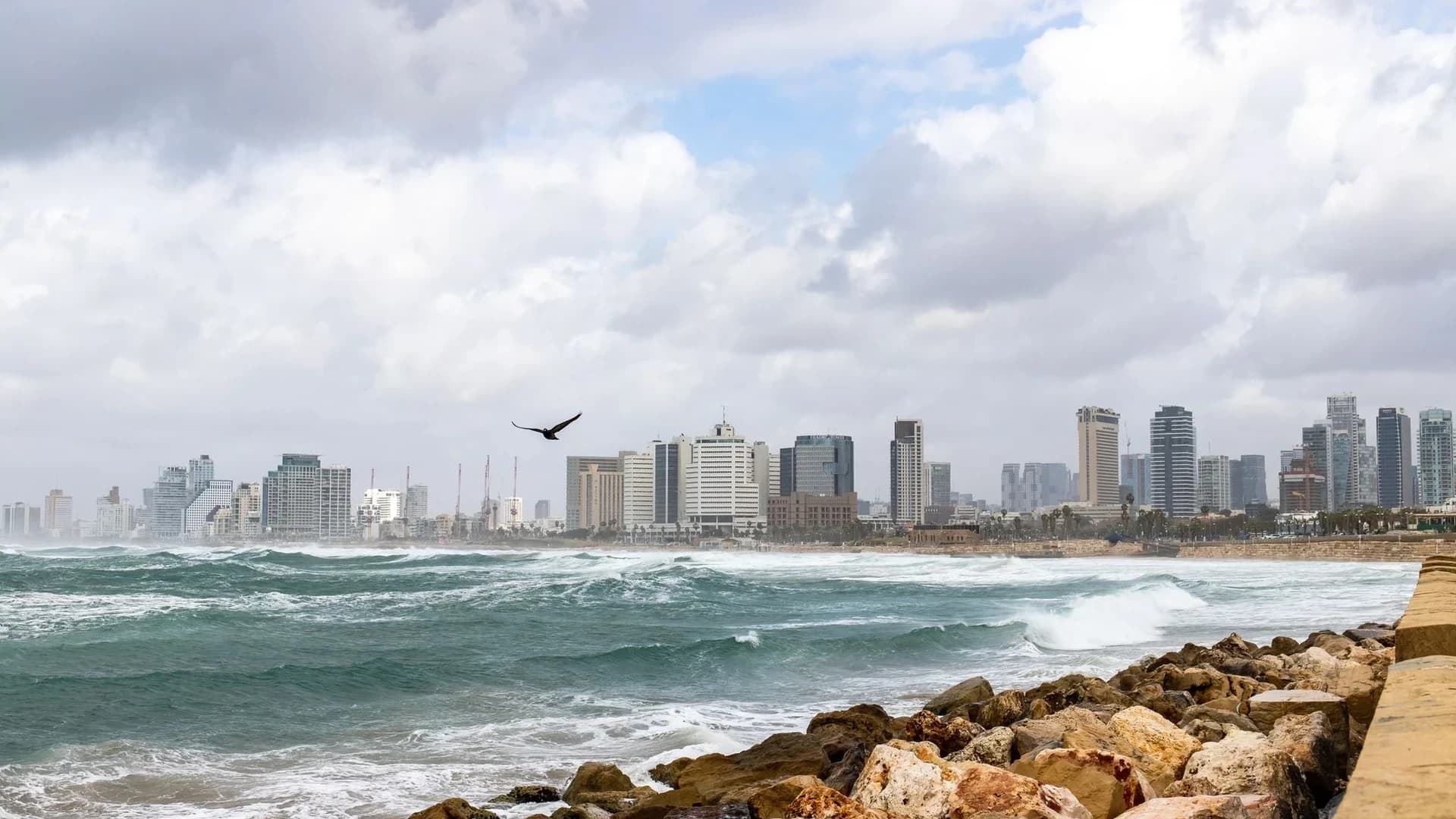
Tel Aviv came under direct missile threat on March 4, 2026, as Israel’s multilayered air defenses sprang into action, intercepting a barrage of Iranian and Hezbollah-launched missiles over the city. The interceptions, documented in real time by CNN cameras as sirens blared across central Israel, underscored the intensifying scope and complexity of the ongoing Iran-Israel conflict, now in its fifth day.
Israeli security commentator Amir Tsarfati was among the first to report the missile interceptions near Tel Aviv on Tuesday afternoon. By 15:00 local time, Israel had weathered eight separate attack waves from Iran, including a mix of ballistic and cruise missiles. Several salvos were launched simultaneously from both Iran and Lebanon, targeting central Israel in a coordinated escalation. Hezbollah, having joined the conflict on March 2, expanded its range to Tel Aviv for the first time, launching missiles that forced Israel’s air defenses into overdrive and marking a significant broadening of the Lebanese front.
The Israeli military confirmed that two missiles fired from Lebanon toward the Tel Aviv metropolitan area were successfully intercepted. This marked a milestone in Hezbollah’s campaign, which has now seen 62 distinct attack incidents since its entry into the war. In total, Iran has launched 128 waves of missile and drone attacks against Israel since hostilities began on February 28, triggered by joint US-Israeli strikes on Iranian nuclear and military infrastructure.
The human toll continues to rise
The human toll continues to rise. Since the conflict erupted, 12 Israeli civilians have been killed and over 1,200 injured. A particularly deadly strike on Beit Shemesh on March 1 claimed nine lives. On March 4, a missile impact in a Tel Aviv residential district killed a woman in her 40s and injured 27 others. The intensifying salvos have tested the limits of Israel’s air defense infrastructure, with wide barrages increasingly designed to saturate and potentially overwhelm protective systems.
Israel’s much-vaunted multi-layered air defense relies on the Iron Dome for short-range threats, David’s Sling for medium-range missiles, and the Arrow system for longer-range ballistic projectiles. The current conflict has seen all three systems engaged in near-continuous operations. Military analysts note that while Israel’s interceptors have demonstrated high success rates, the sheer volume and coordination of attacks from multiple fronts are imposing unprecedented operational demands. The introduction of Iranian hypersonic missiles, as announced by the IRGC, poses an additional challenge, with some experts warning that current systems may struggle to reliably defeat such advanced threats.
The challenge is compounded by sophisticated Iranian tactics
The challenge is compounded by sophisticated Iranian tactics. Simultaneous launches from Iran and Lebanon, and the use of drones and cluster munitions, are designed to complicate tracking and interception. Open-source intelligence suggests that some submunitions from Iranian warheads have landed east of Tel Aviv, though Israel’s civil defense protocols have helped minimize casualties.
In the information domain, AI-generated fake videos purporting to show catastrophic bombing in Tel Aviv have gone viral, sowing confusion and panic online. Israeli outlet Haaretz conducted a fact check debunking several widely shared clips, highlighting the role of disinformation in modern conflict. Meanwhile, Israel has begun cautiously easing some civilian restrictions, permitting gatherings of up to 50 people near bomb shelters as residents adjust to the new normal of wartime life.
The reach of Iranian retaliation extends far beyond Israel’s borders. Gulf Cooperation Council states—including Qatar, Kuwait, Iraq, and Saudi Arabia—have all reported missile impacts or attempted strikes, reflecting Tehran’s willingness to regionalize the conflict in response to the US-Israel offensive.
International air travel remains severely disrupted, with airBaltic and other airlines extending the suspension of flights to and from Tel Aviv. Israel’s main international airport has partially reopened, but operations remain limited amid the ongoing threat.
Looking forward, Israeli officials warn that as missile salvos grow in scale and sophistication, the resilience of the country’s air defenses will be further tested. The arrival of new interceptor shipments and possible US military reinforcements may bolster Israel’s capacity, but the threat of mass-casualty events remains acute. The battlefield is also shifting into the digital sphere, with information warfare now an integral part of the conflict landscape.
With diplomacy stalled and both sides escalating, Tel Aviv’s experience on March 4 may prove to be a harbinger of further intensification. The coming days will likely see continued missile exchanges, renewed scrutiny of Israel’s air defense architecture, and growing pressure on both regional stability and global energy markets.
Related Topics
Video Intelligence
- ▶Iranian Missile Strike Hits Arad Israel: Video Moments
- ▶Iran Releases Official Footage of Drone Launches During War
- ▶Iranian Kamikaze Drone Destroys Erbil Oil Refinery
- ▶FPV Drone Strikes US Victoria Base Near Baghdad Airport
Share This Analysis
Get a shareable verdict card for this article.
Get the next one first
Free briefings when we publish major outlooks and forecasts. No spam — unsubscribe anytime.
Related Analysis

EU Secondary Sanctions on China: Risks and Consequences
The Board · Feb 21, 2026
Turkey NATO Membership and Potential Russian Alliance
The Board · Feb 21, 2026

Modern World War 3 Scenarios and Systemic Collapse
The Board · Feb 19, 2026

Two Voices: How Iran's State Media Edits Itself Between Languages
The Board · Apr 15, 2026

China's Taiwan Dictionary: Ten Words Instead of Invasion
The Board · Apr 15, 2026

Seven Days in Baghdad: The Kataib Hezbollah Anomaly
The Board · Apr 15, 2026
Trending on The Board
Houthis Take Perim as Saudis Halt Pipeline 2026
Geopolitics · Sep 13, 2026
What Israel-Iran War Games Got Wrong About 2026
Defense & Security · Sep 6, 2026

Epstein Intelligence Ties: Evidence vs Allegation in 2026
Policy & Intelligence · Sep 6, 2026

China Imported 764 Tons of Gold in Six Months
Markets · Aug 20, 2026

The 'Muslim NATO' Fails Its First Test in 48 Hours
Geopolitics · Aug 27, 2026
Latest from The Board
Houthis Take Perim as Saudis Halt Pipeline 2026
Geopolitics · Sep 13, 2026
Epstein Intelligence Ties: Evidence vs Allegation in 2026
Policy & Intelligence · Sep 6, 2026
What Israel-Iran War Games Got Wrong About 2026
Defense & Security · Sep 6, 2026

Central Banks Turned Gold Sellers. One Country Did It.
Markets · Aug 30, 2026

Schiff vs Saylor vs the Banks: Who Got 2026 Right?
Predictions · Aug 27, 2026

Silver Deficit 2026: BofA's $300 Target Explained
Markets · Aug 27, 2026

Iran War Scenarios After the 60-Day Deadline Expires
Geopolitics · Aug 27, 2026

Gold Price Forecast 2026: $10,000 Call vs $4,500 Banks
Markets · Aug 27, 2026