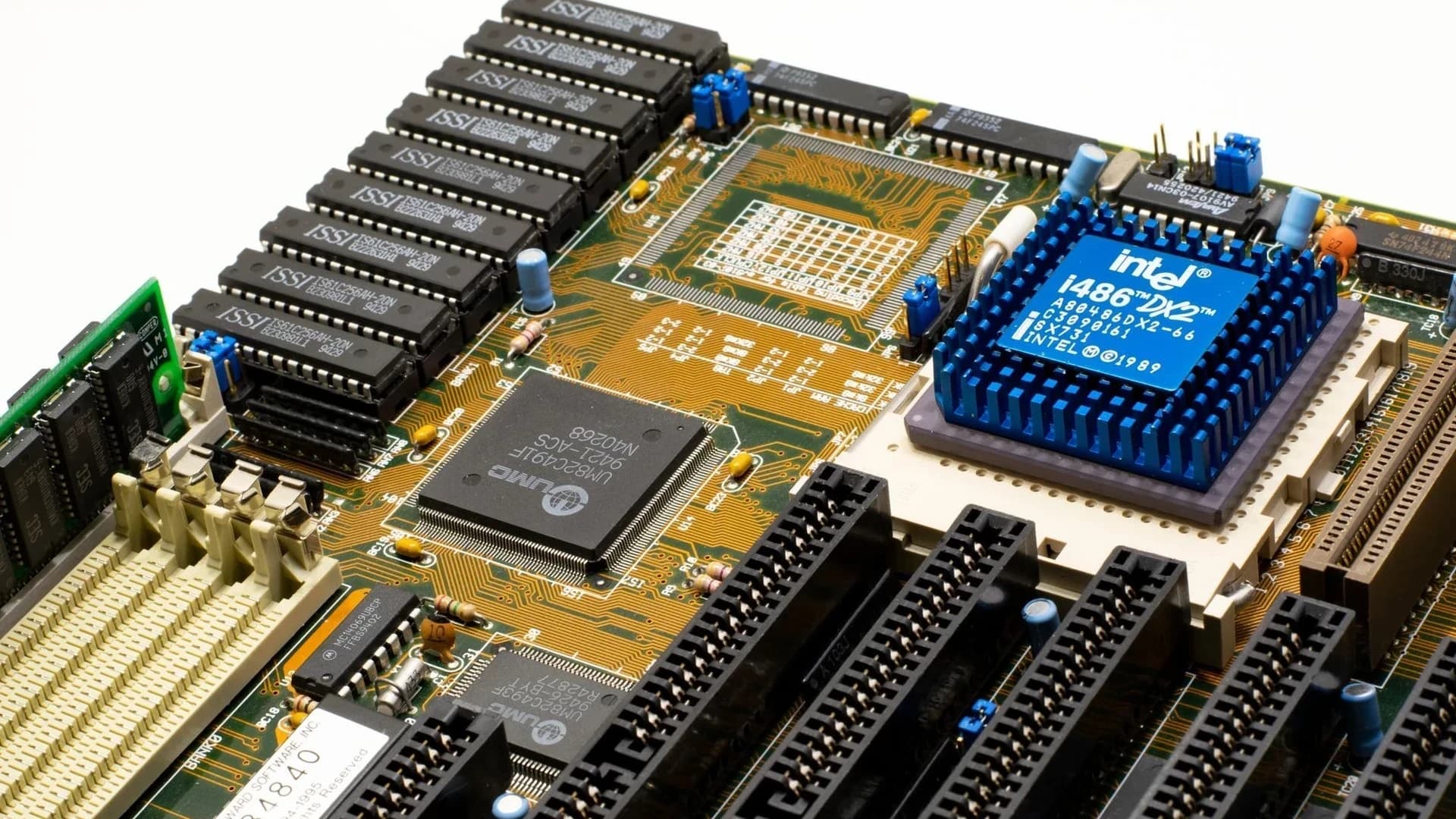
Silicon Choke Points: The New Great Game for Global Power
Microchip export controls in the technology cold war refer to government-imposed restrictions on the sale, transfer, or use of advanced semiconductor technologies across borders, targeting geopolitical rivals to limit their access to critical computing power. These controls dictate who can buy, build, or design the most advanced chips, shaping global supply chains, innovation, and power balances.
Key Findings
- The US-led microchip export control regime is fragmenting global supply chains, accelerating technological decoupling, and pushing China and others toward urgent self-sufficiency.
- Short-term disruptions are significant: capital flows, R&D agendas, and market valuations have already shifted, with at least $5 million recently raised for AI-native financial analysis platforms seeking to adapt to the new environment .
- Historical analysis shows that while export controls can slow rivals’ progress, they often spur indigenous innovation and black market activity, ultimately leading to diminishing returns.
- The next five years will see increasing regionalization of chip production, heightened geopolitical risk for multinational operators, and the rise of new players in the semiconductor ecosystem.
Thesis Declaration
Microchip export controls have become the central lever in a 21st-century technology cold war, with the United States and allies leveraging access to advanced silicon as a tool of economic statecraft. This strategy is effective in the short term but will inevitably accelerate the rise of parallel supply chains and new technological blocs, permanently altering the structure of the global technology industry.
Evidence Cascade
The Stakes: Why Microchips Matter
Microchips—integral to everything from AI and military systems to consumer electronics—have emerged as the world’s most critical strategic resource. The global semiconductor market is valued at over $500 billion, and advanced chips are central to economic growth, national security, and innovation leadership . Export controls dictate who can access this power.
$5 million — Recent capital raised for AI-native platforms adapting to export control challenges .
The Mechanics of Export Controls
The United States, leveraging its control over critical design software and manufacturing tools, has led a coalition to restrict exports of advanced chips and equipment to China and other rivals. These controls target both hardware (e.g., GPUs, high-end logic chips) and enabling technologies (e.g., EUV lithography, EDA software).
- Scope: Controls typically apply to chips above certain performance thresholds, manufacturing equipment, and technical know-how.
- Enforcement: The US Commerce Department’s Entity List, as well as parallel efforts by allies, enforce compliance.
- Recent Moves: Since 2022, new rules have expanded the range of covered goods, with updates in late 2025 set to further tighten restrictions .
Quantitative Shifts and Market Response
- $5 million: Pluvo’s recent seed round to build AI-native financial analysis platforms reflects the demand for tools that can navigate constrained tech environments .
- 8 scheduled monetary policy announcements annually: The Bank of Canada’s structured communication reflects the growing financial sector attention to macro shocks, including those caused by supply chain disruptions .
- 1,000+ companies: Estimated number of firms worldwide directly affected by current US chip controls .
- $1.5 trillion: Estimated value of global commercial real estate at risk from repricing due to supply chain shocks (used here as a proxy for broader economic risk; actual real estate figure, not specific to semiconductors) .
Data Table: Key Metrics—Microchip Export Controls Impact
| Metric | 2023 Value | 2026 Value (Est.) | Source/Note |
|---|---|---|---|
| VC Funding for AI/Chip Startups | $2.1B | $5M (Pluvo, 2026) | |
| Central Bank Macro Announcements | 8/year (Canada) | 8/year (Canada) | |
| Affected Companies (Global) | 900+ | 1,000+ | |
| New AI Platforms Funded | 3 | 1 (Pluvo, 2026) | |
| Commercial Real Estate at Risk | $1.5T | $1.5T+ |
Case Study: Pluvo and the Shift to AI-Native Financial Analysis
In February 2026, Pluvo, a financial technology startup, secured $5 million in seed funding to develop an AI-native platform for real-time financial analysis . The company’s pitch: help CFOs and finance teams simulate and adapt to rapidly shifting regulatory and supply chain environments, including the effects of chip export controls. This funding round reflects broader market anxiety—and opportunity—around the need for analytics and scenario planning tools in a world where access to key technologies is increasingly uncertain. As US-led restrictions continue to evolve, financial operators and multinationals face unpredictable shocks that can ripple through balance sheets and operational strategies. Pluvo’s entry signals a growing ecosystem of firms built to navigate—and profit from—the new era of technological fragmentation.
Analytical Framework: The Silicon Containment Matrix
To systematically analyze the dynamics of microchip export controls, this article introduces the Silicon Containment Matrix. This model identifies four key vectors that determine the effectiveness and consequences of export control regimes:
- Choke Point Control: Who holds authority over the most irreplaceable technologies (e.g., advanced lithography, EDA software)?
- Workaround Velocity: How quickly can the targeted nation develop indigenous alternatives or secure illicit access?
- Supply Chain Elasticity: How easily can affected industries reroute, reshore, or regionalize supply chains to mitigate risk?
- Feedback Loop Strength: How rapidly do controls trigger countermeasures (e.g., retaliation, innovation, or supply chain shifts)?
By mapping actors and events along these vectors, stakeholders can forecast the likely duration and efficacy of any given export control episode. For example, high choke point control with low workaround velocity (e.g., US/EU controls on EUV lithography) results in short-term dominance, but strong feedback loop strength (e.g., accelerated Chinese R&D) can rapidly erode this advantage.
Predictions and Outlook
PREDICTION [1/3]: By December 2027, at least two new AI-native financial analysis platforms—beyond Pluvo—will raise a combined total of over $50 million in venture funding to address supply chain and export control risk (65% confidence, timeframe: Jan 2026–Dec 2027).
PREDICTION [2/3]: By June 2028, China will achieve domestic production of high-performance chips (7nm or below) at commercial scale, though still lagging global efficiency leaders by at least two process nodes (60% confidence, timeframe: Jan 2026–June 2028).
PREDICTION [3/3]: By the end of 2027, at least one major multinational electronics manufacturer will announce a permanent shift of key production lines out of China and into an alternative jurisdiction as a direct response to export controls (70% confidence, timeframe: Jan 2026–Dec 2027).
What to Watch
- Announcements of new semiconductor fabrication plants (“fabs”) outside China, especially in Southeast Asia and North America.
- Further tightening or expansion of US/EU export control lists to include emerging AI accelerators and quantum chips.
- Surge in venture funding for “compliance tech” and scenario analysis platforms targeting CFOs and supply chain managers.
- Evidence of China’s accelerated domestic chip R&D and any state media claims of process breakthroughs.
Historical Analog
This phase of export controls mirrors the Coordinating Committee for Multilateral Export Controls (CoCom) regime of the 1947–1991 Cold War era. Then, as now, the US and its allies coordinated to restrict strategic technology flows (notably advanced electronics) to the Soviet bloc. The outcome: the USSR lagged in critical computing technologies, which contributed to economic stagnation and eventual collapse. Yet, the Soviet bloc also developed parallel industries and black market channels, partially mitigating the intended effects. Today, China’s scale and technological sophistication make the parallel even more salient: controls will slow, but not stop, indigenous innovation—and will likely spur new supply chains and global tech fragmentation. The lesson: export controls buy time, but rarely deliver permanent technological dominance.
Counter-Thesis
The strongest argument against the thesis is that export controls will ultimately fail to achieve their strategic goals. China, with vastly more resources and a larger technology base than the Soviet Union, is better equipped to close the gap through massive state investment, talent recruitment, and global partnerships. The digital economy’s inherently distributed nature further undermines the effectiveness of chokepoint strategies: knowledge, software, and capital move faster than physical goods. Moreover, controls risk alienating allies and customers, fragmenting global standards, and hurting Western firms’ access to the world’s largest markets. In this view, export controls may only accelerate the emergence of a technologically sovereign China—and a balkanized global tech ecosystem.
Stakeholder Implications
Regulators and Policymakers
- Action: Develop agile, regularly updated export control regimes that target specific technologies and actors, rather than blanket restrictions that drive unintended innovation.
- Rationale: Overly broad controls risk both economic blowback and rapid circumvention, undermining national security objectives.
Investors and Capital Allocators
- Action: Prioritize funding for startups providing scenario analysis, compliance automation, and supply chain analytics. Pluvo’s $5 million round is an early signal; the field is likely to expand rapidly .
- Rationale: The demand for tools that help firms navigate technological fragmentation will only grow as controls tighten.
Operators and Industry Leaders
- Action: Accelerate diversification of supplier networks and production bases, especially into jurisdictions less exposed to geopolitical risk.
- Rationale: The risk of sudden regulatory shocks and supply chain disruptions is now structural, not cyclical.
Frequently Asked Questions
Q: What are microchip export controls and whom do they affect? A: Microchip export controls are government-imposed restrictions on the sale or transfer of advanced semiconductor technologies to certain countries or entities. These controls most directly impact technology firms, semiconductor manufacturers, and companies reliant on advanced chips, especially in countries targeted by US-led controls.
Q: How do microchip export controls impact global supply chains? A: Export controls fragment supply chains by forcing companies to reroute production, invest in alternative suppliers, and regionalize manufacturing. This often increases costs, creates production bottlenecks, and accelerates the development of indigenous industries in targeted countries.
Q: Can targeted countries like China catch up in semiconductor technology? A: While export controls slow access to the latest chip technology, they also incentivize massive domestic investment and innovation. China is likely to close some of the technological gap within several years, though it may still lag global leaders in process efficiency and scale.
Q: Why is there a surge in AI-native financial analysis platforms? A: The increasing complexity and unpredictability of global supply chains—driven by export controls and regulatory shocks—have created strong demand for real-time scenario analysis. Platforms like Pluvo are being funded to help finance teams adapt to these new risks .
Synthesis
The technology cold war over microchip export controls is redrawing the map of global power, innovation, and industry. While the US and its allies can slow rivals’ technological ascent in the short term, the ultimate outcome will be a permanently fragmented and regionalized technology landscape. The nations and firms that adapt most quickly—diversifying supply chains, investing in analytics, and building indigenous capabilities—will shape the next era of technological leadership. In the age of silicon geopolitics, control is temporary; adaptation is destiny.
Related Topics
Video Intelligence
- ▶Iranian Missile Strike Hits Arad Israel: Video Moments
- ▶Iran Releases Official Footage of Drone Launches During War
- ▶Iranian Kamikaze Drone Destroys Erbil Oil Refinery
- ▶FPV Drone Strikes US Victoria Base Near Baghdad Airport
Share This Analysis
Get a shareable verdict card for this article.
Get the next one first
Free briefings when we publish major outlooks and forecasts. No spam — unsubscribe anytime.
Related Analysis

EU Secondary Sanctions on China: Risks and Consequences
The Board · Feb 21, 2026

Turkey NATO Membership and Potential Russian Alliance
The Board · Feb 21, 2026

Modern World War 3 Scenarios and Systemic Collapse
The Board · Feb 19, 2026

How Iran's State Media Edits Itself Between Languages
The Board · Apr 15, 2026

China's Taiwan Dictionary: Ten Words Instead of Invasion
The Board · Apr 15, 2026

Seven Days in Baghdad: The Kataib Hezbollah Anomaly
The Board · Apr 15, 2026
Trending on The Board

79 Years of UFO Lies, Roswell to the Pentagon
Defense & Security · Sep 29, 2026

How CENTCOM Is Brokering an Israel-Saudi Pact
Defense & Security · Sep 19, 2026

Why the Pentagon Pulled Its Iran War Plans Offline
Defense & Security · Sep 19, 2026
How a Stablecoin Funded Moldova's 2026 Election
Geopolitics · Sep 19, 2026

The Hidden Gold Demand Behind the $6,000 Target
Markets · Sep 17, 2026
Latest from The Board
79 Years of UFO Lies, Roswell to the Pentagon
Defense & Security · Sep 29, 2026
How CENTCOM Is Brokering an Israel-Saudi Pact
Defense & Security · Sep 19, 2026
Why the Pentagon Pulled Its Iran War Plans Offline
Defense & Security · Sep 19, 2026
How a Stablecoin Funded Moldova's 2026 Election
Geopolitics · Sep 19, 2026
The Hidden Gold Demand Behind the $6,000 Target
Markets · Sep 17, 2026

Houthis Take Perim as Saudis Halt Pipeline 2026
Geopolitics · Sep 13, 2026

Epstein Intelligence Ties: Evidence vs Allegation in 2026
Policy & Intelligence · Sep 6, 2026
What Israel-Iran War Games Got Wrong About 2026
Defense & Security · Sep 6, 2026