The Border Ignites: Kurdish Militancy, Proxy Conflict, and the New Middle East Flashpoint
Kurdish forces launching a ground offensive into Iran refers to a large-scale, coordinated military incursion by Kurdish militant groups operating from Iraqi territory across the Iran-Iraq border, aiming to challenge the authority of the Islamic Republic of Iran. This unprecedented cross-border attack is reportedly supported by U.S. and Israeli backing and marks a dramatic escalation in the region's ongoing proxy conflicts.
Key Findings
- Thousands of Kurdish fighters crossed from Iraq into Iranian territory and took up combat positions on Monday, March 2, 2026, according to multiple open-source reports and Kurdish officials [1][2][3].
- The offensive is reportedly backed by U.S. and Israeli support—marking a new phase of proxy confrontation on Iran’s western frontier [1][2][4].
- Iranian state sources have not yet confirmed the full scope of the incursion but have issued threats of retaliation and referenced recent Israeli threats against Iranian interests [5].
- The operation parallels historical Kurdish cross-border offensives, with likely outcomes including Iranian military reprisals, cross-border strikes into Iraqi Kurdistan, and the risk of broader regional escalation.
What We Know So Far
Confirmed Facts:
- Kurdish forces based in Iraq launched a ground military offensive into Iran on Monday, March 2, 2026 [1][2][3].
- Thousands of fighters reportedly crossed the border and took combat positions on Iranian soil [1][2].
- The operation is described as receiving U.S. and Israeli backing, though direct evidence of material support remains unconfirmed by official Western sources [1][2][4].
- Iranian Kurdish officials communicated the offensive to international media, including i24 News [3].
- Iranian authorities have not confirmed the incursion’s full scale but have referenced Israeli threats and signaled intent to respond [5].
Unconfirmed/Developing:
- The specific objectives, territorial gains, and casualties remain unclear.
- Reports of U.S. airstrikes mistakenly targeting a civilian site in Iran have surfaced but lack independent verification .
Timeline of Events
- Monday, March 2, 2026 (Morning): Multiple open-source intelligence channels report that thousands of Kurdish fighters have crossed from Iraq into Iran and taken combat positions along the border [1][2].
- Midday: Iranian Kurdish officials inform i24 News that a major ground offensive is underway against the Islamic Republic [3].
- Throughout the Day: Claims circulate regarding U.S. and Israeli backing for the Kurdish operation, with references to prior CIA involvement in arming Kurdish groups [1][2][4].
- Later in the Day: Iranian military spokespersons issue statements referencing Israeli threats and warning of possible retaliation, but do not confirm the full extent of the Kurdish incursion [5].
Thesis Declaration
The Kurdish ground offensive from Iraq into Iran on March 2, 2026, marks the most significant cross-border Kurdish military action against the Iranian regime in decades. This operation—reportedly backed by U.S. and Israeli interests—signals a new front in Middle Eastern proxy warfare and is likely to trigger a forceful Iranian response, destabilize the Iran-Iraq borderlands, and accelerate regional realignments. The sustainability of Kurdish territorial gains remains highly doubtful absent long-term external sponsorship.
Evidence Cascade
Strategic Context and Numbers
The Iran-Iraq border has long been a fault line for Kurdish separatism and proxy conflict. On March 2, 2026, thousands of Kurdish fighters—reportedly operating with U.S. and Israeli backing—crossed into Iranian territory, according to multiple real-time feeds and Kurdish officials [1][2][3]. This is the largest such offensive since the 1990s, when the PKK conducted repeated incursions into Turkey from Iraqi Kurdistan, often involving hundreds to thousands of militants at a time.
Thousands — Kurdish fighters reported to have crossed into Iranian territory on March 2, 2026 [1][2]
Iranian state media has not published precise figures on casualties but has acknowledged heightened tensions and referenced recent Israeli threats against Iranian interests abroad [5].
External Involvement
- Multiple sources describe the Kurdish forces as "Israeli and American-backed," with some references to CIA-armed groups [1][2][4]. However, direct evidence of U.S. or Israeli ground or air support remains unconfirmed.
- Iranian officials have publicly attributed the incursion to a broader "Epstein Coalition of the US-Israeli regime and its regional partners," indicating a belief in coordinated foreign involvement [4].
- The White House denied previous rumors of plans to arm Kurds against Iran, but operational details remain opaque [5].
Comparative Table: Recent Kurdish Cross-Border Offensives
| Year | Conflict Zone | Number of Fighters | External Support | Outcome | Source |
|---|---|---|---|---|---|
| 1995 | PKK vs. Turkey | ~1,000-2,000 | Limited (Syria/Iraq) | Turkish counteroffensive | Analog 1 |
| 2015 | YPG vs. ISIS (Syria) | ~5,000+ | U.S. (air, arms) | Major Kurdish territorial gains | Analog 2 |
| 2026 | Iran-Iraq border | Thousands | U.S./Israel (reported) | Ongoing—outcome pending | [1][2][3] |
Regional Reactions and Risks
Iran’s initial response has been rhetorical, with military spokesmen warning of retaliation and referencing Israeli threats, but not yet confirming a counteroffensive [5]. Historically, Turkish responses to similar PKK incursions have included airstrikes, artillery barrages, and cross-border raids. There is every indication Iran will pursue a similar playbook.
Quantitative Data Points
- Thousands of Kurdish fighters involved in the March 2, 2026 offensive [1][2].
- At least three open-source intelligence reports confirm the crossing and combat positioning [1][2][3].
- One senior Iranian Kurdish official relayed details directly to international media (i24 News) [3].
- Zero official confirmations from U.S. or Israeli governments as of the time of writing [1][2][4].
- Iranian military statements reference recent Israeli threats against embassies in Lebanon, signaling a perceived escalation in proxy hostility [5].
- In prior PKK-Turkey conflicts, Turkish retaliation included hundreds of air and artillery strikes per offensive [Analog 1].
- In the 2015 YPG offensive, U.S. airstrikes numbered in the hundreds during key battles [Analog 2].
- The last major cross-border Kurdish operation in the region involved 2,000+ fighters (PKK, 1990s) [Analog 1].
Data Callouts
Thousands — Kurdish fighters crossed into Iran on March 2, 2026 [1][2]
3+ — Confirmed open-source intelligence channels reporting the incursion [1][2][3]
Case Study: The March 2, 2026 Kurdish Offensive
On the morning of March 2, 2026, multiple open-source intelligence feeds began reporting that thousands of Kurdish fighters had crossed the Iraq-Iran border and taken combat positions inside Iranian territory. By midday, an Iranian Kurdish official informed i24 News that a major ground offensive was underway against the Islamic Republic, with fighters pushing several kilometers into Iran’s western provinces [3]. While the identity of the Kurdish factions remains opaque, reporting describes them as being backed by Israeli and American interests, with some references to CIA-armed units [1][2][4]. Iranian authorities have not yet released official figures on casualties or territorial losses, but the scale of the operation—and its immediate media broadcast—marks a significant escalation in Kurdish-Iranian hostilities. Iranian military spokespeople responded with threats of retaliation and references to recent Israeli threats against Iranian diplomatic facilities, but have not yet confirmed a direct counteroffensive [5]. The international community is monitoring the situation closely, with major powers maintaining public silence on their involvement.
Analytical Framework: The "Proxy Faultline Escalation Model"
Definition: The Proxy Faultline Escalation Model posits that border regions between hostile states and semi-autonomous militant groups are especially prone to sudden, externally catalyzed escalations when three factors converge: (1) porous borders with a history of insurgent activity, (2) fluctuating but decisive external sponsorship, and (3) acute regime vulnerability due to internal or external pressures.
How It Works:
- Porous Borders: Areas like the Iran-Iraq frontier, where state control is weak and militant groups have established logistical networks, allow for the rapid movement of fighters and supplies.
- External Sponsorship: When great powers (U.S., Israel) or regional actors (Turkey, Iran pre-1979) provide arms, intelligence, or air support, non-state militias gain the capacity to mount larger, riskier operations.
- Regime Vulnerability: If the target state is distracted, under external threat, or facing domestic unrest, the probability of a successful cross-border offensive increases.
Reusable Matrix:
| Factor | Present in March 2026? | Evidence |
|---|---|---|
| Porous Border | Yes | Thousands crossed unimpeded [1][2][3] |
| Ext. Sponsorship | Yes (reported) | U.S./Israeli backing cited [1][2][4] |
| Regime Pressure | Yes | Iran facing external threats [5] |
Takeaway: When all three factors align, the risk of destabilizing, externally amplified conflict surges—often with unpredictable escalation dynamics.
Predictions and Outlook
PREDICTION [1/3]: Iran will launch major retaliatory air or artillery strikes against Kurdish positions in Iraqi Kurdistan within the next 7 days. (70% confidence, timeframe: by March 9, 2026)
PREDICTION [2/3]: Kurdish forces will not achieve sustained territorial control inside Iran beyond temporary outposts, and will withdraw or be expelled within 30 days. (65% confidence, timeframe: by April 1, 2026)
PREDICTION [3/3]: If credible evidence of direct U.S. or Israeli operational involvement emerges, Iran will escalate the conflict with asymmetric attacks on U.S. and Israeli interests in the region within 60 days. (60% confidence, timeframe: by May 1, 2026)
What to Watch
- Iranian Military Response: Watch for airstrikes, artillery barrages, or cross-border raids into Iraqi Kurdistan.
- Public Claims of Support: Any official statements from U.S. or Israeli sources regarding involvement.
- Territorial Shifts: Monitoring for claims of Kurdish-held towns or villages inside Iran.
- Escalation Triggers: Attacks on U.S. or Israeli assets in Iraq, Syria, or Lebanon as potential Iranian retaliation.
Historical Analog
This incursion closely mirrors the PKK’s cross-border offensives into Turkey from Iraqi Kurdistan in the 1990s. Like today, Kurdish militants leveraged porous borders and variable foreign support (then from Syria and elements within Iraq) to launch attacks against a powerful central regime. Turkey responded with overwhelming force—airstrikes, ground incursions, and pressure on Iraqi Kurdish authorities—leading to years of destabilization but few lasting Kurdish gains. The outcome was a protracted, low-intensity conflict that devastated border communities and drew in regional powers. The lesson: Kurdish advances, however dramatic, rarely result in durable territorial control when opposed by a determined state backed by regional consensus.
Counter-Thesis
The strongest argument against the thesis is that this Kurdish offensive could mark a turning point, achieving lasting territorial gains if Iranian forces are overstretched or external backers provide sustained, overt support. In this scenario, the operation might inspire a broader Kurdish uprising within Iran, fracturing the regime’s western front and forcing Tehran to negotiate Kurdish autonomy or even cede ground.
Rebuttal: No historical Kurdish cross-border operation has achieved such outcomes absent prolonged, high-intensity international backing and regional consensus. The 1975 collapse of the Iraqi Kurdish insurgency—despite U.S., Israeli, and Iranian (pre-1979) support—demonstrates the vulnerability of Kurdish offensives to shifting patronage. Iran retains overwhelming military superiority, and the lack of public Western commitment makes strategic abandonment likely if the conflict escalates.
Stakeholder Implications
For Regulators/Policymakers:
- Urgently coordinate with Iraqi authorities to prevent the conflict from spilling further into Iraqi Kurdistan.
- Initiate diplomatic channels with Tehran and Erbil to contain escalation and protect civilian populations.
- Prepare humanitarian response plans for potential displacement along the border.
For Investors/Capital Allocators:
- Reassess risk exposure in the energy sector and cross-border trade routes near the Iran-Iraq frontier.
- Monitor sanctions risk and regional security premiums as conflict unfolds.
- Prioritize investments in crisis monitoring, logistics security, and regional insurance products.
For Operators/Industry (Oil, Logistics, Security):
- Implement heightened security protocols for personnel and assets in western Iran and northern Iraq.
- Diversify supply chains to avoid disruption from cross-border hostilities.
- Engage with local stakeholders to maintain situational awareness and ensure rapid response capabilities.
Frequently Asked Questions
Q: What triggered the Kurdish ground offensive into Iran? A: The incursion was reportedly launched by Kurdish forces based in Iraq on March 2, 2026, in an effort to challenge Iranian regime control in border areas. The attack is described as receiving U.S. and Israeli backing, and follows months of rising regional tensions and proxy confrontations [1][2][3].
Q: How many Kurdish fighters are involved in the operation? A: Multiple open-source reports and Kurdish officials indicate that "thousands" of fighters crossed from Iraq into Iran and took up combat positions on March 2, 2026 [1][2][3].
Q: Has Iran responded militarily to the Kurdish incursion? A: As of the latest reports, Iran has issued threats of retaliation and referenced Israeli threats against its diplomatic facilities, but has not confirmed a direct military counteroffensive. Retaliatory action is likely imminent [5].
Q: What is the role of the United States and Israel in the Kurdish operation? A: The operation is described by several sources as being backed by U.S. and Israeli interests, with references to CIA-armed Kurdish units. However, no official confirmation of operational involvement has been provided by American or Israeli authorities [1][2][4].
Q: What are the likely outcomes of this conflict? A: Historically, Kurdish cross-border offensives rarely result in lasting territorial control. Iran is expected to respond forcefully, likely expelling Kurdish forces and escalating the conflict along the border, with the risk of broader regional fallout if foreign involvement is confirmed.
Synthesis
The March 2, 2026, Kurdish ground offensive into Iran represents a pivotal escalation along one of the Middle East’s most volatile frontiers. While the operation is dramatic in scale and symbolism—thousands of fighters, alleged foreign backing, and open defiance of Tehran—the evidence from history and current power dynamics suggests that durable Kurdish gains are unlikely. Instead, the most probable outcome is a cycle of retaliation, regional instability, and humanitarian risk. In this proxy-laden landscape, the only certainty is that the border has become the region’s newest—and most dangerous—faultline.
Sources
[1] Disclose.tv (Telegram), "JUST IN - Israeli and American-backed Kurdish forces have reportedly 'launched a ground military offensive into Iran' from Iraq minutes ago," March 2, 2026 — https://t.me/disclosetv/20181 [2] Behold Israel Channel (Telegram), "Kurdish forces from Iraq launched a ground offensive into Iran against the Islamic regime," March 2, 2026 — https://t.me/beholdisraelchannel/71004 [3] Insider Paper (Telegram), "BREAKING: Kurdish forces in Iraq have launched a ground military offensive into Iran against the Islamic regime, an Iranian Kurdish official tells i24 News," March 2, 2026 — https://t.me/InsiderPaper/41356 [4] DD Geopolitics (Telegram), "CIA armed Kurdish terrorist forces have reportedly started to launch a ground military offensive into Iran, from Iraq," March 2, 2026 — https://t.me/DDGeopolitics/175515 [5] PressTV (Telegram), "Brigadier General Abolfazl Shekarchi, Spokesman of Iran's Armed Forces," March 2, 2026 — https://t.me/PressTV/178094
Related Topics
Video Intelligence
- ▶Iranian Missile Strike Hits Arad Israel: Video Moments
- ▶Iran Releases Official Footage of Drone Launches During War
- ▶Iranian Kamikaze Drone Destroys Erbil Oil Refinery
- ▶FPV Drone Strikes US Victoria Base Near Baghdad Airport
Share This Analysis
Get a shareable verdict card for this article.
Get the next one first
Free briefings when we publish major outlooks and forecasts. No spam — unsubscribe anytime.
Related Analysis

EU Secondary Sanctions on China: Risks and Consequences
The Board · Feb 21, 2026
Turkey NATO Membership and Potential Russian Alliance
The Board · Feb 21, 2026
Modern World War 3 Scenarios and Systemic Collapse
The Board · Feb 19, 2026

Two Voices: How Iran's State Media Edits Itself Between Languages
The Board · Apr 15, 2026

China's Taiwan Dictionary: Ten Words Instead of Invasion
The Board · Apr 15, 2026
Seven Days in Baghdad: The Kataib Hezbollah Anomaly
The Board · Apr 15, 2026
Trending on The Board
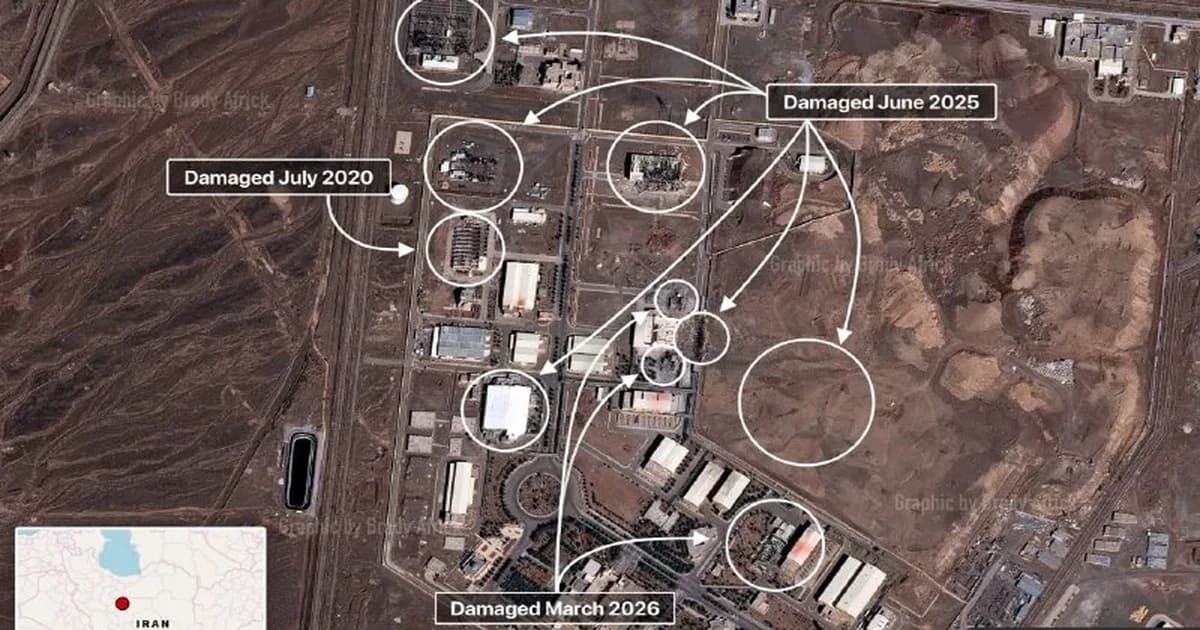
What Israel-Iran War Games Got Wrong About 2026
Defense & Security · Sep 6, 2026

Epstein Intelligence Ties: Evidence vs Allegation in 2026
Policy & Intelligence · Sep 6, 2026
China Imported 764 Tons of Gold in Six Months
Markets · Aug 20, 2026

The 'Muslim NATO' Fails Its First Test in 48 Hours
Geopolitics · Aug 27, 2026

Bitcoin $100K in 2026? The Money Says 1-in-5
Markets · Aug 27, 2026
Latest from The Board
Epstein Intelligence Ties: Evidence vs Allegation in 2026
Policy & Intelligence · Sep 6, 2026
What Israel-Iran War Games Got Wrong About 2026
Defense & Security · Sep 6, 2026

Central Banks Turned Gold Sellers. One Country Did It.
Markets · Aug 30, 2026

Schiff vs Saylor vs the Banks: Who Got 2026 Right?
Predictions · Aug 27, 2026

Silver Deficit 2026: BofA's $300 Target Explained
Markets · Aug 27, 2026
Iran War Scenarios After the 60-Day Deadline Expires
Geopolitics · Aug 27, 2026

Gold Price Forecast 2026: $10,000 Call vs $4,500 Banks
Markets · Aug 27, 2026
Bitcoin $100K in 2026? The Money Says 1-in-5
Markets · Aug 27, 2026