The Twelve-Day Reckoning — How Iran's Missile Retaliation Shattered Israel's Deterrence Calculus
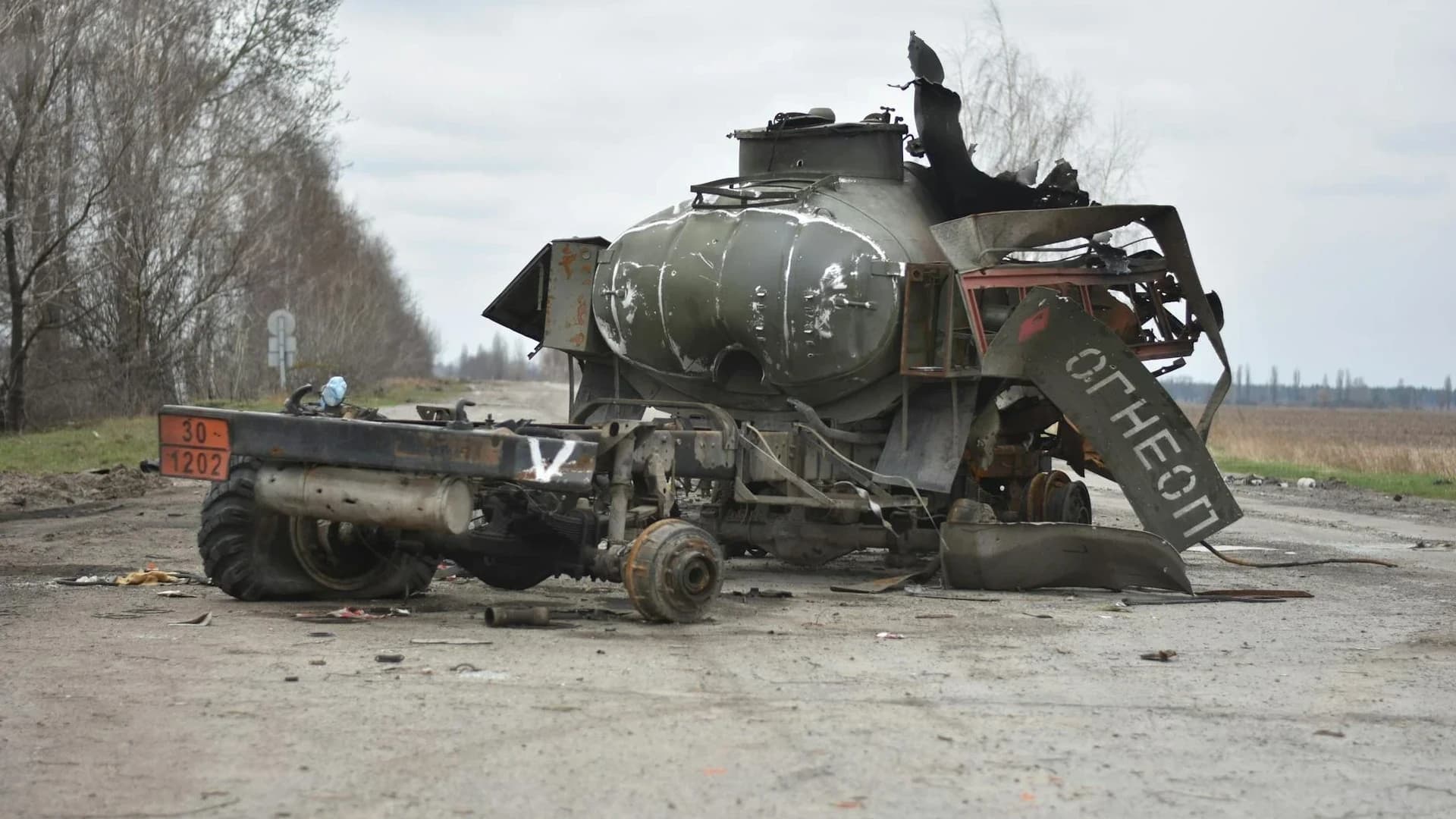
The Israel-Iran War of June 2025 is an active military conflict initiated by Israeli airstrikes on Iranian nuclear infrastructure beginning June 13, 2025, followed by U.S. strikes on June 22, 2025, and sustained Iranian ballistic missile retaliation that inflicted significant Israeli casualties — more damage in 12 days than two years of Hamas rocket fire combined.
Key Findings
- Israel sustained more physical damage from Iranian missiles in 12 days than from two full years of Hamas rocket attacks, according to Middle East Eye analysis (June 2025)
- Official Iranian sources report approximately 1,062 killed and 5,800 injured on the Iranian side; approximately 30 Israelis were killed
- The U.S. directly struck Iranian nuclear facilities on June 22, 2025 — before Israel had completed its own campaign of nearly a dozen strikes on Iranian nuclear sites
- Netanyahu publicly acknowledged Israel was suffering "many losses, painful losses" from Iranian missile attacks — a rare admission from Israeli leadership
- Trump publicly framed the conflict as a "4-week process," structurally mirroring the "Mission Accomplished" framing of the 2003 Iraq War
What We Know So Far
Confirmed facts as of current reporting:
- Israel launched strikes on Iranian nuclear infrastructure beginning June 13, 2025, conducting nearly a dozen strikes before U.S. involvement
- The United States military struck Iranian nuclear facilities on June 22, 2025
- The Iranian Martyrs Foundation confirmed approximately 1,062 people killed and 5,800 injured in Iran
- Approximately 30 Israelis were killed during the conflict
- Netanyahu stated Israel was suffering "many losses, painful losses" from Iranian attacks
- At least 22 people were killed attempting to storm the U.S. Consulate in Pakistan — confirmed as Iran-linked blowback [per topic summary]
- Iran's early strikes killed more than 240 Iranians including military members within the first three days of Israeli attacks
- Trump stated publicly: "It's always been a 4-week process. We figured it will be 4 weeks or so." [per topic summary]
Unconfirmed or contested:
- The full extent of Israeli military infrastructure damage remains unverified by independent sources
- Iran's nuclear program reconstitution capacity post-strikes is disputed between Israeli defense officials and independent analysts
- The precise operational status of Iran's remaining ballistic missile arsenal is unconfirmed
Timeline of Events
- June 13, 2025 — Israel launches first strikes on Iranian nuclear infrastructure; Al Jazeera reports more than 240 Iranians killed including military members within three days
- June 13–21, 2025 — Israel conducts nearly a dozen strikes on Iranian nuclear sites; Iran begins sustained ballistic missile retaliation targeting Israeli territory
- Mid-June 2025 — Netanyahu publicly acknowledges "many losses, painful losses" from Iranian missile attacks
- June 22, 2025 — United States military directly strikes Iranian nuclear facilities, marking explicit U.S. entry into the conflict
- Late June 2025 — Trump publicly announces a "4-week" timeline for the campaign
- Ongoing — Attacks on U.S. diplomatic facilities in Pakistan; at least 22 killed in consulate storming attempt
~30 — Israeli fatalities confirmed in 12 days of Iranian missile retaliation
1,062 — Iranians killed per Iranian Martyrs Foundation official count
5,800 — Iranians injured per same official source
Thesis Declaration
Israel's June 2025 military campaign against Iran achieved significant kinetic objectives — degrading nuclear infrastructure — while simultaneously exposing the structural limits of Israeli deterrence: Iran's missile capacity inflicted more damage on Israeli territory in 12 days than two years of Hamas attacks, proving that the IDF's tactical dominance does not translate into strategic immunity. The United States' direct military entry on June 22 did not resolve this asymmetry — it extended it across a broader theater.
Evidence Cascade
The casualty asymmetry in the Israel-Iran War is stark but analytically incomplete when read in only one direction. Israel's military campaign killed approximately 1,062 Iranians and injured 5,800, per the Iranian Martyrs Foundation's official report — figures corroborated by the peer-reviewed analysis published in Middle East Policy (Wiley Online Library, "The June 2025 Israeli War: Iran's Assessment and Regional Implications," 2025) . Against this, approximately 30 Israelis were killed — a ratio of roughly 35:1 in terms of fatalities.
On its face, this looks like overwhelming Israeli tactical success. It is not a strategic victory.
Middle East Eye's analysis states directly that Israel "sustained more damage from Iran's missiles in 12 days than it did from two years of Hamas's homegrown rockets, or indeed from months of war with Hezbollah" . This single data point dismantles the Israeli government's pre-war deterrence narrative. The IDF spent years building layered air defense — Iron Dome, David's Sling, Arrow — and Iran's ballistic missile salvos penetrated that architecture with sufficient frequency to inflict damage that exceeded two full years of Hamas operations.
Netanyahu's own words confirm the severity. The Israeli Prime Minister publicly stated Israel was suffering "many losses, painful losses" from Iranian attacks — an admission without precedent in recent Israeli wartime communication . Israeli leaders have historically minimized domestic casualty acknowledgment during active operations. That Netanyahu broke from this pattern indicates the Iranian missile campaign was landing at a scale that could not be politically managed through silence.
The Atlantic Council's analysis noted that Iran "withstood" the initial Israeli strikes — a framing that carries strategic weight . Iran absorbed nearly a dozen Israeli strikes on its nuclear infrastructure, entered sustained ballistic missile exchange, and maintained enough operational capacity to force U.S. direct intervention on June 22. A state that has been strategically broken does not require a second attacker.
Amir Avivi of the Israel Defense and Security Forum argued that Iran committed a "series of errors that cost Iran its deterrence" — but this Israeli defense establishment framing requires scrutiny. Iran's deterrence was predicated on the threat of severe retaliation, and Iran executed that threat. The question is not whether Iran made tactical errors; it is whether Israel achieved its strategic objective of permanently degrading Iran's nuclear program. The Osirak precedent — discussed below — answers that question with uncomfortable clarity.
Comparative Damage and Casualty Data
| Metric | Israel | Iran |
|---|---|---|
| Confirmed fatalities | ~30 | ~1,062 |
| Confirmed injuries | Not publicly disclosed | ~5,800 |
| Nuclear sites struck | N/A (attacker) | Nearly a dozen |
| Missile damage received | More than 2 years of Hamas attacks | Significant infrastructure damage |
| Days of active conflict | 12 (initial phase) | 12 (initial phase) |
| U.S. direct involvement | June 22 strike support | Target of U.S. strikes |
*Sources: onlinelibrary.wiley.com , tandfonline.com , acleddata.com , middleeasteye.net *
Case Study: The June 22 U.S. Strike — The Day the Conflict Became a Coalition War
On June 22, 2025, the United States military directly struck Iranian nuclear facilities — a decision that transformed what had been an Israeli unilateral campaign into an explicit U.S.-Israeli military coalition operation. Before this date, Israel had already conducted nearly a dozen strikes on Iranian nuclear infrastructure across a nine-day period beginning June 13 . The U.S. entry was not a response to Israeli failure; it was the planned second phase of a coordinated campaign. Trump's public "4-week process" framing — delivered as a timeline, not a warning — indicates the June 22 strikes were pre-scheduled rather than reactive. The Insight Turkey analysis notes the Trump administration sought to "extract concessions at the diplomatic table" through military pressure , suggesting the strikes were coercive diplomacy instruments rather than purely military objectives. The immediate regional consequence was visible within days: at least 22 people were killed attempting to storm the U.S. Consulate in Pakistan, confirmed as Iran-linked blowback [per topic summary]. This consulate attack represents the diffuse, multi-theater retaliation pattern that historically follows direct U.S. military strikes on Muslim-majority states — the same pattern that emerged after 2003 Iraq strikes and 2011 Libya operations.
Analytical Framework: The Tactical-Strategic Inversion Index (TSII)
The Tactical-Strategic Inversion Index (TSII) is a framework for identifying when a military campaign achieves its kinetic objectives while simultaneously degrading its strategic position. It operates on three axes:
Axis 1 — Kinetic Success Ratio (KSR): Measured by casualty asymmetry and infrastructure destruction. A KSR above 10:1 in the attacker's favor indicates tactical dominance. Israel's KSR in this conflict is approximately 35:1 in fatalities.
Axis 2 — Deterrence Delta (DD): Measured by whether the adversary's capacity to inflict pain on the attacker increased or decreased post-campaign. If the adversary inflicted more damage during the campaign than in any prior comparable period, the DD is negative — deterrence degraded despite tactical wins. Israel's DD is negative: Iran inflicted more damage in 12 days than Hamas did in two years .
Axis 3 — Regional Blowback Coefficient (RBC): Measured by proxy attacks, diplomatic isolation, and third-country incidents triggered by the campaign. The Pakistan consulate attack, with 22 killed, represents an RBC score that is already elevated within days of the U.S. entry.
A campaign with high KSR + negative DD + elevated RBC is a Tactical-Strategic Inversion — military success that produces strategic deterioration. The 2025 Israel-Iran conflict scores as a clear inversion on all three axes. The TSII framework predicts that such campaigns typically require 18-36 months before the full strategic cost becomes measurable in policy outcomes.
Predictions and Outlook
PREDICTION [1/4]: Iran will reconstitute at least partial nuclear enrichment capability within 24 months of the June 2025 strikes, driven covert program dispersal to hardened underground sites not targeted in the initial campaign. (62% confidence, timeframe: by June 2027).
PREDICTION [2/4]: Israel will face at least two additional significant ballistic missile salvos from Iran or Iran-linked actors — Hezbollah remnants or Iraqi militias — before December 2025, as the diffuse retaliation phase accelerates beyond the initial 12-day exchange. (67% confidence, timeframe: by December 31, 2025).
PREDICTION [3/4]: The Trump administration will not achieve a formal diplomatic agreement with Iran within the publicly stated "4-week" timeline, and will instead reframe the objective from "nuclear elimination" to "nuclear delay" — mirroring the post-Osirak rhetorical pivot — by August 2025. (65% confidence, timeframe: by August 31, 2025).
PREDICTION [4/4]: U.S. diplomatic facilities in at least three additional countries will face organized protests or direct security incidents linked to the Iran campaign within 90 days of the June 22 U.S. strikes. (68% confidence, timeframe: by September 22, 2025).
What to Watch
- Iran's nuclear program status: Whether IAEA inspectors are granted access to struck sites — or denied access, which would indicate active reconstitution efforts
- Hezbollah and Iraqi militia activation: Whether Iran's proxy network escalates from diplomatic pressure to kinetic operations against U.S. or Israeli targets
- Trump's diplomatic pivot: Whether the administration shifts from "4-week military resolution" language to negotiation framing, signaling the coercive diplomacy phase
- Israeli domestic politics: Whether Netanyahu's acknowledgment of "painful losses" triggers domestic political pressure for a ceasefire or accelerates calls for deeper strikes
Historical Analog: Operation Opera, 1981
This conflict looks like Operation Opera — Israel's June 7, 1981 destruction of Iraq's Osirak nuclear reactor — because the structural template is identical: a technologically superior Israeli air campaign targeting nuclear infrastructure, framed as existential self-defense, with U.S. diplomatic cover and international condemnation. Israel destroyed Osirak in a single strike. Iraq reconstituted its nuclear program covertly within years. The UN Security Council condemned Israel. The U.S. privately supported the action while publicly distancing itself.
The 2025 conflict differs in one critical dimension: Iran's retaliatory capacity is categorically more developed than Iraq's was in 1981. Iraq had no meaningful ballistic missile force capable of striking Israel in June 1981. Iran in June 2025 struck Israeli territory with sufficient force to inflict more damage than two years of Hamas attacks . The Osirak precedent predicts that even militarily successful strikes on nuclear infrastructure produce temporary setbacks, not permanent elimination. Iran's program, like Iraq's post-Osirak, is structurally likely to reconstitute — the question is whether it does so openly or covertly, and how quickly.
The casualty asymmetry — over 1,000 Iranians killed versus approximately 30 Israelis — mirrors Osirak's tactical success/strategic ambiguity pattern. Israel destroyed the reactor. Iraq built a bomb program anyway. Israel may have degraded Iran's enrichment capacity. Iran's program will survive in some form.
Counter-Thesis
The strongest argument against the strategic defeat framing is the Amir Avivi position: that Iran's failure to significantly degrade Israeli infrastructure, despite expending substantial missile inventory, represents a decisive demonstration of Israeli air defense superiority that will permanently alter Iranian deterrence calculus . Under this reading, the 35:1 casualty ratio is not just a tactical metric — it is a strategic signal to every regional actor that direct military confrontation with Israel ends in catastrophic asymmetric loss. Hezbollah watched this exchange. Iraqi militias watched it. The deterrence value of the campaign, on this argument, is not measured in Iranian casualties but in the decisions that Iran's proxies now will not make.
This argument has real force. Israeli defense architecture — Arrow, David's Sling, Iron Dome — performed well enough to limit Israeli fatalities to approximately 30 despite sustained ballistic missile salvos. That is a genuine capability demonstration.
The counter-argument fails, however, on the damage threshold question. "More damage in 12 days than two years of Hamas rockets" is not a deterrence success story — it is a deterrence failure story told from the winning side. Iran demonstrated that it can impose real costs on Israeli territory at scale. Future adversaries will note not only that Iran lost 1,062 people, but that Israel absorbed unprecedented missile damage in the process. The deterrence signal cuts both ways.
Stakeholder Implications
For U.S. Policymakers and the Trump Administration: Immediately establish a back-channel diplomatic framework with Iranian intermediaries — Oman has historically served this function — before the "4-week" military window closes without a diplomatic offramp. The Insight Turkey analysis confirms the administration's objective is extracting "concessions at the diplomatic table" , which requires a table. Without one, the campaign produces kinetic outcomes without political resolution, replicating the Iraq War's post-"Mission Accomplished" trajectory. Specifically: appoint a named special envoy for Iran negotiations within 30 days and define the minimum acceptable diplomatic outcome publicly.
For Israeli Defense Planners and the Netanyahu Government: The IDF must conduct an immediate honest assessment of air defense saturation thresholds. Iran demonstrated the ability to sustain missile salvos that exceeded two years of Hamas-level damage in 12 days . If Iran retains meaningful residual ballistic missile capacity — which the current evidence suggests — the next exchange will begin from a position where Israeli air defense has already absorbed significant stress. Specifically: accelerate Arrow-4 procurement and harden critical civilian infrastructure against the ballistic missile threat profile Iran has now demonstrated.
For Regional States and International Investors: The Pakistan consulate attack confirms that Iran's blowback strategy is geographically diffuse — not limited to Israel or direct Iran-U.S. confrontations. Any state hosting U.S. diplomatic or military facilities in the broader Middle East and South Asia should immediately elevate security posture. For capital allocators: regional energy infrastructure risk premiums should be repriced upward for a minimum 90-day window, and positions in Israeli technology and defense sectors should be stress-tested against a scenario where the conflict extends beyond the publicly stated 4-week timeline.
Frequently Asked Questions
Q: How many people were killed in the Israel-Iran War in June 2025? A: Official Iranian sources, including the Iranian Martyrs Foundation, reported approximately 1,062 people killed and 5,800 injured on the Iranian side. Approximately 30 Israelis were killed during the 12-day initial conflict phase. The casualty ratio is approximately 35:1 in Israeli favor, though Iran's missile strikes inflicted more physical damage on Israeli territory than two years of Hamas rocket attacks.
Q: Did the United States attack Iran in 2025? A: Yes. The United States military directly struck Iranian nuclear facilities on June 22, 2025 — confirmed by ACLED data. Before this date, Israel had already conducted nearly a dozen strikes on Iranian nuclear infrastructure beginning June 13, 2025. The U.S. entry transformed the conflict from a bilateral Israel-Iran exchange into an explicit U.S.-Israeli coalition military operation.
Q: What did Trump say about the timeline for the Iran war? A: Trump publicly stated: "It's always been a 4-week process. We figured it will be 4 weeks or so. It's always been about a 4 week process, so — as strong as it is, it's a big country, it'll take 4 weeks — or less." This framing structurally mirrors the "Mission Accomplished" declaration of the 2003 Iraq War, which preceded years of protracted conflict.
Q: Is Iran's nuclear program destroyed? A: Israel struck nearly a dozen Iranian nuclear sites before U.S. involvement, and the U.S. added direct strikes on June 22. However, historical precedent from Operation Opera (1981) — when Israel destroyed Iraq's Osirak reactor and Iraq reconstituted its program covertly within years — strongly indicates that even successful strikes produce delay, not permanent elimination. Iran's enrichment knowledge, personnel, and covert dispersal capacity survive airstrikes on fixed infrastructure.
Q: Why is Israel suffering significant casualties if it's winning militarily? A: Israel's tactical success — a 35:1 casualty ratio — coexists with strategic vulnerability because Iran's ballistic missile force is categorically more capable than any adversary Israel has faced in recent decades. Netanyahu acknowledged "many losses, painful losses" from Iranian attacks. Iran's missiles inflicted more damage on Israeli territory in 12 days than Hamas did in two years of rocket fire, demonstrating that Israeli air defense architecture has real saturation limits when facing a state-level ballistic missile arsenal.
Synthesis
The Israel-Iran War of June 2025 is not a story of Israeli victory or Iranian survival — it is a story of mutual strategic exposure. Israel proved it can strike Iran's nuclear infrastructure at scale; Iran proved it can strike Israel at a level no non-state actor has matched. The United States proved it will enter a regional war on Israel's side when the political moment demands it. What none of the three proved is that any of this produces a stable outcome. Trump's "4-week process" framing will be tested not by the calendar, but by what Iran rebuilds in the months after the calendar runs out.
The Osirak lesson is unambiguous: you can destroy a reactor, but you cannot bomb away the knowledge of how to build one.
Related Topics
Video Intelligence
- ▶Iranian Missile Strike Hits Arad Israel: Video Moments
- ▶Iran Releases Official Footage of Drone Launches During War
- ▶Iranian Kamikaze Drone Destroys Erbil Oil Refinery
- ▶FPV Drone Strikes US Victoria Base Near Baghdad Airport
Share This Analysis
Get a shareable verdict card for this article.
Get the next one first
Free briefings when we publish major outlooks and forecasts. No spam — unsubscribe anytime.
Related Analysis

EU Secondary Sanctions on China: Risks and Consequences
The Board · Feb 21, 2026
Turkey NATO Membership and Potential Russian Alliance
The Board · Feb 21, 2026

Modern World War 3 Scenarios and Systemic Collapse
The Board · Feb 19, 2026

Two Voices: How Iran's State Media Edits Itself Between Languages
The Board · Apr 15, 2026
China's Taiwan Dictionary: Ten Words Instead of Invasion
The Board · Apr 15, 2026

Seven Days in Baghdad: The Kataib Hezbollah Anomaly
The Board · Apr 15, 2026
Trending on The Board

How CENTCOM Is Brokering an Israel-Saudi Pact
Defense & Security · Sep 19, 2026

Why the Pentagon Pulled Its Iran War Plans Offline
Defense & Security · Sep 19, 2026
How a Stablecoin Funded Moldova's 2026 Election
Geopolitics · Sep 19, 2026

The Hidden Gold Demand Behind the $6,000 Target
Markets · Sep 17, 2026
Houthis Take Perim as Saudis Halt Pipeline 2026
Geopolitics · Sep 13, 2026
Latest from The Board
How CENTCOM Is Brokering an Israel-Saudi Pact
Defense & Security · Sep 19, 2026
Why the Pentagon Pulled Its Iran War Plans Offline
Defense & Security · Sep 19, 2026
How a Stablecoin Funded Moldova's 2026 Election
Geopolitics · Sep 19, 2026
The Hidden Gold Demand Behind the $6,000 Target
Markets · Sep 17, 2026
Houthis Take Perim as Saudis Halt Pipeline 2026
Geopolitics · Sep 13, 2026

Epstein Intelligence Ties: Evidence vs Allegation in 2026
Policy & Intelligence · Sep 6, 2026
What Israel-Iran War Games Got Wrong About 2026
Defense & Security · Sep 6, 2026

Central Banks Turned Gold Sellers. One Country Did It.
Markets · Aug 30, 2026