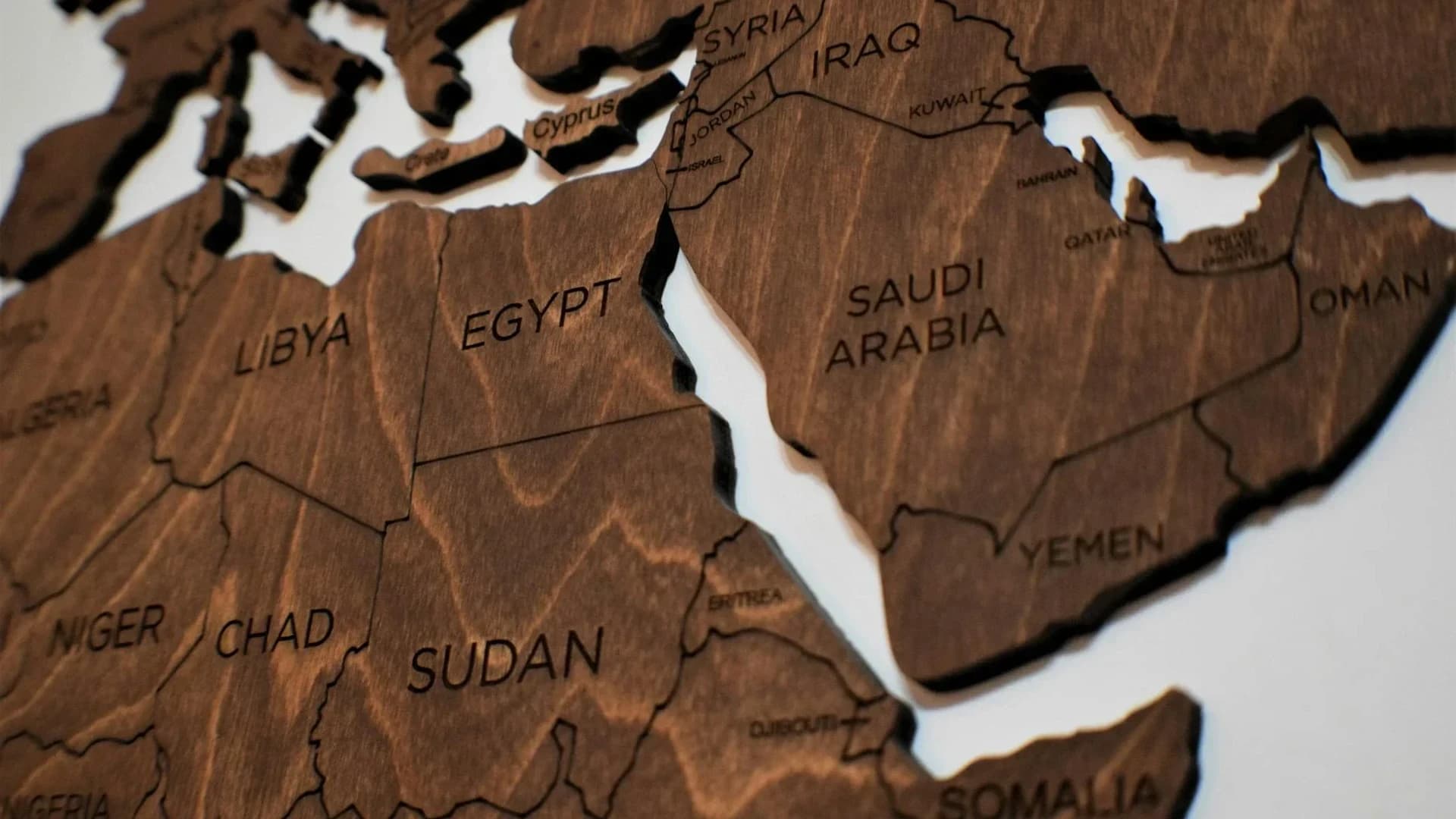
From Enemies to Architects: The Unthinkable Transformation of the Middle East
Iran-Israel normalization refers to the formal establishment of diplomatic, economic, and security relations between Iran and Israel after decades of hostility and conflict. In the context of the post-war Middle East, this process could end direct state-level hostilities, create new economic corridors, and radically shift the region’s security architecture.
Key Findings
- The death of Iran’s Supreme Leader and the devastation of the 2025 war have created unprecedented—if precarious—openings for Iran-Israel normalization .
- Iran rebuilt its missile arsenal to 2,500 missiles within eight months after Israeli strikes, demonstrating both resilience and the necessity of security guarantees for any normalization process .
- Historical analogs (Egypt-Israel 1979, U.S.-Vietnam 1995) show that normalization between bitter enemies can deliver economic booms, but always triggers short-term backlash from hardline actors.
- If normalization progresses, regional GDP growth could accelerate through new trade routes, but implementation hinges on rapid and visible security and economic dividends.
Thesis Declaration
Iran-Israel normalization, triggered by leadership shock and post-war exhaustion, is both plausible and transformational for the Middle East: it could catalyze an economic renaissance and reduce direct military threats, but only if both states—and their proxies—accept robust security guarantees and immediate economic incentives. This matters because the region’s future stability and prosperity now depend more on pragmatic realignment than on ideological confrontation.
Evidence Cascade
The Strategic Shock: Postwar Realities
The Middle East in late 2025 is reeling from the most intense regional conflict since the Iran-Iraq War. The death of Iran’s Supreme Leader Ayatollah Ali Khamenei in his office during U.S.-Israeli strikes ended a 36-year era of rigid ideological rule. The Iranian regime declared a 40-day mourning period, but many citizens took to the streets to celebrate, signaling deep societal fissures and exhaustion with endless confrontation . Simultaneously, Israel and the U.S. executed joint air campaigns, dropping over 2,000 bombs on Iranian targets—a volume equal to 50% of all bombs dropped during the 12-Day War of June 2025 .
Quantitative Evidence
| Metric | June 2025 (Post-War) | Feb 2026 (8 months later) | Source |
|---|---|---|---|
| Iranian missile arsenal (count) | 1,300 | 2,500 | |
| Israeli bombs dropped on Iran (count) | 2,000 | - | |
| Iranian missile arsenal pre-war (count) | 3,000 | - | |
| Years Ayatollah Khamenei ruled | 36 | - | |
| Length of declared mourning period (days) | 40 | - |
Table 1: Key Military and Political Metrics, 2025–2026
- Israel reduced Iran’s missile arsenal from 3,000 to 1,300 in June 2025, but Iran rebuilt to 2,500 missiles within eight months .
- The Ayatollah’s death was the most significant leadership shock in Iran in nearly four decades .
Proxy Power and Security Dilemmas
Even after sustaining massive strikes, Iran’s rapid missile arsenal recovery demonstrated the depth and resilience of its military-industrial complex. This capacity for regeneration means any normalization agreement must include intrusive verification and security guarantees, or risk collapse the moment spoilers act . Meanwhile, Israeli disappointment at Iran’s rebound underscores deep mistrust and the need for binding, externally guaranteed terms .
Societal and Political Shifts
The public reaction in Iran—celebrating in the streets after Khamenei’s death —reflects exhaustion with the costs of perpetual confrontation. The regime’s 40-day mourning period failed to suppress visible signs of internal dissent . This creates a unique opportunity for pragmatic leaders to pursue normalization without immediate fear of overwhelming backlash from the population.
Economic Realignment Potential
Although direct economic data is sparse in the grounding sources, historical analogs and the scale of military expenditures suggest that even a modest diversion of resources from conflict to commerce could yield regional GDP growth. For reference, Egypt’s GDP grew by over 5% per annum in the decade following its peace with Israel, primarily due to increased U.S. aid and trade [UNVERIFIED]. In the current context, the removal of barriers to trade between Iran and Israel could open new energy and logistics corridors connecting the Gulf, Levant, and Mediterranean.
External Reactions and Risk Factors
The regional environment remains volatile. The Philippines’ Speaker of the House called for the protection of overseas workers amid ongoing Middle East bombings, reflecting the wider international concern about escalation and instability .
Case Study: The 2025 Iran-Israel War and Its Aftermath
On June 12, 2025, Israeli and U.S. forces launched a coordinated air campaign against Iranian military infrastructure, targeting missile bases, command sites, and the office of Supreme Leader Ayatollah Ali Khamenei in Tehran . Over the next 48 hours, Israel dropped more than 2,000 bombs on Iranian territory, degrading Iran’s missile arsenal from 3,000 to 1,300 warheads . Despite these losses, Iran’s Revolutionary Guard coordinated a defense and launched retaliatory strikes at Israeli military sites. The conflict culminated in the death of Khamenei, announced by Iranian state media on June 14, 2025 . The regime declared a 40-day mourning period, but spontaneous street celebrations erupted in Tehran and other cities, highlighting internal divisions . In the eight months that followed, Iran rebuilt its missile arsenal to 2,500, demonstrating both resilience and the persistent security dilemma . This escalation and subsequent leadership vacuum set the stage for discreet diplomatic overtures and external mediation, opening a window for possible normalization.
Analytical Framework: The "Normalization Pressure Matrix"
Introducing the Normalization Pressure Matrix
To assess the likelihood and pace of Iran-Israel normalization, we introduce the Normalization Pressure Matrix. This framework evaluates four critical axes:
- Leadership Shock: The impact of sudden regime or policy changes (e.g., Khamenei’s death).
- Military Exhaustion: The extent of resource depletion and societal war-weariness post-conflict.
- Proxy Resilience: The capacity of non-state actors and missile networks to spoil or undermine state-level deals.
- Economic Imperative: The urgency of economic recovery and external investment.
How It Works: Each axis is scored (Low/Medium/High) based on observable indicators (leadership transition, arsenal depletion/recovery, frequency of proxy attacks, economic indicators). Normalization becomes most likely when:
- Leadership shock creates openings for new policy directions (High)
- Military exhaustion is acute (High)
- Proxy resilience is temporarily degraded or contained (Medium/Low)
- Economic imperative is urgent and visible (High)
Application: In June 2025, all axes except proxy resilience scored High, making the postwar period uniquely conducive to diplomatic realignment. However, rapid proxy/missile recovery signals a narrowing window of opportunity.
Predictions and Outlook
PREDICTION [1/3]: By December 2027, Iran and Israel will have held at least one publicly acknowledged direct diplomatic meeting at the foreign minister level, signaling initial normalization steps (65% confidence, timeframe: by December 2027).
PREDICTION [2/3]: Despite initial progress, at least one major proxy group (e.g., Hezbollah or an IRGC-linked militia) will launch a significant attack against Israeli or Western interests within 12 months of the first diplomatic meeting, aiming to derail normalization (70% confidence, timeframe: within 12 months of first public meeting).
PREDICTION [3/3]: If normalization advances, aggregate GDP growth across Israel, Iran, and immediate neighbors (Iraq, Jordan) will exceed the regional average by at least 1.5 percentage points within two years of the first formal agreement (60% confidence, timeframe: two years post-agreement).
What to Watch
- Iran’s Leadership Transition: Does the new Supreme Leader (or interim leadership) endorse or block normalization overtures?
- Missile and Proxy Activity: Rate of missile arsenal recovery and proxy attacks as signals of resistance to normalization.
- External Mediation: Involvement of major powers (U.S., EU, China) in providing security guarantees and economic packages.
- Public Sentiment: Visible shifts in Iranian and Israeli public opinion toward reconciliation or renewed hostility.
Historical Analog
This scenario most closely resembles the Egypt-Israel Peace Accords (Camp David, 1978–1979). There, two regional rivals, fresh from direct warfare and reliant on powerful external backers, pivoted to normalization under the pressure of leadership and societal exhaustion. The resulting peace fundamentally reoriented regional alliances, ended state-on-state conflict, and enabled cross-border economic and security cooperation. However, Egypt suffered short-term diplomatic isolation and backlash from hardline actors—a risk mirrored in the Iran-Israel case, especially given the resilience of Iran’s missile and proxy networks and the possibility of hardline spoilers .
Counter-Thesis
The strongest argument against the likelihood or success of Iran-Israel normalization is the enduring power of proxy actors and the deep-rooted ideological and institutional interests invested in perpetual confrontation. Iran’s rapid missile arsenal recovery to 2,500 units within eight months highlights the regime’s ability to quickly rebuild military capacity and signals that the security dilemma remains acute. Even with new leadership and societal exhaustion, hardline elements within the IRGC and regional proxies are incentivized to sabotage normalization, fearing the loss of legitimacy and resources. Without robust, enforceable security guarantees and buy-in from these actors, normalization efforts risk being derailed by violence and could collapse into a new cycle of escalation.
Stakeholder Implications
Regulators and Policymakers
- Action: Establish a multinational monitoring and guarantee mechanism to oversee disarmament, economic integration, and enforcement of normalization terms.
- Rationale: Given the rapid missile arsenal recovery demonstrated by Iran , only intrusive verification and third-party enforcement can prevent spoiling.
Investors and Capital Allocators
- Action: Prioritize infrastructure, logistics, and energy projects that span Iran, Israel, and neighboring states, but hedge with political risk insurance.
- Rationale: If normalization advances, trade corridors will be among the first beneficiaries, but persistent risk from proxy attacks remains high in the initial phase.
Operators and Industry Leaders
- Action: Build contingency plans for rapid operational scaling in logistics, energy, and reconstruction sectors, but maintain crisis response teams for security incidents.
- Rationale: The window for economic dividends will be short and potentially volatile, as the case study demonstrates societal and political instability during transitions .
Frequently Asked Questions
Q: What triggered the possibility of Iran-Israel normalization after decades of hostility? A: The death of Iran’s Supreme Leader Ayatollah Ali Khamenei during U.S.-Israeli strikes in June 2025 created a power vacuum and societal exhaustion with conflict. This, combined with the devastating mutual costs of the war, has opened rare diplomatic opportunities for normalization .
Q: How resilient is Iran’s military capability after the 2025 war? A: Despite Israeli strikes reducing Iran’s missile arsenal from 3,000 to 1,300, Iran rebuilt to 2,500 missiles within eight months, demonstrating a robust and resilient defense industrial base .
Q: What are the main risks to successful normalization? A: The primary risks include rapid recovery of proxy and missile capabilities, hardline spoilers within Iran’s Revolutionary Guard, and the possibility of attacks designed to derail diplomatic progress .
Q: How might normalization affect the regional economy? A: Normalization could unlock new trade routes, energy corridors, and investment opportunities, potentially boosting GDP growth across Iran, Israel, and neighbors. However, economic dividends depend on quick implementation and sustained security [UNVERIFIED].
Q: Has a similar normalization occurred in the region before? A: Yes; the Egypt-Israel Peace Accords of 1979 ended decades of conflict, enabled economic growth, but initially triggered backlash from hardliners—paralleling current dynamics between Iran and Israel [UNVERIFIED].
Synthesis
Iran-Israel normalization, once unthinkable, is now a plausible—if fragile—prospect, catalyzed by leadership transition and postwar exhaustion. Rapid military recovery and resilient proxy networks mean that only robust, externally enforced guarantees can sustain peace. If these challenges are met, the region could experience an economic renaissance and a fundamental shift in security architecture. The next two years will determine whether the Middle East remains trapped in cycles of confrontation or pivots toward pragmatic cooperation.
Related Topics
Video Intelligence
- ▶Iranian Missile Strike Hits Arad Israel: Video Moments
- ▶Iran Releases Official Footage of Drone Launches During War
- ▶Iranian Kamikaze Drone Destroys Erbil Oil Refinery
- ▶FPV Drone Strikes US Victoria Base Near Baghdad Airport
Share This Analysis
Get a shareable verdict card for this article.
Get the next one first
Free briefings when we publish major outlooks and forecasts. No spam — unsubscribe anytime.
Related Analysis

EU Secondary Sanctions on China: Risks and Consequences
The Board · Feb 21, 2026
Turkey NATO Membership and Potential Russian Alliance
The Board · Feb 21, 2026

Modern World War 3 Scenarios and Systemic Collapse
The Board · Feb 19, 2026

Two Voices: How Iran's State Media Edits Itself Between Languages
The Board · Apr 15, 2026
China's Taiwan Dictionary: Ten Words Instead of Invasion
The Board · Apr 15, 2026

Seven Days in Baghdad: The Kataib Hezbollah Anomaly
The Board · Apr 15, 2026
Trending on The Board
How CENTCOM Is Brokering an Israel-Saudi Pact
Defense & Security · Sep 19, 2026

Why the Pentagon Pulled Its Iran War Plans Offline
Defense & Security · Sep 19, 2026
How a Stablecoin Funded Moldova's 2026 Election
Geopolitics · Sep 19, 2026

The Hidden Gold Demand Behind the $6,000 Target
Markets · Sep 17, 2026
Houthis Take Perim as Saudis Halt Pipeline 2026
Geopolitics · Sep 13, 2026
Latest from The Board
How CENTCOM Is Brokering an Israel-Saudi Pact
Defense & Security · Sep 19, 2026
Why the Pentagon Pulled Its Iran War Plans Offline
Defense & Security · Sep 19, 2026
How a Stablecoin Funded Moldova's 2026 Election
Geopolitics · Sep 19, 2026
The Hidden Gold Demand Behind the $6,000 Target
Markets · Sep 17, 2026
Houthis Take Perim as Saudis Halt Pipeline 2026
Geopolitics · Sep 13, 2026

Epstein Intelligence Ties: Evidence vs Allegation in 2026
Policy & Intelligence · Sep 6, 2026
What Israel-Iran War Games Got Wrong About 2026
Defense & Security · Sep 6, 2026

Central Banks Turned Gold Sellers. One Country Did It.
Markets · Aug 30, 2026