
EXECUTIVE SUMMARY
The Board unanimously rejects the premise that military force or law enforcement alone can "overthrow" the cartels. The consensus is that the Cartels are not an external enemy but a structural market response to a failing Mexican State and unyielding U.S. demand.
The only viable path to ending the destruction is not eradication, but integration. The violence ends when the "War" ends, likely through a Pax Narco (state-sanctioned monopoly) or radical market decriminalization.
KEY INSIGHTS
- Violence is a result of competition, not existence. A monopoly cartel creates order; warring cartels create carnage.
- The "Kingpin Strategy" is a failure. Decapitating leadership merely accelerates Darwinian evolution, stripping away weak leaders and leaving only the most brutal and paramilitary factions (The Hydra Effect).
- The State has lost the monopoly on force. With the Mexican government unable to protect basic industry (e.g., Sinaloa miners), the State typically collapses or merges with the strongest power on the ground.
- U.S. paralysis prevents intervention. Due to the 2026 DHS budget impasse and distractions with Tehran, the U.S. cannot mount a significant intervention.
- Economic flows dictate survival. As long as the drug markup exists due to illegality, the system will fund its own defense against any army.
WHAT THE PANEL AGREES ON
- Total Eradication is Fantasy: You cannot arrest a market demand. The volume of cash flow ($50B+) is too high to be policed.
- Fragmentation causes violence: The bloodiest periods occur when the ecosystem is fractured. Stability requires hegemony (one dominant power).
- The Mexican State is functionally "Senile": It lacks the institutional capacity (Asabiyyah) to enforce law without external help or internal compromise.
WHERE THE PANEL DISAGREES
- The "Pax Narco" vs. System Reset: MACHIAVELLI argues for the State to explicitly pick a winner (a single Cartel) to enforce order. analysts argues this only delays the collapse; the system must be changed economically (legalization/decriminalization) to remove the incentive entirely.
- The Role of the U.S.: HANNIBAL suggests the U.S. could act if not for paralysis; IBN KHALDUN suggests the U.S. is deeply complicit or structurally incapable of solving a demand-side problem.
THE VERDICT
You asked how the Cartels will be overthrown. The answer is they will not be overthrown; they will be institutionalized.
1. IMMEDIATE: Implement 'Pax Narco' (The Machiavelli Option) The Mexican State must covertly select the single most bureaucratically capable Cartel faction and provide them intelligence and immunity to exterminate their rivals.
- Why: This restores the "Monopoly of Violence." One tyrant results in fewer deaths than ten warlords. This ends the chaotic destruction of civil society.
2. NEXT: Decriminalize to Collapse Margins (The Nash Option) Once violence stabilizes, the U.S. and Mexico must strip the "Risk Premium" from the product. Legalize or heavily decriminalize the flow of narcotics.
- Why: This destroys the profit model. Cartels rely on 10,000% markups to fund armies. If the price collapses to commodity levels, they cannot pay their soldiers. They transform from warlords into tax-evading logistics companies.
3. LONG TERM: Rebuild State 'Virtù' Use the tax revenue from regulated markets to pay soldiers and police a living wage, breaking the cycle of bribery.
- Why: Loyalty is market-driven. If the State pays better than the Capo, the State wins.
RISK FLAGS
- Risk: The Frankenstein Scenario
- Likelihood: HIGH
- Impact: Massive. The Cartel chosen to enforce the peace decides it no longer needs the State and fully subsumes the government (Narco-State).
- Mitigation: The State must retain control of the banking system to freeze assets if the proxy gets too powerful.
- Risk: U.S. Sanction Retaliation
- Likelihood: MEDIUM
- Impact: Economic collapse. If Mexico is seen "partnering" with Cartels, the U.S. (even if distracted) might close the border to trade.
- Mitigation: Deep secrecy. The alliance must be disguised as successful police operations.
- Risk: Fragmentation of the Military
- Likelihood: MEDIUM
- Impact: Civil War. Different generals may be on the payrolls of rival cartels, leading to a fractured military coup.
- Mitigation: Purge the military leadership prior to executing the Pax Narco strategy.
BOTTOM LINE
You cannot win a war against a market; you can only merge with it or bankrupt it.
Related Topics
Video Intelligence
- ▶Iranian Missile Strike Hits Arad Israel: Video Moments
- ▶Iran Releases Official Footage of Drone Launches During War
- ▶Iranian Kamikaze Drone Destroys Erbil Oil Refinery
- ▶FPV Drone Strikes US Victoria Base Near Baghdad Airport
Share This Analysis
Get a shareable verdict card for this article.
Get the next one first
Free briefings when we publish major outlooks and forecasts. No spam — unsubscribe anytime.
Related Analysis

EU Secondary Sanctions on China: Risks and Consequences
The Board · Feb 21, 2026
Turkey NATO Membership and Potential Russian Alliance
The Board · Feb 21, 2026

Modern World War 3 Scenarios and Systemic Collapse
The Board · Feb 19, 2026

Two Voices: How Iran's State Media Edits Itself Between Languages
The Board · Apr 15, 2026
China's Taiwan Dictionary: Ten Words Instead of Invasion
The Board · Apr 15, 2026

Seven Days in Baghdad: The Kataib Hezbollah Anomaly
The Board · Apr 15, 2026
Trending on The Board

79 Years of UFO Lies, Roswell to the Pentagon
Defense & Security · Sep 29, 2026

How CENTCOM Is Brokering an Israel-Saudi Pact
Defense & Security · Sep 19, 2026

Why the Pentagon Pulled Its Iran War Plans Offline
Defense & Security · Sep 19, 2026
How a Stablecoin Funded Moldova's 2026 Election
Geopolitics · Sep 19, 2026

The Hidden Gold Demand Behind the $6,000 Target
Markets · Sep 17, 2026
Latest from The Board
79 Years of UFO Lies, Roswell to the Pentagon
Defense & Security · Sep 29, 2026
How CENTCOM Is Brokering an Israel-Saudi Pact
Defense & Security · Sep 19, 2026
Why the Pentagon Pulled Its Iran War Plans Offline
Defense & Security · Sep 19, 2026
How a Stablecoin Funded Moldova's 2026 Election
Geopolitics · Sep 19, 2026
The Hidden Gold Demand Behind the $6,000 Target
Markets · Sep 17, 2026
Houthis Take Perim as Saudis Halt Pipeline 2026
Geopolitics · Sep 13, 2026

Epstein Intelligence Ties: Evidence vs Allegation in 2026
Policy & Intelligence · Sep 6, 2026
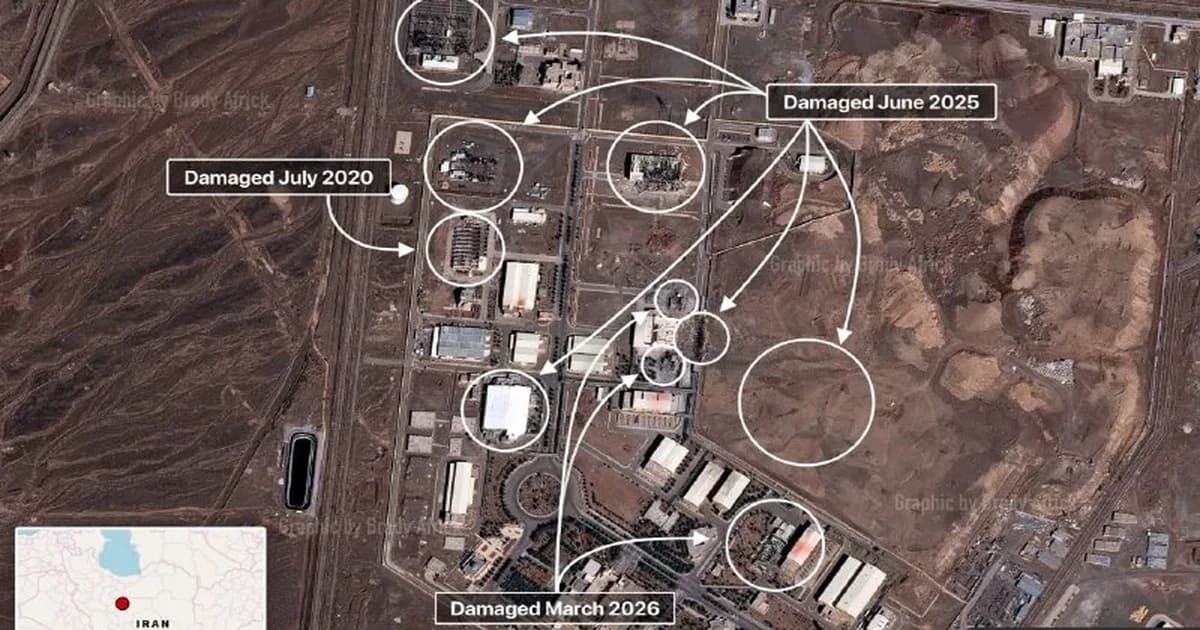
What Israel-Iran War Games Got Wrong About 2026
Defense & Security · Sep 6, 2026